
Blog · 4 November 2026
How Michelin Really Judges a Kitchen: Andy Hayler's Guide to Paying for Food That Is Actually Worth It
Food critic Andy Hayler explains the four things Michelin scores, why some one-stars beat three-stars, and how to spend your restaurant money wisely.
A Michelin star has never been a verdict on how good the food is. It is a verdict on whether you should get in the car. The definitions, unchanged since 1933, are a travel guide's: one star is a very good restaurant in its category, two is "worth a detour", three is "worth a special journey". The whole system was invented in 1900 by a tyre company that wanted the few hundred motorists in France to drive more.
Once you know that, a lot of expensive confusion clears up. The question is not whether a restaurant deserves its stars. The question is whether the journey, and the bill at the end of it, is worth it to you.
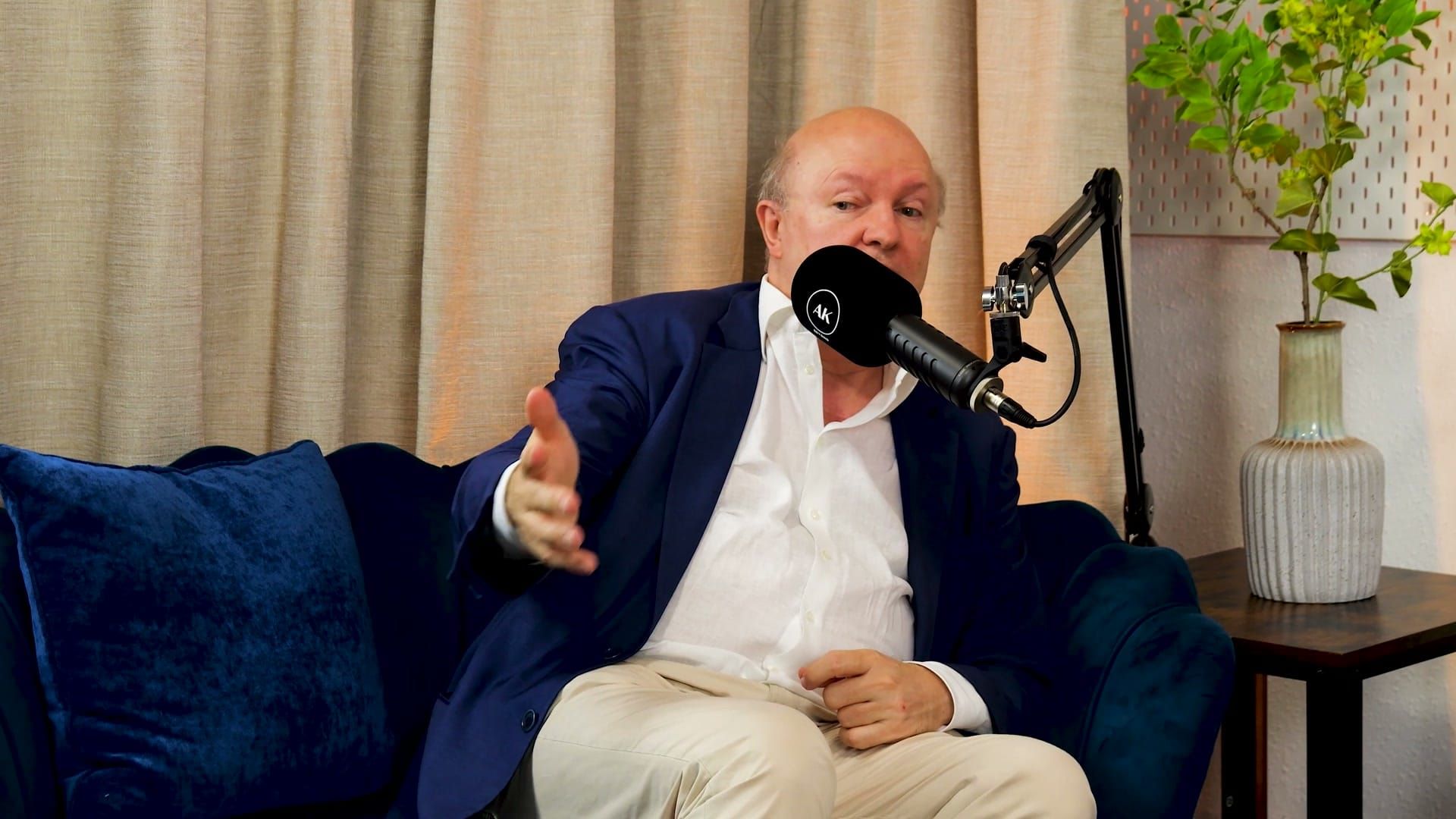
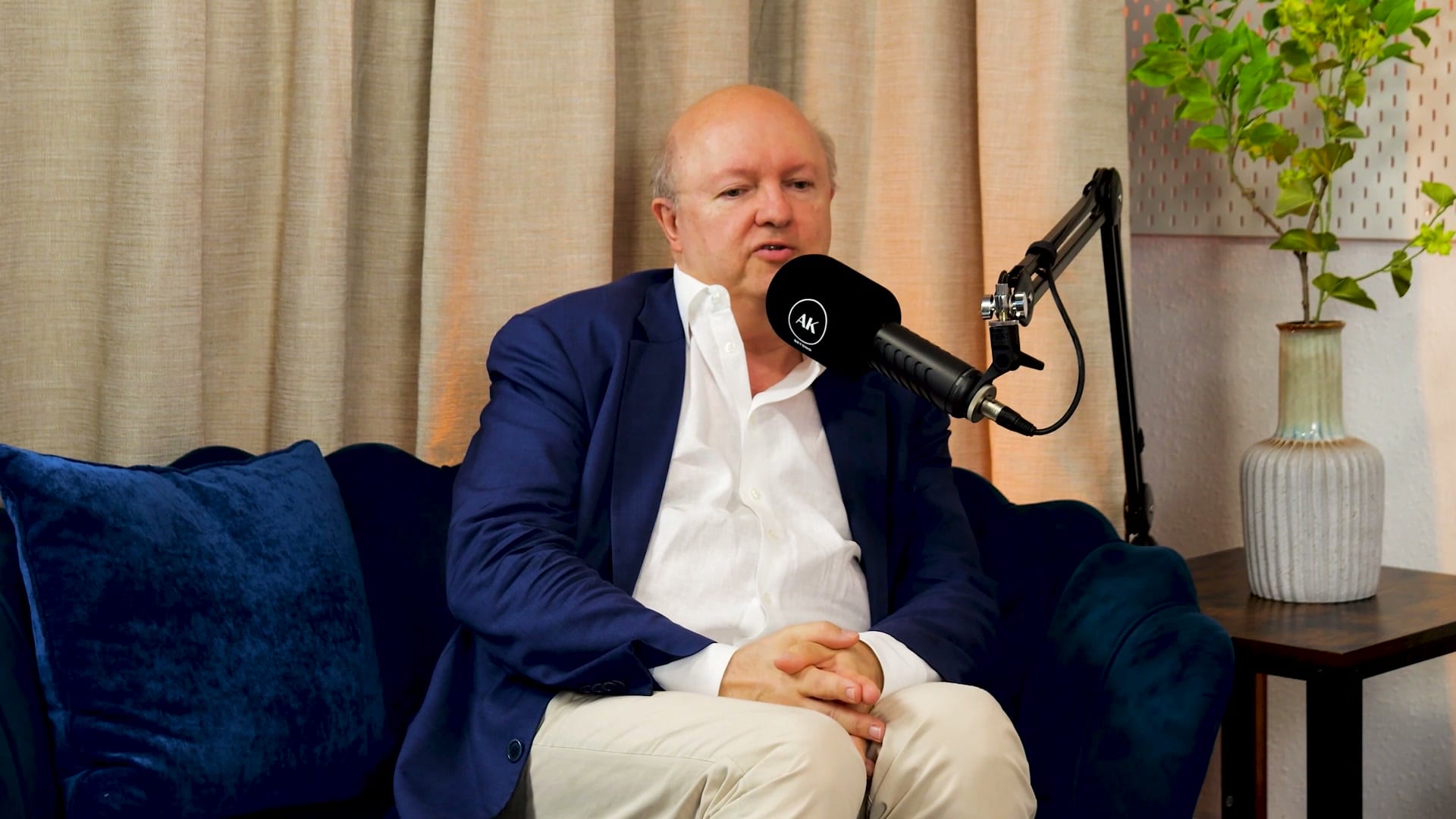
On this episode of The BEYOND Podcast, Aleksandra King asks Andy Hayler, the independent critic behind andyhayler.com and the first person to eat at every three-star restaurant in the world, to lay out how the system actually works and how a normal diner should use it. Listen to the episode or watch it on YouTube. What follows is his playbook.
The Four Things Inspectors Admit to Scoring
Michelin runs what Andy calls "a fairly opaque system". Nobody outside the company knows exactly how a star is awarded, or even how many inspectors there are. But in recent interviews, he says, the guide has become a little less tight-lipped, and four criteria have been acknowledged.
The first is the quality of the ingredients. The second is the technical skill of the chef. The third is harder to pin down: whether "the personality of the chef comes through in the food". The fourth is consistency, which Andy notes with some amusement, "since Michelin probably rarely actually go back to a restaurant more than once in a year".
Those four are useful because they are the same things you can judge from your own chair. Is the produce obviously good? Is it cooked properly? Does the food feel like it came from a person rather than a template? Would you expect the same plate next month? A restaurant that passes all four is doing the hard things, whatever its star count.
Why a One-Star Can Beat a Three-Star
Stars inflate prices in a predictable way. Once a restaurant has one, Andy says, "they probably feel more comfortable charging a bit more", and the same happens again at two and three. There are no rules. These are independent businesses and they charge what they like, so a star is partly a signal about what the next bill will look like.
What a star does not guarantee is that the food is better than the place down the road with fewer of them. Inspectors are human beings following a methodology and "people end up with different views". Some three-stars are, in his careful phrase, "strangely assessed", with most experienced diners and chefs disagreeing. Others are overlooked. His example is the Dysart near Richmond, which holds one star and whose chef, Kenneth Culhane, won the Roux Scholarship in 2010, the premier competition for professional chefs in Britain. "For me it's evidently a solid two star, and much better than many, many of the two stars, if not three stars, around the UK."
The practical lesson is to treat stars as a shortlist, not a ranking. Then do the work that separates the real bargains from the famous names.
What It Actually Costs, and Where It Costs Less
Aleksandra wants numbers, and Andy gives them, with the caveat that food and wine have to be separated because "the total bill is going to be dramatically dependent on what you spend on drinks". In Paris a three-star tasting menu runs about €400, and €600 at one particular address. In London even a two-star like Ikoyi was around £450 the last time he looked, with most of the top tier nearer £295. In obscure parts of Japan he has eaten a three-star meal for something like £50 a head, though that was a decade ago and "very unusual". A realistic range for food alone is £200 to £400, almost always as a tasting menu. (Prices as quoted on the episode; they change.)
Then comes the tip he saves for the end. Fly to Luxembourg, where every bus is free, and ride about forty minutes to the German border. There you find Victor's Fine Dining, where Christian Bau has held three stars since 2005 and is confident enough to have three stars tattooed on his arm, and half an hour away the Waldhotel Sonnora, where Clemens Rambichler cooks what Andy calls "probably the best classical restaurant in the world in terms of classical French". Both have rooms. The menus are "significantly less than in Paris", and the wine lists hold bottles bought ten or fifteen years ago and never marked up, some now below retail. "You can afford to drink relatively well," he says, "which you can't do in London or Paris."
The Mistake That Separates Good Kitchens From Average Ones
If the four criteria are the test, Andy is clear about where kitchens most often fail it. It is not technique, although he has met a risotto "just like wallpaper paste" and a pasta so seared to its plate that he lifted the whole plate off the table with his fork. It is balance, or what Michelin calls harmony: do the elements on the plate make sense together? Strawberries and cream do; lamb and raspberries mostly do not. A rich dish wants acidity or something green against it.
The failure mode is addition. "Aspiring younger chefs tend to think it's clever to put more and more elements on," he says. "They think, what can we improve with that dish? We'll add one more thing." Every extra element has to be cooked at a different time and brought together at the pass, so the fish waits for its garnish and ends up overcooked. His model is the late Michel Guérard in south-west France, whose plates carried three or four elements, "extremely simple looking, but beautifully balanced and perfectly cooked". The remedy for most young chefs is almost insultingly plain: "just buying better ingredients and cooking them well".
He gives you one more tool for the door of an unfamiliar restaurant. A menu that proudly lists its suppliers, the butcher, the fishmonger, the farm, "generally tells you that the restaurant takes some care where it sources its stuff" rather than buying from a catering van. It is not proof. "It's not easy to really tell until the food arrives on the plate." But it is the best early signal he knows.
Actionable Takeaways for Diners and Operators
- Judge on the four criteria, not the star count. Ingredients, technique, personality, consistency. A one-star that scores on all four is a better buy than a famous three-star that coasts.
- Separate the food bill from the drinks bill before you book. Andy's £200 to £400 range is for food. Decide your wine spend separately, and remember that water is allowed.
- Subtract before you add. Whether you run a kitchen or cook at home, the move that most improves a plate is removing an element and spending the saving on the produce.
Listen to the full conversation with Andy Hayler on The BEYOND Podcast or on the Aleksandra King YouTube channel, and explore the other episodes for more straight talk from people at the top of their fields.
Get the next insight first
Follow the show and the ideas keep coming.