
Blog · 5 August 2026
Regulate, Reframe, Reset: The Three-Word Protocol Steve Featherstone Uses Several Times a Day
A British Army veteran of forty years, Steve Featherstone coaches leaders with a three-step protocol for staying functional when a situation is beyond control.
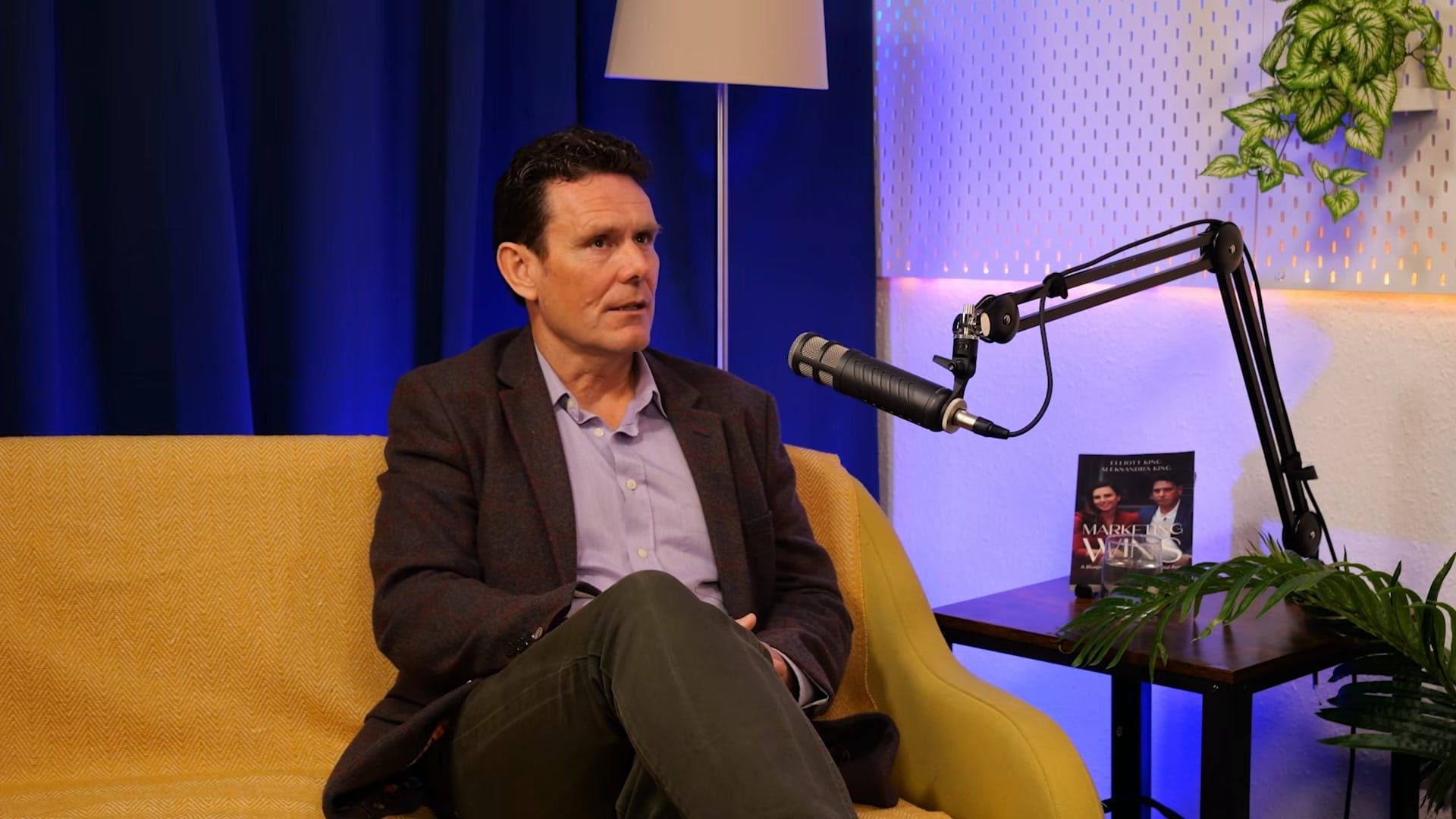
Almost everything sold as stress management asks you to think your way out. Reframe the narrative, challenge the thought, talk yourself down. Steve Featherstone spent forty years in the British Army and reached the opposite conclusion: you cannot argue a body out of an alarm state.
"Breathing is power. Regulate. Don't try and think your mind through into calm. The body needs to relax."
It is a small correction that reorders everything downstream. If the body goes first, the first move in a crisis is not cognitive at all, and most people are attempting step two while skipping step one.
On BEYOND, Steve Featherstone takes Aleksandra King through the method he now coaches at Ubiquitous Consulting and speaks about for Spy Q. His LinkedIn records the career it came out of: the Corps of Royal Engineers, senior logistics, project and assurance roles across Tidworth, Aldershot and Blackwater, and a spell as a Sergeant Major.
The Three Rs, in Order
- Regulate, Breathing first, and his version is deliberately unglamorous: inhale, hold, exhale, hold, repeated for roughly a minute. The tension has to leave the body before anything else is possible, which means dropping the shoulders and taking the breath all the way down. He also sighs on purpose, using it to dump what he calls the negative energy.
- Reframe, Only now does the thinking start, and it is narrower than you would expect. He is not reinterpreting the whole crisis. He is establishing that he is not actually under threat even though his body has filed the situation as one, and then shrinking the problem to a single item. "focus on the first thing that needs to be resolved rather than the whole of the situation"
- Reset, A moment of silence, which he calls a step back, followed by a checklist so short it barely qualifies. "Am I safe? I am safe. I haven't reacted. I can now respond." The distinction between reacting and responding is the point of the whole protocol, and the response he rates highest is the one most people never consider. "Silence is strength. It really is a powerful place to be."
Aleksandra, who cheerfully admits she loves reacting, pushes back on whether anyone actually does this in the moment. Steve runs it several times a day, and not for the discipline. He went through an acrimonious divorce, and he is unsentimental about why the habit stuck: chronic stress is a killer that suppresses the immune system and accelerates ageing.
Why three steps? Because he has watched better acronyms fail. "I work in threes," he says, "Well, I'm a simple man. So, I try to make things as easy as possible." A protocol you can recall while your hands are shaking beats a superior one you cannot.
Why He Paid to Become a Jet Ski Instructor
The most revealing thing Steve did after leaving the Army looks like a hobby and is actually fieldwork.
He understood military people completely: the framework, the shared language he can still identify in a stranger in a bar within ten minutes. Civilians he did not understand at all. So he qualified as a jet ski instructor.
"I needed to learn about people's behaviours in high stress environments or high octane events... it was more about research for me."
The logic is sound and slightly ruthless. Put ordinary people on the water off the south-west coast at fifty miles an hour and you get, on demand, the exact state he needs to study.
"you could see the chaos in their eyes"
And because he was the instructor, he also had to be the regulating presence, which produced the leadership half of the insight. The three Rs are not only for him.
"If I go into a state of panic when my hair is on fire, invariably everybody will see that well, if Steve's panicking, we need to panic."
Purpose Is a Responsibility, Not a Discovery
Ask most coaches what they do and you get some version of helping people find their purpose. Aleksandra asks Steve exactly that, and he declines the premise.
"Purpose is something that can't be found. It has to be chosen. You have to shoulder purpose... Purpose is a responsibility and you get held to account."
The verb is the argument. Finding is passive and endless, and it lets you keep searching indefinitely without committing. Shouldering means picking something up, changing your behaviour and values to match it, and accepting that you can now fail at it. Step away from purpose, he says, and you lose drive and start to stagnate.
He is equally careful about what the work is not. He resists the label of life coach and describes it as self-awareness, orientation and alignment, and finding your centre. His written description of the practice runs the same way: leaders and teams who want to lead with more clarity and steadiness, focused on tension and decisions under pressure, with mediation when conflict has already arrived.
The Leadership Test Most Managers Fail
Steve carries one line from a commanding officer's report, and quotes it with obvious affection because he did not initially understand it.
"Featherstone demonstrates an amazing leadership, novel but effective."
He decided it came down to being relatable: building relationships with your soldiers, understanding their needs above your own, making the right call even when it goes unseen, and being present. There is also a specific test, and it translates directly out of uniform.
"what are their interests, what are their passions, what are their motivators."
Knowing names is administration; knowing motivators is leadership. His definition of bad leadership is equally concrete, and it is not tyranny but absence.
"there's poor decision making, the reluctance or hesitation of making decisions because they don't want regrets. They don't want to be judged."
Aleksandra calls that selfish and he agrees, but will not stop there, because his instinct is to look for the driver underneath: a narrow window before promotion, or something below the waterline nobody can see. He is honest about the cost, too. As a Sergeant Major he found the role lonely, because impartiality is not optional and befriending one group reads as favouritism to everyone else.
Actionable Takeaways for Leaders and Founders
- Regulate before you reframe: One minute of inhale, hold, exhale, hold, before you touch the problem. Then shrink it to the single next thing that has to be resolved.
- Treat silence as a response, not a failure to respond: The urge to fill the gap is usually about your discomfort, not the decision.
- Write down the motivators of everyone you lead: Not names, not job titles. What they are actually chasing. If you cannot fill in the list, you are administering people rather than leading them.
▶️ Watch the full conversation on the Aleksandra King YouTube channel, or listen on Spotify and Apple Podcasts.
➡️ For the other half of this story, read The Boy Who Walked Through Graveyards. And for composure under a far more literal kind of fire, hear How Derrick McManus was shot fourteen times.
Get the next insight first
Follow the show and the ideas keep coming.