
Blog · 3 August 2026
The Boy Who Walked Through Graveyards: How Steve Featherstone Burned Out His Fear Before the Army Could
Steve Featherstone was morbidly afraid of the dark at 13, then learned the British Army fights at night. What he did next shaped the next forty years.
Most people manage their fears. They arrange their lives so the thing they dread stays at a comfortable distance, and they call that coping. At thirteen, Steve Featherstone did the opposite on purpose: he went looking for the most frightening place within walking distance of his house, and then kept going back.
The place was a graveyard, the time was after dark, and the reason was that he had worked out, with the terrible clarity of a teenager, that the life he wanted was incompatible with the boy he actually was.
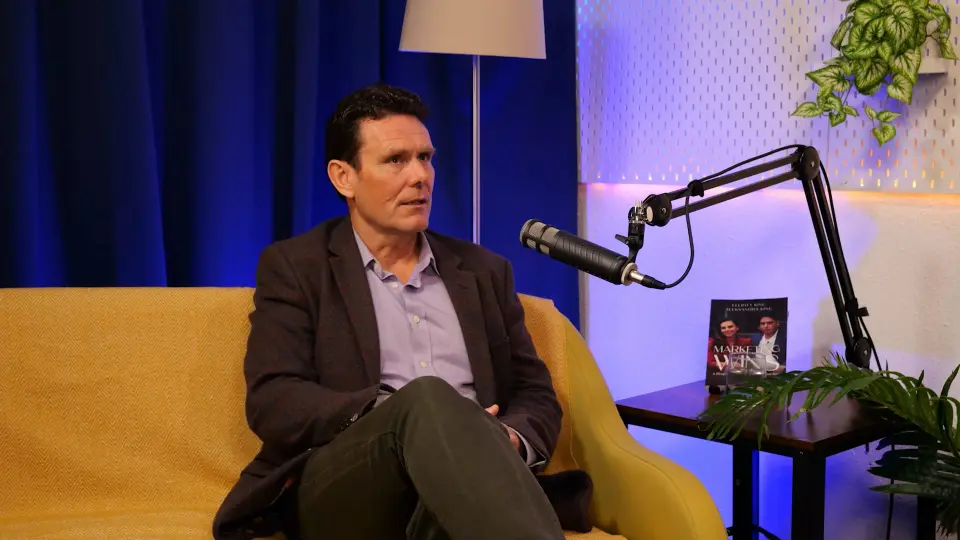
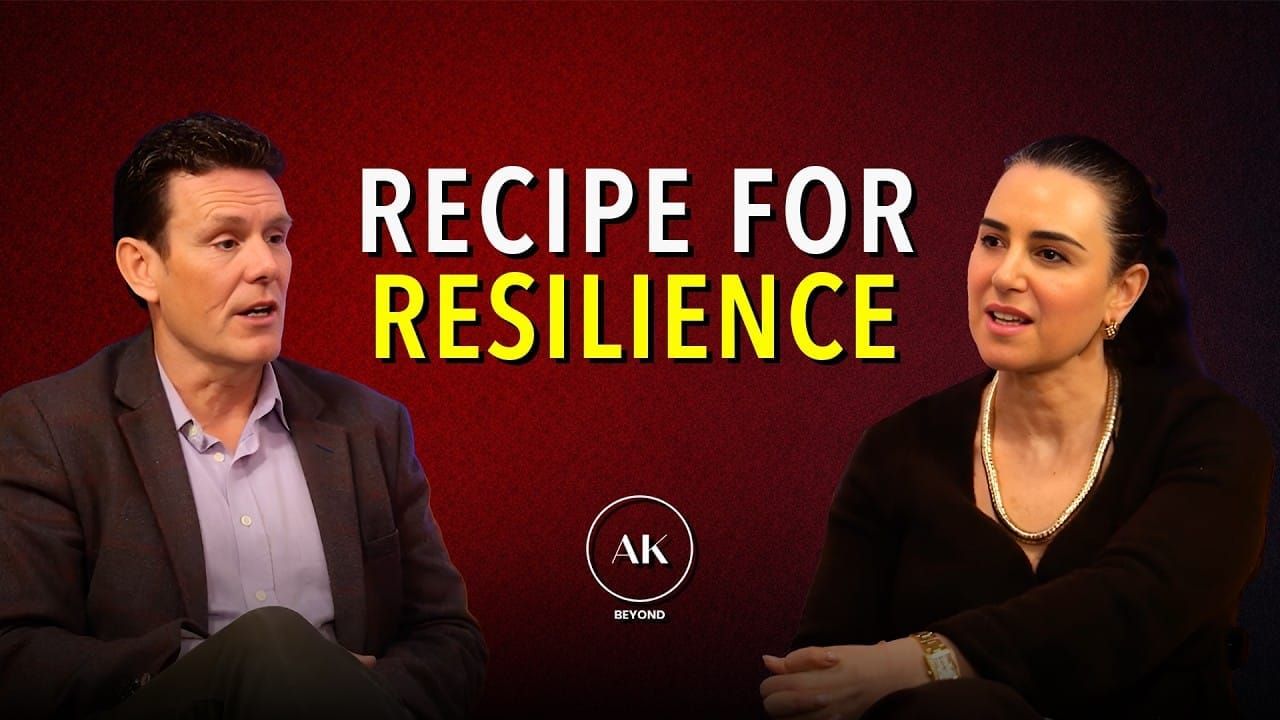
On this episode of BEYOND, Steve Featherstone tells Aleksandra King the story of the forty years that followed, from that paper round to the Corps of Royal Engineers to a Sergeant Major's peculiar loneliness. The shape of it is unusual: the dramatic part happens before he ever puts on a uniform, and everything afterwards is a man applying the same method to harder problems.
The Advert That Ruined Everything
The ambition came from his father. Steve wanted the military from thirteen, and in the Britain of the mid-1980s that was, as he puts it, the done thing. He was mentally prepared, physically prepared, and had in his own words carved out a purpose. Then he watched television.
"I saw an advert for the British Army and they do 80% of their fighting at night. And I kind of realized that well, I'm scared of the dark. How's that going to work?"
Scared of the dark undersells it. He could not turn his bedroom light off, and he arranged his afternoons so he was home before the light went, which his parents read backwards as unusually good behaviour. His friends never knew, because he hid it behind what he calls a rebellious arrogance. What frightened him was never the dark itself, but the uncertainty inside it.
The Paper Round With Two Routes
The story turns on something almost comically ordinary. Steve had a paper round, and the round offered a choice: the long way into town, or straight through the graveyard. He always went round, until the day he decided that going round was the problem.
"I had to find the most scariest environment or situation just to get rid of."
Aleksandra, morbidly afraid of the dark herself, is not persuaded this is a reasonable thing for a thirteen-year-old to do. She asks whether he is serious, and he says he is very serious. She tells him it is not merely random, it is madness. He agrees, and offers the only defence he has: he could not think of another way.
He went through it countless times, and somewhere in that repetition the thing he was chasing arrived.
"I transitioned from fear to excitement, the excitement of the unknown. And then I started to become really comfortable with the darkness."
Forty years on the reversal is total, and it is the detail that lands hardest: he now swims and dives in pitch darkness by choice, because it brings him peace.
The Fear That Was Waiting Inside the Uniform
He enlisted at sixteen, and when Aleksandra asks whether the fear followed him in, the answer is one of the flattest lines of the episode: "No. Completely severed." Camped under a basher among the trees, in the stillness and the isolation, he loved it.
So she asks what frightened him in the Army instead. She is braced for bullets. What she gets is this:
"the fear of standing up and presenting to people"
He does not soften it. Underneath sat a fear of rejection and of judgement, and the military's response was to make him give lessons and then mark him down in front of everyone. He describes that, without irony, as a gift.
"I learned from an early age that I have to be more accepting of criticism... And I find that liberating because no one's perfect as much as they think they are."
Before recording, Steve had asked *her* how she handles trolling, and it was not small talk. His approach is not thicker skin but a redirection of attention: he cares less about what is said than about why it is being said. Then the line that does the real work: "if I allow their problem to maybe be a me problem, then it's a me problem."
Welcome to the Wild West
Joining at sixteen meant being taken apart. He calls it organised chaos: structure imposed from outside while inside he was in turmoil, his identity stripped in a way that served the Army rather than him. Leaving is the harder story. After forty years he walked out into what he calls the wild west of civilian street, and found freedom.
"It was liberating. So much free time... there was no structure."
No one would impose a standard on him again, and for a man built by imposed standards that was the problem rather than the prize. There was also an acrimonious divorce, and a stretch where he woke up flat and going nowhere. His fix on the worst mornings was upbeat music and dancing badly around the room, on the theory that the body leads and the mind catches up.
So he built a new structure out of discomfort. He lives in Weymouth now, on a hill he calls Heartbreak Hill, refuses to drive anywhere in the town, and runs 10k before a sea swim, or swims first and runs after, the order swapped so it never settles.
"I hate going in the sea when it's like nine degrees, but I know that I stop that I will lose the resilience and it'll be twice as hard."
Last year he walked the fifty-four-mile Cateran Yomp having never covered more than twenty-four, got cramp at twenty-five, and treated it as data. The fear he names now is not the dark, and it is not failure.
"that's my fear, stagnation."
Actionable Takeaways for Ambitious Professionals
- Go and find the worst version of it: Steve picked the most frightening setting available and repeated it until his body stopped reacting. Whatever you manage at a safe distance, the distance is what keeps it alive.
- Interrogate the criticism instead of absorbing it: Ask what is driving the person, not whether they are right about you. Their problem becomes yours the moment you agree to host it.
- Work out which fear you are running: Steve separates the fear that prepares you, sharpening focus months in advance, from the fear that imprisons you in avoidance and rumination, a cage that feels like caution.
▶️Watch the full conversation on the Aleksandra King YouTube channel or listen on Spotify. Steve's practice is Ubiquitous Consulting, and he speaks for Spy Q
➡️Listen next to Aleksandra's conversation with Derrick McManus, the special operations officer who was shot fourteen times who shares that Spy Q platform with Steve, then browse the rest of the BEYOND catalogue.
Get the next insight first
Follow the show and the ideas keep coming.