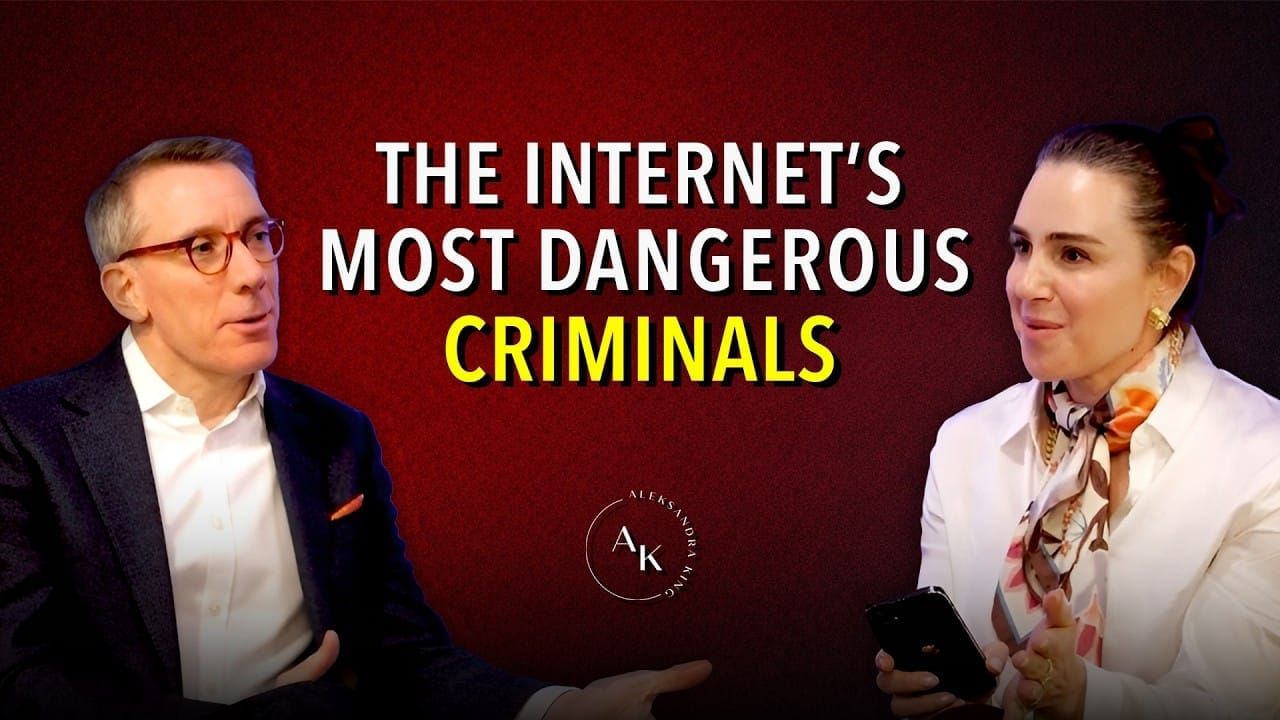
Most journalists worry about their byline. Geoff White worries about his front door. "The kind of people I investigate, I do not want them to know where I live," he says, and he means it literally, because the people he investigates are North Korean hackers and Russian cyber criminals, and they are very good at finding things out.
From the conversation
Season 3, The BEYOND Podcast
That is the trade Geoff White has made. To explain how the modern criminal world actually works, he has spent his career walking straight into it: "I have interviewed fraudsters and money launderers the world over. I've chatted online with North Korean spies." This is the story of a man who goes where most of us are terrified to look, and what that vantage point has taught him about safety, human nature, and the price of trust.
On this episode of BEYOND, Aleksandra sits down with Geoff White, the investigative journalist and cybercrime expert who reports for the BBC, Channel 4 and the Sunday Times, for a conversation that turns the thing we all quietly dread into something you can finally understand.
The Beat Nobody Wants to Explain at a Party
Ask Geoff what he does and he starts where you are. "Oh, you know those dodgy emails you receive, those dodgy phone calls you get. That's the kind of thing I cover." Then comes the twist that defines his whole career: "But I cover the people, the organised crime gangs who are on the other side of that."
That is the shift most of us never make. We experience cybercrime as an annoyance, a scam text, a suspicious login, a frozen laptop. Geoff experiences it as an industry with employees, bosses, revenue models and career ladders. His job is to sit across from the people running it and ask them how, and why. It has taken him from the outputs of crime, the drained accounts and the ransom notes, all the way back to the humans typing the code.
Why the Hackers Come From the Games Room
One of the most disarming things Geoff has learned is where these people come from, and it is not a hooded stereotype in a basement. Again and again, he has traced the best hackers, good and bad, back to the same training ground: video games. "Video games seem to prepare these people for a life of hacking," he says. Games reward the person who thinks around corners, who probes a system for the move it wasn't designed to allow. He's found the same lateral instinct in chess players and, tellingly, in lockpickers.
It reframes the whole picture. The skills that make someone dangerous online are not exotic. They are the ordinary skills of a curious, pattern-hunting mind, pointed in a criminal direction. That is exactly why Geoff refuses to treat the people he investigates as a different species.

Sitting Across From People Who Steal for a Living
The hardest, most human part of Geoff's work is that he listens to how criminals justify themselves, and the justifications are unnervingly coherent. Ransomware gangs, he explains, "call themselves post-paid security testers." Their logic: "You failed the security test cuz we've hacked you. You now pay us the same you would any other security researcher." West African scammers he has interviewed frame stealing from wealthy Westerners as a form of "reparations."
Geoff neither excuses this nor flinches from it. He simply reports it, because understanding the story a criminal tells themselves is how you understand what they'll do next. He is careful, too, about geography. The criminal "nexuses" he names, Russia, parts of West Africa, pockets of South-East Asia, are, he stresses, tiny but significant minorities, never whole populations. The reporter's discipline is to be precise about who the bad actors are, and who they are not.
The Genius of the Con
Nowhere is Geoff's insight sharper than in the cases where the trick is psychological, not technical. He describes one attack where hackers ran a target through *four video interviews* for a job that didn't exist, built up his trust, and then asked him to "download the software." "The company got taken for $625 million," Geoff says, "at the time one of the biggest hacks of all time", money "which they transferred out in 1 minute 36 seconds."
The truly clever part wasn't the code. It was that the victim would never confess, because owning up meant admitting to their employer that they'd been quietly job-hunting. The criminals didn't just steal the money; they engineered the silence around it. That is the kind of detail only someone embedded in this world would think to surface.
What It Feels Like to Be Robbed by a Ghost
For all the scale and the spycraft, Geoff never loses sight of what cybercrime does to an ordinary person. His most quietly devastating point is about the aftermath. "The problem with cyber crime is you've not only been digitally burgled. You have no idea what window they got in through," he says, "and whether they're going to come back tomorrow night and the night after and the night after. Imagine getting burgled and you have no idea how they got in."
That is the toll of his beat, and the reason he does it: the violation isn't only the theft, it's the not-knowing. Geoff's work is an attempt to switch the lights on, to show us the window they came in through, so the fear has somewhere to go.
Where He Lands
After a career spent among the world's most sophisticated criminals, you might expect Geoff White to be paranoid. He is the opposite, almost reassuring. You don't need to be a super-spy, he says; you just need to be a slightly harder target than the person next to you. His whole hard-won worldview compresses into two ordinary words: "Bit of patience, bit of skepticism, that will see us right." He signs off on an old proverb his work has proven true a thousand times over: "the devil makes haste."
Actionable Takeaways for Ambitious Professionals:
- Treat criminals as an industry, not a boogeyman. Understanding how the other side actually operates, their incentives and excuses, is the first real step to defending against them.
- Slow down when you're being hurried. Nearly every con Geoff describes relies on urgency. Patience is not passivity; it's a security control.
- Aim to be the harder target. You'll never be un-hackable, and you don't need to be, just less convenient to rob than the next person along.
▶️Listen to the full conversation on the Aleksandra King YouTube Channel.
➡️If this one gripped you, hear it alongside Aleksandra's conversation with financial-crime expert Jessica Cath on how dirty money really moves, then browse the rest of the BEYOND back catalogue.
Podcast Host / CEO
Aleksandra King is the uncompromising host of the The BEYOND Podcast Podcast, where she drives fearless conversations with entrepreneurs, leaders, and cultural voices on resilience, ambition, and unapologetic success. As a media agency founder, podcaster, and leading communications specialist, she is dedicated to cutting through the noise to reveal the raw truths of achievement. Prior to launching her media career, she built an extensive corporate background. Born in Poland and raised in South Africa, her global upbringing shaped her ambition as she climbed the corporate ladder, working in areas such as telecoms consulting and developing her expertise as a seasoned marketing and communications specialist across continents.
In 2016, Aleksandra became a familiar face after her time on BBC’s The Apprentice UK. Known as the candidate who famously walked out mid-series, she chose to reclaim her autonomy, recognizing the conflict between the show's high-pressure environment and her core values. She left the boardroom to redefine success on her own terms, turning a moment of controversy into a lesson in mental resilience and trusting her gut. Today, she channels her incisive style and corporate expertise into her podcast, providing listeners with unfiltered lessons on confidence, power, and success.