
Blog · 18 July 2026
The Man Who Dresses with Purpose: Anthony Flynn on What Your Clothes Confess
Anthony Flynn walked onto BEYOND in an outfit chosen to be difficult, then asked to be analysed. What he revealed goes far deeper than clothes.
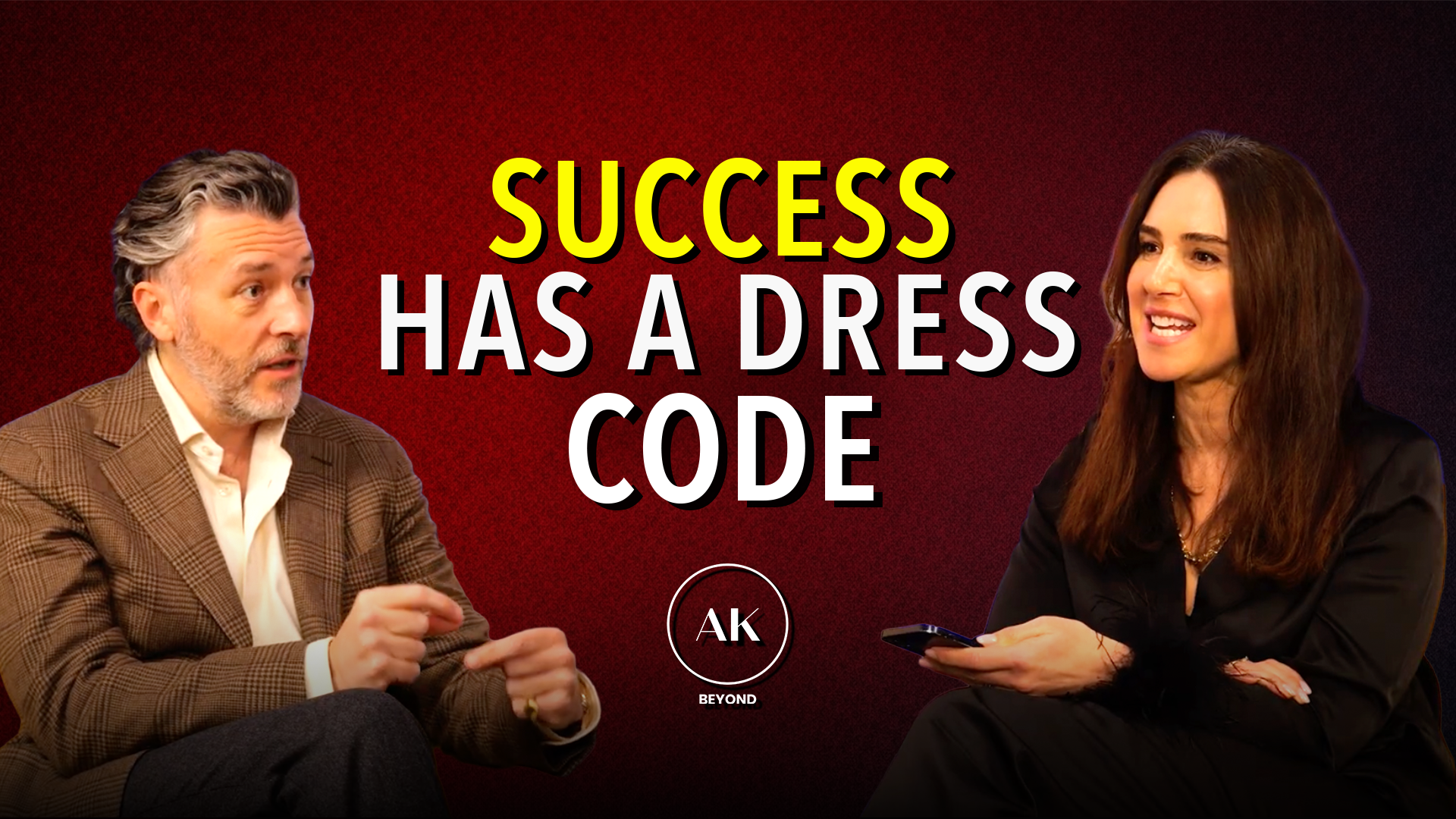
Most guests dress to be liked. Anthony Flynn dressed to be caught.
He stood in front of his wardrobe before the episode and made a deliberate choice. Not the safe choice. The difficult one. Then he sat down opposite Aleksandra King, gestured at himself, and invited her to take him apart.

On The BEYOND Podcast, Anthony Flynn, Director at Evelyn Partners who has spent his working life studying behaviour, argues that clothing is never decoration. It is evidence. Everyone in the room is already reading it, whether or not they have the words for what they see. He came to prove it, and the first person he used as evidence was himself.
"A Little Bit Challenging"
Anthony Flynn begins the episode highlighting how purposeful he is with his choice of outfit.. And he had done more homework than anyone expected. He had thought about the set before he arrived, the block yellow sofa, the block blue wall, and dressed against it, because a guest who turns up fluorescent on that set makes the camera scream. He avoided a blue shirt. He avoided a white one. He went cream.
Then he worked upward from the floor, because that is how he builds an outfit. Shoes first, from a maker he rates as the only shoe company ever to have existed on Savile Row. Dark brown, deliberately sharp but not overdone. Olive socks, knee-high, which he notes is the gentlemanly answer. Grey flannel trousers with a two-inch turnup, grey because it keeps your options open in a way navy quietly closes down. A brown overcheck jacket, because brown and grey is one of the great combinations in menswear.

None of it was vanity. It was a demonstration. He was showing that every one of those choices is legible to somebody, and that he had made them all on purpose.
The Room That Turned On Him
He and Aleksandra then recalled how they had met before, on a course where he presented on the psychology of style. It did not go smoothly.
Two people in the audience took it badly. One in particular. He was not happy, and he saying lines like: "I don't care!", and "I am going to wear this", and "why can't I just wear this?"
It was, Aleksandra recalls, a difficult moment. Anthony's assessment is drier.
"Probably more difficult for him than me."
Because the reaction was the data. People get upset, he says, when a nerve is hit. And he offers what he calls a universal truth, one most people will refuse to accept:
"If you're outwardly saying, 'I really I don't care what people think. I really don't care.' What that really means is I deeply do care."
And he does not leave it there. The rest of the diagnosis, delivered without any particular relish: "I can't compete and I'm [expletive] off about it."
That is the whole method in one line. He is not listening to what the man says. He is listening to the volume he says it at.
"Do You Think I Respect Myself?"
Then Aleksandra put something on the table that she had not resolved. A few months earlier she had met a man who had stopped bothering, wearing whatever and not looking after himself. She tried to lift him, "these people don't think badly of you", and he stopped her cold.
"Hang on, look at me. Do you think I respect myself?"
It hit her, she says, like a ton of bricks. She was still thinking about it months later. She still wanted to help him and did not know how. (That instinct to fix people runs through everything she does on this show.)
Anthony did not treat it as a wardrobe problem for a second. Someone making a conscious effort to disengage is telling you something, and what they need is not a better jacket. It is love, attention and support. Underneath it he hears a loop probably coded in childhood, and a question the man has never been able to answer for himself: do I have permission to feel good, and to present myself as somebody who does?

He Wasn't Judging. He Was Diagnosing.
This is where people get him wrong, and he knows it. Three separate times he stops to say he is not judging anybody.
He means it, and the reason is the sharpest thing he said all hour:
"How we judge other people is secretly how we judge ourselves."
Which makes the whole exercise less comfortable than it looks. When you clock the man dripping in logos, or the one who has given up, you are not reading him. You are reporting on yourself. Anthony's question for the logos is not *is it fake*. It is:
"How much not enough does this person feel?"
And that question does not stay pointed outward for long.
So the man who dressed to be caught was never really talking about clothes. He was making a point about causes. You can buy the jacket. You cannot buy the state of mind that makes the jacket sit right. Get the inside sorted, he argues, and the outside stops being a performance and becomes a simple consequence.
He arrived dressed to be read, because he already knew what the reading would say.
Actionable Takeaways for Ambitious Professionals
- Dress for the room you are actually walking into: Anthony analysed the set before he arrived. Most people analyse the mirror and stop. Context is half the message.
- Listen for volume, not content: When somebody insists loudly that they do not care what people think, that is not indifference talking. Indifference is quiet.
- Ask the question inwardly first: "How much not enough does this person feel?" is a devastating question to aim at a stranger, and a more useful one to aim at yourself.
Watch the Full Conversation
Anthony Flynn's full conversation with Aleksandra King is on the Aleksandra King YouTube channel, the psychology of style, the composure pendulum, and why he would rather you never took his advice at face value.
If this one landed, listen to it alongside Aleksandra's conversation with Lewis Raymond Taylor on why the scoreboard lies: Success Doesn't Equal Fulfillment, A Psychopath's Brutal Honesty. Then browse the rest of the BEYOND archive, the whole show runs on this kind of honesty.
Get the next insight first
Follow the show and the ideas keep coming.