
Blog · 1 September 2026
The Obsession Economy: Bradley Garrett's Playbook for Turning a Niche Nobody Wants Into a Career Nobody Else Can Have
Bradley Garrett built five books, a film role and a freelance career on places nobody looks. His playbook: obsession, proof, and a risk-reward ratio.
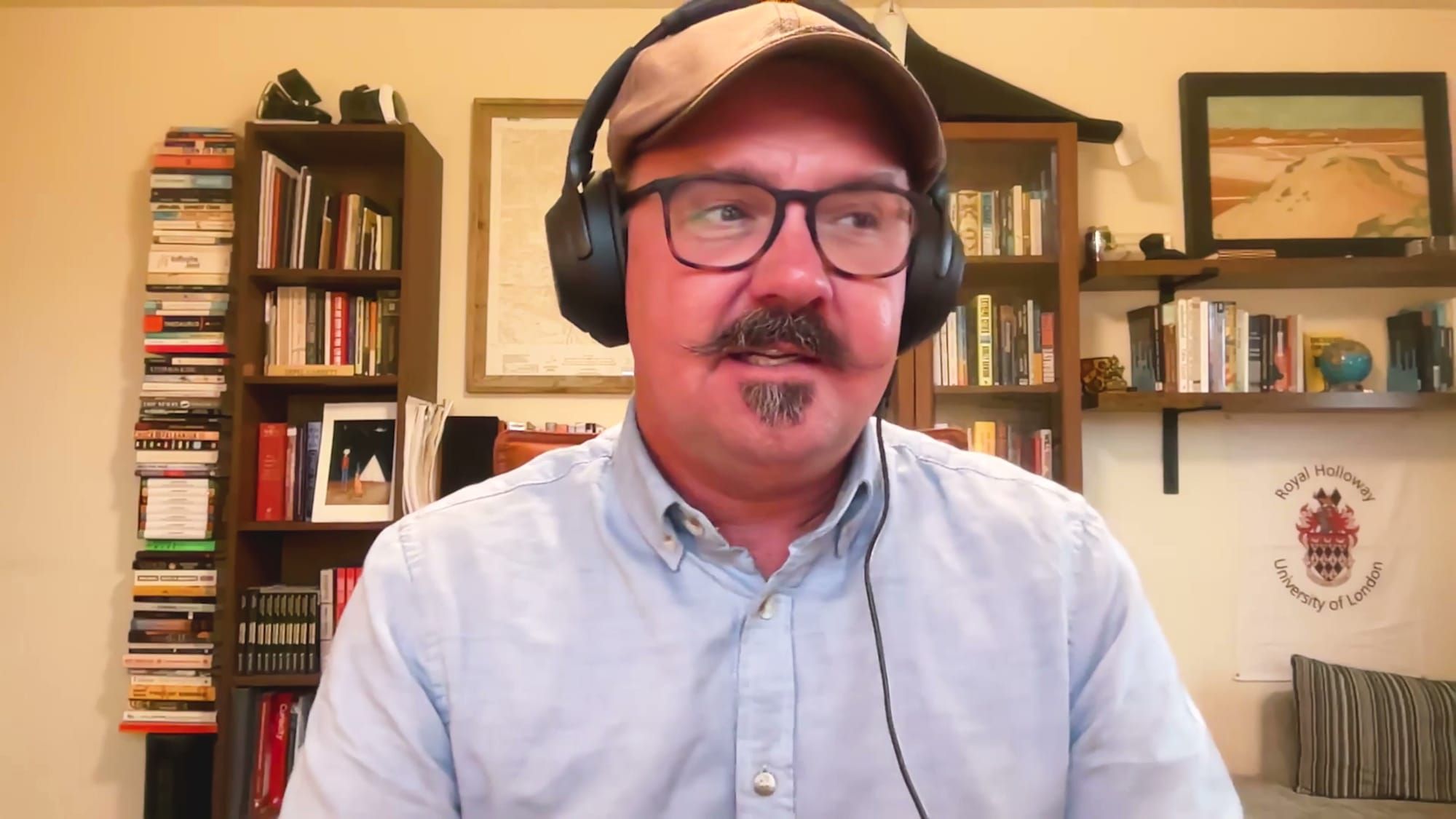
The most defensible market position in the world is the one nobody else is willing to occupy. Every founder says they want an uncontested niche, and then they crowd into the same five industries because the uncontested ones are uncomfortable, unglamorous or hard to reach. Bradley Garrett picked the literal underground, and two decades later he has no competition worth naming.
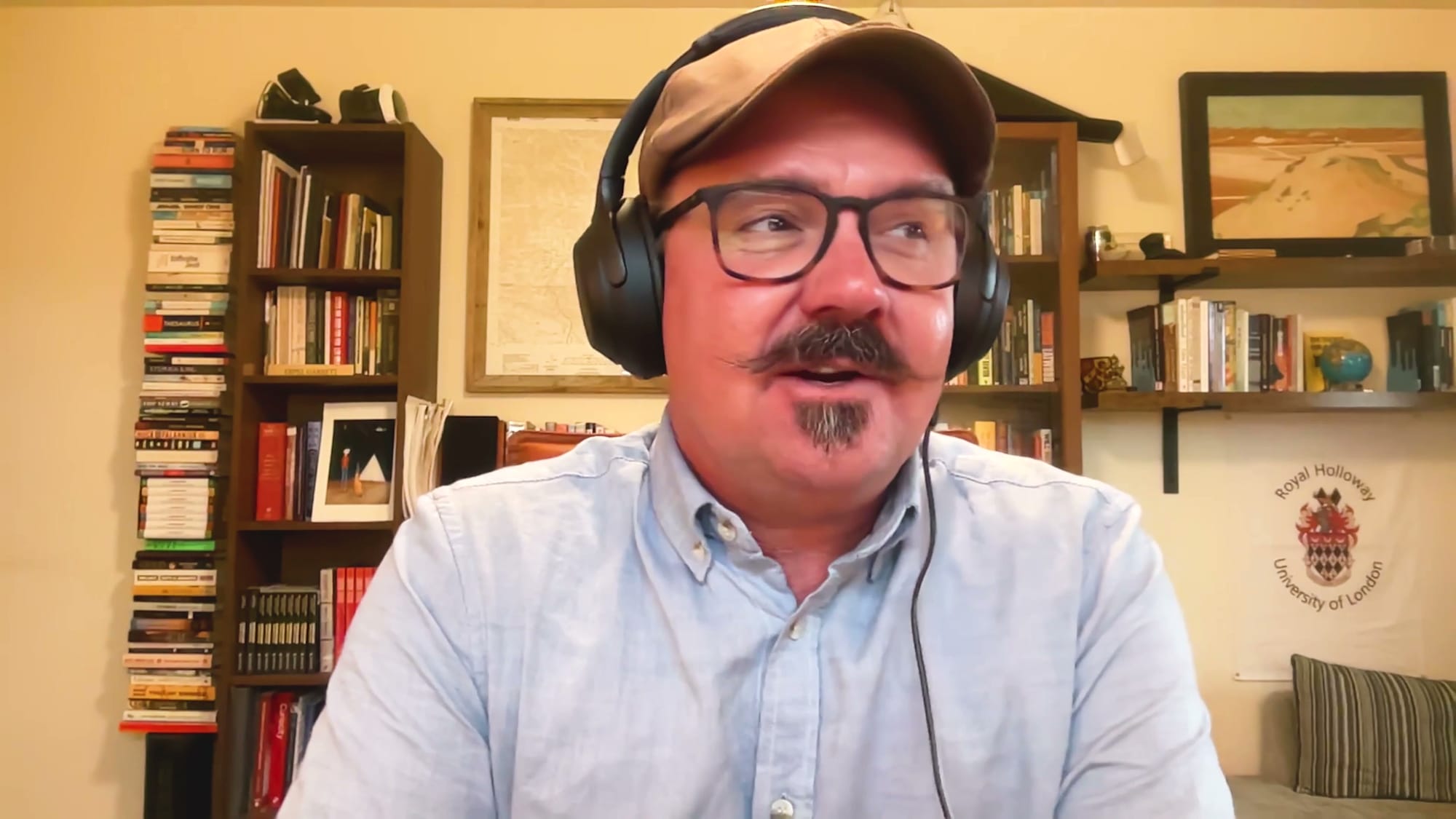
On this episode of The BEYOND Podcast, Aleksandra King unpacks the working method of Dr Bradley Garrett– cultural geographer, photographer and author of five books including Bunker: Building for the End Times. Strip away the trespass and what remains is a repeatable playbook for anyone building a career or a company: find the layer everyone depends on and nobody looks at, document it better than anyone alive, and price your risks like an operator.
The Unseen Layer Is the Undervalued Asset
Garrett's core insight is commercial as much as it is geographic. "Most of our lives are lived on the surface," he tells Aleksandra. "We cruise from work to school to the coffee shop, and we don't think much about what's below us"– yet a city simply stops functioning without its tunnel networks moving water, waste, energy and people. His entire catalogue is built on that gap between importance and attention. "I bring dark places into the light," is how he puts it, and the phrasing is precise: the value is not in the dark places, it is in the bringing.
The business lesson translates cleanly. Attention clusters around what is visible, so the margins live in what is essential but ignored– the infrastructure, the plumbing, the unglamorous layer of every industry. The founder who understands the hidden layer of their market owns something the crowd on the surface cannot copy.
Price the Risk Like an Operator
The popular version of Garrett is a thrill-seeker, and it is wrong. "All exploration is a risk-reward ratio," he says, and the discipline behind that sentence is what has kept him alive and producing. Before the Tube, his crew obtained engineering track maps. Before the sewers, they checked the weather, because a storm turns a buried river deadly. He has crawled away from tunnels full of hanging muck because the odds of finding anything worth a mile-long crawl were poor, backed out of Paris catacomb chambers with cracked roofs, and abandoned an entire mine after finding boxes of dynamite sweating nitroglycerine behind a locked gate.
That is not adrenaline management; that is portfolio management. The rewards he chases are asymmetric– the first photographs from the top of the Shard, the only ethnography of London's explorers– and the risks are examined one by one and declined when the maths fails. Aleksandra draws the parallel directly in the episode: it is the same calculation a founder runs before committing capital, and Garrett agrees. "I've been a business owner as well... everything's a calculation."
Publish the Proof, Then Let It Compound
What separates Garrett from a hobbyist with a headtorch is output. Every expedition became an artefact: photographs, blog posts documenting decaying asylums, an academic paper, then books– Explore Everything, Subterranean London, London Rising, Global Undergrounds, Bunker. The proof compounded into media (60 Minutes, The Joe Rogan Experience), a role in the Underland documentary, and journalism for The Guardian and GQ's world.
The Bunker project shows the method at full scale. When the Wiltshire government bunker he had explored went up for sale, Garrett noticed who was bidding: a doomsday prepper planning to sublet it to paying members. Instead of writing a hot take, he spent five years living in people's bunkers around the world– including Larry Hall's Survival Condo in Kansas, a converted Atlas F missile silo where a half-floor cost 1.5 million dollars, a full floor 3 million, and the whole complex sold out before it was built. He came back with the numbers everyone else lacked, like the FEMA survey finding that 139 million Americans believe they could survive 30 days without infrastructure. That is what being the primary source looks like: five years of fieldwork nobody else would do, condensed into authority nobody else can claim.
Keep Moving Before the Niche Gets Crowded
Garrett is now onto the next unseen layer: tunnels as "the connective tissue of modern life". He has been inside Snowy 2.0, the Australian hydroelectric megaproject boring through Kosciuszko National Park with a tunnelling machine he describes as a spaceship with a city inside it, and his next book– Groundbreaking, for St. Martin's Press– is a 2,000-year cultural history of tunnels. The pattern is consistent: plant the flag while the territory is still empty, publish the definitive account, and move on while imitators arrive. As he tells Aleksandra, "we only have so many years, and I'm not going to spend them working on somebody else's project that I don't care about."
Actionable Takeaways for Founders and Operators
- Hunt the importance-attention gap. List what your industry depends on but never discusses, and build your expertise where dependence is high and attention is low.
- Run the ratio before every commitment. Name the reward, name the risks, and be willing to walk away mid-corridor– declining a bad position is a skill, not a failure.
- Turn every project into a published artefact. Garrett's access today is bought with two decades of visible proof. Work that stays private cannot compound.
Listen to the full conversation on the Aleksandra King YouTube Channel, and browse more episodes of The BEYOND Podcast– including Aleksandra's conversation with investigative journalist Geoff White on the hidden industry of cybercrime, another world that runs beneath the one we see.
Get the next insight first
Follow the show and the ideas keep coming.