
Season 3 · 26 August 2026
Inside the Places You’re Never Meant to See | Bradley Garrett
What is really down there beneath the city– and what would you risk to see it?
Cultural geographer, author and urban explorer Dr Bradley Garrett joins host Aleksandra King on The BEYOND Podcast to reveal what exists beneath and above the city you think you know. Garrett is the author of five books, including Explore Everything and Bunker: Building for the End Times, and his photography and reporting have appeared everywhere from The Guardian to 60 Minutes and The Joe Rogan Experience.
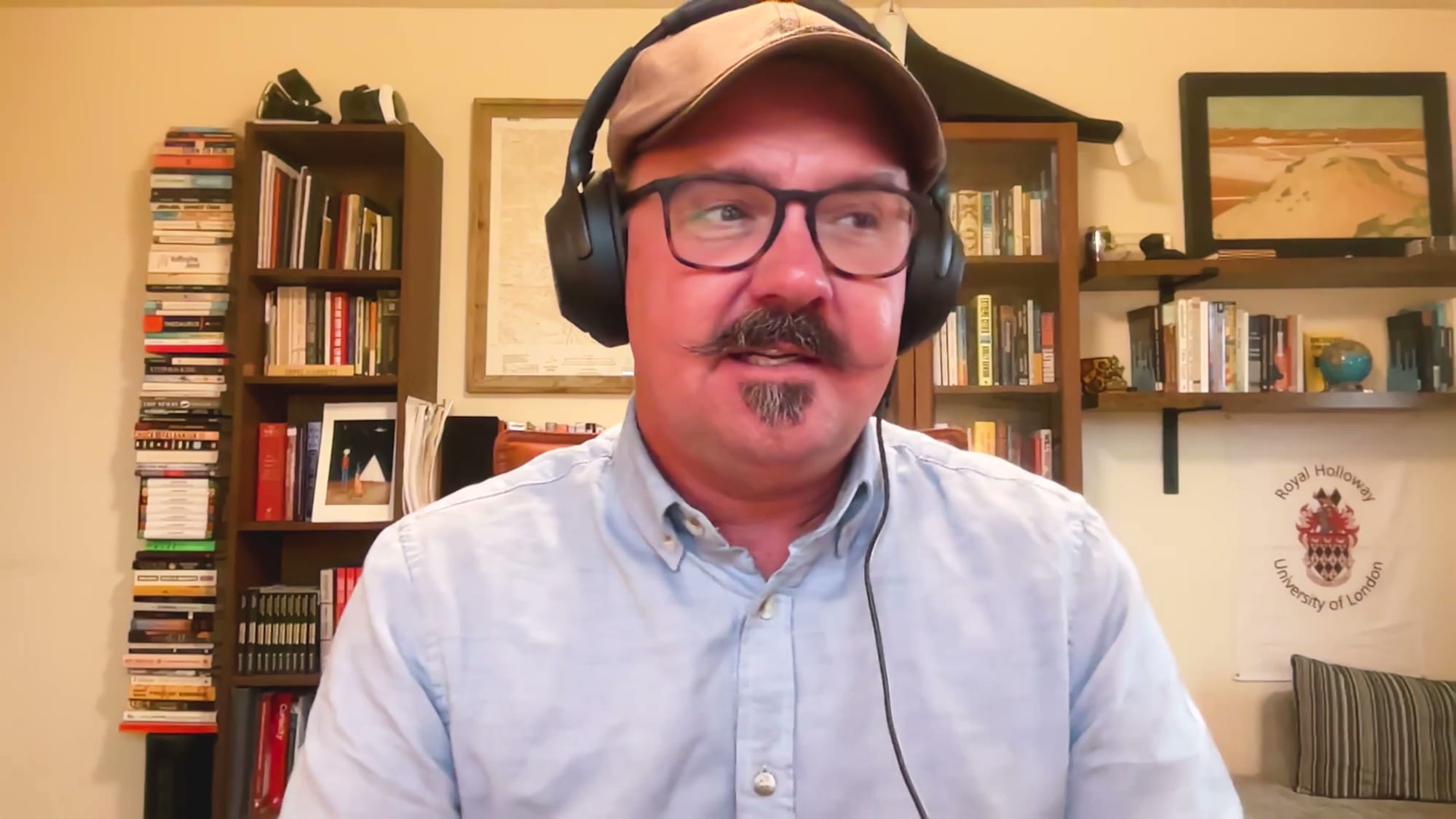
Episode summary
Garrett grew up hunting petroglyphs and abandoned mines on the edge of the Mojave Desert, and a PhD scholarship at Royal Holloway, University of London embedded him with the city's urban explorers, whose night missions became his research and then his life. He takes Aleksandra into London's abandoned Victorian asylums, where patient records still rotted in filing cabinets while trees grew through the hallways, and to Chernobyl, where the guides who call themselves stalkers walked him three days through the exclusion zone to Pripyat.
Below the pavement, he explains, the sewers of London are its buried rivers– the Fleet, the Tyburn and the Wandle, covered over in the 1850s and lined with 318 million hand-laid bricks. His crew crossed the capital underground from Blackfriars to King's Cross without seeing another soul, and a flash flood in the Fleet once nearly trapped them beneath the city with only an unchecked manhole between them and the rising water.
Above ground came the climbs: the concrete spine of half-built skyscrapers, silent crane gantries with a 360-degree view of the city, and the freezing November night his crew took the first photographs ever captured from the top of the Shard. The price arrived on a taxiing plane at Heathrow– handcuffs at seat 42K, a coordinated raid on twelve explorers, a conspiracy charge he calls a thought crime, two years on bail, and an Oxford University job contract lying in the rubble of his battering-rammed flat.
The conversation closes inside the doomsday economy he documented for his book Bunker: the Kansas missile silo turned luxury Survival Condo that sold out before it was built, the 139 million Americans who believe they could survive 30 days without infrastructure, and the philosophy underneath it all– risk as calculation, and expertise built without permission.
“I became an expert without permission, and now I’m offered permission.”– Bradley Garrett on The BEYOND Podcast
Key takeaways
- Follow the reaction, not the plan: Garrett built four careers on the photographs that made people ask how he got there.
- All exploration is a risk-reward ratio: name the reward, price the risks, and be willing to walk away mid-corridor.
- Know where the exit is before you enter– the explorer's rule that applies to deals and careers as much as sewers.
- Publish the proof: five books, first-ever photographs and years of fieldwork turned trespass into invited expertise.
- The most valuable territory is the layer everyone depends on and nobody looks at.
Key chapters
| Chapter | Timestamp |
|---|---|
| Three hours with Joe Rogan, and a fourth career | 00:33 |
| Growing up on the edge of the Mojave Desert | 03:13 |
| The PhD that became urban exploration | 04:48 |
| First mission: London's abandoned Victorian asylums | 07:03 |
| Chernobyl with the stalkers | 11:00 |
| A £5 manhole key and the hidden rivers of London | 15:00 |
| The layers beneath the city, from sewers to bunkers | 17:30 |
| Inside the Clapham deep-level tunnels | 18:17 |
| Flash flood in the Fleet: "everyone cross your fingers" | 20:20 |
| Climbing the spine of a skyscraper | 23:58 |
| The silent, circuit-board city from the cranes | 32:21 |
| The Shard: first photos from the top | 35:40 |
| Seat 42K: handcuffed on the plane at Heathrow | 40:34 |
| Conspiracy, bail, and the Oxford contract in the rubble | 42:09 |
| A terror-coded passport | 46:54 |
| Bunker: inside the doomsday economy | 49:19 |
| The Survival Condo missile silo | 51:55 |
| 139 million Americans and the 30-day question | 54:26 |
| Snowy 2.0 and a 2,000-year history of tunnels | 57:03 |
| Risk-reward, and becoming an expert without permission | 1:00:00 |
The guest
Dr Bradley Garrett is an American cultural geographer, author and photographer known for exploring the places cities are built on but never show: sewers, disused Tube stations, half-built skyscrapers and Cold War bunkers. He has written five books, including Explore Everything and Bunker: Building for the End Times, and is now writing Groundbreaking, a cultural history of tunnels, for St. Martin's Press.
- Website: bradleygarrett.com
- LinkedIn: LinkedIn
Where to listen
Related reading
What Surviving 2 Everest Disasters Reveals About Mental Health | Alex Staniforth.
Transcript
Read the full episode transcript
Interview
00:00:00 Aleksandra King: Hi Brad, welcome to Beyond the Boardroom. Super excited to have you on. You were on Joe Rogan– how long was that conversation with Joe?
00:00:09 Bradley Garrett: It was three hours long and it went by really fast. We were just chatting and then suddenly he was like, well, we're coming up on three hours, and I don't know how that happened. But it was fun. It was actually during the pandemic and I got my first Covid test there. He had stolen a nurse from some hospital, and that was her full-time job, giving people Covid tests for The Joe Rogan Experience.
00:00:33 Aleksandra King: Cool. So for people that don't know you, I don't even know where to begin to introduce you. I'm going to let you introduce yourself, because the things you do are wild, and people are going to love hearing about what it is that you've done. Very cool stuff.
00:00:47 Bradley Garrett: No problem. Yeah, so my name is Bradley Garrett. I'm 44 and on my fourth career, I think, at this point. I had a skateboard shop in my 20s, I became an archaeologist, and then I became an academic. I got my PhD in geography, and just recently I went freelance. So it's been a wild ride. But generally as a geographer I'm interested in subterranean things, which stems from my background in archaeology. So I spent a lot of time exploring spaces underground and trying to tell stories about the cultures of the underground, which often people don't know much about.
00:01:22 Aleksandra King: I think it's also fair to say that you explore forbidden places.
00:01:28 Bradley Garrett: Yeah, a lot of places underground you're not supposed to be in. Access is barred, or they're just really difficult or tricky to get into. And so I ask permission where I can, but if I'm determined to get access to something, I'm absolutely just going anyway.
00:01:47 Aleksandra King: So when you're determined to gain access to these places, you're going anyway. But really the thing that you crave, the thing that you want to explore, is the unexplored, really.
00:01:58 Bradley Garrett: Yeah. I'm a photographer, so I love getting into these places and taking photographs that sort of shatter people's perception about what's possible and what exists. Because most of our lives are lived on the surface. We cruise from work to school to the coffee shop, and we don't think much about what's below us. But there's a whole network of things going on under our feet that make modern life possible. And when you show people photos of those places, and you explain to them, well look, a contemporary city just couldn't exist without all of these tunnel networks that are moving around water and waste and energy and people– when you show people those photos, I think it causes them to pause and to think about where they are in a different light. And that's what I do. I bring dark places into the light.
00:02:55 Aleksandra King: Yeah. There's something about your background as well, your childhood and where you grew up. Because, correct me if I'm wrong, but you grew up near a desert, and you would want to go to this desert, drive there, and then explore these abandoned mines and things, these abandoned camps. Is that right? That sort of triggered that interest in you, to go where you shouldn't, in a way.
00:03:18 Bradley Garrett: Absolutely, yeah. I grew up on the edge of the Mojave Desert, and I actually live here now. It was always my dream to buy land out here. I'm sitting in the middle of the Mojave right now in a massive rainstorm– there's flash flooding outside of my window.
00:03:34 Aleksandra King: That's crazy. That's not normal. That's wild.
00:03:37 Bradley Garrett: No, it's not normal. It's an auspicious occasion today. But yeah, I was doing my degree at the University of California, Riverside in archaeology, and I was driving into the desert primarily to look for petroglyphs and archaeological sites. I was just fascinated to find these remnants of people who had been here thousands of years ago, and to imagine what their lives were like. How did they survive out here in the middle of the desert? And not just survive, but have enough free time to be decorating massive rock panels with petroglyphs. So that kind of was the beginning of becoming interested in spaces that were really hard to access, hard to get to. And I certainly noticed that when I would bring back photographs of these places, the response was often: how did you get there? How is that possible? Where is that? And so, yeah, that's the thing really that drives me– finding these places that people don't usually get to see.
00:04:38 Aleksandra King: And you went to London, which people do see, although not in the way that you've seen it. Why London?
00:04:43 Bradley Garrett: Well, I got a scholarship to do my PhD there, at Royal Holloway, University of London. And originally my project– so one of the things that kind of bothered me as an archaeologist was that I was the expert whose job it was to interpret other people's existence, and I always felt like there's got to be a way to give that voice back to the people that I'm working with. And so I pitched this project for my PhD that was on alternative archaeologies. So I wanted to spend time with these druids that were taking over Stonehenge every year and claiming that it was their ancestral right to use the site in a ceremonial way– I found that really interesting. And then with people who were looking at ley lines, these kind of psychic power lines that are connecting things across the landscape. I thought that was an interesting, sort of folksy interpretation of archaeology. And then the third group were these urban explorers, and they were sneaking into mostly abandoned buildings and telling these incredible stories about their adventures going in there, but also telling the histories of those places. And often these are places that were totally overlooked– you don't find them in history books. So I saw the urban explorers as kind of, I don't know, amateur historians or amateur archaeologists, but the work they were doing was incredibly valuable in my mind. And at some point, maybe three months into my PhD, I had gone out with these urban explorers to sneak into some abandoned buildings, and my supervisor, Tim Cresswell, he said: look, that's the PhD. Just keep going with them, wherever they end up going. And it ended up turning into quite a story.
00:06:41 Aleksandra King: Yeah. We're going to go into this story. But basically you met these guys, and they're doing this urban exploring, and that's like the perfect thing for you, from your childhood, and it's just opened up that side of you, and you think, yeah, I'm going to join these guys. So you join them. What was your first mission, and how addictive did that become?
00:07:03 Bradley Garrett: The first mission– so around London, the Victorians built these asylums. And when people would become physically or mentally ill, they would sort of say, well, you need to leave the city and go to the country to one of these asylums.
00:07:19 Aleksandra King: Like an old country house or something that's got bars on it? How does it look?
00:07:23 Bradley Garrett: Oh, just huge, beautiful estates. Long corridors, striking architecture, beautiful Victorian spaces. During the 80s the Thatcher government shut down most of these hospitals and sort of put the burden of care on families, and it was a very rapid transition– some of these hospitals were shut down kind of overnight. And so they wanted to sneak into those hospitals to see what was left behind. The first one we went into, it's got this beautiful aesthetic of decay– there's rain coming through the roof and trees growing in the hallways. Beautiful spaces. But then we would start opening up filing cabinets, and there would be patient records and X-rays, and we would sit there for hours kind of piecing the stuff together. And soon we were able to write these very long blog posts that were not only documenting the deterioration of those spaces– because every season they would fall apart more and more, and it felt like they were kind of being absorbed by the earth– but also we were able to tell those stories of the patients that were living in those places.
00:08:38 Aleksandra King: I can't believe they've left all these records of all these patients just to rot. I mean, what, for trees to take over, for it to get rained on, pigeons coming in– you can just sort of imagine the whole thing. We talk so much about data privacy today, and it's totally unacceptable. But hang on, hang on. So you're literally opening up these filing cabinets and you're finding the whole medical history– whether they had a bipolar thing going on or whatever. You've got the full view of all these people. And that's spooky, though, isn't it? You're in this abandoned place, and these are like ghost stories going on here. Were you scared?
00:09:22 Bradley Garrett: Yeah, they were incredibly eerie. I think that's part of the joy, part of the fun. They're also patrolled by security, and so we had to kind of evade the security guard– get in through a window, sort of hide out somewhere, and then move through the corridors very carefully, sometimes belly crawling from room to room so that we weren't caught. But at the same time, yeah, they did feel haunted in a way.
00:09:49 Aleksandra King: Haunted, really? And that was kind of part of the fun, for sure. Why did they feel haunted? What was it? Did you hear things? Did you see things?
00:10:00 Bradley Garrett: Well, they weren't spectral in a physical sense, but the building is creaking, and you can feel, as I said, the earth kind of swallowing this place as you're sitting there.
00:10:13 Aleksandra King: And there are like rats and things? Rats running around?
00:10:17 Bradley Garrett: Oh yeah. And you could definitely feel the presence. There was a kind of weight there. I don't know, it's hard to describe. It's a kind of affect– it's something you feel in the body, that eeriness.
00:10:34 Aleksandra King: Do you know what the closest I can think of to what you're describing is– and it's fascinating, this abandoned asylum with trees growing out of it– I don't know if you've seen the footage of Chernobyl, what it looks like after the nuclear disaster, with everything just– the classrooms with all the dust on them, and the town, and all broken swings. And it's super, super spooky.
00:10:56 Bradley Garrett: Yeah, I've been there.
00:10:57 Aleksandra King: You've been there? Stop it right now.
00:11:00 Bradley Garrett: Yeah, I went in 2017, before the war. And there's a group of urban explorers there called stalkers, and they come straight out of– I don't know if you've seen the movie Stalker from the 70s, the Tarkovsky film?
00:11:12 Aleksandra King: I will not. Yeah, no.
00:11:14 Bradley Garrett: It's an absolutely beautiful film. And I'll tell you, here's another very eerie thing to think about: the book that that was based on was written long before the nuclear disaster, and if you watch the film, at the end of it they end up in room number four– and it was reactor number four.
00:11:35 Aleksandra King: No, no, no.
00:11:36 Bradley Garrett: So the book is totally prescient. It's really bizarre. But in any case, then it gets weirder–
00:11:44 Aleksandra King: Oh, that is weird.
00:11:46 Bradley Garrett: It gets weirder, because in the book and in the film, the people who take you into this space, they're called stalkers. So now the stalkers are real people. You pay them and they will figure out how to get you past the security patrols and get into the exclusion zone, the zone of alienation. And we walked for three days, sleeping in abandoned buildings, to make it to Pripyat, the city that had half a million people in it and is now completely empty. And we went through it floor by floor, tower by tower. It was amazing. And they were building the new sarcophagus over reactor number four at the time, and we went up there with some snacks and some beers one night, and there was a lightning storm, and we were watching lightning bolts strike the sarcophagus on reactor number four. It was the most amazing thing.
00:12:40 Aleksandra King: Wow.
00:12:41 Bradley Garrett: I'll send you a photo of it. It's quite incredible.
00:12:43 Aleksandra King: We have to include it for the audience. Yeah, that's crazy. Wow. So you've seen some things. You put yourself in really weird situations. I mean, were you not scared of the radioactive dust and things? And did you wear a mask?
00:13:03 Bradley Garrett: No. The stalker that we were with, he'd been in there a hundred times, and he had a dosimeter, so we were keeping an eye on radiation levels. But there's always a possibility that you kick up a gamma particle and swallow it, and that's the end of you. And again, that's part of the thrill, I guess.
00:13:20 Aleksandra King: What a thrill.
00:13:21 Bradley Garrett: But check this out. There was a giant nuclear bunker sort of deep in the exclusion zone, and we went in to explore this thing as we were passing through, and there was a smouldering fire inside– so someone else had been there. And the stalker that we were with, he said, you know, this is really sad. I said, well, what's going on? He said, all of that wood is totally radioactive, and they were breathing it all night in the campfire. He's like, they're all dead, whoever that was.
00:13:54 Aleksandra King: That is– yeah, it's wild, isn't it? It's so wild. But also what's wild, literally, is the animals that are there that seem to thrive. You've got all these wolves and owls and all these animals, huge fish in the river. They're fine– they've adapted.
00:14:13 Bradley Garrett: Yeah. Well, we're so anthropocentric, we imagine that the post-apocalyptic world without us in it is going to somehow fall apart, or there would be nothing there. That's absolutely not the case. Everything thrives when you take humans out of the equation.
00:14:31 Aleksandra King: Yeah. So you're in this asylum, you're finding out all this stuff about these people, and that's luring you even more, even more, even more. So from then, what do you– you've got a thrill like that, what's next? What do you do?
00:14:47 Bradley Garrett: Well, the next thing the explorers wanted to start getting into was infrastructure in the city. So they wanted to see the sewers, the power tunnels–
00:14:57 Aleksandra King: Why? Why do you want to go–
00:15:00 Bradley Garrett: Oh, so I'll tell you. Most people don't understand this, but as you're walking through London, you're walking over manholes all day long. And you can literally buy a manhole key on Amazon for like five quid and go open these things up and get inside the sewers. And the sewers of London used to be rivers. They were covered over in the 1850s, and so essentially what you're walking through are the hidden rivers of London.
00:15:28 Aleksandra King: You can walk through? Wow.
00:15:29 Bradley Garrett: Yeah. The Fleet, the Tyburn, the Wandle. And the really amazing thing about these sewers is the way they built them– it's called cut-and-cover, so they cut a trench in the ground and then they would lay bricks inside and then cover it up. That's how they built the sewer system. And there are 318 million hand-laid bricks in the system. And when you get to these junctions where there's multiple rivers coming together, they're some of the most beautiful places you can imagine.
00:16:02 Aleksandra King: Oh really?
00:16:03 Bradley Garrett: Yeah. And the explorers were telling me this. They were like, no, the sewers are gorgeous. I was like, okay, well, do you have a picture? Take a picture.
00:16:11 Aleksandra King: Okay, we'll try and put that in as well. I mean, explain it.
00:16:15 Bradley Garrett: So, what we were able to do in the sewers– in addition to just seeing this beautiful architecture that most people rely on and don't know is there, we were also able to cross the city. So we could kind of pop in at Blackfriars and walk the Fleet up to King's Cross and pop out of another manhole, and it felt like magic, right? We crossed the city without seeing another human being, and it felt very much like exploring the wilderness, but it was under the city. You know when you're backpacking on a trail and you're alone, you don't encounter anyone else– we kind of had that experience in the city, which is incredible.
00:16:53 Aleksandra King: Just so I get my head around it: when you go underground– everyone knows the London Underground, well, most people will know the London Underground. You go down the stairs and you're on the Underground, and you've got different levels of underground. So the Circle and the Metropolitan line and those guys, District, they're higher up, and then you sort of go lower down, and then the Northern line and those guys go deeper and deeper and deeper. So in terms of layers, where are we talking?
00:17:16 Bradley Garrett: So this is really fun, because as an archaeologist, when I was excavating a site, you expect that the oldest material is deeper, right? So you're digging through time into the past.
00:17:29 Aleksandra King: Yes.
00:17:30 Bradley Garrett: But in a city it's the opposite. As you say, all of the new stuff has to keep going below what's already there. And so the sewers are the first layer under the city. And below that you have gas, water, fibre optics, telecommunications, all these kind of utility tunnels. Below that you have the Tube. The Tube connects to bunkers, some of which were built during World War II and some during the Cold War. And then below all of that you have all the new stuff– the super sewer, the Crossrail.
00:18:05 Aleksandra King: Wow. Crossrail. Crossrail has a new name now, doesn't it?
00:18:09 Bradley Garrett: Yeah.
00:18:09 Aleksandra King: So the bunkers– are they still there? So you can go out and hide there? How big are these things?
00:18:17 Bradley Garrett: So, I lived in Clapham in London, and Clapham South, Clapham North and Clapham Common have extensive bunker systems attached to the Northern line. There, I would say, there's probably eight miles of empty tunnels.
00:18:36 Aleksandra King: Really?
00:18:37 Bradley Garrett: And– actually, actually not completely empty, because Clapham Common was the last one we did, and we abseiled down a ventilation shaft and squeezed through an extractor fan and popped out inside a secure file storage that was owned by Iron Mountain. We didn't know that was in there, but once we were inside, we were like, well, we might as well dig through all the documents. That was fun. We found a box of old BBC cartoons on tapes that no one knew what the tapes were– it was an obsolete form of media. It was really cool.
00:19:12 Aleksandra King: So no one's going into these places, really. They're kind of just closed down, abandoned. But it's good to know, for anyone living around Clapham– you've got your little safe space to go down. But yeah, you'd have to know to go down there, you'd need to have the key, and then you'd have to know how to navigate. But isn't it dangerous down there? What happens, I don't know, when it rains and things?
00:19:34 Bradley Garrett: The only place it's not safe to be when it rains is the sewer system, obviously, because it's a combined system. So storm water, sewage, rain runoff– it's all going in the same–
00:19:44 Aleksandra King: Yeah, I was thinking in that river, the river thing that you were talking about, the whole connection of all that. That must be–
00:19:52 Bradley Garrett: Yeah. I mean, when you go underground, you're totally disconnected from the surface. Your phone doesn't work, you're not getting weather reports or weather alerts, and so you really need to think about it before you go down and make sure that there's not going to be an unexpected rainstorm. And that did happen to us once. I was with musician Cosmo Sheldrake, and he wanted to make a music video in the Fleet.
00:20:18 Aleksandra King: Yeah.
00:20:20 Bradley Garrett: We went down there and had video cameras and sound mixing equipment, all of this stuff. And then I'm standing in the tunnel– there's these smaller side tunnels, it's kind of like arteries and veins– but the veins start pumping in water, and I said, I think we should probably pack up now. But the problem is we had come in the manhole sort of upstream, so going upstream pretty quickly was not an option anymore. So we basically had to go down to the Thames and just hope that the manhole opened.
00:20:58 Aleksandra King: Oh gosh. No, no.
00:21:00 Bradley Garrett: Yeah. But we got down there, and I climbed up the ladder, and I was like, everyone cross your fingers. And the manhole opened, and we all clambered– climbed out.
00:21:08 Aleksandra King: Listen, that's too close to the bone, man. That is– oh, that's freaking– I've got literally my hairs– that's scary. Because you didn't know. You didn't check it before. You can't possibly know. That's really cutting it. That's dangerous living.
00:21:24 Bradley Garrett: So check this out, here's another weird story. The cameraman that was shooting that music video, Ruben, Ruben Dechamps– he was not very happy about what had happened, you know, bad planning on my part. And– Robert Macfarlane's new film Underland, Rob Petit directed it, but it's based on Robert Macfarlane's book Underland– I'm one of the characters in the film. And when the film crew showed up in Las Vegas to go into the storm drains, guess who the cameraman was. And he was like, you have to be kidding me. You're taking me– now we're in another country, whatever, four, five years later, and you're taking me into a storm drain again. It was absolutely hilarious. And then while we were there, he was nominated for an Emmy.
00:22:13 Aleksandra King: So cool. Wow, so cool.
00:22:15 Bradley Garrett: But yeah, there's these characters in my life that I've met through exploring.
00:22:23 Aleksandra King: Oh, you must meet the best people.
00:22:26 Bradley Garrett: So many fascinating people. But they tend to pop up again in other places. So I'll be underground in some other part of the world and it's like, oh look, it's somebody I know, in the Paris catacombs, randomly. It's pretty fun.
00:22:40 Aleksandra King: Yeah, it's just mad how you're going around, your brain wants to go into all these places, and then it is dangerous. It's literally very, very, very dangerous. And we're going to talk about those dangers, because they continue. And it's not just underground, is it? No. You've done some dangerous stuff above the ground. Talk us through.
00:23:04 Bradley Garrett: Yeah. So in addition to exploring those kind of layers under the city, the explorers at one point wanted to start sneaking into construction sites where skyscrapers were being built. And the archaeologist in me was like, look, I really don't care about a construction site, I don't want to go in here. And then one of the explorers said to me: Brad, it's like archaeology in reverse. We're building the thing that's going to fall apart later, so you can just enjoy it in that way. Oh yeah, that totally makes sense. So we started getting into construction sites, and then climbing the sort of core of skyscrapers before they were built.
00:23:40 Aleksandra King: So how do you climb the core of a skyscraper? I mean, we're not encouraging people here– don't get the key for the manhole, and do not try and do this. But you did. How do you do it? Because there's scaffolding, but there's not– they've got these cranes, and they've got– it's complicated.
00:23:58 Bradley Garrett: There's scaffolding, there's barbed wire, there are security patrols. Sometimes they have laser sensors in the stairs. Absolutely never take the lift under any circumstances, because you don't know– they leave the site and they shut the power off and you get stuck in there or whatever. Also the security patrols can probably see that being used. So yeah, we would take the stairs, or sometimes climb scaffolding and then sort of get in through a window and then get to the stairs. There's usually a concrete core to a building, and then they kind of build around it. And so that core is usually where the lift and the stairs are, and that's the first thing that they– it's like the spine of a building.
00:24:45 Aleksandra King: The spine, the spine of the building.
00:24:45 Bradley Garrett: It's the spine of the building, exactly. So you can kind of climb the spine and then sometimes pop out of a hatch on the top, and then you're on top of this thing with all the construction cranes, and then you can climb the cranes.
00:24:58 Aleksandra King: Oh, I wouldn't want to climb the crane.
00:25:01 Bradley Garrett: Oh, it's so much fun. You get out on the gantry and you can kind of poke your head over the side, and you're 50, 60 storeys up and looking down at the city, and you can't hear anything. It's completely silent.
00:25:15 Aleksandra King: If it's windy–
00:25:16 Bradley Garrett: If it's windy, yeah, we'd probably pick another night.
00:25:17 Aleksandra King: You'd probably pick another night, yeah. Wow. So you're obviously not scared of heights.
00:25:23 Bradley Garrett: No. I feel like I understand people's fear of heights, absolutely. But I just think, this is somebody's work site. There are construction workers who are up here every day, walking on the gantry and climbing the cranes, and I think if it's safe for them, it's safe for us. So I just keep reminding myself that as long as you have kind of three points of contact– make sure you've got two hands and a foot on something at all times– the likelihood of falling off is pretty low. That being said, there are a lot of explorers that do stupid things. People doing pull-ups on cranes and doing flips on the–
00:26:00 Aleksandra King: Yeah, there are the ones for the photo. And lots of it goes wrong.
00:26:05 Bradley Garrett: Yep.
00:26:05 Aleksandra King: So how much safety stuff do you think about when going into this thing? Do you consider some of the dangers, and do you plan for them at all?
00:26:15 Bradley Garrett: Well, yeah, there's a lot of planning that goes into exploring. So like I said, with the sewers, you absolutely have to look at the weather. You have to know what's happening with the weather before you go down there. In the power tunnels, you've got to be careful not to touch certain things– you'll get electrocuted, obviously. Exploring the Tube is extremely dangerous, so we had engineering track maps and we knew when the trains coming– yeah, so we were extremely careful about when we went down. You have to think about these things a lot, and the most important thing, always, is to make sure that you know where the exit is, and that you have one. Because that is the worst possible scenario: you get stuck underground somewhere and you can't get out, and–
00:27:01 Aleksandra King: Horrible.
00:27:03 Bradley Garrett: You can't call anyone. I mean, you just eventually starve down there, I don't know. It would be awful.
00:27:09 Aleksandra King: Yeah. I mean, I get this fear of the London Underground anyway. I don't like it when it stops between the two tunnels and you're sort of stuck there, and you're just conscious of, I'm in this different world here. It's a bit claustrophobic, and you sort of think, where's the exit? But you can't really get out, because you're in this little tin thing, and it's all a bit– but you don't get scared that easily, I think.
00:27:33 Bradley Garrett: No. And as you say, if you know what the dangers are– don't touch the third rail, make sure you know where there's an alcove that you can get in if a train happens to come through–
00:27:45 Aleksandra King: Oh yeah.
00:27:46 Bradley Garrett: That kind of stuff. All exploration is a risk-reward ratio, and there's stuff that I've walked away from, because I'm like–
00:27:58 Aleksandra King: What have you walked–
00:28:00 Bradley Garrett: It's risky and it's not worth it.
00:28:02 Aleksandra King: Like what, for example?
00:28:03 Bradley Garrett: Well, so, a couple of the sewers that we went into– we would pop the manhole and get down there, and they would be not standing height, so you'd have to kind of crawl through them.
00:28:16 Aleksandra King: No. No way.
00:28:19 Bradley Garrett: Yeah. And often there would be– this is nasty, but there would be kind of like muck hanging from the ceilings, and there would be toilet paper and tampons and all sorts of stuff kind of wrapped up in it. And we would look down those tunnels and it's like, realistically, risk-reward: what's the possibility we're going to find something really cool if we crawl a mile through this? And then you back out. Other times– there are a couple of places in the Paris catacombs, which are amazing, there's like 160 miles of tunnels underneath Paris, they go on and on– but there's a couple of places that we got into where the roof was cracked, and you just imagine, not stone coming down on you, but the city coming down on you. And so you back out. We're not doing that. Okay, I'll give you one more. So I've been exploring abandoned mines lately. Me and my buddies went into an abandoned mine and there was a gate, like deep down in the mine, five storeys deep. And my buddy picked the lock on the gate backwards with a phone. So he put it on selfie mode and he picked the lock backwards– it was really cool. And we popped the gate open. We're like, let's see what's in here, it's got to be something good, right? And it was explosives. There were boxes and boxes of dynamite, and they were sweating– you could see the nitroglycerine kind of sweating through the wood. And that was another moment where we were like, we're leaving the entire mine.
00:29:56 Aleksandra King: Yeah, out. Not worth it. Mines are freaky places. They're really hot, the lower down you go, as well. You sort of feel it, and the pressure–
00:30:06 Bradley Garrett: Oh yeah, I don't like it. I want to go see some of these mines in South Africa that are like–
00:30:12 Aleksandra King: You need to go deep. Yeah, I've been down them. And as you go down, and you go down such a long time, and it's this rich– well, it was in those days– and it just gets hotter and hotter and hotter, and you really do feel like you're on your way to the core of the earth. And then you get down there and it's just rocks and heat. But there's gold in the rocks. So when you're standing in these tunnels, you just see little bits of gold. Pure gold.
00:30:40 Bradley Garrett: Oh, it's amazing. I do recommend it. And it's amazing that human beings do this. That's what blows me away– these incredible feats of engineering underground. And you wouldn't see them, you wouldn't know about them, unless you made a conscious effort to be like, I'm going to go try and understand that. And I'm never disappointed when I go into these subterranean spaces. And then, imagining the amount of sweat and toil and labour and death inside these spaces– that's part of what makes them eerie to be in, knowing that people sacrificed so much to extract this stuff, and we don't even think about it.
00:31:24 Aleksandra King: Yeah. I mean, things have developed along the way. I know, especially in South Africa, for mining safety, and the equipment that you wear, and the technology's moved on, so things have definitely improved. But yeah, it remains awful and dangerous. But we're moving out of the undergrounds– we're back there, we're climbing that core, we're going up. And what's next? What's the experience, and how is it different from underground for you?
00:31:49 Bradley Garrett: The experience of being on top of a skyscraper by yourself– it gives you a really good sense of where you are in the city. Because you're not looking through a window. Usually in a building you can see out of one side or the other, right? But if you're at the top of this core, on a crane, you have this 360-degree view of the city.
00:32:10 Aleksandra King: Wow.
00:32:11 Bradley Garrett: So it gives you a really good sense of place. But then also, as I mentioned, you can't hear anything. You're so high up that there's no noise.
00:32:20 Aleksandra King: That's so weird.
00:32:21 Bradley Garrett: Yeah. You look down at the city and it kind of looks like a circuit board– there's all these little kind of nodes and things connecting it, and you can see all the lights of the city, and sometimes you can see things moving around, but it's totally silent.
00:32:36 Aleksandra King: Gosh.
00:32:38 Bradley Garrett: Those moments definitely make it worth it. Especially when you've climbed like 60, 70 storeys on stairs– you're pretty tired by the time you get up there.
00:32:48 Aleksandra King: That's the reward. I wonder how similar this is to those guys climbing Everest. Although when you're stuck in a tourist queue, that probably takes some of the magic away. But there was a guy who did it out of season recently– it was a Polish guy, and I think he walked up quickly, because he was quite light, but then he skied down, and it was only him and the guide, and I think that probably made it nicer. But you probably get to the top there as well, and it's got that perspective. I think it's probably a bit spiritual. Did you feel a bit connected to greater things? I don't know– what emotion did it bring out of you?
00:33:26 Bradley Garrett: Yeah, it does give you this sense of just utter privilege. Like, I feel so lucky that I'm able to have this experience that so few human beings are able to have. And it is very peaceful. And then you have the adrenaline rush of getting away with it. As you say, it would be completely different if someone took you up there, right, and it was this kind of guided tour. I lived in Sydney for a long time, and people climb the Harbour Bridge on these tours, and you're clipped in and you're with ten people– and yes, it's an experience, but it's a very different experience than going in the middle of the night and climbing up there by yourself, without anyone telling you what to do or how to do it. There is a spiritual aspect to it. And the adrenaline is sort of going the whole time that you're in there, because you still have to get out of the building too. So there's always a fear that someone sees you on the crane, and then they call the police, and then the police surround the building, and then you've got a problem. So as you're coming down, and you've got this memory card full of photos, and your head is– you're feeling that euphoria of having had this amazing experience– then you have to run from the core to the fence again and jump over and get out into the street and kind of blend in with the crowd. And then you have the release, and that is the best feeling, when you're like, we did it. No one knows we were there. And then you come home and you look at these photos, and you know that when you post these photos online, there's going to be a reaction. People are going to be like, how did you get there? How did you get these photos? Who let you in? And it's such an amazing feeling to know: no one let me in. I did that all on my own back.
00:35:25 Aleksandra King: You did that. And you made headlines for it, didn't you? For climbing the Shard, right?
00:35:32 Bradley Garrett: Yeah. The Shard turned into a bit of a spectacle.
00:35:35 Aleksandra King: Tell us– what was the spectacle?
00:35:40 Bradley Garrett: The Shard was under construction at the time, and they had finished the core. And so the group of explorers in London that I was working with were all kind of trying to coordinate, you know, what's the right time to tackle the Shard? Because once we get in there and we take the photos and we put the photos online, it's going to blow up the site, right? They're going to increase security.
00:36:05 Aleksandra King: Yeah. Just for people that don't know, the Shard is one of the tallest buildings, right? In the world– like, it's tall.
00:36:13 Bradley Garrett: Yeah. At the time it was built, it was the tallest building in Europe, for sure. But yeah, it's massive.
00:36:20 Aleksandra King: I mean, that's a challenge. But you guys decide– timing, trying to work it out. And then you do it.
00:36:29 Bradley Garrett: So we went in– it was a really cold night, I remember. And we climbed up this scaffolding where we could see the security guards, and we were laying there, shivering–
00:36:42 Aleksandra King: What time was it? What month?
00:36:44 Bradley Garrett: It was like 2:00 in the morning. November.
00:36:47 Aleksandra King: Oh yeah. Cold.
00:36:48 Bradley Garrett: Yeah, super cold, and it was kind of drizzling. But anyway, so we're shivering and freezing, and we're watching the security do their patrols around the site. And then eventually he went into this little shack, and we could see him on his phone– we could see inside there– and we were like, this is it. This is it. So we climbed down the scaffolding very quietly– you have to go sort of hand over foot, very quietly, and make sure that it doesn't shake or rattle– and where it drops down, it's right in front of the security hut. So then we crawled under the window, like Scooby-Doo, past the security guard, and then ran into the middle of the building. Anyway, the views were absolutely spectacular.
00:37:34 Aleksandra King: How long did it take you to get to the top? Because you're not using elevators. So you've got to– that's quite a– I mean, your muscles must get really sore.
00:37:42 Bradley Garrett: Oh yeah, you're completely exhausted by the time you get to the top of the thing. I think it took about 45 minutes to get to the top of the building, and then once you're there, then you're on ladders going up the cranes. So yeah– spectacular. But we got these amazing photos, and they were the first photos ever taken from the top of the Shard. So when we posted them, it just turned into this total media frenzy. And the weird thing is, a lot of the explorers use pseudonyms– they operate anonymously. They have jobs. They don't necessarily want their employer to know that they're doing this on the weekend or whatever. But I was a researcher studying them, and so there was no way to hide my identity. People can just find me on University of London's website and be like, that's the guy in the pictures, and obviously he was there.
00:38:43 Aleksandra King: So you got into trouble.
00:38:45 Bradley Garrett: Well, so my phone started ringing off the hook, and I've got every news organisation wanting to do an interview. And I talked to the guys about it, and they're like, well, it's your PhD, you're the one writing– we all kind of agreed that this stuff was going to be published eventually anyway, so go for it if you want to do it. So I ended up on morning talk shows and whatever– things I never do.
00:39:12 Aleksandra King: I found, as part of the research, loads of information about this, honestly.
00:39:20 Bradley Garrett: Yeah, no, it was pretty crazy. As a PhD student I'd never had that kind of media exposure. And it was a little tricky for the university, because on the one hand they're like, wow, this is such a successful PhD– obviously it's engaging the public, it's potentially bringing in new students, because now this geography programme looks super cool. But then also the media is calling the university, and it's a little overwhelming for them. And eventually we came to find out that the police were also starting to get involved in the background.
00:39:55 Aleksandra King: So yeah, okay, that's kind of like the next chapter of this thing. After all of the wins– you had a lot of wins, and there were lots of places you explored– but yes, let's go to that chapter. You're on an aeroplane, and you're about to land in Heathrow. Everything's good at this point. So talk us through that. You have to put your seat belts on, ladies and gentlemen, this aeroplane's about to land, please put your seat belts on. The aeroplane then lands. What happens?
00:40:34 Bradley Garrett: So they taxi in, that little ding goes off, ding, and everyone unbuckles their seat belts. And then they get on the intercom and they say, everyone please get back in your seats, the police are boarding the plane. And in the back of my head I was like, could that be for me? I'm like, no, there's got to be something else going on. And British Transport Police get on the plane, and they're like, 42K. 42K. Dr Garrett. I'm like, oh, it's me. And they said, you're coming with us. They got me out of my seat. They handcuffed me on the plane.
00:41:13 Aleksandra King: They handcuffed you on the plane? And everyone's looking at you, and you're thinking what?
00:41:18 Bradley Garrett: Yeah, and everyone's like, oh wow, he's a terrorist, or he's smuggling drugs or something terrible, of course. And they take me to baggage claim and they're like, point out your bags. And then the police take my bags, and then they took me through passport control. And of course, you know what happened then– I had a US passport, so they took my passport.
00:41:38 Aleksandra King: Wow. And then, are you freaking out at this point?
00:41:44 Bradley Garrett: Yeah, I'm totally freaking out. It's not that I didn't expect it to happen at some point. I just didn't expect it to be that dramatic.
00:41:52 Aleksandra King: It's so scary.
00:41:53 Bradley Garrett: It was so over the top. I'm like, really? For sneaking into buildings you're going to arrest me on the plane? You've got to be kidding me.
00:42:00 Aleksandra King: So what was the charge, in their mind? Is it breaking and entering? What's the accusation?
00:42:09 Bradley Garrett: What they charged me with– this is the craziest part of the whole thing– is, they had no evidence that we had damaged anything, so they couldn't charge us with criminal damage. It turns out, by the way, that when they arrested me, they arrested 12 other explorers at the same time. It was like a coordinated raid across the city. So they charged us all with conspiracy to commit criminal damage, which is a thought crime, essentially.
00:42:33 Aleksandra King: You didn't conspire, though, to destroy anything.
00:42:37 Bradley Garrett: Well, what they were telling me is that they only had to prove that we had coordinated and communicated with each other to go into these places, and then we were reckless as to whether damage could be caused–
00:42:50 Aleksandra King: Oh, I see.
00:42:51 Bradley Garrett: –in the course of these explorations, and so we were guilty of the conspiracy. And the conspiracy carries a longer charge than criminal damage. So they were really going for it.
00:43:03 Aleksandra King: I understand. Yeah.
00:43:06 Bradley Garrett: So when the plane landed, I was supposed to meet this journalist, Matthew Power. He was an amazing guy. He was writing an article for GQ about the explorers, because of the Shard– we had all this media exposure, and then the kind of newspapers turned into magazines. Anyway, I was supposed to meet this journalist, who had flown there from New York, at the airport. Obviously I didn't show up. And he's like, waiting, and I never arrive. And eventually he gets a cab to my flat in Clapham, and the front door had been taken down with a battering ram. And he's like, something's happening. Meanwhile, I was in jail. They kept me for a couple of days or whatever. And when they finally took me back to my flat and threw me the keys to the padlocks on my busted-up door, the journalist was there– Matthew Power was there. And he was like, dude, I can just go home right now. I've got the whole story.
00:44:04 Aleksandra King: You know, this is a good story with you, yeah.
00:44:08 Bradley Garrett: But then it got better, because I had finished my PhD at this point, and when I unlocked the door and I opened it up, I had a job contract from Oxford University sitting in, like, the rubble of my flat. And he was just like, this is so bizarre. And I was like, yeah– I need to sign this and send it back right now, before it ends up in the media that I've been arrested. It was a really crazy time. And we were on bail for two years awaiting a court date, and one of the bail conditions was that we couldn't speak to each other, and that was really traumatising for everyone. Which I think was the point. I think they actually never had a reasonable expectation that the conviction would stick. I think the bail conditions were actually the point, because it prevented us from exploring together, from planning these things.
00:44:59 Aleksandra King: So what happened in the end? What was the outcome of this?
00:45:04 Bradley Garrett: Basically, one by one, people were kicked out of the conspiracy, and then it was down to just two of us. And I said, you know what, what if I just plead guilty to criminal damage? That's what you want, right? They don't really do plea deals in the UK, but that's essentially what it ended up being. And so I pled guilty to four counts of criminal damage, which included taking a screw out of a board with a drill and then putting it back when we left– so they said that I had damaged the screw head.
00:45:38 Aleksandra King: Right.
00:45:38 Bradley Garrett: Another one of them was aiding and abetting someone by opening a window. I climbed up a drainpipe and I opened a window and then let people in through a fire exit, and so they said that I was aiding and abetting. The charges were absurd, and the judge, I think, felt the same way. She could have given me jail time, but she offered me a conditional discharge, which just meant that it kind of went away.
00:46:08 Aleksandra King: Oh really? That is relief.
00:46:12 Bradley Garrett: But then I had to go try and get my passport back, which was really interesting. So the police still had my passport, and I got it back. And then the Festival of Dangerous Ideas in Sydney was flying me out to talk about all of this, and it was like perfect timing– the court case was over, I was going to go to Australia, super excited to get out of– I'd been stuck in the UK for two years, not knowing if I was going to jail or not. So I was like, yes, put me on a plane to Sydney. And I went to the airport with my passport that I'd just got back from the police, and they swiped the passport, and it was like– oh no.
00:46:50 Aleksandra King: They hadn't updated it to say you're actually good to go?
00:46:54 Bradley Garrett: No. And they were like, you can't fly with this. And then, so I had to go to the embassy, and he swiped it, and he's like– oh. He grabbed a hole puncher and he just punched the strip in the passport. He's like, you can't use that. He said, just hang out for a couple of hours.
00:47:11 Aleksandra King: It's contaminated. It's a contaminated passport.
00:47:14 Bradley Garrett: Yeah. He said, hang out for a couple of hours and we'll get you a new one. But essentially he told me later that there were codes on there related to terrorism.
00:47:24 Aleksandra King: No, really? Actual terrorism? Serious?
00:47:27 Bradley Garrett: Yeah. They had coded something on the passport saying that I was a terror risk, because I was exposing state secrets, basically.
00:47:41 Aleksandra King: Wow.
00:47:43 Bradley Garrett: So I should give you a little bit of context here. We were sneaking into abandoned Tube stations, and then we got into the Mail Rail, which is now like a tourist attraction, a ride– totally weird. When we got in, it was derelict, and without permission. And then we got into the BT deep-level tunnels, where the trunk of all of the telecommunications and fibre– all of that stuff was definitely rubbing BTP the wrong way, because– don't do this at home, folks, don't get any ideas– on public transport, a lot of that money is going to security, and we had just completely embarrassed them. So I think that's why they came down so–
00:48:36 Bradley Garrett: Good on us. Even though they never caught us in the act, and I'm very proud of that.
00:48:40 Aleksandra King: But you had to go through that, and the police, the law, came after you, and there was a case, and in the end it turned out as well as it could have, I think, considering the situation. I just want to move away from that now to another area that you're exploring: bunkers. And you have a book about this. So can you just explain and take us all into this world and this mindset and fascination with this whole bunker story? Just paint it for us, so we get it here.
00:49:19 Bradley Garrett: Sure. Yeah. One of the places that I went with the urban explorers was an abandoned bunker in Wiltshire, and it was amazing. There were like 60 miles of roads inside this bunker. There was a telephone exchange, BBC broadcasting facilities, a giant reservoir with drinking water, industrial kitchens. It was the place that they would take the government in the event of a nuclear attack. So like 3,000 people could live in this bunker for like three months.
00:49:47 Aleksandra King: How deep under the ground is this? Like, pretty deep?
00:49:50 Bradley Garrett: Yeah, I'd say probably 60 metres under the ground. And so I was totally blown away by this place, and I became sort of obsessed with these bunkers. Because obviously they were next to my house in Clapham, the World War II bunkers, and then we started finding these Cold War bunkers everywhere. And they're just these huge, cavernous spaces that you can imagine, like, having the best party in the world–
00:50:16 Aleksandra King: No one will know. Yeah. House party.
00:50:21 Bradley Garrett: Completely out of the sight of anyone. And then a couple of years later, after I wrote Explore Everything, my first book, the bunker that we had explored in Wiltshire went up for sale. And I was looking at the real estate listing, and I was like, who would buy this? What would you do with it? So I'm thinking data centre, mushroom farm, maybe secure file storage. But one of the potential bidders was a doomsday prepper, this guy Robert Vicino, who is from California, not far from where I live. And his proposal was that he was going to sublet the bunker to other doomsday preppers, and they would build an underground community that was completely private. So you had to pay to get access to the bunker, and then if there were to be a terrible disaster, the paying customers would sort of flee into the bunker and close the blast door.
00:51:15 Aleksandra King: Yeah. Because you would think this sort of place is reserved only for, like, the government, the elites– they'll sort of go in and be protected, and I'm sure they've got their own place. So this would be like for the regular people that have bought their little part of this.
00:51:28 Bradley Garrett: Yep. So I started thinking, obviously, how many of these are there? I want to see all these private bunkers.
00:51:36 Aleksandra King: Yeah. If there's one, there's more.
00:51:38 Bradley Garrett: Yeah. And I want to know who's building them, and why, and who's moving into them. It just seemed like such a cool story. So I spent the next five years of my life travelling around the world to live in people's bunkers, essentially.
00:51:52 Aleksandra King: No way. Really?
00:51:55 Bradley Garrett: Yeah. And some of the places that I've seen are just mindblowing. There's one in Kansas called the Survival Condo, and it used to be an Atlas F missile silo. It's like 60 metres deep. There was a nuclear missile inside this thing. At the end of the Cold War they removed the missile, the warhead, and so it's just this empty tube. And so this doomsday prepper bought it, Larry Hall, and he spent 10 million turning this into a luxury subterranean condominium complex.
00:52:30 Aleksandra King: No way.
00:52:32 Bradley Garrett: There's a rock climbing wall in there, a dog park, a swimming pool, a shooting range, a cinema– like, full cinema, stadium seating, every movie you could ever imagine on a hard drive, disconnected from the internet, underground. So, yeah, amazing stuff. And they're selling– you can get a half-floor condo, so you imagine they're circles, right, so you can get half of a circle for 1.5 million or a full one for 3 million. And he sold out before it was even built. So he's now building a second one. I spent a bit of time with him underground in the first one, and then I saw the second one that was under construction pretty recently. And he says basically he's going to keep going. These missile silos are all over the Midwest of the United States, and he's going to kind of turn them all into doomsday prepper compounds and then connect them with a local area network, so that they can communicate with each other in a disaster.
00:53:36 Aleksandra King: Wild stuff. So these doomsday preppers– so you call them preppers, that's the name– so this is like a genuine community of people, and I'm sure some of our listeners are preparing– please comment if you are one– are really preparing for, like, just in case. Just in case there's this nuclear issue, which is becoming more real, unfortunately, as time moves on.
00:54:06 Bradley Garrett: Yeah. Well, real people. There's a lot of people. The people who are buying into the Survival Condo– and some of your listeners may be on this level, where they're preparing for existential events: nuclear war, civil war, unaligned artificial intelligence that decides to wipe us–
00:54:26 Aleksandra King: Exactly.
00:54:26 Bradley Garrett: But most preppers are just kind of prepping for low-level emergencies, usually related to the climate crisis. Because the frequency and severity of natural disasters is just getting worse every year, and so people want to have their three-week plan, or their three-month plan, of what they do if everything falls apart. And I'll give you an amazing statistic. Recently Chris Ellis at Cornell University– he just wrote a new book, amazing researcher– he took all of this FEMA data from the National Household Survey, and one of the questions on there is: how long can you survive without infrastructure? So you have no water, you have no power, grocery stores aren't open. And the response was astounding. 139 million Americans said they could survive for 30 days with no infrastructure.
00:55:18 Aleksandra King: That's a lot of preppers.
00:55:20 Bradley Garrett: That is huge. And 30 days isn't easy, if you think about what you need for 30 days. Even just 30 days of water– it's a lot of water.
00:55:31 Aleksandra King: That's a lot of water, yeah. So they're really prepared. They're going to have stashes of everything. Makes me worry that I'm not prepared, and I'm not prepping.
00:55:43 Bradley Garrett: It's a lot harder to prep in a city, you know– space issues.
00:55:47 Aleksandra King: So what do you need for prepping on five acres in the middle of the desert? So you need a bunker of some size, you need water, you need some sort of fuel, some sort of energy, dried food, I would say.
00:56:01 Bradley Garrett: Yep. I think the resources are more important than the space. The bunker isn't really necessary. I mean, a bunker is absolutely vital in the event of a nuclear attack– even if you're not in the blast radius, just in terms of fallout, being able to get underground for the fallout is really important. But I think having a remote property does just as good a job. So I'm on five acres out in the back of the desert. I'm backed up to federal land. I have very few neighbours– I know all of them. If something terrible were to happen and we all kind of just hunkered down in our neighbourhood, we could absolutely control who's coming in and out of our road, because there's only a handful of people living up here. So I think that does just as good a job as having a bunker.
00:56:54 Aleksandra King: I'm sure you'd be able to survive. You'd find a way. So what's next for you? What are you going to be exploring and doing?
00:57:03 Bradley Garrett: So I am now moving on to thinking about tunnels full-time. So, thinking about tunnels as, like, the connective tissue of modern life. And I'm spending time in massive construction projects, talking to CEOs and engineers that are building these tunnel boring machines. I just spent some time at Snowy 2.0– it's a hydroelectric project sort of between Sydney and Melbourne, in Kosciuszko National Park– and they have a 14-kilometre tunnel boring machine that's like a spaceship. There's, like, a whole city inside of this thing. All these workers, there's kitchens, decontamination chambers– because they're digging through asbestos– and this thing is digging at a 47% grade to connect two reservoirs. And yeah, that's the kind of stuff that I've been looking at recently. And I'm going to attempt to write, for my next book, a sort of 2,000-year cultural history of tunnels, about how tunnels have defined contemporary existence.
00:58:07 Aleksandra King: Yeah, I'm never going to think of tunnels the same way now. I still can't get that horrific picture of the muck with the stuff you said– but I love what you said about the architecture, and these underground rivers, and all these connections. And then you've got the power lines and everything and all this infrastructure. It's so interesting. And then, you're right, it also gets interesting above the ground, when they build these skyscrapers, these really strange structures– but, you know, beautiful views. It is a fascinating way– it's such a different way to think about the world that we live in. I see what you're getting at. I understand the lure to these places. I suppose I want to just finish on understanding– because this podcast, it's got like a business source, you know, my time in The Apprentice– a lot of the people are interested in entrepreneurship, reality TV and stuff, and we explore topics of mindset a lot, and psychology, and all that sort of thing. It's about basically just empowering yourself and being the best that you can be. And I just find it fascinating– you're coming at life from a different angle. But what I really love about you as a person, and what you do: you see the beauty in these unexplored places, and you put yourself in, I suppose, difficult situations, willingly, in order to– it's like you saying, that feeling that you got at the end, you feel like you have this massive sense of achievement. You've got these photos, you've got this stuff, you were able to see the beauty, you were able to overcome these challenges. I mean, in a way it is very similar to entrepreneurship. But I suppose, like, what makes you brave enough?
01:00:00 Bradley Garrett: I guess it's that risk-reward ratio. And I've been a business owner as well. I've resigned from multiple careers that were extremely successful. And I see people in the corporate world taking those kinds of risks, and often they pay off. But everything's a calculation, and I think it really does come down to following your passion. My whole life has been just this rabbit hole where I'm chasing the thing that excites me. Because we only have so many years, and I'm not going to spend them working on somebody else's project that I don't care about. I mean, I'll do that to the extent that I need to to get by, but fundamentally my primary MO is exploration, and I keep pushing my career– I'm pushing that point, pushing that wedge, as much as I can. And it's taken a really long time to get to the point where I can actually turn this into a freelance career. And it's kind of odd now– I was so used to telling people, oh, I'm a geography professor, and I had this kind of narrative that made sense. And now people are like, what do you do? And I'm like– whatever I want, basically.
01:01:16 Aleksandra King: But also the cool thing is– I mean, you've learned from the Heathrow lesson as well, what happened with the Shard and everything– is that you're also now doing it in a way that you're given access to these places, and it's all legit, it's all cool, and you're invited there. You're a part of this whole process, because of who you are, because of the way that you're– you're allowed to do it now, basically.
01:01:41 Bradley Garrett: Yeah. I became an expert without permission, and now I'm offered permission.
01:01:46 Aleksandra King: Permission. So for anyone watching, he's got the permission. But that is so cool, because you're living your dream, you're doing what you want, under your own terms, and I just love that, man. I think you're terrific, and I want to thank you– thanks so much for coming on. I know it's very different to the Joe Rogan experience, but I hope people love it and watch it and take something from the really cool way in which you explore your life.
01:02:09 Bradley Garrett: Listen, no, it's an absolute pleasure, and I've got a lot of respect for what you do. So keep going.
01:02:15 Aleksandra King: Thank you so much.
01:02:15 Bradley Garrett: Thank you.
Follow Aleksandra
Business and collaborations: aleksandraking.com | aleksandra@aleksandraking.com
The views expressed by guests are their own and do not reflect those of Aleksandra, the podcast, or its producers. This podcast is for entertainment only.