
Season 3 · 12 August 2026
What Surviving 2 Everest Disasters Reveals About Mental Health | Alex Staniforth
What happens when you come face to face with death at 19– and survive it twice?
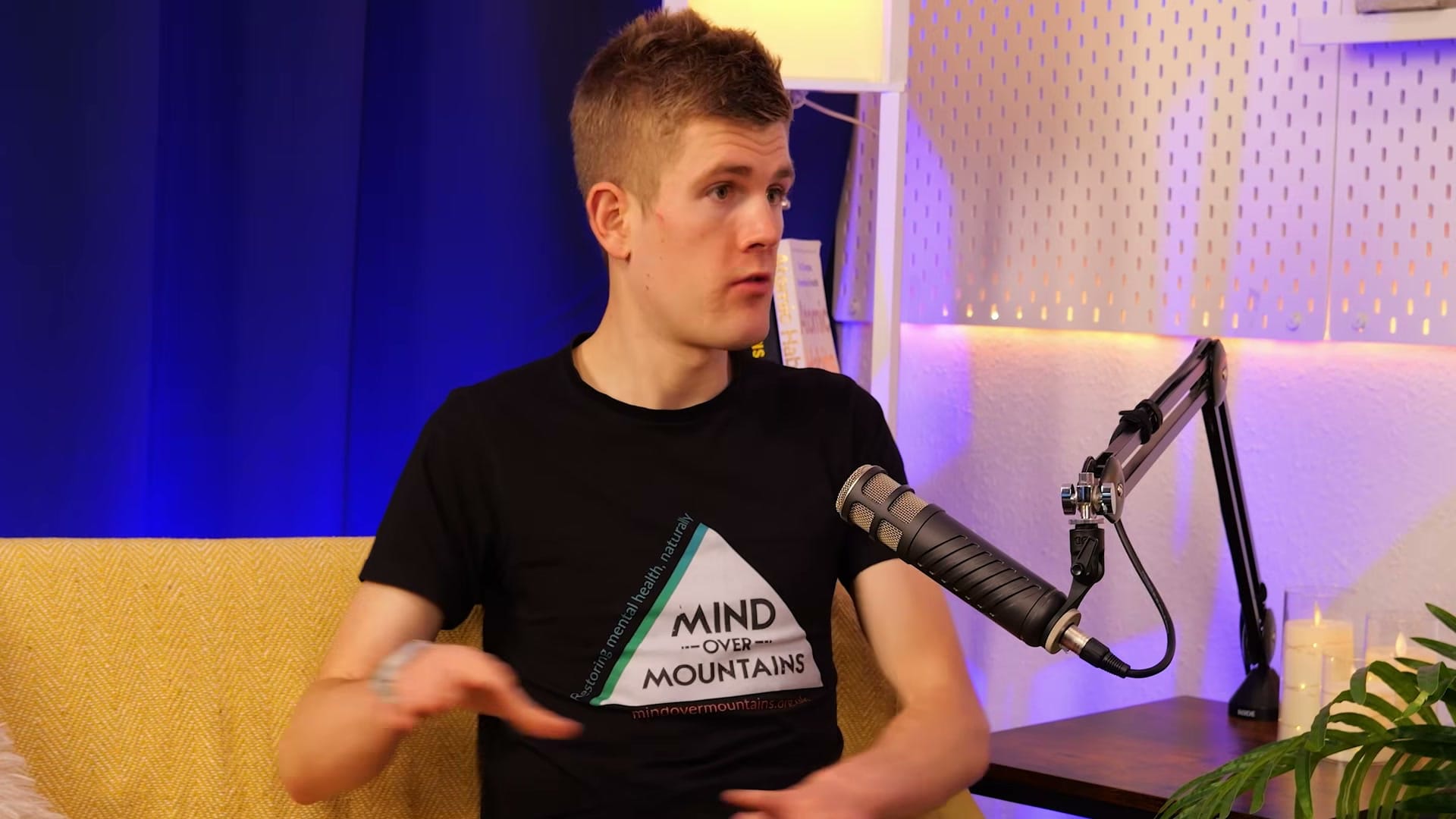
Record-breaking ultra-endurance athlete and Mind Over Mountains founder Alex Staniforth joins host Aleksandra King on The BEYOND Podcast to unpack what surviving the two deadliest disasters in Everest's history reveals about fear, risk and mental health. Before turning 20, Alex had lived through the 2014 Khumbu Icefall avalanche and the 2015 earthquake; he has since become the fastest person to climb all 100 UK county tops and the first to climb all 446 mountains in England and Wales by human power.
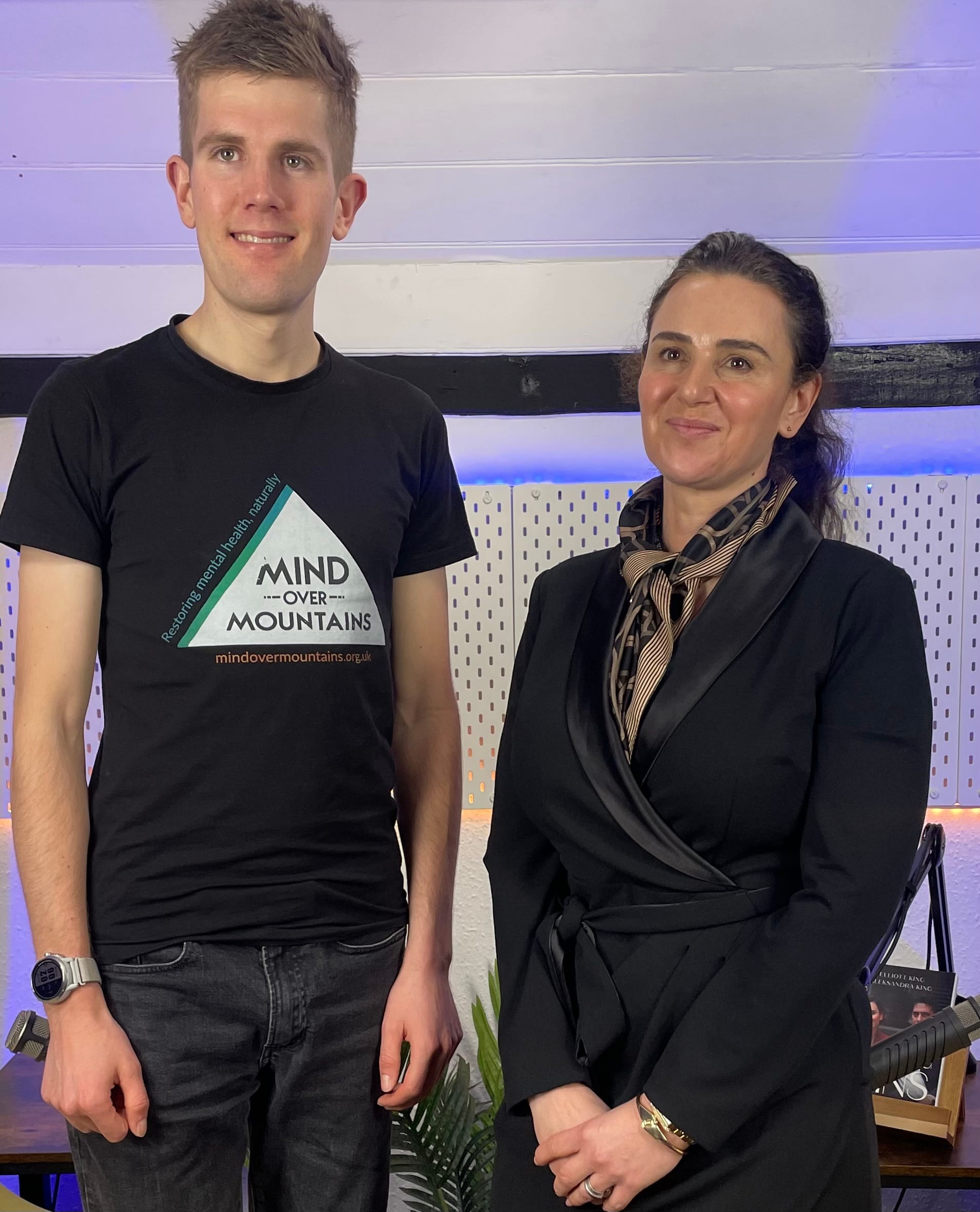
Episode summary
Alex Staniforth was half an hour from Camp 1 on Everest when the 2015 Nepal earthquake sent an avalanche straight at him through thick fog. On this episode of The BEYOND Podcast, he tells host Aleksandra King what that moment was actually like: the crack of ice above the Western Cwm, the deafening wall of freezing air, the ropes buried, the radio answering with silence. It was his second expedition; the first had ended a year earlier when an avalanche in the icefall killed 16 people before his team reached Base Camp.
The conversation then goes somewhere richer than survival. Alex traces the story back to a childhood of epilepsy, panic attacks, bullying and a lifelong stammer– the boy who felt "born to fail"– and the first Lake District hill walk at 14 that turned adversity into obsession. He and Aleksandra dig into the fine line between courage and recklessness: the sponsor email telling him to quit mid-record-attempt, the seizure at mile 78 of a 186-mile run, and why he consulted brain specialists before going back six weeks later. He is unsparing about the physical costs too, from blood oxygen of 54 and early cerebral oedema on Cho Oyu to collapsing with hypothermia after a 27-and-a-half-hour solo Bob Graham Round.
The heart of the episode is his redefinition of resilience as the ability to recharge rather than endure– an argument he earned by burning out at Mind Over Mountains, the mental health charity he founded after realising it had taken him longer to get help as a teenager than to cycle, walk and run 5,000 miles around the country. It closes with the light bulb moment at 30: he had been chasing validation, and letting go of Everest was the proof he no longer needed it.
“My definition of resilience, to be sustainable, is that ability to recharge. It's knowing when to step back, to reassess, to regroup, to go again.”– Alex Staniforth on The BEYOND Podcast
Key takeaways
- Failure is about your response– the objective can be taken from you by forces you don't control; how you learn, regroup and go again cannot.
- Commitment beats interest. "If you want something, you'll find a way. If you don't, you'll probably find an excuse."
- Raise the safety net– doing dangerous things cheaply doesn't make you braver, it makes the risk bigger.
- Sustainable resilience is the ability to recharge: knowing when to step back, reassess, regroup and go again.
- When everything goes wrong, shrink the horizon– control the controllables, check your why, and focus on the next mile.
- A goal chased for validation is never satisfied; ask whether you would still want it with nobody watching.
Key chapters
| Chapter | Timestamp |
|---|---|
| Cold open: what's coming | 00:00 |
| The 2015 avalanche, moment by moment | 01:36 |
| "It's game over": standing in the blast at 19 | 03:53 |
| Buried ropes, silent radio, survival mode | 04:39 |
| Epilepsy, bullying and a stammer: why Everest | 06:36 |
| Rethinking failure after the 2014 icefall disaster | 10:11 |
| Stuck on your own Everest: commitment and language | 12:30 |
| Raising the safety net: managing mortal risk | 13:34 |
| Courage vs recklessness: the sponsor email | 15:21 |
| The seizure at mile 78– and the expert-checked return | 16:46 |
| Has Everest lost its magic? Queues and commercialisation | 21:01 |
| Altitude sickness and cerebral oedema on Cho Oyu | 23:40 |
| Hypothermia on the Bob Graham Round | 27:29 |
| Staying calm: controllables, your why, the next mile | 30:41 |
| Resilience is the ability to recharge | 35:32 |
| Long Covid, burnout and the charity he had to hand on | 38:45 |
| Mind Over Mountains: walking back to mental health | 39:30 |
| The one regret: waiting for the perfect moment | 42:15 |
| "The biggest barrier is themselves": Alex's takeaway | 46:38 |
| Turning 30 and letting go of validation | 54:22 |
The guest
Alex Staniforth is a record-breaking ultra-endurance athlete, adventurer, speaker and author from Cheshire, and the founder of the mental health charity Mind Over Mountains. Before turning 20 he survived the two deadliest disasters in Everest's history– and he has since turned that adversity into records on home ground and a charity that walks people back to mental health.
Where to listen
Related reading
Steve Featherstone: Why Comfort Is Making You Weaker.
Derrick McManus: Shot 14 Times in a Police Siege.
Transcript
Read the full episode transcript
Cold open– trailer montage
The episode opens with a montage of clips lifted from later in the conversation, plus the guest's self-introduction. These lines recur at their true positions below; the duplication is by design.
00:00:00 Aleksandra King: You nearly died in an avalanche on Everest. Talk us through that day.
00:00:03 Alex Staniforth: First time in my life, at 19 years old, I'm thinking it's game over. I'm Alex Staniforth. I'm a record-breaking ultra-endurance athlete and adventurer. I've survived the two biggest disasters in Mount Everest history in two consecutive years. I'm the founder of an award-winning mental health charity called Mind Over Mountains. On the mountain, on Everest, failure really could be death.
00:00:26 Aleksandra King: So if you want to avoid death, what do you need to do?
00:00:29 Alex Staniforth: Everest is 90% mental, only 10% physical. In terms of managing the risk, our leader always spoke about raising the safety net– by having the best possible team and Sherpas and oxygen. If you try to do Everest cheaply, you increase the risk, because you haven't got that in place.
00:00:44 Aleksandra King: For those that are stuck, they have that Mount Everest version of it, and they want to do that dream, but they're stuck– what do you say to them?
00:00:50 Alex Staniforth: Partially it's wanting something. If you want something, you'll find a way. If you don't, you'll find an excuse. The difference between success and failure, in my opinion, is often about commitment.
00:00:59 Aleksandra King: Have you ever experienced altitude sickness?
00:01:02 Alex Staniforth: Altitude sickness is horrible. It's the worst sickness I've ever had. It isn't about preparation. It's often just a very genetic thing. Some people are good at it, some people aren't.
00:01:11 Aleksandra King: How did you get your brain to keep calm when things are going wrong?
00:01:15 Alex Staniforth: Generally I really just try to hone in on what can I control in the situation, because anything else is a waste of energy. Often it's been things that I haven't anticipated, the things that have gone wrong. I was trying to run the Coast to Coast a few years ago, which is trying to run 186 miles in one go. 78 miles in, it was going really well, and out of the blue I just had a seizure. Now that was the end of that.
The conversation
00:01:36 Aleksandra King: Right, Alex. You nearly died in an avalanche on Everest. Talk us through that day.
00:01:45 Alex Staniforth: Yeah, the 25th of April 2015 is when it all went a bit wrong. I was on my second attempt on Everest, second expedition, after the first attempt the year before hadn't really gone to plan, due to an avalanche in the icefall which sadly killed 16 people. So in 2015 we were moving through to Camp 1, and we were probably half an hour away from Camp 1 at the time. We'd moved through the icefall, which is the most dangerous part of the entire route– you've got house-sized blocks of ice, you've got crevasses hundreds of metres deep– and I was on my own at the time. And I remember, ironically, I didn't even feel the earthquake at the time. I didn't feel this earthquake that had just hit Nepal.
00:02:26 Aleksandra King: And so there was an earthquake?
00:02:27 Alex Staniforth: There was an earthquake. It had taken over 9,000 lives. All I remember of that day was hearing this massive crack above my head, which is the sound of ice breaking off the mountain to the left of me– 7,000-metre peaks hanging over the Western Cwm– and behind that you've got this distant boom of an avalanche coming straight for us. Now at the time I didn't really work out what was going on. I knew I had to get out of there.
00:02:56 Aleksandra King: Did you know much about avalanches? I mean, did you–
00:02:58 Alex Staniforth: Well, given what had happened the year before, and you hear about it– I mean, you hear them all the time in the Himalayas, they're happening everywhere. But because the fog was so thick, I didn't actually realise this thing was coming straight down towards us. I just knew, because of the sound, I had to get a move on. And I suddenly had more energy than I'd had all day, and I was moving faster than I'd moved all day, thinking, okay, I can't quite see this thing, I'm trying to work out where's this big wall of snow coming from. And I remember after a while kind of assuming that I was safe, and that it must have fallen behind us into the icefall. And then I let my guard down for a moment, and as I did that, I remember this sudden pressure change around me, and then just being hit– like a whack, like a snow cannon– by this big wall of just white all around.
00:03:49 Aleksandra King: The avalanche hit you.
00:03:50 Alex Staniforth: So yeah. Yeah.
00:03:53 Aleksandra King: Wow.
00:03:53 Alex Staniforth: And in that split-second moment, for the first time– first time in my life, at 19 years old– I'm thinking, this is it. It's game over. And there's nothing I can do but stand and take it. And in that split second, time kind of freezes still, no pun intended. You don't know whether it's seconds or minutes, but all these things are flashing through your mind. You feel guilt, you think of your family, and you think, any second now, that's it. But this wall of freezing cold air just– it was deafening, it kept coming, but the debris, the ice, never came. And you kind of expect it's just going to go black. And then suddenly, after a while, it just stopped. The mountain went silent again.
00:04:38 Aleksandra King: How haunting.
00:04:39 Alex Staniforth: And I remember opening my eyes again. I was dusted in snow, I was shaking, the ropes had gone, but I was still here. And I think at that point I realised actually I was still here. And pretty miraculously, the debris never really hit us, so we got hit by basically a big blast of powder that had been dislodged. But in the moment you only assume the worst. And I remember getting on the radio– no response. Try again– no response. So I assume that my teammates are gone, and I assume that I'm the only one. I start thinking, has anyone made it to Camp 1? And all I could do was get to Camp 1. I had to get to safety. I was just in shock at that point. I was in survival mode.
00:05:25 Aleksandra King: Okay, so you got hit by– is it like an outside of an avalanche, a part of an avalanche, the effects of an avalanche? Because it's air.
00:05:38 Alex Staniforth: It was snow and air. And it was basically part of the avalanche, I would say.
00:05:44 Aleksandra King: Okay. So you got hit by that, and you lost your ropes. What does that mean, for people that don't understand? Is that your safety net?
00:05:52 Alex Staniforth: The ropes were buried under all this fresh snow that had just hit us, so you couldn't really see them. And when you're moving through the section– bear in mind you've got massive crevasses hundreds of metres deep– the ropes are your safety net. We are clipped in on a fixed line at all times. That's what stops us falling down them, and we use them all the way up the mountain. So suddenly you feel like you've got no protection. You're just kind of moving blind. Now parts of this are really patchy, because at the time obviously that experience blurred a lot of things for me, but I remember just thinking, I can't stay here, I've got to move, I've got to move. But these ropes, we just couldn't see them. And some of them did pull out, but you just– I need to get out of here as fast as I possibly can, and get to safety.
00:06:36 Aleksandra King: If we just rewind– why did you go there in the first place? Like, why are you choosing to climb Everest and put yourself in such a dangerous, dangerous situation?
00:06:51 Alex Staniforth: I think for me it started with adversity. When I was a child I'd always struggled, with my whole experience through school– having epilepsy when I was nine, which was a trigger for anxiety and panic attacks. I was badly bullied because I was different. I've had a stammer all my life, so I've never really been able to express myself or communicate properly. And I never felt good enough. I always felt like I was a victim, like I was born to fail. And when I discovered the outdoors, through my first hill walk in the Lake District when I was about 14, I just remember this sense of freedom and achievement, and that kind of safety I'd never had at school, where I could really be myself. And that real switch of mindset, to think actually we can't choose what life throws at us and what challenges we face, but we can choose our response to that. And from then on, I decided– I made a conscious decision, and maybe didn't realise this at the time– that I wasn't going to let the adversity stop me. And at some point that day I had this light bulb moment where I asked myself, where is Mount Everest? And I remember coming home, looking at pictures of this thing, and I became absolutely obsessed, fascinated, captivated. It just seemed like the ultimate challenge, the ultimate goal, to prove myself and to prove those bullies wrong.
00:08:15 Aleksandra King: It is the ultimate goal. It's like she calls you, you know, Mount Everest, in a haunting way– but I get it. Like, I understand. I love nature too. But that power that you feel when you're in it, in that nature, and you're experiencing it, and you can get through it, and you can also enjoy it at the same time. And you understand that you're small and nature's grand. But just being there in the presence of nature, Mother Nature herself– there is a sense of freedom and power. However, you chose the most difficult challenge there is. There is no higher peak. It is incredibly dangerous. I mean, K2 is another mountain that's also very dangerous– it's a horrible, you know, I think technically there's some problems with that one– but Everest, you don't get higher than that. So you went for the big thing.
00:09:14 Alex Staniforth: Yeah, the biggest. And to be honest, I never really had the appeal for K2, because it's so much more objectively dangerous. And Everest just had something on me that I still struggle to necessarily explain. Only people that maybe have been there will get that. People have their own version of that, whether that being a career or a job title or something, whatever that is. But for me, Everest was the ultimate. And when you're 14, you're naive, you think you can take on the world– and we all make bad decisions as teenagers– but something got me. And I remember the goosebumps up my arm, and I took that as like an intuition, as a sign, that this is what I've got to do. And I think because of the adversity I'd experienced as a child, I've always wanted to prove people wrong. I've always been stubborn, I've always been very stubborn, and I can't explain that drive, but I just knew that nothing else mattered to me at that point in my life. And I never dreamed at 14 that four years later I'd be there.
00:10:11 Aleksandra King: Yeah. I think if people listening to this story– they'll all have their Everest, you know, their thing that they would love to be able to do, that lures them, that calls them. But not everyone does it. So it's incredibly commendable that you took that step, one step after the other, and you decided to do that. But it is a challenge, although it didn't always go well. You spoke about one, you know, adversity– let's say failure. So how, in these triumphs, as you're trying to deal with what you've had in the past– people bullying you, you've got that at the back of your mind, and you're working through it through the suffering on these mountains and these challenges– what about failure? What about when you didn't achieve the things, and you've got Mother Nature or whatever it is going, not today– not today?
00:11:05 Alex Staniforth: Yeah. I think intrinsically most of us are afraid of failure. And I was, and I was terrified of failure, but I used that fear to drive me to work harder, to make sure that didn't happen. And I think maybe naively, being younger, having not had that experience, I'd always been conditioned that if I just worked really hard I could have anything I wanted– which is true to an extent, but it doesn't alter the fact that in the mountains, they don't give a damn how hard you've worked or how much you spend. They really don't.
00:11:33 Aleksandra King: I was about to say.
00:11:34 Alex Staniforth: And so I think that was really important for me, to be able to switch my whole perspective of failure at 18, on that first attempt– realising that actually failure is about our response to the situation. Ultimately, yes, we can fail on the objective. That can be outside of our control. But we can still be successful in how we deal with that situation, how we learn from it, how we grow, how we pick ourselves back up again. And I think having had that avalanche the first year, which cancelled the expedition literally before we even got to Base Camp, I think it just took away that fear of failure. Because now I know that even if I fail, it's not the end of the world that we kind of assume it to be. In fact, for me it's just an opportunity. I wouldn't be having this conversation today, I wouldn't have done 75% of the things I've done, had I not failed, in objective terms. And so many people, they kill their dreams because of that fear of failure. And it's sad.
00:12:30 Aleksandra King: Okay, so for those that are stuck, and they have that Mount Everest, their version of it, and they want to do that dream, but they're stuck– what do you say to them? How do they get out of it?
00:12:41 Alex Staniforth: I think there's a few aspects to that. I think partially it's wanting something enough. Like, if you want something, you'll find a way. If you don't, you'll probably find an excuse, as the old saying goes.
00:12:50 Aleksandra King: So are you saying you don't want it bad enough, then?
00:12:53 Alex Staniforth: Often that's the case. And I think the difference between success and failure, in my opinion, is often about commitment. Like, you burn the bridges, you throw yourself in. It's not a case of, oh, I'd like to do that. It's a case of, I'm doing it. Even our language matters. The final thing I'd say to those people is often, instead of asking what could happen– you know, what could go wrong, what if I fail, what if people think I'm stupid, what if this happens– is asking, what could happen if I don't? Kind of reframing that in terms of being motivated away from something rather than towards something.
00:13:24 Aleksandra King: I love that. I think that's powerful. I think it's a stronger motivation if you're avoiding something than it is to actually go towards something.
00:13:31 Alex Staniforth: So I think how we frame that in our minds is really important.
00:13:34 Aleksandra King: Yeah, that's completely relevant, because on the mountain, on Everest, failure really could be death, very quickly. So if you want to avoid death, what do you need to do? I mean, what are the things that you need to do? You need to have acclimatised– what else do you need to do? Like, a lot.
00:13:56 Alex Staniforth: Yeah, there is a lot to it. And I mean, yeah, preparation, everything. Everest is probably 90% mental, only 10% physical, in terms of how you approach it. And that was one of the main things I learned after the first trip– you can be the fittest, strongest athlete in the world, your body will react very differently at altitude. And I think in terms of managing the risk, Tim, our leader, always spoke about raising the safety net. So, by having the best possible team and Sherpas and oxygen. If you try to do Everest cheaply, you increase the risk, because you haven't got that in place. And that's where Everest sadly gets a bad name. And I think generally, even if you do all those things right, there is still a risk.
00:14:38 Aleksandra King: Yeah.
00:14:38 Alex Staniforth: Yeah, life is risky. But I think the biggest risk is taking no risk at all.
00:14:43 Aleksandra King: Yeah. I mean, in business, if this is a metaphor for how you do business– the cheap way, the shortcuts, they just will never, ever work. They'll always bite you. You can't do that.
00:14:57 Alex Staniforth: Yeah, we've all heard there's no shortcuts to success. And ultimately, if you buy cheap, you'll probably buy four times until you finally invest in it properly. And I knew with Everest that I had to do this in the proper way, and I had to jump through the hoops to feel that actually I'd managed everything to a level that I was happy with. The risk will always be there, but you have to mitigate that risk to a level that you're comfortable with.
00:15:21 Aleksandra King: Okay, so there's a fine line between courage and recklessness, right? So when you are taking these risks– and they are big, big risks– how do you know? Is there like a gauge somewhere that you can check, maybe within yourself, that no, I'm just being reckless, like I shouldn't be here, I shouldn't have done this? How do you know?
00:15:44 Alex Staniforth: I think it's very individual, and it's very situational. For example, I'd be more terrified going into a bar full of strangers than I would be giving a talk on a stage to 500 people. And because I've got experience and I'm confident there– there is an element of learning on the job, and intuition. And intuition comes from experience. But then again, I would never do a BASE jump, because the risk is too high and the reward isn't big enough for me to justify that. So in terms of a gauge, it is intuition.
00:16:15 Aleksandra King: Think of an example.
00:16:17 Alex Staniforth: Like, I remember doing my Three Peaks run a few years ago, and halfway through I was in a bad way. I could barely run more than 10 metres at a time, for the swelling and the shin pain– and what happens when you try and run 50 miles a day, day after day after day. And I remember having an email off one of my sponsors telling me to stop. And they basically said something on the lines of, you know, we've been watching your progress, you're not going to make it, so why not just call it a day and go home and rest?
00:16:46 Aleksandra King: Yeah.
00:16:46 Alex Staniforth: And that comes from a place of care and good intention. And in my head I was thinking, okay, this is a sign that it's gone too far, this is reckless here. But then I justified that in my head in terms of, I know myself and my body better than anyone, and actually I've been in this position before. And so ultimately it's about not necessarily hearing what you want to hear, but hearing what you need to hear. And a lot of people could have taken that as a good reason to stop, but I think only if you're willing to risk going too far can we find out what's really possible. And I've taken that risk. And ultimately, often it's been things that I haven't anticipated, the things that have gone wrong– it wasn't like a known risk, for example. I was trying to run the Coast to Coast a few years ago, which is trying to run 186 miles in one go. 78 miles in, it was going really well, and out of the blue I just had a seizure. Now that was the end of that. Never anticipated. It wasn't on the risk register. I'd not had a seizure for 17 years. I've been doing all this having almost treated epilepsy as if it's gone. So you could say, well, obviously going back and doing it again would be stupid and would be risky. But I just trusted my instinct. I trusted having the right people around me. And I spoke to the experts. I got their opinion, not my own. I spoke to the best doctors and medics and brain specialists I could, basically to mitigate the risk– so that I couldn't remove it, but I could go into that knowing that actually I got the best advice I had available to me. Just by having people around us who are better than us.
00:18:24 Aleksandra King: That's incredible advice, really, that you got the advice. Because we don't ask enough. We don't ask people for help. We don't necessarily go to the experts when we should. But that information is power. And if someone– that is what they do– why not go to them and get the information? Because then you're well informed, then you can make the decision. And the other point that you raised, which I love, I love it so much, is the whole thing about listening to your inner voice, to your intuition. You know yourself better than anyone– that's what you've said, I know myself better than anyone. And that is valid. No one will know you the way you know yourself. So if you really feel something, your instinct, you should trust it. And actually, there's huge danger and risk in not listening to your intuition.
00:19:14 Alex Staniforth: There is. And the more I make decisions, the more I learn to trust it, because generally it's pretty right. And when I've gone against it, I've seen the evidence of that as well. And ultimately, I knew that if I didn't get back out there soon and try again, this thing wasn't going to happen. I was never going to get back out there. I was just going to stay in this pit of worry and kind of what-ifs. I need to get on the bandwagon again very quickly, otherwise I was never going to get back out there. So that's why, when people were saying to me, is it sensible to go back out there again when you've just had a seizure– I said it was never sensible to begin with. And six weeks later I went back, and I got 124 miles before I stopped– not because of a seizure, just because of the joys of ultra running. So I think a lot of it comes from instinct, but it also comes from having experts, and people that you trust and rely on. And ultimately, if it feels wrong, it probably is. And if it persists long enough– if you know that you're going against your own inner voice– I think there's something really off.
00:20:17 Aleksandra King: Yeah. And normally, the real red flags of the world– even this goes with relationships and things– they'll show up pretty quickly. You'll see evidence.
00:20:26 Alex Staniforth: Yeah. And often, I think if you're doing something that's really hard, I often say that you've got to have a good reason to quit. If you're trying to justify why it's a good reason to quit– when you have no other choice but to quit, or no realistic choice, like if a doctor or an ambulance is saying to you, you've got to stop– if that choice is taken out of your hands, then I think that's different. I think if you think, oh, I'm a bit tired, I'm a bit sore– well, you signed up for that. Of course it's going to hurt. And I think if you have to justify it, or give a reason that you're not proud of, I think that says a lot.
00:21:01 Aleksandra King: Interesting. So, Everest. It has become quite commercial, hasn't it? I love watching all kinds of Everest documentaries. I've always been just fascinated by the mountain, and I would love to climb it. But you see the dark side of it too– the bodies on the way up, and also the queues, you know, everyone lining up, and all these people desperately trying to get to the top. What do you feel about that?
00:21:33 Alex Staniforth: I mean, I've not been high enough on the mountain to actually witness or experience this, so I'm not the right person to really comment. On the first trip we didn't get above Base Camp; the second we only got to Camp 1, which is only 6,000 metres. Everest is 8,850, so you've got Camp 2, 3, 4 and then the summit. So I think for me, partly, Everest has lost its magic– or some of it, or some of the magic that I had as a curious 14-year-old. And it is an incredibly beautiful place. The Himalayas, as you mentioned before, around perspective and feeling small– it's a whole new level. It blows your mind. And there's nowhere else like it, and that will never change. But I do think that there is an element of commercialisation. Like anything, the more people do it, the more people do it. And I don't think that undermines the achievement, because it's still the same height mountain, it's still very hard to get there. But ultimately there's a lot of people there that maybe shouldn't be there, or are making themselves a risk to not only themselves but other people around them.
00:22:35 Aleksandra King: That's true.
00:22:36 Alex Staniforth: And so I haven't experienced anything to comment. What I would say is often the media would maybe be using old data, using old images, and maybe actually not really showing the full story, is what I gauge from hearing both sides of it. And the queues, again, can be shown in certain lights and certain ways. For example, if there's a very narrow window for summits, obviously everyone's going to be going on the same day. And all the Western operators are trying to avoid that, because they want to keep themselves and the client safe. But the media will obviously focus on that without giving the full picture. So generally, yes– like anywhere that gets busier, the more people there are somewhere, the more problems we're going to have. And for me, I think if I was ever going to go back, I would want to see that change, because it's just lost a lot of that magic for me.
00:23:30 Aleksandra King: And that tainted–
00:23:32 Alex Staniforth: Yeah, I can't say from first hand, but what I hear from the people that are there is that a lot of this is just the same old stories, and a lot of them aren't true.
00:23:40 Aleksandra King: Yeah. The other thing that fascinates me– not in a good way– is the health side of it. When you hear the stories of people that have gone up and then they develop this altitude sickness, which is just a crazy idea to think about. Like, how does that feel? What does that mean? Why can't you see? What happened? Like, didn't you acclimatise properly? The whole health side of it fascinates me. Have you ever experienced altitude sickness?
00:24:05 Alex Staniforth: Altitude sickness is horrible. It's the worst sickness I've ever had. It's horrific. I was always really quite unlucky, in that I was generally the first one to get ill. And a lot of that isn't about preparation. It's often just a very genetic thing. Some people are good at it, some people aren't. Like on one of my expeditions– so not even Everest– post-Everest I went to then try and climb the sixth highest mountain in the world, called Cho Oyu, in Tibet.
00:24:31 Aleksandra King: What altitude is that?
00:24:33 Alex Staniforth: 8,200. So it's 8,200 metres. It's the easiest 8,000-metre peak.
00:24:41 Aleksandra King: Very high.
00:24:41 Alex Staniforth: On that trip, I was 21. I trained even harder for that than Everest. I was in a whole new shape and experience level. And despite that, I struggled more than anyone. And there were people on my trip in their 60s, who did very little training other than maybe just cycling to work, who didn't even get a single headache. And they just cruised all the way through the trip. And it's infuriating. It seems unfair, but it's just the way the mountains work.
00:25:09 Aleksandra King: So what do you feel when you have altitude sickness?
00:25:11 Alex Staniforth: The worst I've been was probably on that trip, when I got up to the advanced camp, which was about 5,700, and my blood oxygen went down to 54. You lose your appetite, you're very nauseous, you have a splitting headache, you can barely walk. It's the worst level of dizzy.
00:25:31 Aleksandra King: Vertigo?
00:25:32 Alex Staniforth: Not so much, from what I remember. You just feel very, very sick, and you can be very lethargic. And when my expedition leader saw that score, he threw me in a jeep and I was out of there. Now, it just meant I needed more time. And then I was taking a drug called Diamox, which helps with the acclimatisation, having gone back down again and recovered. I just needed more time. Once I had more time, I was as strong as everyone else. But at the high camp, when we got on our summit push– we went up to 7,200 metres, which is the highest I've ever been, well, just short of 7,200. At this point we were on oxygen, because we're that high. That night I went out for the summit and I knew something wasn't right. I was throwing up, projectile, all over the tent.
00:26:16 Aleksandra King: Oh dear.
00:26:17 Alex Staniforth: I could barely speak. I couldn't walk in a straight line. It's like I was drunk. And that is the early onset of high altitude cerebral oedema, which can be fatal. So that's like the extreme end of altitude sickness– there's HACE and there's HAPE. So at that point I was on steroids and I was going down. So yeah, that's the more severe end. When you're trekking into Base Camp, a lot of people will get altitude sickness. Most people don't escape it. Often it can just be headaches– really splitting migraine headaches– it can be nausea, it can be vomiting. But with time you acclimatise. This is why we go slowly. But even then, even people that have been to altitude lots of times can suddenly get it.
00:26:58 Aleksandra King: Wow. I can't imagine 54. I mean, I had to do something the other day, actually, for a client, and I had my oxygen level tested, and it was 99.
00:27:10 Alex Staniforth: Yeah.
00:27:10 Aleksandra King: What was it– 99, and then down and then all the way to 54.
00:27:13 Alex Staniforth: But it's quite normal– even at Base Camp, your oxygen is around 80. So that's your normal operating. You can feel fine even if it's low. But even at Base Camp people can get very serious early if they go too fast, and that's when you need to be going down.
00:27:29 Aleksandra King: Wow. Have you ever had hypothermia?
00:27:32 Alex Staniforth: I have. And not in the Himalayas, actually. The worst case I've had of it was when I was trying to run something called the Bob Graham Round, in the Lake District, which is basically a 66-mile run to 42 peaks. So it actually basically nearly climbs the height of Everest in one go. And the goal is under 24 hours. Now, this was August, and I was trying to run it solo. I didn't do the 24-hour target, so I just thought, well, I'll finish what I start, and it took me 27 and a half. But I was so wet and so cold– in the summer, in August. I'm not eating enough. I learned a lot that day. I got very complacent. And basically, when I finished, I was very elated, and next thing, I collapsed on the floor with hypothermia. And it's incredibly scary, how– given my experience, I never thought it would happen to me. So even August, you're never immune.
00:28:25 Aleksandra King: Can I ask you, like– were you shivering? Did you have symptoms of it?
00:28:29 Alex Staniforth: Well, the thing is, because I was on my own for most of this, I had all the kit with me. I had food with me. I didn't notice anything, and that was it. Because normally I'm very aware of, okay, I'm a bit cold, I need to put some layers on here, I need to change. But there was no signs. I just remember stopping, celebrating, and– I think because I'd suddenly stopped, obviously you're not producing heat– within 20 minutes I felt very dizzy, and I'm just like lying on the floor, spinning around the world.
00:28:55 Aleksandra King: That's frightening.
00:28:56 Alex Staniforth: It was. Because next thing, all I remember was hearing voices, and then I'm in the back of an ambulance, and then I spent the night in Carlisle hospital. So obviously I'm not proud of that. It was really bad management. But it just shows that even in August it can catch anyone out, if it catch me out.
00:29:10 Aleksandra King: Well, I'm glad you said that, and people can hear this– that you might not have any warning signs that you might have hypothermia. And make sure you tell people when you're going out to do these things. Because that's the thing– it's wild.
00:29:22 Alex Staniforth: The thing is, I just wanted to sleep– which is understandable, given I'd been running for 27 hours. But the thing is, I didn't realise there was hypothermia. And had I just gone home and gone to bed, who knows, I may not have come around. So obviously I learned a lot about that, and it's something I've been very scared of since. Like, I'm now very sensitive to the cold. And if I can use this experience to educate people, then that's a positive thing.
00:29:44 Aleksandra King: Yes, please do. So when you did this run– what was it? Was it the type of fabric that you were wearing that possibly you could have changed, or should you have more layers, or what? Just to keep people safe out there.
00:29:56 Alex Staniforth: Yeah, spare layers. And also you have to produce heat, by food and water. And I was– bear in mind I was solo, I was carrying most of it by myself. There was no change of dry layers. Having spare layers in a dry bag at all times– but when you're running for 27 hours, eventually they're going to run out. So most people do this challenge supported, with a crew.
00:30:15 Aleksandra King: With a crew, that's right.
00:30:16 Alex Staniforth: So obviously I tried to kind of wing it, and learned the hard way.
00:30:20 Aleksandra King: You do some extreme, wild things, but you learn from them. I would call these teething problems, even though they're quite advanced teething problems. But you learn from it. You will never do that again, will you? You will have a dry bag and a team.
00:30:35 Alex Staniforth: And I've done much bigger things since then. And obviously I'm glad I had that experience, because it's probably prevented something more serious happening.
00:30:41 Aleksandra King: Yeah, it's made you– yeah, you're becoming a pro. And when you introduce yourself, the USPs, the things about you, the things you've done– it's because you've gone through all these things, and you've achieved these things through learning, failure, trials, and you've built up a lot of experience in doing so. All these challenges. When you faced all these difficult moments, how did you get your brain to keep calm and override the sort of panic station thing?
00:31:18 Alex Staniforth: I often don't. I mean, I'm a very anxious person, still. But I'm better at managing that now, and I'm a lot more self-aware. And I think, again, it comes from experience– which isn't maybe helpful for people that maybe haven't done it yet, but that's why, as we keep raising the bar, obviously that confidence and awareness grows alongside us. But I think when things are going wrong, generally I really just try to hone in on what can I control. Like, what can I control in the situation? Because anything else is a waste of energy, and a waste of worry. But I think also it's having a clear why. It's knowing why I started. Like, okay, what's my reason to keep on going? If that isn't strong enough, you're probably going to find excuses. Secondly, yeah, it's that piece about the controllables– okay, what can I do in the situation? So when I get injured, when something happens, it's like, okay, accept it, let it go, what else can I do in the situation? I think thirdly, often it's just that law of impermanence– knowing that this situation might feel really hard right now, but tomorrow is a new day. A lot can change. If your business is going really badly, or something's happening right now– and I know that's obviously on a scale of severity– a lot can change, and you've just sometimes got to break it down to the next milestone. If a full day is too much, just focus on the next mile. Get there, reassess. Get there, reassess.
00:32:42 Aleksandra King: I had to hear that. I had three big not-so-nice things happen business-wise. Just three– it's always in threes, isn't it? Boom, boom, boom, straight after I came back from holiday. Literally one thing served on a plate after the next, and I was just like, oh no. And you have to try and process through that. But it is relaxing, in a way, to know it will pass. And what you said before, as in, you become better as you navigate through these things.
00:33:15 Alex Staniforth: Yeah. I think I've got a few friends who I've been supporting recently, outside my family, and they've had a lot of bad stuff happen to them, as you say, almost in threes. And I think, God, how unfair has life been. But then if I have three good things, I start thinking, okay, I'm due something bad. If you expect it and you embrace it, I think it loses its power. But also, my default response now– generally, not immediately, it's okay to be human, I have a bit of a whinge about it– but then I think, okay, what's the opportunity here? And at some point, in a year's time or further down the line, I think, oh, that happened, but actually I'm glad, because it did this, or I learned this from it. It doesn't make it less annoying, but it just loses the power over it.
00:33:56 Aleksandra King: I love your mindset. It's like you've been designed by nature in the right way. Nature's done some work on your mind.
00:34:04 Alex Staniforth: It's what you were saying at the start– I spent a lot of time there. I think we've all lost touch with nature as well. And when we lose that connection with it, I think we really lose intrinsically who we are. And nature and adversity, I think, are the best teachers of all.
00:34:22 Aleksandra King: Could you ever go back to a life before? Like, before, when you were 14, and you started these adventures– could you go back to how it was before, and have a "normal", I quote, life?
00:34:35 Alex Staniforth: I mean, I'm 30 now, and it feels like I've been doing this all my life. I don't really remember much about this, other than maybe being conventional– in the loose terms of, like, I did what everyone else did. I wanted to fit in. I just did kind of normal things. There's nothing wrong with that, but I didn't have any real ambition or purpose for my life. And so I would never change anything. Obviously back then it's great, when you don't have the commitments and the pressures and all that of life now– but I've chosen all that for myself. And I think I'm very grateful for all the adversity, because it's got me to where I am, and the experiences and the people I've been able to encounter. So could I go back? It feels so long ago that I can't even imagine or even feel it any more.
00:35:24 Aleksandra King: You're just not that person.
00:35:26 Alex Staniforth: For me, it feels like I'd be stepping down from where I am. And I want to be stepping up, not going backwards.
00:35:32 Aleksandra King: Yeah. What's the biggest misconception people have about mental toughness, do you think?
00:35:40 Alex Staniforth: I mean, I see resilience being a component, sorry, of mental toughness– so if we see it as the same kind of thing. I think often people see that resilience piece as the ability to just keep on pushing, to be stoic. That ability to kind of keep being punched and keep on going, and keep on going, and keep on running, or keep on striving in business. I think actually that conception, that definition, is wrong. My definition of resilience, to be sustainable, is that ability to recharge. It's knowing when to step back, to reassess, to regroup, to go again. Not to keep on going until you've crashed and burned– because I've burnt out before, and I've learned from that. And I think the misconception of toughness is that almost ability to avoid pain. I don't think it's avoiding pain. I think it's just dealing with it in a different way, even if that means taking a step back, taking care of yourself.
00:36:39 Aleksandra King: I'm with you on that. And I also didn't respect breaks and things. But if you think about training like an athlete, properly– you need your intervals. If you want to be faster at running, you need to do your interval training. You need to have that speed for whatever, one minute, two minutes, whatever it might be, whichever interval you're doing. Break. Break. That's what allows you to go again. And even within that, it's like, okay, you can only do that what, twice a week, maybe– not too much, because you need to fit that with the easy runs in between, otherwise you will pull a muscle or do something. And then even within that, you've got to sort of push for four weeks, then take off a week, then push again for four weeks. So there's so much rest and recuperation built into really, really, really serious training. And it's the same, I think, with really, really, really serious life, and work, business, whatever it is you've got going on. You've got to rest.
00:37:35 Alex Staniforth: Yeah. And I think that rest is what allows us to challenge ourselves. People could say, well, running ultramarathons isn't going to help you recharge. But for me, the components of sustainable performance is not only having grit and mindset, but it's also having recharging time. And we often say we don't have time to stop, but we find time when we're ill or injured or burnt out, because then we have no choice.
00:38:02 Aleksandra King: Well, yes. Well, life will teach you the lessons you have to learn. I mean, that did happen to me, because I burnt out and developed a thyroid problem– Graves' disease– because I just kept going. And I was like, oh no, I can't allow myself to take a break, because that would be being lazy, so I have to push through this. And my body wasn't happy about that. And then finally, my body put the reins on me, because I wasn't reining myself in. So my body said, stop it, right away. And I had to stop immediately. And now, when I have this urge and I want to– I have to just chill out. It's so hard. It's so hard. But I respect it. And it's what you were saying– I respect that.
00:38:45 Alex Staniforth: Yeah. I mean, until I got long Covid, I didn't really respect it. And that forced me to manage my energy much more carefully. I mean, that's gone now, and it was the worst year of my life. But for a while I didn't think I was ever going to get back to this life, in this world. And that was my identity. And back to that point earlier on– I would never want to go back to living a life that's less than I'm capable of. But as always, the opportunity that came from that is I'm now much better at saying no to things, and I know when my energy level is down. Even with the charity– it's ironic that the charity burnt me out, because I cared too much, and I gave too much of myself, and there was nothing left for the fight. And you can't help anyone, you can't lead, when you're burnt out.
00:39:30 Aleksandra King: Okay, so talk to us about the charity. What was it, what did you do, what happened?
00:39:36 Alex Staniforth: Well, I think after Everest I kind of realised that maybe big mountains weren't for me, and I really switched to focusing on ultra-endurance challenges in the UK, and trying to do things that maybe haven't been done before. And along the lines, that led to a chance conversation, and then doing an event in the Lake District in 2018, with a group called Adventure Uncovered– basically a retreat to promote the benefits of nature and hill walking for mental health. Now, I've used nature as my therapy since I've been a teenager. And I've had therapy, I've been on all sorts of medications– and still, being in nature is the cheapest and the best therapist I've had. I'm not saying it's a miracle cure, and anyone should just go out and do it and they'll be fine– it's something we have to manage– but I do think that it's something everyone should have access to. So this weekend kind of became the catalyst for starting a charity. And I never planned to start a charity in my twenties. But we've really found the power in this unique combination of hill walking and coaching and counselling and mindfulness– and essentially just giving people that safe space to walk and talk, alongside that professional mental health support.
00:40:45 Aleksandra King: Lovely.
00:40:46 Alex Staniforth: And I think when we're outside, we can really open up and have those difficult conversations, than maybe we would in a boardroom or in an office with someone. And so it's about giving people that space, so they don't have to wait for help on a waiting list, like I did, for months or years. And I think ultimately the charity came about because it took me longer to get the help I needed as a teenager, with my own struggles, than it did to cycle, walk and run 5,000 miles around the country. So the charity kind of grew from that opportunity, and it's just gone from there. And it's kind of my baby, really.
00:41:26 Aleksandra King: It's your baby. You proud of it?
00:41:28 Alex Staniforth: Yeah. Like any baby, it has tantrums. But it's a real privilege now, almost, as a founder and as a trustee, to have handed it on, to sort of step back and to focus on where can I make my biggest impact, for us to reach where we need to be. And part of that was reaching burnout, and having to admit to our team, like, this isn't sustainable– if I go down, the whole thing's going to go down– and being able to let go and put my hand up. And I think as leaders that's really important. It's very difficult to do.
00:41:58 Aleksandra King: It is, it is.
00:41:59 Alex Staniforth: I just had to set the example. But had we not done that, I don't think the charity would be thriving as it is now.
00:42:05 Aleksandra King: What a lovely charity.
00:42:07 Alex Staniforth: It's special. I think what we do is unique. And from that initial walk, it's bigger now than we ever dreamed.
00:42:15 Aleksandra King: Okay. If you found out you only had three years left, would you regret not doing something? Is there something on that list that you've not done?
00:42:25 Alex Staniforth: People often say I've done quite a lot in my years, and I feel like I have. So I don't really regret anything, because I've made the decisions with what I wanted at the time. I feel like I've done enough, but I don't think I want to stop. The only thing I maybe regret– I don't think regrets are useful, because it happened, it's gone, we can't change it– but the one thing I do regret is on Cho Oyu, in Tibet, the sixth highest peak in the world. When I went there after Everest, I got to– on the summit push, I decided to wait until the second night before going for the top. I felt I was exhausted, I needed more rest, I needed more time to recover. You don't recover at 7,000 metres. And by staying up there an extra night, seeing everyone else coming down– people who summited, but they were snow-blind, there was one with frostnip– it really knocked my confidence, and also I deteriorated. And of course, I didn't summit. And I've always wondered what would have happened had I gone at that first opportunity. I was waiting for the perfect moment. And I think the lesson from there is, sometimes you've just got to make a decision based on what you know, and go for it. And I wondered, would I have finally summited an 8,000-metre peak? Who knows. But then again, had I done that, maybe I wouldn't have gone on the path I did.
00:43:45 Aleksandra King: That is such a classic, because that happens to everyone– you don't do something because you will only do it when you're perfectly ready to do it, and there's not always the perfect time to do something.
00:44:00 Alex Staniforth: It's that moment, yeah. And there's other moments like that, where I look back in hindsight and think, ah, if I'd just pushed a little bit harder. Like, I missed the record on the Three Peaks run by about an hour.
00:44:11 Aleksandra King: Ah.
00:44:12 Alex Staniforth: You know, all those marathons, by an hour. But in the moment– when I think back, it's hard to put yourself in that level of exhaustion and pain, to the point when I can't eat, I can't speak, I can barely move, and expect more of myself in hindsight, when in the moment I was doing everything I could. But you always wonder, what if this, what if that, what if I tried that, what if I just asked for help sooner? But it's not useful. And everything else is just a learning journey.
00:44:41 Aleksandra King: Yeah. It's actually a waste of energy. If you think about the parallel to climbing the mountain– you don't want to breathe unnecessarily fast and lose that energy. You don't want to eat all your food and then have no food left. So you've got to pace yourself with things correctly. And at the same time, you can't waste your mental energy, your physical mind strength, on things that have passed. It's what you said earlier– it's like, what's next, what's next, I'm moving forward, how do I progress? But it isn't doing it blindly. It's really learning from your own– we say mistakes, but experiences, we'll call them, because we all have our own experiences– and using them as an asset.
00:45:30 Alex Staniforth: Yeah. And ultimately, I think experience in the mountains is what keeps you alive. And you could say that in business as well, and in any kind of factor of life. And people say to me often, oh, well, you know, you didn't fail– yes, I failed, objectively, but I think I've turned failures into something successful. And I think the main thing I've learned from all of this is that sense of the fragility of time. People say, you've got lots of time to do that thing, why not wait and do that when you're older? Same with Everest– my parents were very supportive, but they were never going to sign me a cheque. I had to find a way myself and raise it through corporate sponsorship, which is like 35 grand. And they were saying to me, why not wait till you've done your A-levels and done your studies, and gone and got a degree, and follow the sort of conventional route? And I just kind of said no. And I'm glad I did. So ultimately, I think sometimes, like I say, it's about throwing yourself in the deep end and learning to swim.
00:46:38 Aleksandra King: Yeah. So for someone who's just stumbled across this podcast– they don't know you, they've never heard of you– what do you want them to take from this, from your lessons and adventures?
00:46:55 Alex Staniforth: I mean, the book has the full story– no, joking. You know, I think ultimately, I really think my journey is around resilience through adversity. And I really want people to think that, whatever is going on for them in their life, I'd like to see myself as an example that it can be done– in the same way that I had role models and people that I followed, who showed me it could be done, even when life gives you lots of reasons not to. Whether that's a stammer, whether that's epilepsy, whether that's just self-doubt or self-confidence or anxiety, or whatever that is, I want people to really realise that actually, the time is now. If you've been wanting to do something, you've got to throw yourself in the deep end, commit yourself. Because people don't commit, because they find reasons not to. And deep down, if they're really honest with themselves, I think the biggest barrier is themselves. So I want them to think that actually, if I can be knocked down time and time again and keep on going– success is very relative. As I said before, I might be fine on a stage in front of hundreds of people, or running a marathon in the mountains in the wind and the rain. Put me in a social situation, put me on The Apprentice, and I'd be terrified. Put me on the London Underground in a packed Tube and I'll go mad. But everyone has their own challenges, and it's relative. And I think ultimately, we spend so much time comparing ourselves to other people, rather than comparing ourselves to where we used to be and where we want to be. I think that's all that really matters.
00:48:23 Aleksandra King: Yeah. It's so good, so good. I cannot believe you've been there, Everest. I just can't believe– I can't believe you've done the runs you have. I mean, I love running, I love sports, I'm mad about nature, I'm completely obsessed. If I could do sports all day and be outside, 100% would do that. I grew up outdoors– South African upbringing.
00:48:42 Alex Staniforth: Oh yeah.
00:48:42 Aleksandra King: Trees and bikes, and– yeah, I'm super sporty and love all that stuff anyway. But yeah, Everest has always been calling. The problem is, I've had kids. And you think– you know, it's an excuse maybe, but it's like, there is a time you go, when you don't have dependants, and you don't have– there are times for things. But it's just such a– also, I'm actually Polish. I grew up in South Africa, but a lot of Polish pioneers were the first ones to go on– there's something in the Polish minds.
00:49:11 Alex Staniforth: Yeah. I think that was partially why I rushed so much to do Everest so soon.
00:49:16 Aleksandra King: You did the right thing. It's when you're young, when you don't have, like, rent to pay, and you're not scared, and you don't have commitments.
00:49:23 Alex Staniforth: Yeah, it was less at risk. And people said to me, why not wait? But I didn't want to. At the time– before speaking and things, I used to work in hotels and kitchens, and I'd hear people whinge about the jobs. I never, ever want to live in that way. And I don't have a family or anything, so I'm quite lucky that even now I can still go off and do something.
00:49:44 Aleksandra King: Yeah. Your VO2 max must be insane.
00:49:47 Alex Staniforth: I had it tested, yeah.
00:49:48 Aleksandra King: What is it, what is it? Tell me.
00:49:49 Alex Staniforth: I think it was like 62. It wasn't–
00:49:52 Aleksandra King: It's bloody good.
00:49:53 Alex Staniforth: Well, I'm hoping it's improved now.
00:49:55 Aleksandra King: 62 is– yeah, so you're– that's proper, you know, like pro athlete.
00:50:01 Alex Staniforth: Not quite. I mean, I think it was "superior" for my age.
00:50:04 Aleksandra King: It is a superior, for sure.
00:50:05 Alex Staniforth: I want to get tested again, because I did a talk at the University of Doncaster, and their sports department said, oh, come back and we'll put you on. But I'd been ill at the time, so I didn't really give it 100%. And I've knocked about two minutes off my 5k time.
00:50:20 Aleksandra King: Okay, so you're going to probably be at 68 or so, maybe 70.
00:50:23 Alex Staniforth: Yeah, I'd love to hit 70. I mean, my 5k time has come down, but obviously–
00:50:27 Aleksandra King: What is your 5k time?
00:50:30 Alex Staniforth: 16:20. I'm trying to get under–
00:50:32 Aleksandra King: It's up there.
00:50:34 Alex Staniforth: I'm trying to get under 16 this year, if I can.
00:50:36 Aleksandra King: But like, 5k is fast.
00:50:40 Alex Staniforth: The thing is, I've switched from doing ultras now to trying to get as fast as I can while I'm young enough, and I love it. I've got Chester Marathon in October, and that's my goal. Doing a marathon, compared to the stuff I've done, might seem like an easy step, but it's all about how fast you go, and I want to see how fast I can get around that. But ultimately, 5k is like VO2 max effort, so it's always a good indicator.
00:51:04 Aleksandra King: Oh yeah.
00:51:04 Alex Staniforth: And I'd love to go back in maybe six months and see if my score's higher. I'd love it to be 70, but that is like elite level, so I don't think–
00:51:12 Aleksandra King: But also, a lot of it is genetic.
00:51:14 Alex Staniforth: Yeah, it is, for sure. I've got a client– I'm actually coaching people now in running as well. So I coach people on mindset, and I work a lot with, I guess, aspiring leaders as well, but I also coach athletes now. I've got a guy who's obsessed with VO2 max, and I'm like, actually, this is probably genetic. You can improve it to an extent, but your VO2 max really isn't that important– your times and your heart rate are more important. But he's obsessed with it. And actually the best indicator is probably your times.
00:51:45 Aleksandra King: Yeah. So mine is like 21:30, and that's with, like, amateurish training. Now I'm probably a little bit slower, because I had a plantar fasciitis injury.
00:51:56 Alex Staniforth: I had that last year. It's horrible.
00:51:57 Aleksandra King: Is it– can it go away, please? Because it's getting a bit– luckily I've restarted running, but it's just a bit– but yeah. I did one of those test things, like a hybrid build. So my VO2 max is actually not brilliant– it's like medium– but I've got the ability to regenerate, and like, endurance and power. So I'm more of a hybrid athlete anyway. But you're right, there's so many other factors that are genetic. They did the whole gene test, and it really depends on the configuration of those, and which doubles you have or not, and blah blah blah. So it's all very complicated, to what you're good at. Which explains why I was very good at more like a netball player– the short, sort of, fast twitch.
00:52:37 Alex Staniforth: Yes, exactly. Because I guess I'm just full of, like, slow twitch endurance. Which has helped– but that's why that's the only sport I have any kind of ability at. I'm hopeless at everything else. I've just been built to run.
00:52:49 Aleksandra King: You've got a big engine.
00:52:51 Alex Staniforth: Yeah. But then again, if you put me in CrossFit or something, I'd be hopeless. I've got no muscle on me whatsoever. But yeah, luckily, I just run. But it helps with the endurance side of it. I hope the 446 would give me– having that level of base would help, but obviously it's not high-end speed, so you're going to lose a lot of the– over capacity. But– I went to South Africa a few years ago, to Cape Town. I've got a friend out there. And I did enjoy it.
00:53:16 Aleksandra King: Yeah, it's so good, so good, so much. I mean, the plan this year is the Dolomites, in Italy, just to hike.
00:53:24 Alex Staniforth: So again, the Himalayas– if you get the chance to go, it is just a whole new level. But even places in Europe can have the same effect.
00:53:32 Aleksandra King: I've just come from the Pyrenees. I was thinking, oh, how high is this? So I came from Andorra, literally now, and I was like, okay, well, this is about– it's 2,400 or something like that, the highest– maybe not the highest, but that's sort of the elevation. And then I was thinking, literally thinking about it– I know your podcast interview is coming up, and I'm thinking, yeah, Everest– so take this, put another one, put another one, put– then you get to Everest. And it just showed the magnitude of that monster.
00:53:57 Alex Staniforth: It's like– I've got a poster, which is at my mum's house, at home, in my old bedroom. And it's Everest from the north face, from Tibet, and it's sunset. And it's just mind-blowing. And when I saw that as a kid, that's what got me. And it's gone a little bit now, and that's why I let go of it– because I realised I could go back, but I wouldn't be going for me. I'd be going for the wrong reason.
00:54:20 Aleksandra King: Yeah. For the wrong reason.
00:54:22 Alex Staniforth: I guess I didn't really talk much about that in the podcast, which was interesting. I think something happened when I turned 30 last year. I just had this light bulb moment of, I'm chasing validation. I'm doing this for something external, rather than for myself. And that's never a sustainable source of motivation, because when you get there, you always want more and more and more. And also, you'll never please everyone. And I think as a kid there was something in me that was trying to prove something– but along the journey I realised I had nothing left to prove, and therefore I'd been doing the goal for the wrong reason. So ultimately, that's why I've decided now, at least for this year, I'm just going to focus on doing stuff that I enjoy and I'm excited by– which is running marathons and trying to get as fast as I can. So yeah, I've kind of had a bit of a quarter-life crisis at 30. But I'm glad, because I've just let go of a lot of things that aren't important. And we see it all the time– people are always wanting more and more and more. But if you're trying to do it for something external you can't control, like comparing ourselves, it's a bit of an endless pursuit, if you ask me.
00:55:27 Aleksandra King: Yeah. I am guilty of all those things, because I always want more, more, more, and I'm always competing. I compete a lot, with myself and everyone else. I can't help it. Even when I run, and I'm practising by myself, I'll see a runner and I will make sure– I have to– I'm competitive. It's just– I've been so competitive.
00:55:44 Alex Staniforth: It is. It's just, again– I think that was on the challenge, when my sponsors were saying to me to stop– part of me was like, yeah– childhood Alex, child Alex being bullied– like, watch this. And that was what I needed to hear. In a run– like, I take parkruns very seriously. I want to race everyone. I think the important thing, though, is that the outcome is less than 1% of the journey, and as long as you enjoy the 99% of the way there, it's okay to be competitive. I think some of us are competitive. But I think the difference now is I'm learning to be content with it– before, and sitting with it, and reflecting, before going after something else. I think that's the difference I've sort of noticed for myself.
00:56:25 Aleksandra King: I find myself avoiding competitions if I can't win them or do extremely well, sometimes. So even with the parkruns– like, now, because I've had this injury, and I know I'm not as fast, there's no way I'm going to go and sign up for a parkrun, because I'll be hurt if I don't do well. It sounds so weak, I know, I know. And we were talking about not doing that, so I'm very guilty of this. But yeah, I'm very performance-driven.
00:56:51 Alex Staniforth: Though– I mean, ultimately, I didn't do a parkrun last weekend. My partner did, because she wanted just to enjoy it. But I knew, because I was tired– I'd been away for a talk, I'd done a big session the day before– I knew I wasn't going to hit the same time or improve it. Therefore I thought, well, actually, this is counterintuitive to the end goal.
00:57:08 Aleksandra King: Ah, okay. So it's not that bad, then.
00:57:09 Alex Staniforth: Yeah. Because it was almost– it was counterintuitive to the– totally, it wasn't going to help my training. And I race to do well. I want to be as good as I can– that's the point of racing. People say, oh, just enjoy it– well, enjoying it should be a side product, but ultimately I want to do as best I can, because we have so much potential that we don't realise, and I want to find every drop of that. But the difference now is that I'm not doing it for other people's approval any more. And I see that a lot. And this is why I'm now barely on social media, for the same reason– because I find that is an incredible–
00:57:44 Aleksandra King: You stay on social media, and train people on the running stuff, and improving their VO2 max.
00:57:48 Alex Staniforth: Yeah, I'm using it just for my coaching now, and using it to produce rather than consume. But using it intentionally is the key.
00:57:58 Aleksandra King: Using it intentionally, and building real connections outside of that as well, I think, is really important. Alex, it's been an honour. Thank you so much for sharing your mindset with us. It's definitely elite, and pro. So I'm very honoured to have you on. Thank you.
00:58:15 Alex Staniforth: It's been a pleasure, and I hope everyone's found something useful from it as well. So thank you for having me.
Follow Aleksandra
Business and collaborations: aleksandraking.com | aleksandra@aleksandraking.com
The views expressed by guests are their own and do not reflect those of Aleksandra, the podcast, or its producers. This podcast is for entertainment only.