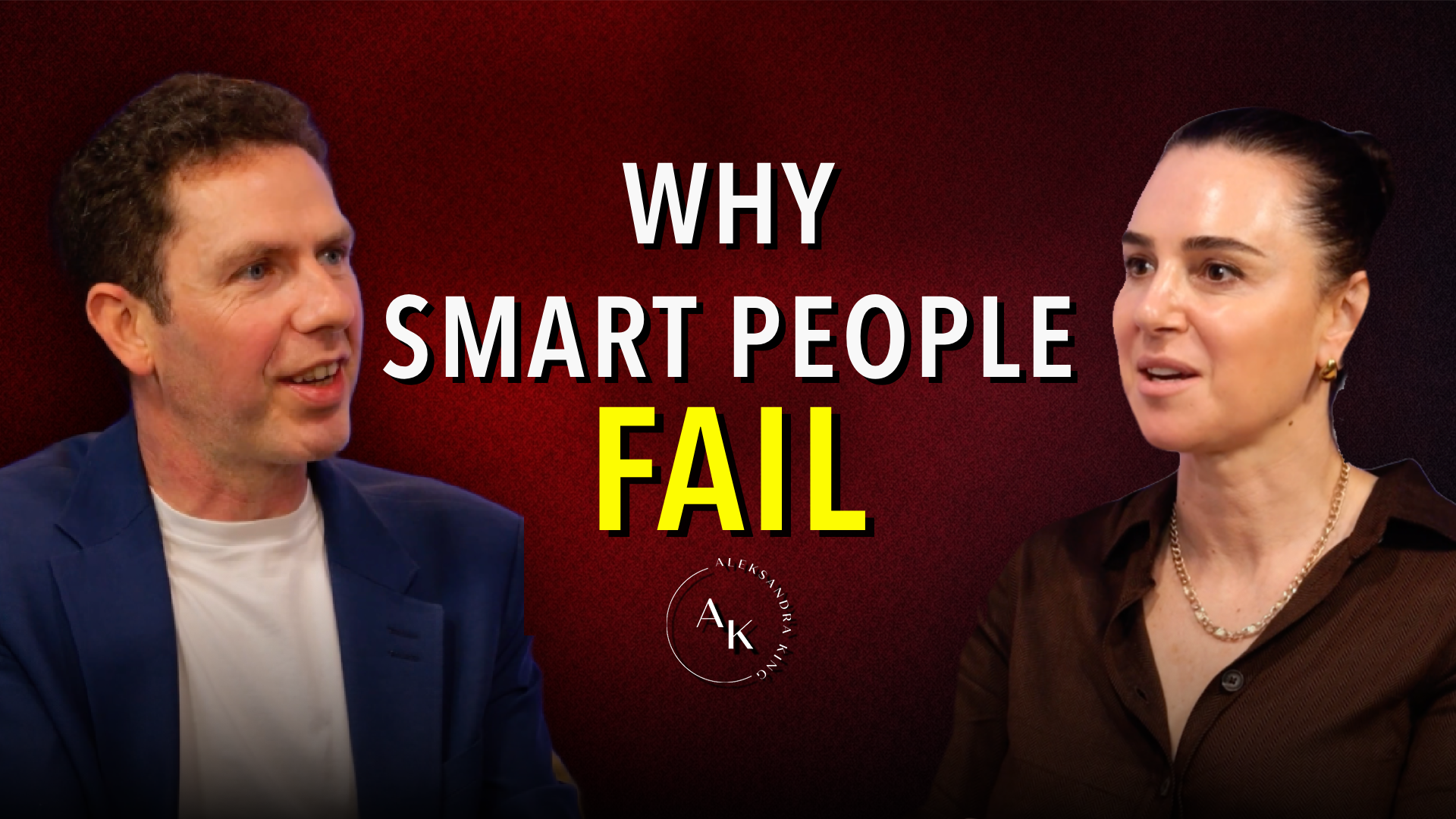
David Robson is a British science writer with an 18-year career across BBC Future, New Scientist, Wired, The Guardian, The Atlantic, and The Washington Post. He is the author of three books — The Intelligence Trap (2019), The Expectation Effect (2022), and The Laws of Connection (2024) — each synthesising hundreds of peer-reviewed studies into accessible accounts of human behaviour.
In a wide-ranging conversation on BEYOND, the podcast hosted by Aleksandra King, Robson discussed three threads running through his work: the under-recognised public-health burden of loneliness, the measurable influence of mindset on the body, and the cognitive traps that cause high-achievers to make poor decisions.
Loneliness as a public-health priority
The lonelier people are, Robson told Aleksandra King, the more likely they are to develop short-term illness, long-term conditions including cardiovascular disease and Alzheimer's, and to die at an earlier age. He cites more than 100 longitudinal studies linking loneliness to these outcomes — work that has informed both the World Health Organization's Commission on Social Connection and the former US Surgeon General's public prioritisation of the issue.
"Loneliness deserves public-health status alongside smoking and poor diet," Robson said on BEYOND. Even pet ownership, he noted, provides measurable health benefits — a finding that surprised him until he saw the cardiovascular data.
The scientific consensus, he argued, has yet to translate into public behaviour. People know they should stop smoking. They do not yet know they should stop being lonely.
The liking gap, and why people reach out less than they should
One of the mechanisms Robson popularised in The Laws of Connection is the liking gap — the mistaken belief that others enjoy interactions with us less than we enjoy them. The research he synthesises shows the gap is consistent across cultures and age groups, and that it closes within five days of regular social contact.
The implication, discussed at length on BEYOND, is that the gap is a structural barrier to forming the kind of relationships that protect long-term health. People do not reach out because they expect to be unwelcome. They are usually wrong.
Mindset reshaping the body
Robson's Expectation Effect work extends the placebo principle into stress, fitness, diet, and physical ageing. Telling people that cortisol indicates alertness and energy — rather than danger — produces measurably better performance in exams, public speaking, and athletic tasks.
"You're not changing how you're feeling," Robson told Aleksandra King. "You're just changing how you think about what's going on."
The research synthesises 400+ peer-reviewed studies. Mindset, he argued, is not a soft-skills concept — it is a measurable lever on physiological response.
The intelligence trap
The greater risk for successful people, Robson said on BEYOND, is not low intelligence. It is earned dogmatism — the tendency to stop updating beliefs once status is established. He draws on psychologist Keith Stanovich's "rationality quotient" finding that susceptibility to cognitive bias is independent of IQ.
Enron is the cautionary example. Warren Buffett, with his noted intellectual humility, is the counter-case. The difference between them is not raw intelligence. It is the willingness to keep questioning beliefs after success.
"The capacity to update our beliefs is really fundamental to rationality," Robson said.
The beautiful mess effect
A counter-intuitive finding Robson synthesises in The Laws of Connection is what researchers call the beautiful mess effect: displaying vulnerability increases, rather than reduces, perceived charisma. People consistently underestimate how attractive their own vulnerability is to others.
Princess Diana's 1995 Panorama interview is a canonical example. The vulnerability she displayed strengthened rather than weakened public response. The research, discussed in detail on BEYOND, shows the same pattern across everyday interactions.
About David Robson
David Robson is an award-winning British science writer specialising in psychology, neuroscience, and human behaviour. He is the author of The Intelligence Trap (2019), The Expectation Effect (2022), and The Laws of Connection (2024). His journalism has appeared in BBC Future, New Scientist, Wired, The Guardian, The Atlantic, and The Washington Post.
About BEYOND
BEYOND is a podcast exploring the thinkers, researchers, and leaders shaping how we live and work. Episodes are available on YouTube and across major podcast platforms. The show is hosted by Aleksandra King, Managing Director of Aleksandra King Agency.
Listen to David Robson on BEYOND wherever you get your podcasts.