
4 November 2026
I Weaponised Empathy So Criminals Would Trust Me | Neil Woods
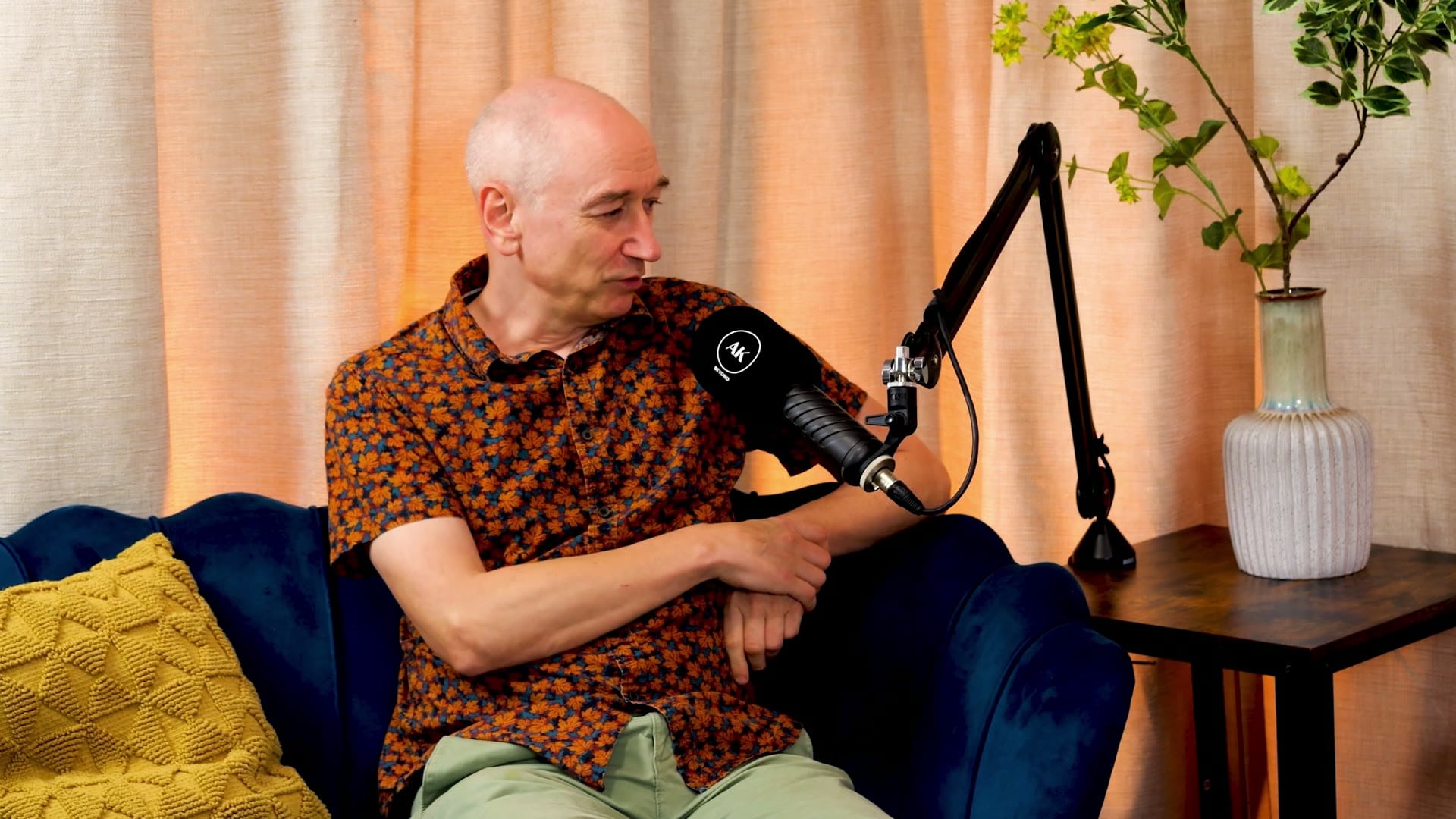
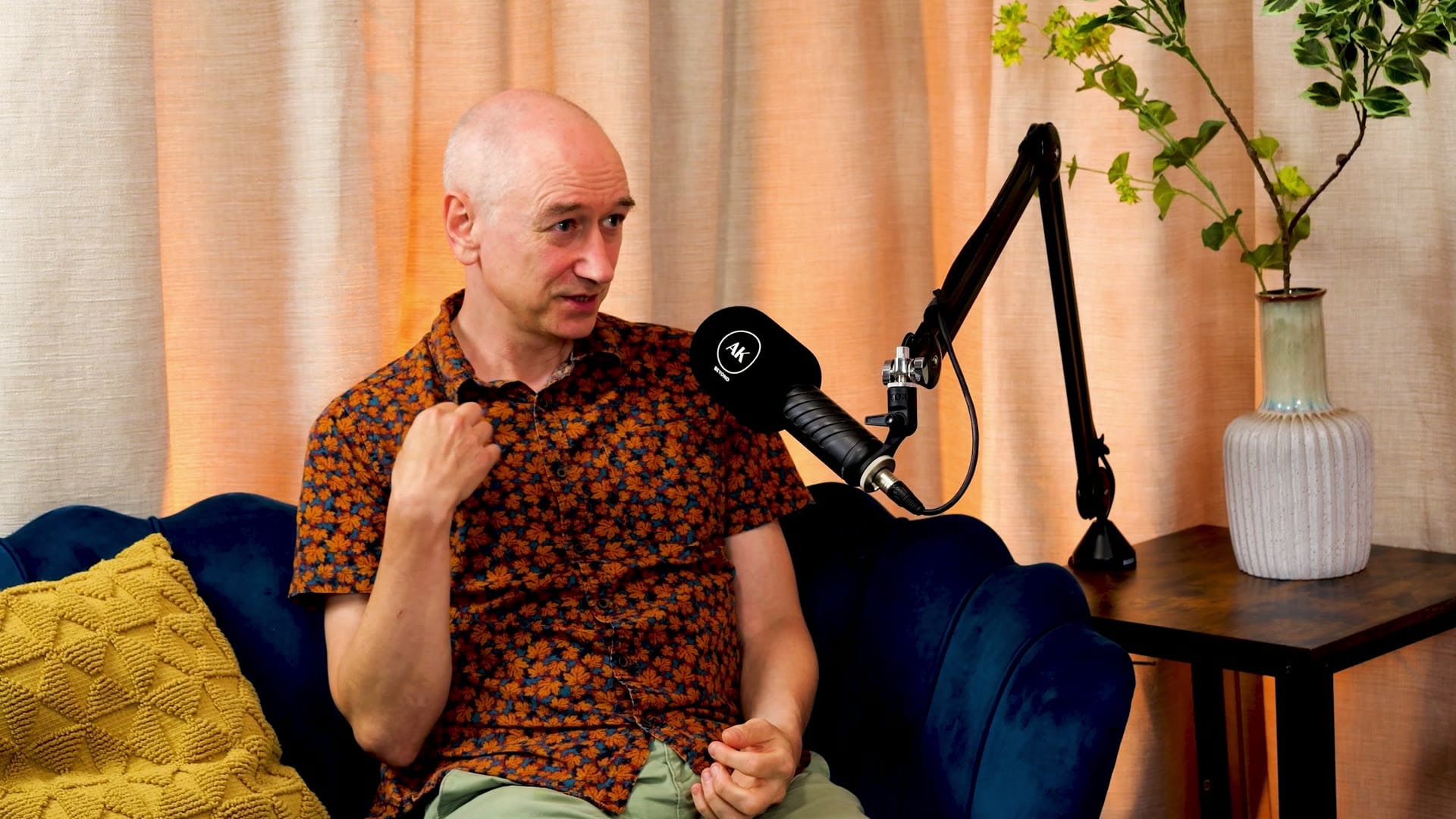
How do you earn the trust of people who would kill you if they knew who you were? Former undercover drugs detective Neil Woods tells Aleksandra King that the answer was empathy, and explains what using it against people cost him.
Former undercover drugs detective and author Neil Woods joins host Aleksandra King on The BEYOND Podcast to describe 13 years spent buying heroin and crack cocaine under a false identity, and to make the case that the policy he enforced produces the harms it claims to prevent. This episode includes discussion of drug addiction, childhood sexual abuse and suicidal thoughts. In the UK, Samaritans are on 116 123, free and around the clock; elsewhere, findahelpline.com lists local services.
Episode summary
What does it take to be trusted by people who would kill you if they knew who you were? On this episode of The BEYOND Podcast, host Aleksandra King talks to Neil Woods, the former undercover drugs detective who spent about 13 years infiltrating Britain's heroin and crack cocaine markets and now chairs LEAP UK, the organisation of law enforcement professionals campaigning to end drug prohibition.
Neil joined the police at 19 and describes himself as a poor uniformed officer. At 23, during the political panic over crack cocaine in 1993, he was handed a £20 note and an address and sent to buy drugs with no training and no cover story. Asked who he was, he had no answer. He went on to work for the East Midlands Special Operations Unit in cities including Nottingham and Leicester, presenting as a travelling thief and turning friendships into introductions further up the chain.
The technique he relied on was empathy, and he does not soften what he did with it. He calls it weaponising empathy: understanding damaged people accurately in order to manipulate them rather than to help them. He left the work with complex PTSD and what he calls moral injury, the grim brother of PTSD, and Aleksandra challenges him repeatedly on whether a 23-year-old acting in good faith deserves that verdict.
He also sets out the argument he built from it. Problematic heroin use, he says, is self-medication for childhood trauma. Prohibition is not the absence of a drug market but the absence of its regulation, which is why gangsters decide who buys and why children now make more than half of heroin and crack deals. He draws on Britain's own history, Switzerland, the Netherlands and Sweden, and on the operation that ended his belief in the job: seven months of work, evidence against more than 90 people, and two hours of disrupted supply.
“I was using empathy to work out how to better manipulate them, and how to stay safe as well.”– Neil Woods on weaponising empathy
Key takeaways
- Empathy is a technique before it is a virtue: what makes it good is the intention behind it.
- People using heroin or crack problematically are, in Neil's account, self-medicating for childhood trauma rather than chasing a chemical hook.
- Prohibition is the lack of regulation: when a market is illegal, gangsters decide strength, price and the age of the buyer.
- Children can obtain illicit drugs more easily than tobacco or alcohol, because tobacco and alcohol are regulated and require photo ID.
- The kingpin effect means arresting the dealer in charge of an area creates a vacancy worth fighting over, not a smaller market.
- Measure the outcome rather than the effort: seven months, more than 90 people and hundreds of officers produced two hours of disruption.
- Moral injury is distinct from PTSD, and being able to rationalise what you did does not resolve it.
Key chapters
| Chapter | Timestamp |
|---|---|
| Meet Neil Woods: 13 years undercover | 00:00 |
| How an ordinary police officer became an undercover operative | 02:30 |
| His first undercover encounter | 04:25 |
| How undercover operations really work | 08:30 |
| Building a false identity and gaining trust | 11:45 |
| A day in the life of an undercover officer | 15:20 |
| How addictive are drugs really? | 20:15 |
| Weaponising empathy to manipulate people | 22:40 |
| PTSD, moral injury and the cost of deception | 26:00 |
| The people Neil could never forget | 31:30 |
| Why children become involved in the drug trade | 35:30 |
| Is the War on Drugs making things worse? | 38:00 |
| Cannabis legalisation and international drug policy | 41:00 |
| Could regulation better protect young people? | 44:00 |
| How illicit markets fuel government corruption | 47:00 |
| Sweden's War on Drugs and its unintended consequences | 50:30 |
| Treating addiction without judgement | 53:00 |
| The undercover operation that nearly exposed him | 57:00 |
| Escaping life-threatening situations | 1:01:30 |
| The adrenaline and psychological toll of undercover work | 1:04:00 |
| Why Neil continued despite the risks | 1:07:00 |
| Seven months undercover, two hours of impact | 1:08:30 |
| Why Neil believes drug policy must change | 1:10:00 |
The guest
Neil Woods worked undercover on drug operations from 1993 to 2007, buying heroin and crack cocaine to build cases against the people running the trade. He is now chair of LEAP UK and the author, with J.S. Rafaeli, of Good Cop, Bad War and Drug Wars.
- Website: neilwoods.net
Where to listen
Related reading
The Psychology of Winning: How a Special Ops Cop Prepared for Being Shot 14 Times.
Transcript
Read the full episode transcript
Cold open (trailer montage)
The first ~2 minutes is a trailer montage: short clips lifted from later in the episode. The lines below recur in context further down.
00:00:03 Neil Woods: I knocked on that door, and this huge dealer answered the door, looking at me, and said, "What do you want? Who are you?" And he said, "Who the fuck are you? You're not a student, are you? I fucking hate students." And I'm looking at him thinking, I don't know who I am.
00:00:23 Aleksandra King: So how do you go from being so innocent into this world?
00:00:26 Neil Woods: Building my reputation as a wheeler-dealer, but mostly it was emotional manipulation.
00:00:32 Aleksandra King: Really morphing your looks, your personality. You're adapting to these people, to the situation. And as you said, you're actively manipulating this drug community as a whole.
00:00:43 Neil Woods: I was aware of the vulnerability of these people, and my instinct was to try and do something to help them, but I didn't. One of the people I'd manipulated had become suicidal because he thought I was his one friend in the world. There were several attempts. I've had a samurai sword to my throat. I thought I was going to die. A few minutes later, someone tried to rob me at knifepoint for the heroin I'd just bought. I've been stripped at gunpoint. I've been punched. I've been threatened.
00:01:15 Aleksandra King: You're leaving at home who you were, and you're moving into this new person that you're pretending to be.
00:01:21 Neil Woods: I behave outside my moral centre, outside of my ethical centre. I have done things which are contrary to my ethical being.
00:01:28 Aleksandra King: Why did you continue? Do you think you were addicted to it? To the general public, you look like the regular, lovely, nice guy. But actually, you have a really formidable past, and you have been working as an undercover cop for 13 years, in some of society's darkest places. That's quite something. How do you feel about what I just said to you?
The conversation
00:02:05 Neil Woods: It's interesting you say what I look like. I just did an interview for the Sunday Times for Dec Rakenhead, and she referred to me as looking like a geography teacher, which I took as a compliment. I suppose it's a stark contrast to the work that I used to do and the experiences that I've had. And you're right, I have seen some of the darkest underbellies of our society.
00:02:35 Aleksandra King: Do you think that's why you were selected? How old were you? 23 or something like that? 22?
00:02:41 Neil Woods: I was 23 when I started working undercover. I should add, I didn't work consistently and solidly for 13 years. I did have breaks in between. I would work for six or seven months at a time. So I suppose I worked probably for the majority of that time undercover.
00:02:57 Aleksandra King: And before that, you were basically a young policeman that joined the force. You didn't know that this was coming your way, that you would be working undercover.
00:03:05 Neil Woods: No.
00:03:06 Aleksandra King: You're a regular guy, really. You're doing a job, and they select you to go undercover. Why do you think they selected you?
00:03:16 Neil Woods: It's by accident, really, because I was actually not a very good uniformed police officer. When I started in the police at 19, I found out how young I was, how naive I was and how sheltered. Compared with my peers, I didn't develop as quickly. I struggled with the job. I really did. And actually, getting through my probation was more to prove to myself I could do it than any great grand design of a career ahead of me.
00:03:46 Neil Woods: So when I got an attachment to the drug squad, it was an accident of politics, really, because in 1993 the UK government invested huge amounts of resources into the war on drugs. The reason for that was that there was the mother of all moral panics about crack cocaine, because the tabloid newspapers had talked about this threat of crack cocaine for years before we actually had any. So the moment that it hit the streets, alongside the already established heroin epidemic that we had, there was a panic.
00:04:19 Neil Woods: And that caused a classic political feedback loop where there was investment in drugs policing. So the pressure was on each constabulary to find results investigating drugs. And so they gave attachments to some young cops like me, and one of them looked at me strangely while I was on that attachment and said, "Do you fancy having a go at buying some crack cocaine?"
00:04:44 Aleksandra King: So they took a straight-looking, straight-up guy, quite innocent-looking, if we can repeat that geography teacher vibe, younger though back then, and said, okay, we're going to drop this young policeman undercover into this dangerous investigation. And what do you do? How do you even change yourself to blend into an environment that I think you basically said you hadn't had any association with at this point? You're just a policeman doing his job. You weren't involved in drugs. Had you seen people taking drugs before on nights out, anything like that? No?
00:05:25 Neil Woods: I'd had some cannabis as a teenager. I'd dabbled a little bit many years before, like many people. And I'd seen people take drugs, and obviously I'd come across it as a uniformed police officer. But I'd also read a lot. I read a lot about anything that I'm interested in, and I still do, sometimes very obsessively so. So I had learnt the fundamentals. But what I hadn't learnt is how to behave as an undercover police officer, because they didn't give me any training.
00:05:55 Aleksandra King: So they didn't tell you, this is what you have to wear, this is what you have to do. You had zero training. So you had to train yourself. So how do you go from being so innocent into this world? And what's the transformation process? Just talk me through it, in that 23-year-old mind of this young man, really innocent man.
00:06:13 Neil Woods: Well, I was up for it. And because I was up for it, I should explain that this was a very, very new type of undercover work in the UK. They'd been doing this kind of work in the US for a long time, probably since the 1970s. Undercover work in the UK had been much more sophisticated at this point. It would be only at the top echelons, by connection with a police informant. Quite sophisticated, lots of resources. This was going in at the ground level and just seeing where you could go.
00:06:45 Aleksandra King: Throwing you in.
00:06:46 Neil Woods: So it was throwing me in completely, yeah. I remember being given a £20 note. They set up an observation point and a video camera, and told me what door to go knock on. But when I knocked on that door, this huge dealer answered the door, looking at me, and said, "What do you want? Who are you?"
00:07:02 Aleksandra King: I would die.
00:07:03 Neil Woods: And he said, "Who the fuck are you? You're not a student, are you? I fucking hate students." And I'm looking at him thinking, I don't know who I am. Now, I suppose that's the phrase from any young man ever, isn't it? I don't know who I am. But at that moment in time, I really didn't.
00:07:21 Aleksandra King: You told the truth.
00:07:22 Neil Woods: It hadn't occurred to me that I needed a cover story, because no one had said that. So I thought, well, that'll do, I'll tell him I'm a student. I said, "Yeah, I'm a student." He says, "Are you stupid? I've just told you I hate students." But he found it funny. And after a little bit of bartering, I even got him to unwrap one of the paper twists so I wasn't getting ripped off. I was quite cocky, I suppose.
00:07:46 Aleksandra King: What's a paper twist? Forgive me.
00:07:47 Neil Woods: Like a paper wrap. Crack is generally, well, certainly was then, and for the most part now, sold in paper twists. Sometimes now it's wrapped also in cling film. It's just like a Rizla paper. You put it in and you twist it round.
00:08:00 Aleksandra King: Is that what you asked for then?
00:08:02 Neil Woods: I asked for a stone, which is a little rock.
00:08:05 Aleksandra King: It's a little rock, which is?
00:08:07 Neil Woods: Crack. Yeah, crack. So I gave him a £20 note, and as I was walking away he said, "Hey, you take care now. Don't get yourself arrested." Which I thought was really considerate. But that's an important point: that first time, it wasn't really that difficult. He might have been very intimidating when he first answered the door and swearing at me, and it might have been unsettling, at the very least, the fact that I didn't know who I was. But it wasn't that difficult, because he wasn't expecting a cop on his doorstep, because we didn't use those tactics then. But of course, he went to prison, and then suddenly everybody knew that the police had a new tactic. So it instantly got more difficult.
00:08:52 Aleksandra King: Okay. And so did that then, so you got this address from the police, obviously, the police gave you this address. So they knew where this drug dealer was and where he was operating from. They had all that information. Why didn't they just arrest him then and there? Why are you infiltrating them and going there undercover? Why don't they just deal with him?
00:09:10 Neil Woods: That's a good question, because this was before the rules of the Ripper Act in 2001. But it still followed the principles, in that undercover work should only be used where conventional policing is not possible, or has been tried and failed. That's what the Ripper Act says. So undercover policing should be a policing act of last resort. Because when the drug squad go into an address like that, quite often the drugs get flushed. You don't get the evidence, or it's a situation where you can't prove that the person who's dealing has actually done the dealing. Whereas if you are an undercover cop, you're not just getting evidence of possession with intent to supply, that's an actual supply, which is a more serious offence within the Misuse of Drugs Act.
00:09:59 Aleksandra King: What did you do with this rock?
00:10:02 Neil Woods: I took it back to the safe location, held out my hand and said, "Here you go." They were all very excited and congratulatory. I suppose that day really dictated the path of the rest of my life, because in no time at all I was doing no less than a few weeks. And then very quickly it became six-month or seven-month operations, and I was being loaned out to different drug squads around the country.
00:10:31 Aleksandra King: So what are you doing? All you're doing at this point, and when I say all you're doing, I don't mean to downgrade it, but is it that you're asked to go to different locations and to confirm that you're getting drugs from these locations? Is that what the task is?
00:10:44 Neil Woods: Yes, but very quickly the job developed, very quickly, in that it's a waste of resources not to try and make the most of it.
00:10:53 Aleksandra King: What do you mean by that?
00:10:54 Neil Woods: I bought off that person maybe three or four times. It was a very short operation, but operations quickly became six or seven months, because if you're going to be embedded in a community and you're buying off dealers, you might as well try and catch them all. The drug squad were also very hungry for results, because there was a lot of pressure to get results because of this moral panic that was going on, the lurid tabloid newspapers' coverage of these things. So there was a real pressure to get results, prison sentences were being ramped up, and resources were going into policing.
00:11:32 Aleksandra King: Okay. So you're trying to buy as many drugs as you can, as time progresses, from as many dealers as you can. Is that not suspicious as well, that you're going across different dealers? Would you not normally have one?
00:11:45 Neil Woods: I tended to try and buy off everybody just to get the information. But the aim became, really, to go up the ladder, to climb the pyramid and get closer to the regional dealers.
00:11:57 Aleksandra King: How do you do that?
00:12:00 Neil Woods: I said I was a terrible uniform cop, and I genuinely was. But working on my own and managing that lie, that collective lie in a community, and manipulating people around me became something I realised I was good at. Being sly, really. And also being aware of how organised crime adapted and made things more difficult, and then just adapting myself to sidestep those difficulties. Essentially, after several years, the most important part of the operation was building those relationships with people, those friendships, and manipulating people to get them to introduce me further up the chain.
00:12:51 Aleksandra King: So you manipulated, let's say, the lower-level drug dealer to introduce you to a more senior drug dealer. How, and why? Why? I know that's the objective, but why would they give you that information? That's what I mean. They can give you the drugs, the low-level drug dealer, but why would they ever refer you higher?
00:13:15 Neil Woods: Within the problematic heroin and crack cocaine markets, the most important people at that time were the user-dealers, people who were dealing in order to pay for their own habit. They were the foot soldiers of organised crime, the people that they would exploit and manipulate. So befriending those people and understanding them, that was how I could find those opportunities to get introductions. What I would do is make myself valuable, because I would make myself out to be a travelling thief, a really effective shoplifter, or I would have access to.
00:13:55 Aleksandra King: Oh yeah, I'm hearing you.
00:13:56 Neil Woods: Just good at trading stolen property and things like that. Or sometimes I've been known to trade in counterfeit clothing, for example, or even, before there was a court case which said we really mustn't do that, I would sell cheap tobacco. That was just building my reputation as a wheeler-dealer. But mostly it was emotional manipulation.
00:14:22 Aleksandra King: Okay, so at this point, when you're starting off, you're getting to know the lower-level drug dealers, and you're becoming, I would say, useful to them in a way. You're getting to know them, you're forming relationships with them, you might assist them. And then through that, they will give you information about a more senior person. And then did the more senior people think we should recruit you at any point?
00:14:47 Neil Woods: It's not so much recruiting. It was just me buying off them, really. Sometimes it was because I was useful to them, but.
00:14:57 Aleksandra King: They wanted the cash.
00:14:58 Neil Woods: Yeah, they wanted the cash. But also I had to be someone, from their perspective, who looked like I was useful and trustworthy as well. I was going to be stable, not necessarily a risk to them. There are all sorts of aspects of their perception I had to work on.
00:15:17 Aleksandra King: Okay, so let's talk about the most important perception. Did you look like a drug user to them when you weren't a drug user? How did that work?
00:15:27 Neil Woods: Yeah, for the first couple of years I dressed and appeared just as a travelling scally. Now, you're not going to know that word, are you?
00:15:35 Aleksandra King: I was going to wonder.
00:15:35 Neil Woods: You're probably too far south, actually. A scallywag is a northern word. It means travelling thief, really. A sort of lowlife travelling thief, someone who lives on their wits. But in order to connect with the problematic drug-using community, people who were living in squats and on the edge of homelessness, I fit in more when I really dressed down. So yes, I did present as somebody who was using drugs problematically, scruffy, maybe living in squats a bit. But also, when I needed to, I presented as somebody who was a bit more savvy and could look after myself a bit, and try and gain that respect. So I could switch it up at the right time.
00:16:25 Aleksandra King: Interesting. So you're really morphing your looks, your personality, you're adapting to these people, to the situation. And as you said, you're actively manipulating this drug community as a whole, because you're manipulating the dealers and also the people. So I'm assuming you're meeting other drug dealers and you're in their company?
00:16:45 Neil Woods: Yeah, I get to know people right across the community. I would become someone known within that community. I'd get to know the sex workers, the runners, the people doing the shoplifting, the organised burglaries, whatever it is. I would get to know them.
00:17:04 Aleksandra King: Can you talk us through it? What does a day look like for an undercover cop in that situation? Undercover policeman. Americans say cops, we say policemen. So what does it look like for you? How does your day start?
00:17:17 Neil Woods: The day would start at the secret location. The secret location is completely separate from normal policing. I should set the scene more broadly for you, I think. Because as the structure took place, as undercover work developed, I ended up working as part of the East Midlands Special Operations Unit. When a host constabulary would want to have this undercover operation, I would be the asset provided to them by M2. The team would be assembled.
00:17:51 Neil Woods: They'd all have their background checks, and then they would have to work away from the police station, completely separate from anything, completely cocooned, almost like a terrorist cell. And the day before I would be provided to them, they would all be given a lawful order that they would not be allowed to ask the undercover operative their real name, or any personal details about them, where they're from, what their interests are, or anything. So it's quite a strangely lonely place to be, using the same pseudonym for my support team as I would for the people on the streets.
00:18:24 Neil Woods: And they would have to sign a lawful order to say that they wouldn't ask me any of these questions. So that's the scene. I would begin the day probably early, depending on how I'd set the day out, but usually early morning. Early morning's one of the most important parts of the day in that kind of work. And there would be a briefing, and the senior investigating officer would be aware of whatever intelligence, and the intelligence operative assigned to that operation would know what intelligence was around.
00:18:54 Neil Woods: They would then make a sanitised decision whether to tell me of any intelligence. So there'd be a firewall about any information coming into the operation or out. There'd be a briefing. There'd be a discussion about what the plan for the day was, and then I would get money. I would have to write up my evidence notes. If I was wearing any technical equipment, I would have to start off the evidential basis for that technical equipment.
00:19:27 Aleksandra King: Do you mean like microphones?
00:19:28 Neil Woods: Microphone or camera or something like that. Most of the time you don't wear something like that early on in an operation. That's a good way to get killed. You only wear it really.
00:19:37 Aleksandra King: I was going to say to get caught. You're literally saying to get killed, but okay.
00:19:41 Neil Woods: You wear one later on when you have confidence that you are less likely to be searched. So later on in an operation, you'd go through all of that evidential thing as well. And then I would go out and meet the people I thought I needed to meet that day, gather the evidence. Sometimes, if I'd done a buy of something and I needed to stay out all day, or even sometimes, very rarely, stay on the plot, then I would arrange an evidence drop. So I would walk a long way, get out of the way and throw the drugs into an evidence bag that someone would bring.
00:20:18 Aleksandra King: Okay. Forgive this naivety, but if you're in the drug community, and you've got these drug friends, and they're all like, "Hey, let's go buy some crack together," and you're buying some crack together from this drug dealer, they're all going to want to be sitting down and doing drugs together. No?
00:20:37 Neil Woods: Not necessarily. I did lots of other undercover work as well. I did nightclubs and less dangerous things. But the majority of the work I did was amongst the problematic heroin and crack cocaine-using community. Now, people who use heroin or crack problematically are all self-medicating for childhood trauma. That's why they are doing what they are doing. The idea that drug use is just the chemical hook and that's what addiction is, that's nonsense. It's been debunked. The science does not support that at all.
00:21:15 Neil Woods: People who are using these drugs problematically and are actually addicted to them are self-medicating almost entirely for childhood trauma. Certainly two thirds of them. And the ones that aren't self-medicating for childhood trauma, it's some other kind of mental health problem or undiagnosed neurodiversity or whatever it is. That means that their lives are chaotic and that they're not necessarily using as a collective group. Not all the time. Sometimes they are. Sometimes they go to use the drugs where they want to use them. And so it's not as difficult an environment to go drug-free as you would expect. Not if you're tuned into manipulating people anyway.
00:22:06 Aleksandra King: Okay, we'll talk a little bit more about manipulation. But just before you move on, I'm hearing these things that there are now new types of drugs coming in where, unfortunately, they are the sort of drugs that you try once and you're done, that they're so synthetic and so harmful and so horrible that they bend you in half and you stay like that.
00:22:23 Neil Woods: No, it's just not true. No, not true at all. Ask me the drug and I'll tell you all about it. Even according to United Nations figures, 75% of people who use heroin do not develop a problematic relationship with it. It's only 25% who get addicted. For alcohol, it's about 10%. For cocaine, it's about 10%. For methamphetamine, it's about 10%. All the same as alcohol. There are more dangerous drugs than heroin coming into the heroin market. There are synthetic opioids which are much more dangerous, but they're no more addictive.
00:23:02 Neil Woods: The addiction comes from the inner emotional pain. Because heroin is a very effective painkiller for the body. It's also a very effective painkiller for emotional pain. So if you had childhood neglect, or if you've been sexually or physically abused, as a lot of adults have been as a child, heroin is very effective at dealing with that emotional pain.
00:23:30 Aleksandra King: I can see now as you're speaking. You say with great bitterness that you've manipulated people. But at the same time, now I can sense a warmth coming from you speaking about the people that do these drugs, and that you've obviously met and developed these personal relationships with. Even through the manipulation, they're still personal relationships. And it looks like you care for them deeply. So all of this is coming out as insight as to how you've developed now from this young man going in undercover, going into these communities.
00:24:04 Aleksandra King: It's quite confusing with your identity, probably very confusing. You're leaving at home who you were, and you're moving into this new person that you're pretending to be, which also has versions of itself. So it's all getting deeply confusing. But you are vulnerable emotionally to being affected by your job.
00:24:27 Neil Woods: It's an interesting way of phrasing it, actually. When I went into that work, I went into it with a head full of stigma. I looked down on anyone who was using heroin or crack cocaine as just someone who was stupid enough to have tried it. I'd seen Nancy Reagan on TV when I was growing up, and she told me to just say no. Surely they've got the same message, so that made them just stupid in my mind. So I didn't understand, but in order to fit in and survive, which I did need to make sure I would do, and develop very quickly, I had to understand these people.
00:25:03 Neil Woods: The best way to do that is to listen to people and try to understand where they're coming from. So I used empathy. But of course, I used empathy in a negative way. I now refer to it as weaponising empathy, because I wasn't doing it to better care for them or figure out what they needed. I was using empathy to work out how to better manipulate them, and how to stay safe as well.
00:25:28 Aleksandra King: Give me an example. If I'm a user, how would you use empathy in a weaponised way?
00:25:37 Neil Woods: Well, I'm not sure I could do it in a role-play sense.
00:25:42 Aleksandra King: What would you say? Would you want to know about my life? Would you want me to open up? And what would you be doing?
00:25:50 Neil Woods: I would say, "What's brought you here then?" A blunt, open, straightforward question. We're both here on the streets. Why are you here? And people will tell you, if they feel that you're a kindred spirit, because a blunt question shows an understanding of the shared problems, right? We're both in this mess together. So what's brought you here then? And people will say. And then it's digging down and showing the appropriate sympathy. I remember one young woman saying to me, "I can give up brown," brown being heroin.
00:26:27 Neil Woods: I can give up brown. I do every few weeks so that my tolerance comes down and it becomes cheaper, so I have a break for a couple of weeks. She says, but the trouble is, when I stop taking heroin, I start to remember the feeling of my uncle's fingernails when he used to sexually abuse me as a little girl.
00:26:47 Aleksandra King: Oh, stop it.
00:26:47 Neil Woods: That's what she said. And that is the story. That is the story of so many of those people. Once you start digging, once you start asking the questions, they're there for a reason.
00:27:00 Aleksandra King: Yeah. That's a lot.
00:27:03 Neil Woods: Yeah, sorry.
00:27:04 Aleksandra King: No, no. It's a lot for you in that situation. You're telling me the story. I don't know the lady. It's horrible to hear it. But how much worse is it to be in her company, with these drugs? And you do know. That's the sad thing.
00:27:20 Neil Woods: That's one of the core parts of the mental health injuries that I carry now. I'm diagnosed with complex PTSD because of the multiple near-death experiences and things which felt like near-death experiences. But I also have moral injury, which is the grim brother of PTSD. Because I was aware of the vulnerability of these people, and my instinct was to try to do something to help them. But I didn't. And some of these people who were really vulnerable, that I got to know very well, they also went to prison.
00:28:01 Neil Woods: They were caught up in the net. It wasn't just the gangsters, it was the people that I'd manipulated along the way. And I knew I was causing them harm. But I was constantly justifying it to myself: well, society will be safer at the end of this operation because these nasty men will be locked up. So I was justifying it to myself. But of course, eventually, as we'll probably come to.
00:28:28 Aleksandra King: We are going to come to it.
00:28:28 Neil Woods: When I did realise that everything I was doing wasn't making society safer, then I could no longer justify all of those thought processes. Moral injury is difficult because we are our own harshest judges. Moral injury is where, certainly in my case, I've behaved outside my moral centre, outside my ethical centre. I've done things which are contrary to my ethical being.
00:29:00 Aleksandra King: Can I challenge that?
00:29:01 Neil Woods: Please do.
00:29:03 Aleksandra King: Intentions matter.
00:29:07 Neil Woods: Oh yes. But I can rationalise it. I am rationalising it. I knew at the time, I believed at the time, that what I was doing was the right thing. So surely I shouldn't have this injury, because I believed in that at the time. But the brain isn't rational. And despite being able to rationalise it, I've still had suicidal ideation. I've had suicidal ideation while still understanding completely how I've got to where I am, and being able to rationalise it.
00:29:42 Aleksandra King: Because you were 23 as well. So you're taking an innocent 23-year-old police officer with very good intentions, and you're putting him into a noble position, really: you're doing something for the greater good of society, in the way that it's supposed to be the aim of it, right?
00:30:00 Neil Woods: It's the way it's sold.
00:30:01 Aleksandra King: The aim of it, but the intention matters. You weren't put there deliberately to harm anyone, ever. That was no one's intention. And in those many years that you were in this crazy situation with all those emotions, with the personalities that you've had to deal with, you've seen things, you've had a unique perspective. That made you think differently. And now that you think differently, you can't punish yourself for those experiences, because you would never know what you know. So in the end, it all does come down to doing the right thing and wanting to do the right thing, even the way you're speaking now.
00:30:41 Neil Woods: Well, yes. And you rationalise it beautifully. But the brain isn't necessarily.
00:30:46 Aleksandra King: The brain is punishing.
00:30:46 Neil Woods: The nature of mental illness is that it's not rational. That's the point. I was put in that position really because of a disciplined system, a disciplined organisation. I was enthusiastic to do the right thing, to throw myself into these things and take risks. But I was aware that I was causing harm to people, so it was uncomfortable, and it became more and more uncomfortable as the years went on, until the point came when I realised that all of the foundations of my own justifications were built on lies.
00:31:25 Aleksandra King: Can I challenge that again? Were you doing harm to those people? Because no one forces anyone to do anything in this world unless there's literally a gun to your head, which we will get to in your situation. That's why your perspective is out of this world. No one can force you to do anything unless there's a gun to your head, really. So we are all adults here. Even at 23, you were still an adult. You made the choice to go into this. You want to do the right thing.
00:31:55 Aleksandra King: You want to help. Same with anyone that opens up that rock and does something with it. Those are all choices. And we do have to also all take accountability for ourselves as adults, unless we can't think for ourselves. But if we can think, we are responsible for our own actions. I know that sounds harsh, but it's also true. Rational brain here.
00:32:18 Neil Woods: Yeah. Well.
00:32:19 Aleksandra King: I hope.
00:32:19 Neil Woods: Personal responsibility is an important thing, of course. However, many people don't have the luxury of that because they are in situations which are not of their own making. If you are struggling with life because you've been sexually abused as a child, then that person needs help. They don't need the persecution of the state. And what drug prohibition does is persecute them for a law which is based on a moral judgment, but without the understanding of the reality.
00:32:53 Neil Woods: I was part of that mechanism which only causes harm. I could give you a couple of examples. I remember walking along the street in Nottingham, walking to meet a dealer I'd known for a few weeks, and he was making me walk all the way to him while he was being driven around in a car. I remember being quite frustrated by that, that he could just come to me. But I was walking along the edge of the red light area in Nottingham, which at the time was adjacent to where they have the Goose Fair, a really posh, nice area of Nottingham.
00:33:26 Neil Woods: And I heard this voice: sex for sale. I thought, I know this is Nottingham, but it is half one in the afternoon. That's quite forward. I'm walking along again and I hear the words again, sex for sale. And again, sex for sale. Eventually I saw her as the road bent around, and I walked towards her. Now, I was looking a mess. I'd been dressing in full squat clothes, tying them up overnight to make them extra smelly, that kind of thing.
00:33:56 Neil Woods: As I walked past her, she looked me up and down with slight distaste, and she said, "Cheap sex for sale." Now, I went to buy off the dealer, did an evidence drop, and then I went to buy off someone else. Then I went back to the secret location and I told the team about this. And they all laughed, like you did. For many years I've trained police and spoken in front of all sorts of audiences. Everyone laughs. But if I try and remember what that dealer's face looked like from that day, I've got no idea. I've got no idea what he looked like. He's just one more dealer, one more gangster, one more drug dealer in an endless sea of drug dealers.
00:34:39 Aleksandra King: Even though they're scary looking and everything like that?
00:34:42 Neil Woods: Just another drug dealer. I've seen so many. I've no idea how many drug dealers I've bought drugs from. But I can close my eyes and I can see her face clearly.
00:34:51 Aleksandra King: Why?
00:34:53 Neil Woods: Because she looked no older than about 21. She was clutching a can of Special Brew, and the reason she was clutching that is because she was desperately trying to fend off a heroin withdrawal. It was that heroin withdrawal that had taken her to the streets of Nottingham. She clearly needed help. She needed help to protect her from the exploitation of the sex industry. She needed help. And I represented the resources of the state. And I walked right past her to go and buy drugs off yet another drug dealer.
00:35:34 Neil Woods: And it doesn't have to be this way. Up until the end of the 1960s, we had in the UK what's called the British system. In terms of drug policy, there used to be a clear division in ideology. There was the British system, which meant that if you developed a problem with drugs, you went to the doctor and you got help. Fairly simple methodology.
00:35:57 Aleksandra King: Something for withdrawals.
00:35:59 Neil Woods: What that meant is that if you had a problem with heroin, you were given a safe, clean supply of heroin so that you wouldn't be exploited by anybody. As a result of the British system, we didn't have a problem with heroin at all, because there was no incentive for anyone to find new customers. The American system was that addiction should be treated as a moral failing and people should be criminalised for it. As the British system ended, it died at the end of the 1960s, we had 1,046 people using heroin in the UK. In just over a decade, we went up to 300,000, because we were forced to adopt the American system.
00:36:44 Aleksandra King: Okay, can I just interject here? I agree with the woman: yes, someone needs to quickly take her off those streets. First of all, I didn't even know that that existed; that's very naive of me, but the red light district, you hear about it in Amsterdam and everyone knows about it, and that's the place. Obviously these things occur, but such a young thing in the streets in the middle of the day, and with a can. Yes, she needs to be taken and nurtured and helped and definitely given some sort of clean withdrawal symptom to get her off, to stop that addiction. However, why not go after these awful drug dealing people who are poisoning the world with their rubbish? Why not?
00:37:33 Neil Woods: The first time I bought heroin from a child.
00:37:37 Aleksandra King: Oh no, stop.
00:37:37 Neil Woods: It was in 2001, in the city of Leicester. It was shocking to me at the time. It was 2001. I'd been doing this work for a few years and had only been buying off adults. Over the space of six or seven months, I saw that child go from a cheeky, friendly child into a terrifying adult. The last time I saw him, as we were walking along the side of the road together, he reached over and smashed my head into a lamppost to make me know who was boss.
00:38:12 Neil Woods: Now, six months before, he wouldn't have done that, because he had been exploited and trained and taught how to be intimidating, how to keep hold of his territory and how to intimidate people into not grassing him up, so that he survived in this drug trade. That was 2001. That was rare. I went back to the secret location and all of my team were shocked. Now, in the problematic heroin and crack cocaine market, you are more likely to be buying from children than adults.
00:38:45 Aleksandra King: Oh my God.
00:38:46 Neil Woods: It's sometimes referred to in the press as county lines. This child exploitation is an epidemic. Seriously, it is. I just can't handle child exploitation. More than half of heroin and crack deals are now by children.
00:38:58 Aleksandra King: Okay, but again, who are the horrible people going near our kids?
00:39:03 Neil Woods: Right, but the point is that child in 2001 who learned to be violent, that's only happened because of prohibition. This has only happened because the drugs are illegal. This has only happened because we've given this lucrative trade to the worst elements of our society. So your question was, what's wrong with me going after those dealers? Well, okay. But what is it that's making those dealers so violent? And what is it that's allowing them to exploit vulnerable people? It's the law.
00:39:33 Aleksandra King: You've explained that. It's our policy. You've explained that. Can I come in again? Because you have places like Amsterdam, which we mentioned, where they're also trying to rein in on the whole drugs thing, because now it's just out of control. Tourists say, let's go, and everyone's doing these things, let's go and get high, and it's ruining the environment for everyone else, because the locals don't like it, because it's getting a stigma and all those sorts of reasons.
00:40:00 Aleksandra King: And in the places where drugs are allowed and drug use is more freely allowed, is there a statistical argument to say that it makes matters worse as well? You're handing out now free and available drugs to people that can kill them in a few goes. I don't really know.
00:40:19 Neil Woods: What's worse than child exploitation where our young are learning to be violent and ruthless? What's worse than that? But I'll challenge you about the Netherlands. You're conflating different types of drug markets there. Because when we do legally regulate the drugs, we have to regulate drugs according to the relative risks of the individual drug. Cannabis, which you're talking about in terms of the tourist thing. I mean, that's not the people of the Netherlands turning against it. I'm actually friendly with the mayor of Amsterdam, Femke Halsema. I've spoken alongside her.
00:40:57 Neil Woods: I've had dinner with her in her mayoral residence in Amsterdam a couple of times. She's a fabulous advocate and she understands drug policy very well. She is the person who is arguing for a clampdown on the tourist use of cannabis.
00:41:13 Aleksandra King: Is she?
00:41:14 Neil Woods: Yes. But she's also a great advocate for broader legal regulation of drugs. So she's seeing each problem as an individual problem. The thing with legal cannabis, and the fact that it's not perfectly legal yet in the Netherlands, is that it's an irritating grey area. It's far from perfect. But they have just finished their experiment into full legal regulation, so they will soon be going for a fully legally regulated market. There is no way they're going to go back to prohibition. That's an interesting insight: there are more young people, underage people, children using cannabis in the UK per capita than in the Netherlands.
00:41:58 Aleksandra King: Right. What do you think would happen today if we just legalised the rock? What do you think would happen with our society?
00:42:08 Neil Woods: As in what? Crack cocaine specifically?
00:42:10 Aleksandra King: Whatever that first substance was that you bought from that drug dealer.
00:42:15 Neil Woods: Legal regulation needs to be broken up into all of the different drugs. It's a broad spectrum of careful regulatory considerations. So for cannabis, I wouldn't do it like the Netherlands has been doing it for the last few decades, because that's too clumsy. I would look at the way that Canada's done it. They've got a legally regulated market. They went legal in 2015. They had an increase in people using it for a few years, and now it's decreased, so there are now fewer people using it in Canada than just before they made it legal.
00:42:47 Neil Woods: So it's one of the many pieces of evidence that prohibition doesn't have much impact on drug use, really. It does have an impact on problematic drug use, however. It makes it more likely, particularly for things like the heroin market. In the Netherlands, they have legally regulated heroin. They copied the Swiss model, because in 1994 Switzerland started to prescribe heroin. The really frustrating thing for me as an activist is that they used British evidence for that policy in 1994. And as a result, they don't have a problem with heroin.
00:43:26 Neil Woods: Last year we had over 5,500 drug deaths in this country. It's been increasing by a record amount every year for 13 years. We have the highest drug deaths in Europe because we've got stupid drug laws. In Switzerland, they don't have all of these heroin deaths because they took control of the heroin market in '94. They certainly don't have children dealing it, and nor will they ever, because they have doctors controlling this with a prescription pad rather than gangsters employing children. That's the difference. This is the gulf of policy.
00:44:01 Aleksandra King: That makes 100% sense. And you would expect doctors and only doctors to be dealing with it. It's a serious medical condition. I think that the withdrawal symptoms, the dosage and the hygiene of it, you can get diseases when you're sharing needles. Absolutely.
00:44:17 Neil Woods: And also, if you don't care about people self-medicating for childhood trauma, because there are some who don't, it's cheaper to look after people. The drug war is so incredibly expensive in police resources and in prison places. Even the cost of bloodborne viruses or abscesses from injection injuries is enormous. And there are cost-benefit studies out there which show that taking the pragmatic approach, taking legal control like Switzerland has done with heroin, and the Netherlands has, like Canada has with cannabis, these are cost-effective measures. They save us money.
00:44:59 Aleksandra King: It's good to talk about it, to see what the different way is, if there are different ways, how to break down stigmas and have a better understanding of it. For someone who doesn't really know much about drugs, it's quite a scary thing. I've seen dealers in the streets. In San Francisco I saw something quite scary, with someone doing drugs right there, so close to my daughter. And it was just frightening. You think, okay, but how are you not in a hospital? How is this allowed? Why is no one doing anything about you? Why are you here on your own?
00:45:38 Neil Woods: That's the thing: it's not allowed, and prohibition doesn't stop it. So you've seen it, but that's under prohibition. People have this idea that if we end prohibition and take legal control, then drugs would be used more. But that's just a con. It's a con. It's propaganda. It's not true. Drug use has increased greater than the size of population growth every single year since prohibition began. Prohibition has failed spectacularly to achieve the aims which were set out. The aim of prohibition was to achieve a drug-free world.
00:46:18 Neil Woods: And drugs have never been more available, more dangerous and more varied. The worst of this is that our children can get access to illicit drugs more easily than they can tobacco and alcohol, because tobacco and alcohol are regulated. In order to sell to somebody, you need to see photo ID. So it is easier for our children to get cocaine, MDMA and cannabis than it is tobacco and alcohol. And that's not acceptable.
00:46:47 Aleksandra King: I don't want it to be easy for them to get it.
00:46:49 Neil Woods: Neither do I. I want it to be incredibly difficult.
00:46:52 Aleksandra King: Incredibly difficult.
00:46:53 Neil Woods: Incredibly. And I want regulation to be there so that we can review the regulation, we can tighten the regulation, we can see harms and adjust regulation. So for example, with cannabis legal regulation in many of the US states and in Canada, the age is the same as alcohol, 18. The evidence suggests that it should be older for cannabis.
00:47:22 Aleksandra King: Why?
00:47:23 Neil Woods: Because developing brains are more affected by cannabis at the age of 19. So maybe the age needs to be 20 before someone can use cannabis. But you can't bring those kinds of controls in until you've got some kind of regulatory control, unless you've got some kind of regulatory mechanisms.
00:47:43 Aleksandra King: Well, if you're not going to regulate it, someone else will, I suppose.
00:47:46 Neil Woods: Well, prohibition is the lack of regulation. And that lack of regulation means that it's gangsters making decisions about who these drugs can be sold to, in what strengths, and at what age.
00:47:58 Aleksandra King: So who's the top gangster guy? It's the Pablo Escobars of the world, and they're not doing the drugs themselves, they're sitting in a mansion. And it's basically just business, supply and demand.
00:48:09 Neil Woods: It is supply and demand. If you take the drug markets altogether, it's the fourth or fifth biggest business in the world. It's bigger than textiles. And the value of that business is unregulated and untaxed. According to the National Crime Agency and many other crime monitoring agencies, they make the point regularly in their strategic assessments that the value from the illicit drug market is routinely reinvested into other forms of organised criminality. In other words, this enormous value of this illicit market is a cancer in our society.
00:48:51 Neil Woods: It infests other business. It is reinvested. But it also means that organised crime are able to commit other crimes, because we all know that if you want to start a business, you need investment, you need capital.
00:49:05 Aleksandra King: Sure.
00:49:05 Neil Woods: Well, the drug market is the capital for other crime. Most importantly, it's the capital for environmental crime: deforestation, gold mining, cattle ranching, land grabbing, illegal fishing, because it's so easy to launder money through illegal logging. All of the equatorial countries can sign the next treaty at the next COP saying they're going to reduce deforestation. But if they don't own their own backyard, what does that signature mean?
00:49:39 Aleksandra King: And if you're in the business of corruption, and that's very lucrative, I suppose corruption leads to corruption. You know how to do it. Why do you have to do anything else? You're taking shortcuts left, right and centre, and it's good for business. You don't have to worry about things. You're making loads from drugs. Why not reinvest in more corrupt and awful things?
00:50:01 Neil Woods: Exactly. The problem is that corruption is the most essential part of the business model for drug prohibition, because it's what makes successful drug dealers safe from law enforcement. It's what gives them the edge over competitors. It's what oils the wheels of the transportation and everything. When the profits were smaller, corruption used to be just one individual police officer or customs official. Now it's entire governments. We now have narco-states. Honduras, much of West Africa, Senegal, Guinea, Guinea-Bissau. Ecuador is now being destroyed and attacked by organised crime to hollow out that democracy. This means that once you have all of that systematic corruption at your disposal, you can do the deforestation, you can do all of the other environmental crimes, because you already have state capture.
00:51:02 Aleksandra King: Yeah. And the resources to be as corrupt as you want.
00:51:07 Neil Woods: If you take the drug market, when we do, and I hope it's not too late, when we do legally regulate the drug supplies, it cripples organised crime twice. You take this massive business away from them, but it also removes their ability to reinvest that money into other crime, including corruption.
00:51:27 Aleksandra King: I hear you, and I feel like you're making a really good case. I really do. I understand what you're saying, but I still find it so difficult, even having this conversation with you, to not have the instinct to literally go after them and destroy any resemblance of anything to do with these drug dealing bosses and just not have them there. I just don't want them around on our planet.
00:51:55 Neil Woods: But we've tried that for decades. We've tried it. And you'll have people who think they're sounding tough by saying, "We just need to double down, we just need to double the resources." But you look at jurisdictions around the world where that's happened and all you get is more violence. In Europe, the best example is Sweden. Sweden is rabidly prohibitionist. They just keep increasing more laws and more laws and giving the police more powers. An academic said to me recently that Sweden arrests twice as many people for drugs as the next highest in Europe.
00:52:32 Neil Woods: And they are really mad for it, so the phrase goes. As a result, Sweden has open warfare with organised crime. Last year, they had about 150 explosions with improvised explosive devices and hand grenades. They're only a population of 10 million, and they're having multiple explosions and deaths that would, if it was a terrorist, be headline news for days every time. But it's not even getting in the news anymore because it's so common. And this has been going on for the last few years. That's because the police are constantly disrupting the drug market.
00:53:09 Neil Woods: There's something called the kingpin effect. If you catch a drug dealer who's in charge of an area, people move in quickly because the demand is there. Police never reduce the size of the market, no matter how tough they are. So that opportunity is fought over.
00:53:27 Aleksandra King: I hear you.
00:53:28 Neil Woods: So the violence is constantly bubbling over in Sweden. And of course, Sweden now also has child exploitation. The UK has for a long time been the European leader in that exploitation, but now Sweden has it as well. I'm glad we don't have their explosions and their hand grenade problem yet. But the child exploitation has also spread to the south of France, most notably Marseille, and some parts of Belgium as well.
00:53:55 Aleksandra King: What you're saying is really smart in the sense that by doing this, by creating a prohibition, we're fuelling their market. More people have to go illegally to them. But then again, we would never legalise heroin for kids. Let's say teenagers, 13-year-olds, 14-year-olds, want to buy something like that, they're still going to have to go to their drug dealers. God forbid anyone's doing that at that age. But if they want to have their whatever party drug, are you saying completely legalise these things?
00:54:28 Neil Woods: You see, if you capture the market of heroin by legally prescribing to the people who have a problem with heroin,
00:54:36 Aleksandra King: Problematic users, you call them.
00:54:37 Neil Woods: Problematic users. You stop the growth of that market. You make it suddenly hard for people to get it who might want to take heroin.
00:54:44 Aleksandra King: What about for the kiddies and the ones that I just spoke about?
00:54:46 Neil Woods: The best way of protecting children is legal regulation. Prohibition doesn't. And under prohibition, children have access to drugs.
00:54:55 Aleksandra King: So you're saying you decrease the size of these operations by slicing off a huge amount of the market.
00:55:01 Neil Woods: It depends on the drug, though, because heroin is quite an outlier, really. Heroin's the easiest one to get a grip with. It's the easiest one to take control of. We wouldn't even need a change of law in the UK. We just go back to the British system. But prescribing heroin specifically, not an alternative like methadone or buprenorphine, because people are self-medicating for that drug, you see. Methadone only medicates withdrawal. Heroin medicates trauma. So to suddenly say to somebody and take a moral judgment, "You've got a heroin addiction, but I'm going to give you methadone because that's what I think is right for you."
00:55:44 Neil Woods: But that person needs to be consulted and cared for in the way that they need to be. And for many people, that will be maintaining their heroin habit. But you give them the support. And if they want to come off, you give them the support to do so, but you remove the judgment from it. You remove the moral judgment and you provide the care. And that's the route out of this.
00:56:04 Aleksandra King: Understood. Understood. There are so many layers in this subject.
00:56:12 Neil Woods: Of course, the difficult drug, you mentioned rock, the difficult drug to regulate is cocaine. In one way, it's the most urgent, because that's the drug trade which is causing the most ecological harm in Latin America. So taking legal control is the only way to prevent that harm and help us deal with the climate crisis. However, it is the most difficult to regulate, but there are clever people who've worked out how to do it. There's an organisation called Transform Drug Policy Foundation, and they did a document called Blueprint, and then another one called How to Regulate Stimulants.
00:56:45 Neil Woods: And the thing about most drugs is that if a milder version of a drug is available, that's the version that people tend to prefer. More people like a pint of beer than like to drink bottles of whiskey. More people like a mild form of cannabis, like hash, than prefer really strong skunk. But prohibition tends to make only the strongest versions of these drugs available. Before cocaine was banned, it was very popular in coca drinks, in tonic drinks. In fact, just before alcohol prohibition, the Temperance Society of the United States were recommending cocaine tonics as a healthy alternative to alcohol.
00:57:29 Neil Woods: And actually, they are a healthier alternative to alcohol. So to have a milder version of the drug is a useful step. But for people who have developed a problematic relationship with crack cocaine, you treat them much the same way as you would a heroin addiction. And there's an experiment going on in Switzerland around that approach at the moment.
00:57:53 Aleksandra King: Yeah. So there are different ways to take people off the drugs.
00:57:57 Neil Woods: Or allow them to use them more safely and without causing problems for themselves or others.
00:58:03 Aleksandra King: Okay. I'm going to step back, to round off. When you were doing these investigations, you got to know these people, you understood the community, you understood the problems in the community and in the business, the societal impact of all this stuff. You really got to see a lot and learn a lot. But you were also in a lot of danger, because you were mentioning that even a child who then grew up into a gangster smashed your head against the pole, you said. So what was the most danger you've been in from this? Talk us through what happened.
00:58:44 Neil Woods: The most danger? God, which one? I suppose the one I probably came closest to dying with was this real gangster type from Leicester. At the very beginning of the operation, I'd bought off him almost by accident, so I'd jumped up the ladder a little bit quickly. But then he stepped away and wasn't having any hands-on dealings with anybody. So I'd got some evidence against him, but I hadn't got him on camera, because it was too early in the operation to have been wearing a wire.
00:59:19 Neil Woods: He wasn't coming out to play, so to speak. So I phoned him up and offered him some cheap counterfeit clothing, because I knew he was into his clothes. He loved his Stone Island jackets and things, and I'd got some fake Stone Island jackets. So he agreed to meet me in this secluded car park in Leicester. But he brought two of his mates with him who I'd not met. He came up to me and he says, well, do you just want to sell me these or do you want something else?
00:59:47 Aleksandra King: How old is he? What does he look like?
00:59:51 Neil Woods: He was a wall of muscle. He was one of these types who just spent all day in the gym, and some of these characters do. Both of his mates were as well. He was probably about 30, 32.
01:00:07 Aleksandra King: So into his looks, one of those.
01:00:08 Neil Woods: Oh yeah, real swagger. Gold chains, designer clobber. He was into all that. And he said, do you just want to sell me these, or do you want something? I says, well, if you carry them white, I'll have a 20 stone off you. Crack cocaine. So he gets in the car and he starts this massive block, ludicrously big block of crack cocaine. He's cutting a tiny, tiny bit off for little old me. But then his mate started pushing me back against this galvanised steel security fence and started touching my clothes.
01:00:46 Aleksandra King: Why?
01:00:46 Neil Woods: And he said, how long have you known him? How long? Where have you come from? How long have you known him? He's really suspicious of me. And he grabbed a button, this metal button, and he found the camera. Because this is 2001, and it wasn't James Bond tech. So what was winking up at him, there was no doubt really what it was, because it was a hole with a camera.
01:01:07 Aleksandra King: Oh my word.
01:01:07 Neil Woods: And he said, he is as well, man. And I knew at that point there was no one else in this car park, only a couple of cars. I knew that if he could communicate to his mate what he'd found, I was in real trouble. Probably going to get murdered, because I knew the type of people these were. They were reckless. So I had to interfere with that communication. I just threw up a torrent of abuse. I said, it's not even my jacket, what are you fucking talking about?
01:01:35 Neil Woods: And picking up my clothes, what are you doing? And I snatched one of the jackets up off the other guy and put it back in its bag. But I just let up this torrent of abuse, so I didn't let him get a word in edgeways. And it worked, because it shocked him. He wasn't expecting this reaction. And clearly he was starting to doubt himself about what he'd found, because why would I be shouting abuse at him? I just gave him this torrent of abuse and I carried on.
01:01:59 Neil Woods: I was walking as slowly as I could, shouting this abuse over my shoulder, because if I was going to run, it would have broken the spell, to say the least. I got about halfway across the car park and I heard running behind me. And I thought, oh no, if I just spin round and if I can get one punch in, then maybe I can run from this point. I've got halfway, maybe I'll get away. So I spun round expecting violence, and it was the guy I knew. He says, oh, don't mind my mate, he's a dickhead. And his mate was shouting at him saying, mate, I'm telling you, he's 5-0.
01:02:35 Aleksandra King: 5-0?
01:02:36 Neil Woods: 5-0 as in the old police programme, Hawaii Five-O. I remember thinking, actually, you don't look old enough to have seen Hawaii Five-O. But anyway. So he's saying, mate, he's 5-0. And he says, mate, don't you want this ting? I'm thinking, you want to sell me crack now? So I gave him the £20 note, all nicely captured on the camera, actually. Put it in my pocket. And then he's shouting at him, so he went back. And as I'm getting to the edge of the car park, I heard the car wheels spin and it's zooming across the car park towards me.
01:03:06 Neil Woods: I'm thinking, okay, he's convinced him. Now's the time to run. So I start running. Now, I say it was a secluded car park. It was, but it was also near to the inner ring road in Leicester, so it's a dual carriageway. I started running along the pavement and they followed me up the pavement, driving.
01:03:23 Aleksandra King: Oh no.
01:03:23 Neil Woods: Trying to get me. But I came up to a roundabout and there was a railing separating the road and the pavement. And just as I got to that railing, there wasn't a gap for a car. It rammed the brakes on, and when I looked behind me it must have been two metres behind me. So they're clearly trying to run me over. Anyway, it bumped onto the road and then went around the roundabout a couple of times, and I walked.
01:03:47 Neil Woods: It was actually a pedestrian-only bit, so they couldn't follow me, and it circled a couple of times. And I remember going back to the safe location and giving the car registration number and the description, and the intel guy went out of the room, came back a minute or two later, and he was laughing. He says, I don't know why they didn't just shoot you. I says, what?
01:04:06 Aleksandra King: What kind of a reaction is that?
01:04:08 Neil Woods: He said, there's loads of intel about a gun in that car. So we all laughed. It was honestly really.
01:04:17 Aleksandra King: It was one of the funniest. I didn't think it was funny. I'd be more one to go to him and say, are you okay? I'm so sorry we put you through this. You almost lost your life.
01:04:23 Neil Woods: No, it was.
01:04:23 Aleksandra King: None of that?
01:04:23 Neil Woods: No, no.
01:04:25 Aleksandra King: No.
01:04:25 Neil Woods: Okay. And I do remember finding that really funny, like one of the funniest things I'd ever heard. But genuinely, they were trying to kill me. And I think they were, if I'd got just a few metres less away before I started having to run.
01:04:43 Aleksandra King: Yeah, you would have been killed. Yeah, definitely. Just flattened. That's what they would have done.
01:04:47 Neil Woods: That was probably my 4th time I thought I was going to die. Maybe the 5th.
01:04:53 Aleksandra King: There were several attempts on your life.
01:04:57 Neil Woods: I've had a samurai sword to my throat. I thought I was going to die. A few minutes later, someone tried to rob me at knifepoint for the heroin I'd just bought. So that was 2 times I thought I was going to die within a few minutes of each other. I've been stripped at gunpoint. I've been punched. I've been threatened. I have no idea any more how many times I thought I was going to die during that time.
01:05:21 Aleksandra King: Why did you continue?
01:05:26 Neil Woods: The first few years, I enjoyed being good at something. I enjoyed developing. We all like to feel that we're learning, don't we, and that we're developing. The sense of developing and getting better at what I was doing was intoxicating, actually. It was also a massive boost to my ego as a young man, because I was doing something that I was good at. I was developing this reputation amongst my peers, these drug squad detectives around the country, of being a risk-taker, fearless, being able to cope in times of high risk.
01:06:02 Neil Woods: And I could, and that was very pleasing to me, that I was learning I was someone who could cope with these things. But then it got more and more difficult and more tiring, and I was feeling weary, and probably by 2002, probably by 2001, I was already developing PTSD. Then I just carried on out of a sense of duty, that this is what I needed to do. I gave it up a couple of times, and was always tempted back into it by the people who were running the operations, because by that point I'd become a sort of troubleshooter. When I did an operation into an infamous gang, the Burger Bar Boys, 2 other people had already tried and they hadn't managed it. So I was brought in because the operation was failing.
01:06:54 Aleksandra King: Can I ask you a controversial question then? Do you think you were addicted to it?
01:07:03 Neil Woods: Maybe in the early years, I enjoyed that, the whole process of learning, that intoxicating feeling.
01:07:12 Aleksandra King: But not later on, with the stress of it, because there are professions, and I speak to a lot of people, where there's a pattern: when they're doing very significant things, of which this is for sure one, especially in a high-stress environment with high stakes, you get used to and almost addicted to, on some really weird level, operating at that pace. And then when that's taken away, it can actually leave one quite flat, because you're used to that adrenaline constantly, constantly, constantly. And this is adrenaline. You're running away from someone trying to drive you over. You've got a sword in your neck.
01:07:56 Neil Woods: I certainly had that flatlining after the adrenaline highs, and that exhaustion, certainly. But in between operations I was also doing some conventional detective work, which I was very much invested in as well. And I was a bit of a workaholic. So there was probably an element of addiction there. But for the Burger Bar Boys operation, I didn't want to do it. I'd already stopped undercover work because one of the people I'd manipulated had become suicidal, because he thought I was his one friend in the world.
01:08:33 Neil Woods: And that betrayal was the thing that pushed him over the edge. He was just one example of the harm I was causing. So for the Burger Bar Boys operation, I was manipulated myself by somebody who said, "Yeah, but Woodsy, we need you to do this job because these gangsters are even worse than the last lot you were involved in." And one of the things he mentioned was the double murder of 2 young women in Birmingham. It was the same gang that was involved in that, Letitia Shakespeare and Charmaine Harris.
01:09:06 Neil Woods: It was just a few months after that. And also, the main target for the operation was implicated in 7 separate murders, and they'd not managed to get any evidence on those murders against him. So I was manipulated into it. The point being that the only way we were going to catch these people was through an undercover operation, and we'd already failed twice. So I thought, I've got to do it. It was a sense of duty for that.
01:09:34 Aleksandra King: Everyone's manipulating everyone.
01:09:36 Neil Woods: Yeah, absolutely. At the end of that operation, the Burger Bar Boys, that was the operation where I had to strip, when they showed me the gun. At the end of that, I developed quite a strong dislike for that group, for those 6 gangsters. And I'd got evidence against them of conspiracy. I'd also got evidence against 90 other people. It was the biggest operation I'd done. I'd got evidence against everybody involved, every phone number I'd got. There was no one else to meet.
01:10:07 Neil Woods: I'd caught everybody. So I remember thinking at the end of that 7 months, wow, this is going to sweep the town clean. This is going to have such an impact. There were hundreds of police brought in for that, hundreds for the arrest phase. It was an enormous operation. And the intel officer attached to the cell, to my team, was tasked with keeping his ear to the ground as to the impact of the operation. And he said to me, "We managed to interrupt the drug supply for a full 2 hours."
01:10:41 Aleksandra King: 2 hours.
01:10:43 Neil Woods: 7 months of work, being quite convinced I was going to die on multiple occasions.
01:10:48 Aleksandra King: And you're certain about this, that this is the impact?
01:10:49 Neil Woods: Yeah, this is the impact. This is the impact. And I speak to police all over the world now, and cops know that this is the impact. The futility is terrible, for all of those resources, but it's not just futility. This is actively causing harm to society, because what happened after that operation is that the violence went up. Now, I've been saying this for years, as have many police like me, many voices like me, that this is actually just increasing violence in our communities.
01:11:18 Neil Woods: It's making our society more dangerous. But last year, the United Nations World Drug Report actually concluded that police operations more likely increase violence than decrease it. And that's even now coming from the UN in the World Drug Report. The evidence is all there that the current policy is disastrous. We just need to find the political courage to act on that evidence.
01:11:45 Aleksandra King: And how are you doing now?
01:11:47 Neil Woods: Well, as I've said, I have mental health injuries, but this year I am actually at the best I've been in probably 17 years.
01:11:59 Aleksandra King: And can I tell you something else?
01:12:00 Neil Woods: Go on.
01:12:02 Aleksandra King: That when we talk about impacts, they're still ongoing, and the positive impacts of what you're doing now.
01:12:10 Neil Woods: Yes. The reason I do as much media as I do, and writing, and I've published 2 books, the reason I do these things is because I've developed this knowledge from the experiences that I've had. I do feel a sense of duty that I have to share. So at least I am now doing something positive with the experiences that I've had.
01:12:35 Aleksandra King: You've always been trying to do the right thing, and you've been learning what that right thing is, but the intentions were always good, and that matters. That matters.
01:12:48 Neil Woods: Yeah, yeah. The intentions were good.
01:12:52 Aleksandra King: And are good.
01:12:54 Neil Woods: Yes. Well, thank you very much for inviting me to speak about it today, because it does help when people such as yourself are willing to dig down and explore this in the way that you have done. So, thank you.
01:13:08 Aleksandra King: Thank you for coming on. Thanks so much.
Follow Aleksandra
Business and collaborations: aleksandraking.com | aleksandra@aleksandraking.com
The views expressed by guests are their own and do not reflect those of Aleksandra, the podcast, or its producers. This podcast is for entertainment only.