
Season 3 · 28 January 2026
The Anxiety Paradox: Why Fighting Panic Makes It Worse
Stop fighting your feelings and start understanding them.
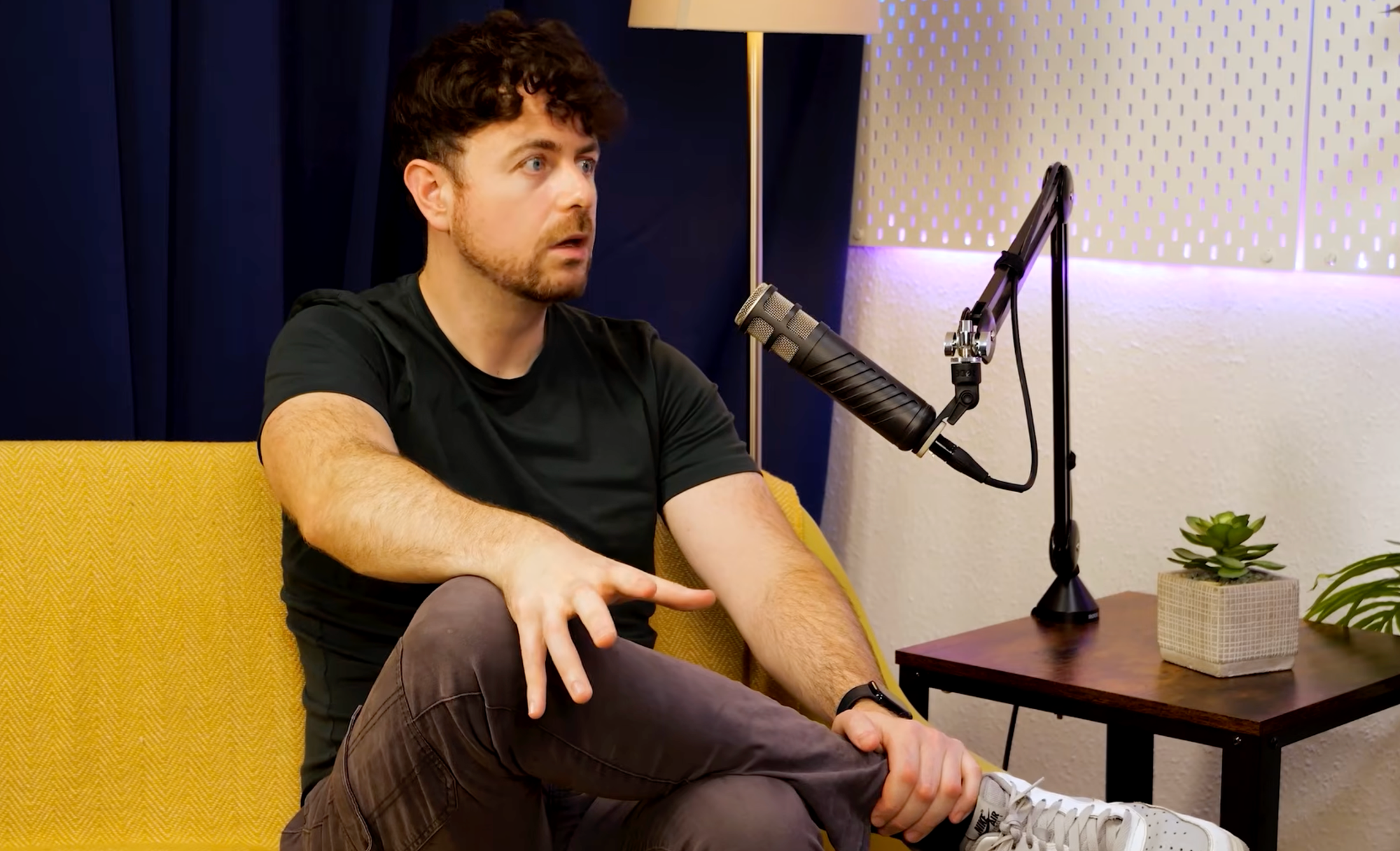
Psychotherapist, TEDx speaker and bestselling author Joshua Fletcher, known online as Anxiety Josh, joins host and producer Aleksandra King on The BEYOND Podcast to break down the stress jug, explain why your brain is wired for anxiety, and show how fixing your panic might actually be making it worse.
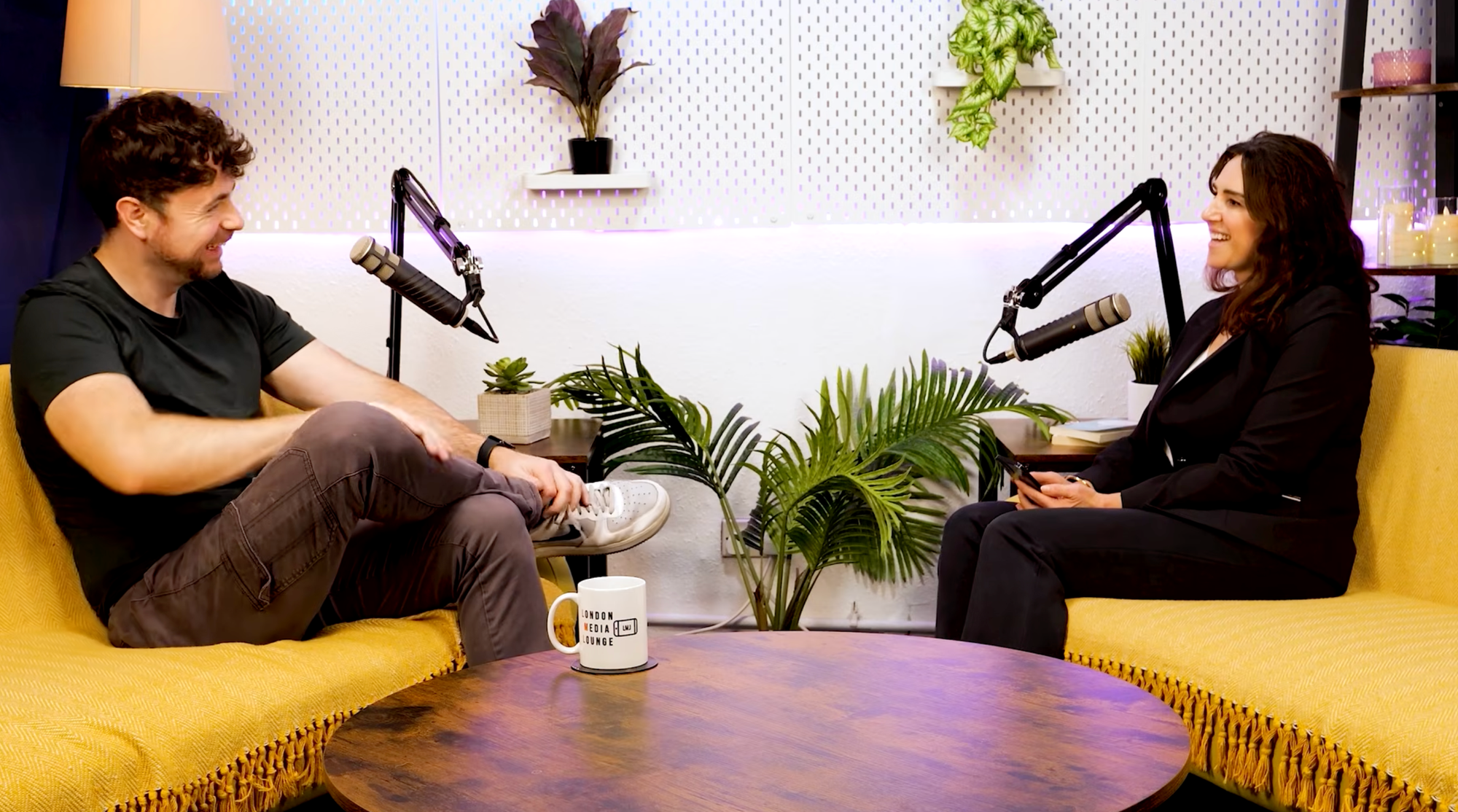
Episode summary
Joshua explains what an overwhelming moment actually feels like from the inside, and unpacks the stress jug: the analogy for why everything that goes in eventually overflows, and why the answer is not simply trying harder to stay calm.
He makes the case against fighting your feelings, because doing things purely to get rid of anxiety teaches the brain that anxiety is still a threat, and takes a clear-eyed look at mindfulness versus wellness trends, behavioural techniques, and how to navigate crowded spaces and daily fears.
The conversation closes on the pressure of self-optimisation culture, and the one small step you can take today.
“Anxiety is actually what makes us good predators.”– Joshua Fletcher
Key takeaways
- Anxiety lives in the oldest parts of the brain; it is part of how we evolved, not a malfunction.
- The stress jug: everything goes in, and when it overflows the problem is the load, not your willpower.
- Doing things purely to get rid of anxiety teaches the brain that anxiety is still a threat, which is why fighting panic makes it worse.
- Mindfulness helps when it is understanding-led, not when it is another wellness chore.
- Small behavioural steps beat grand fixes: there is one small step you can take today.
Key chapters
| Chapter | Timestamp |
|---|---|
| Understanding the body's response | 00:00 |
| From author to psychotherapist | 02:15 |
| What does an overwhelming moment feel like? | 05:30 |
| The stress jug analogy explained | 10:45 |
| Why we shouldn't fight our feelings | 18:20 |
| Mindfulness versus wellness trends | 24:50 |
| Behavioural techniques: understanding the mind | 32:10 |
| Navigating crowded spaces and daily fears | 38:40 |
| Self-optimisation culture's pressure | 45:00 |
| One small step you can take today | 52:15 |
The guest
Joshua Fletcher is a psychotherapist, TEDx speaker and bestselling author, known online as Anxiety Josh. His full background is on his guest profile.
Where to listen
Related reading
Read the companion insights on the site: Why Am I Always Anxious? The Science of the Stress Jug.
And: Beyond Quick Fixes: Why Your Anxiety Coping Skills Aren't Working.
Transcript
Read the full episode transcript
Cold open (trailer montage)
Lines in this section are clips, some lifted verbatim from later in the episode; they legitimately appear twice.
00:00:00 [Speaker?] (montage): Heart pounding. Chest tight. Sweaty palms. Mind racing. [sighs] [panting] Can't breathe, but you can't explain why.
00:00:19 [Speaker?] (montage clips): Here's a great skill– Let me show you a super fast– a secret point– technique.
00:00:30 Aleksandra King (voiceover): Anxiety Josh knows that feeling. He's lived it, studied it, and now helps millions like you and I to understand what's really going on inside our minds when we feel anxious– and how to really manage it.
00:00:48 Joshua Fletcher (clip from later): Oh, this worked for a bit, but now it's back. And then this worked for a bit and now it's back. It's like– yeah, because we still fear that response. We still fear the thoughts. You have to teach the brain and the body that anxiety, albeit uncomfortable, is actually okay.
00:01:04 Aleksandra King (clip from later): [laughter] I have to get my head around that.
Interview
00:01:13 Aleksandra King: I will represent all of the anxious people of today, okay?
00:01:18 Joshua Fletcher: Yeah.
00:01:18 Aleksandra King: I'm going to let all the audience's anxiety come to me, and I will be the vessel to find out how we deal with this ginormous thing, anxiety– before I do. So, your long name is very nice, Joshua, right? But you're also called Anxiety Josh, or just Josh– or do you prefer?
00:01:40 Joshua Fletcher: My name's Josh. On my birth certificate it's Joshua, or if it's on the book I've written it's Joshua. So, that's better. Or if–
00:01:49 Aleksandra King: You're my mum. Yeah, that's what I was going to say– when you get told off. Joshua!
00:01:52 Joshua Fletcher: Yeah, [laughter] that's about it. Yeah, yeah. And then– yeah, totally. Yeah, and I go by Anxiety Josh on socials and stuff.
00:02:00 Aleksandra King: It's such a good name, Anxiety Josh. I love that.
00:02:03 Joshua Fletcher: Yeah, we kind of– [laughter] kind of– you know, it infers that I'm anxious all the time, when it's not true.
00:02:12 Aleksandra King: You're so not anxious. You've got such a calm, wonderful energy about you. But yes, you're anxiety-healing Josh. That's how we'll refer to you in this podcast. You're also a psychotherapist. So, you come qualified to speak on anxiety. Let's– let's just put this declaration into the pod so people get it.
00:02:35 Joshua Fletcher: Yeah, it's my field– the niche of psychotherapy that I specialise in– particularly in a world full of misinformation and nonsense online and, you know, self-optimisation, quick hacks, all these kinds of things. Yeah, I like to bring, you know, science– empirically backed advice for people who struggle with anxiety.
00:02:58 Aleksandra King: Yes. And for this podcast I will not bring anyone to speak on the subject unless they are fully qualified, trained and expert in that subject, because I can't stand the noise, and people pretending. And it's so dangerous as well, when you have all these people and they sound so commanding when they're advising you– but actually they have no background in that, no training. Zero.
00:03:21 Joshua Fletcher: No.
00:03:21 Aleksandra King: Just speak well.
00:03:22 Joshua Fletcher: Yeah, and there's always something to sell at the end of it as well, you know– commodifying people's vulnerabilities.
00:03:27 Aleksandra King: It's really scary.
00:03:28 Joshua Fletcher: Yeah, yeah, it's scary. It's very frustrating. You just got to be very careful with where you get–
00:03:33 Aleksandra King: You're also a recognised authority– so you're a TEDx speaker. You're a best-selling author. You do your own pods and things. You're a guest in other people's pods. So you're pretty– you know, you put yourself out there and you speak on the subject a lot.
00:03:48 Joshua Fletcher: Mhm.
00:03:49 Aleksandra King: So, it's fabulous.
00:03:50 Joshua Fletcher: Yeah, yeah, I like to pontificate about it from time to time.
00:03:54 Aleksandra King: Yeah. No, it's really lovely to hear you. And you are– as you are the trusted voice in mental health, you know, you are someone with your qualifications that we can all listen to and ask. I'm going to come to you from the point of view of the public, and we'll get some genuinely good answers from you–
00:04:13 Joshua Fletcher: Okay.
00:04:13 Aleksandra King: –on the topic of–
00:04:14 Joshua Fletcher: That's high hopes, getting genuinely good answers from me.
00:04:18 Aleksandra King: We're going to get genuinely good answers from you. We're going to get genuinely– So, let's– let's– okay, so I did watch your TEDx talk as well, so I know a little bit more about you, let's say. But for those who don't know– can you tell us, like, your anxiety journey? Because you've got a personal anxiety journey. So, just for people to understand– we'll put it into context– how it came about that you suffered with anxiety, and then you've gone into working to help people, and you do help people with anxiety.
00:04:48 Joshua Fletcher: Yeah. So, in my young 20s I found the difference out between what is conventional anxiety and an anxiety disorder. I think we all get anxiety. It's a normal, healthy human emotion and function within us. But yeah, in my young 20s I experienced something called dissociation and panic, and it was after prolonged stress. And that kind of made me become agoraphobic, so I couldn't leave the house. I was obsessed with how I felt. So, having intrusive thoughts– I was having panic attack after panic attack after panic attack, and I was scared of how I felt. And that's what initially, you know– the first step on the path to being a therapist was that. Wow, this is actually really scary. A lot of people say, you know, "Oh, I don't get anxiety," or "I know what anxiety's like," or whatever. But you know you've got an anxiety disorder when almost every day is consumed by worry, weird symptoms and an obsession with how you feel– and it's really debilitating.
00:05:58 Aleksandra King: Yeah. So I was going to ask you how– well, how did you know you were having, like, a panic attack moment? How did you know that that is a panic attack?
00:06:06 Joshua Fletcher: I didn't at the time. That's what made it scary. You know, you think a panic attack is something that you see on Netflix or something– you know, like someone hyperventilating– and then you'd think it'd be obvious, but it's not. The whole point of a panic attack is to make you doubt, you know, your safety, and that something bad's going to happen. So most people who have panic attacks will fall for the what-ifs of– what if I'm dying? What if I have a heart attack? What if I lose control? What if I humiliate myself? What if I collapse? Something like that. Because your brain's firing off the threat response at 10 out of 10, but it's usually in a situation that doesn't merit that level of anxiety. And so what happens is the cognitive brain just starts to give suggestions as to where the danger might be. But if you're in the supermarket or out for dinner and you're having that– we know that's not dangerous, so it goes inwards, and panic attacks are very much like– well, maybe something really bad's going to happen to you. And then that can go with so many symptoms.
00:07:08 Aleksandra King: So, is it like– so, is it like you feel like you're having a heart attack or something? Or, like, what's physically happening to your body?
00:07:17 Joshua Fletcher: It's different for everyone. The main symptoms of a panic attack are– yes, your heart can race, but not all the time. An intense feeling to escape, or something awful's going to happen. Dissociation– so you suddenly don't feel like in the room, and objects look weird, and you don't feel like you're in your body.
00:07:35 Aleksandra King: Yeah.
00:07:37 Joshua Fletcher: Difficulty catching your breath, air hunger, sweating, stomach's going, nausea, light-headedness. That's a lot of them. And then racing thoughts– like, intense racing thoughts.
00:07:49 Aleksandra King: Can I ask you a question? When I was a kid and I had to do– I had to write a maths– this was, like, for– in South Africa, matric finals. I had to write a maths exam, and I hated maths. I still hate maths. Really hate maths. And I was sitting there and I was dreading it so much, and then when I looked on the page, I could no longer see the shapes in that geometry exam. Was that a panic attack?
00:08:15 Joshua Fletcher: [laughter] That's high anxiety.
00:08:16 Aleksandra King: Yeah, it just became–
00:08:18 Joshua Fletcher: Yeah, that's high anxiety. Yeah– because our fight or flight response is designed to focus for predators, and so it's very common for our focus to be out.
00:08:29 Aleksandra King: Right.
00:08:30 Joshua Fletcher: So– threat response is confused, usually with your imagination or whatnot, and then you look down at the paper and, you know–
00:08:36 Aleksandra King: Yeah, I had a panic attack moment.
00:08:38 Joshua Fletcher: Yeah, it could be panic. It could be– or just high anxiety.
00:08:42 Aleksandra King: High anxiety. I mean, that's the thing– like, how do you know? Which is my next question. What is the actual difference between everyday anxiety and an anxiety disorder? Like– and what's the definition of a disorder? Does it mean that you can't function properly in the daily life, or where's that distinction?
00:09:04 Joshua Fletcher: You know it's an anxiety disorder when it does start to consume your life and you can't do what non-anxious you would like to do– or you feel like you can't do it.
00:09:11 Aleksandra King: Like non-anxious you would like to do.
00:09:14 Joshua Fletcher: Yeah– so you would avoid. You don't feel like your usual self. You are ruminating on worries. You think that something's really wrong with you. You're bombarded with intrusive thoughts. You're not getting joy out of things, and that consumes you. Whereas– it's also cyclical, and feels interminable. Whereas everyone gets anxiety, and it usually has an end result. I'm worried about my exam. I'm worried about the dentist. I'm worried about a date.
00:09:42 Aleksandra King: Okay.
00:09:43 Joshua Fletcher: But when that's done, the anxiety switches off. But an anxiety disorder is like an endless loop, because it doesn't have a resolution.
00:09:51 Aleksandra King: Yeah, yeah. But– but Josh, what if you're born anxious?
00:09:54 Joshua Fletcher: Everyone's born anxious. Everyone has an–
00:09:56 Aleksandra King: Oh, really? Everyone's– everyone's–
00:09:58 Joshua Fletcher: Yeah, of course it is. You know– anxious.
00:10:00 Aleksandra King: Even though I just did it in South Africa. My dad grew up in South Africa.
00:10:03 Joshua Fletcher: Everyone has– everyone has anxiety. Yeah.
00:10:06 Aleksandra King: It's true, right? Literally everyone– everyone's got anxiety. Let's be perfectly clear about this.
00:10:11 Joshua Fletcher: Well– because it's your threat response. Everyone has a threat response.
00:10:14 Aleksandra King: Yeah, yeah, yeah.
00:10:15 Joshua Fletcher: Some people react in fight response. Some people react in flight. Some people freeze, and some people people-please and fawn. But we all have a threat response, so we all have anxiety.
00:10:24 Aleksandra King: Oh my gosh, I love that. That's so liberating. That is so–
00:10:28 Joshua Fletcher: And when someone says–
00:10:29 Aleksandra King: –the best thing I've ever heard.
00:10:31 Joshua Fletcher: When someone says, "I don't get anxiety," they're lying. It's physiologically impossible.
00:10:35 Aleksandra King: Are lying.
00:10:35 Joshua Fletcher: Yeah, yeah.
00:10:36 Aleksandra King: Yeah. That is freeing. Yeah, yeah. Never imagined that before.
00:10:41 Joshua Fletcher: They might not struggle with it all the time, but there'll be times in their life where they're anxious. Yeah– you know, over something– you know, public speaking, the birth of their child, you know, an upcoming job interview. Surgery, whatever. They'll be anxious in some way. Just for some people it's not as prominent, and it's more socially acceptable.
00:11:02 Aleksandra King: Not as prominent– and some people admit to it and some people won't. Or some people don't mind saying, "Look, anxiety is a part of my identity," and some people are like, "Oh, I don't get anxious." But– but all of us, is what you're saying. All of us get anxious.
00:11:15 Joshua Fletcher: Varying levels, yeah.
00:11:18 Aleksandra King: That– I love that so much. Okay. And on that– is it one in five that develop the actual disorder version? So, the version where it's now really throwing things off.
00:11:33 Joshua Fletcher: Yeah, one in five of us.
00:11:35 Aleksandra King: It's huge.
00:11:36 Joshua Fletcher: I mean, that's a result of a big meta-study in America, where– yeah, one in five adults will at some point in their life experience chronic, debilitating anxiety that falls under an anxiety disorder bracket. So that could be panic disorder. The most commonly diagnosed one is generalised. Then you've got things like that.
00:11:58 Aleksandra King: What is generalised anxiety? Is it just–
00:12:00 Joshua Fletcher: It's just when you find yourself anxious a lot of the day, often for no identifiable reason. Then you've got OCD, which I specialise in, and social anxiety. There's things like that. There's loads. And since COVID a lot of people have health anxiety as well.
00:12:17 Aleksandra King: Oh gosh. Yeah. I've been– I've been guilty of health anxiety. Okay. Stress jug. Can you explain– what is this whole stress jug thing?
00:12:27 Joshua Fletcher: The stress jug is an analogy that I pinched. It's not original, but I use it to explain how excessive stress then can create disorder anxiety.
00:12:38 Aleksandra King: Okay.
00:12:40 Joshua Fletcher: Well– so, everything goes in our stress jug. So, you know, it could be daily things– work, parenting, you know, just maintaining a house, relationships, whatever. That goes in the jug.
00:12:52 Aleksandra King: Mhm.
00:12:53 Joshua Fletcher: Then there's things that have probably been in there for a while. You know, maybe you're grieving, maybe you've gone through something horrible, maybe you've got unprocessed trauma. And then you've got other things, like things happening in the world.
00:13:03 Aleksandra King: Yeah, the news. Oh my goodness, yeah.
00:13:04 Joshua Fletcher: News, day-to-day stress. And when that fills up– the threat response, which is one of the oldest parts of our brain, involves the amygdala in our brain. I believe that it misinterprets all of the stress, because it doesn't get it. It's older than our thinking brain. It can just see that we're stressed, so it steps in to try and help.
00:13:28 Aleksandra King: Mhm.
00:13:29 Joshua Fletcher: But all it can do is release adrenaline and cortisol and those things, because it thinks there's a threat.
00:13:34 Aleksandra King: So it's pumping– it's literally pumping you with– with hardcore hormones.
00:13:37 Joshua Fletcher: Yeah. And– and it's the last thing you need as well.
00:13:41 Aleksandra King: The last thing you need. It's making you wired and, like, hyper and freaking out and all that sort of thing.
00:13:47 Joshua Fletcher: Yeah. And if you're someone who's, like, you know, proud, or ashamed, or doesn't want to have any– you know, gives a distance from mental health narratives– that is particularly troublesome for people like that. And I just try to keep things simple, like– and this is like, "Okay– let's see what this means," maybe. And I'll say to clients, "What's been happening in your life recently? Let's see the stress jug." And then almost every time, it's like– really full. It's overflowing.
00:14:14 Aleksandra King: Yeah, yeah. Because often people say, "Oh, panic attacks come from nowhere." And do they?
00:14:20 Joshua Fletcher: They feel– they feel like they do. But when you look back and look at the stress jug, you're like– actually, this– this was coming.
00:14:25 Aleksandra King: Okay, can I just ask you a bit about a particular panic attack– or, like, a feeling of really, like– on the tube, for example. The tube train underground– London Underground, for anyone who's been on it. It's really scary when that underground stops between stations. And then you've got all these people, and it's really hot, and it's like, you know– and then you're in there for some time, and then no one's saying anything, and then you feel a sense of panic. I mean, I don't know how many people have experienced this, but not many people are going to say they don't mind being stuck underground for an amount of time, if it's an amount of time, in a packed–
00:14:57 Joshua Fletcher: No, it's– yeah, it's very common. Yeah, very common. I don't like that feeling either. Particularly if you're sensitive to being, like– to claustrophobia and things like that, feeling trapped. I hate feeling trapped.
00:15:09 Aleksandra King: Horrible.
00:15:10 Joshua Fletcher: Yeah. And some people will deal with it fine, because they've probably been trapped in the tube several times, you know.
00:15:16 Aleksandra King: Delayed in the tube, rather than trapped. But yeah, that's a feeling that– that often feels like, you know, the beginning of a panic sometimes, you know. I'm just wondering if that's normal.
00:15:26 Joshua Fletcher: It's really normal, yeah. Yeah, absolutely. Like– loads of people in that– in that tube will be feeling exactly the same.
00:15:33 Aleksandra King: Will be feeling it. That's the thing.
00:15:34 Joshua Fletcher: They do, don't they? Yeah. But we mask and things, don't we? Because we don't want to see that. So people bury themselves in their phone or whatever.
00:15:40 Aleksandra King: Oh, I'll be the sort of– I'll bring up the phone to look at cute pictures of cats, dogs, you know, like– yeah. [laughter] But loads of other people are doing that, too. Because it's horrible. Because you just don't know. It's the– it's the unknown that's the thing. You mentioned the amygdala. Amygdala. Can you just explain the amygdala properly? Because it– it's just, like– I want to go into the science. So we– we know that there's the hormones and they're released, and we're sort of talking about this. But, like– I feel it's– it's nice to know the mechanics of what your body is doing, because then it doesn't feel like such a– it demystifies this whole thing. It's a real thing, and it's–
00:16:20 Joshua Fletcher: Well, I keep it simple. I was like– if you really, you know– if you sat down with a neuroscientist and they were like, "Well, actually there's 10 parts involved." But I keep it in a simple way.
00:16:29 Aleksandra King: Is there really?
00:16:30 Joshua Fletcher: Yeah– the thalamus and things like that. But, like, you know, I just– I just keep it simple. So, the amygdala is part of the fear centre of our– of our brains. It's one of the oldest parts of our brains. It's responsible for threat.
00:16:44 Aleksandra King: Is it like your primitive brain? People talk about a primitive brain that's most–
00:16:48 Joshua Fletcher: Well, yeah, it's one of the oldest parts, yeah. And it's part of how we evolved to be top of the food chain– because anxiety is actually what makes us good predators. You'd think, "What? How does that make sense?" But– but– well, when we have doubt– think of our ancestors. Their amygdala is firing off when, you know, walking across the Serengeti, or through the jungle or whatever. And– or across the desert, whatever. If their amygdala fires off, it creates doubt. And then what do you do when you doubt? You start to look for danger. So– our ancestors– really helpful to look for danger and anticipate danger before it happens. Because we're human. We're not going to fight lions. We're not going to fight a bear hand-to-hand. I mean, I might if I'm feeling all right. But in general, no. But the evolutionary advantage to be able to spot a threat before it spots you– yeah– and sneak around it, and then use your brain, and then you could hunt it, you know. Even though you're not stronger than it, you're smarter than it. The amygdala is part of that.
00:17:49 Aleksandra King: Mhm.
00:17:50 Joshua Fletcher: And you can plan. So anxiety is part of the reason why we're here. It's not just a bad thing. And the amygdala is still– it hasn't ever evolved. So it just feels weird when you sit at your desk, or chilling with your family or whatnot, and it's firing off. It's the very same mechanism. But because of social pressures and things like that, it just feels a bit odd having that.
00:18:13 Aleksandra King: Yeah, yeah. That feeling in things that we know aren't directly dangerous. Yeah. But then they are, if we read the news articles– because it could be. I mean, this could– it's like that– that perceived danger, because it might be dangerous. You know, there's all these– I mean, I was reading the news this morning, and it's like– honestly–
00:18:31 Joshua Fletcher: Mhm.
00:18:32 Aleksandra King: Yeah. You think, "Oh, I want to quickly run and protect. Don't do that. Don't do that. Don't shoot down that thing. Don't put spy ships out. Don't–" You know– don't– yeah. Don't kill people. Don't–
00:18:40 Joshua Fletcher: When it takes in information that you take in– and to help it wire for threat, you know– whether it's the news or whatever, you know, that's what it is. That's what conditions our threat response.
00:18:52 Aleksandra King: Okay, so our ancestors wouldn't have to then go home and deal with the articles, and then this and that, and the social media, and then they get a– well, they would have that thing, and it would– the– the jug that you're talking about would be at, you know, filled only that much, versus starting to–
00:19:07 Joshua Fletcher: Well, yeah, kind of. I mean, it wasn't easy to live back then. Like, it was hunter-gathering and, you know, finding shelter for the winter and things like that, and, you know, no medicine or things like that. But– but in general, yeah. Like, it's– we have so much information overload now. The brain's processing– a lot of information is stressful. You know, don't be surprised if that makes you anxious so you can't sleep at night, because you've just been bombarded.
00:19:35 Aleksandra King: Sent to– yeah.
00:19:36 Joshua Fletcher: Your brain is filing away all these, you know– all this information, and that takes a lot of energy and– and creates stress.
00:19:44 Aleksandra King: Yeah. Yeah, so you– so– so you're going through the day, and then maybe for weeks and months, and then you're getting to bed, and then– and then you sleep, and then, like– whatever– 2:00 a.m., 3:00 a.m., you wake up, because your mind is like– think, think, think, and think and think and think and think about the day. What's that?
00:20:06 Joshua Fletcher: If you are focusing on what the mind is thinking, thinking, thinking– that's called ruminating.
00:20:11 Aleksandra King: Ruminating?
00:20:13 Joshua Fletcher: Yeah– when you sit there and your thoughts are just on loop and you just–
00:20:16 Aleksandra King: Yeah, but it's waking you up. You should be sleeping.
00:20:20 Joshua Fletcher: Yeah– but attention is always part– this is what I do as a therapist as well. Attention is always part of, you know– we have agency in that attention. You know, we all have what-if thoughts. But we also have the ability to channel our attention. But a lot of people just believe their thoughts at face value. Like– oh, what if that happens? Oh yeah, that's true. I'm going to just focus on that thought now and try and work it out. That's called ruminating– because you're engaging with the thought. We have, like, 5,000 different thoughts a day– and why giving yourself all the attention to that one? You know– and then you're teaching the brain and the threat response that that thought is, one, probable, and two, potentially dangerous. And that's what I often do with my clients– why– why not focus on something else, you know? It's difficult when you're anxious, because it's convincing, and– and you feel doubtful. But actually, you know, with all the different thoughts that we have, we still have agency in the ability to control our attention.
00:21:20 Aleksandra King: Yeah– because there's other things that you can focus on, which is– which is definitely possible. You can shift focus. That– that's especially if you've been dragged in a direction. But the mere– the concept of waking up because of thoughts, and then being awake with the thoughts, and then having– it's almost like– it, you know, wakes you up quite intensely, and then you have to sort of wait for the thoughts to sort of calm down, and then you sleep. Yeah. So is that an anxiety?
00:21:50 Joshua Fletcher: Could be, yeah. I mean, we all have bad dreams. We all have nightmares that wake you up. Depends on your relationship with that. Sometimes you just– you just do. You can't stop thoughts, but you can also show the brain that the thoughts are not important.
00:22:03 Aleksandra King: And then wind back down again, yeah? Yeah– I've had actually some– some good things where, if the thoughts do wake me up, it's things that I've forgotten during the day. And then I'll get woken up and be like– I didn't send that email to that person. And it– it came to me 2:00 a.m.
00:22:20 Joshua Fletcher: Yeah– but it's classic, isn't it?
00:22:21 Aleksandra King: It's annoying, though, because you're trying to sleep, and it's dangerous if you don't sleep.
00:22:24 Joshua Fletcher: Yeah. But also, if you're a hard worker and a perfectionist, you'll be in fifth gear all day, and you don't teach the brain and body it's okay to shift down the gears. So if you're in fifth gear from 7:00 a.m. to 7:00 p.m., don't suddenly expect your body to go into first gear when it's– it's been rusty all day. If you're someone who's constantly go, go, go, go– graft, graft, graft, graft, graft– you'll be in fifth gear. You're more likely to burn out. You'll be in constant threat mode, because the stress drugs flow. And ironically, you won't be as productive. You're chasing the illusion of productivity. Whereas if you work smart, look after yourself, take breaks, do properly– you ease the nervous system. The irony is you actually get more done.
00:23:07 Aleksandra King: Yeah, it's the– it's the hardcore truth. It's the hardcore truth. I– I definitely have more respect for the whole concept– the mental health, stress– I used to be very– very dismissive, actually, of it. "Come on," you know. I used to be. I'm not anymore, because I've learned the hard way.
00:23:32 Joshua Fletcher: It's something I tried to challenge, you know. Like– I, you know– I'm not– I wouldn't say I was a soft lad, you know. I grew up playing rugby and boxing and football and things like that quite a lot. And I just think it's– it's just an aged cliché to just dismiss those things now. I think it's like– the statistics don't lie. You know– and– and the evidence doesn't lie. These things exist. And if your loved one was struggling, and hears you saying, "Oh, that's a load of nonsense," all day– yeah– how's that going to make your loved one feel?
00:24:06 Aleksandra King: Yeah. And also, if you're in denial about it, then your body will let you know. Like– your body will not lie to you. It will make you aware that the stress is a thing. Because, like you were saying– the amygdala– and it– it touches on all these areas in your body, and it's a– a whole network. And these things start firing off, and there is a mega effect. It's like a storm. It's like– it's like a hurricane forming in the Atlantic. Those thoughts are just sort of seemingly innocent– doesn't look– a little bit of wind, doesn't look too bad– and then it picks up momentum, and then it starts picking up all the clouds with it. And by the time you know it, you're sucked into this horrible thing, and– and your body will send you a message in the form of whatever. It could be some other thing, but it will send you the message to go– yeah– watch yourself.
00:24:54 Joshua Fletcher: Often, yeah. I mean, even my own anxiety disorder was a message to say– this– this isn't sustainable.
00:25:01 Aleksandra King: Yeah, it's not sustainable. You can't keep doing this. Enough, enough. Yeah. So it shows up– and it can show up in different ways. I'm reading here, like– headaches or something. People get– manifest itself as a–
00:25:13 Joshua Fletcher: Tension headaches, and– so many physical symptoms of anxiety. Headaches, migraines, jaw tension, muscle twitches, face twitches. You ever had an eyelid twitch?
00:25:25 Aleksandra King: Yeah, loads.
00:25:26 Joshua Fletcher: Yeah, those. Scalp– band tightness on the scalp. Neck ache, shoulders really hurt, chest pain, chest tightness, chest stretching, heart palpitations–
00:25:37 Aleksandra King: Yeah, yeah.
00:25:37 Joshua Fletcher: Skipped heartbeats. Your digestion's off– diarrhoea, constipation, feeling nauseous.
00:25:43 Aleksandra King: Hair loss?
00:25:44 Joshua Fletcher: Hair loss? I'm not sure– I'm not sure about the evidence of hair loss. Maybe if you've got a pre-existing condition. Yeah– pains, aches, pains, tension. Honestly, it's– the list is endless. Eye floaters, tinnitus–
00:25:59 Aleksandra King: I had those.
00:26:01 Joshua Fletcher: There's so many.
00:26:01 Aleksandra King: From stress?
00:26:02 Joshua Fletcher: From anxiety and stress, yeah. They're all there, yeah.
00:26:05 Aleksandra King: Okay. Fixing compulsions. What are fixing compulsions?
00:26:12 Joshua Fletcher: So– people who are chronically anxious, you know– and they're people that are, like, fixing things. It's a good trait to have– when you see a problem, you want to fix it. And we're humans– we do want to fix it. But when you see having anxiety as something to fix, you just end up irritating something that needs to be left alone. And that's why we're constantly obsessed, particularly in the wellness sphere, you know– like, five things you can do to get rid of a feeling. And these can be fixing compulsions. So– I'll do this. I'll do deep breathing in the morning. I will do this. I will ice bath. I will do all these things. And it's fair– if– if you like the benefits of that, that's okay. But if you're doing that to get rid of anxiety, it's counterproductive, because you're teaching the brain– the amygdala– that anxiety is still a threat. You are literally fighting an emotion. As a therapist, I often propagate the use of allowing the emotion– to teach the amygdala that anxiety is not dangerous. Yeah, it's uncomfortable. You know, I've ended up in hospital with panic attacks. I know how uncomfortable it feels. But you've got to understand what you're actually doing with the brain, and what you're teaching the brain there. And social media and the wellness sphere and podcasts and all this stuff are just bombarded with– here's 50 things you can do to get rid of a feeling. And I–
00:27:36 Aleksandra King: Yeah.
00:27:37 Joshua Fletcher: I play the long game. And I have to say, like– yeah– and of all those 50, which worked?
00:27:44 Aleksandra King: Interesting.
00:27:44 Joshua Fletcher: You know– and then– and you– you know, you're still here. Oh, this worked for a bit, but now it's back. And then this worked for a bit and now it's back. It's like– yeah, because we still fear that response. We still fear the thoughts. You have to teach the brain and the body that anxiety, albeit uncomfortable, is actually okay.
00:28:03 Aleksandra King: Gosh. [laughter] I have to get my head around that. I literally– I'm a fixer. Okay, so you're speaking to a fixer. Anxiety is actually okay. And it's normal, and it's common. And what you're saying is– you've got to teach yourself to be– you can't be batting it away, trying to breathe your way through it and all that kind of thing. Just actually get used to it. And– and– and is it– don't pay too much attention to it, because you're making it grow by giving it–
00:28:33 Joshua Fletcher: Yeah– you're giving it more importance. And don't get me wrong– those things, for stress– like, if I feel stressed, I will definitely breathe– breathe, mindfulness, things like that.
00:28:42 Aleksandra King: Okay. Okay, good.
00:28:43 Joshua Fletcher: Definitely for stress. Oh, absolutely. I had a hot bath last night. It was really nice. I wasn't stressed. Okay. But when you're anxious, and you want to get rid of anxiety, and you're scared– and particularly if you've got an anxiety disorder, which a lot of people do– it's– what are you teaching the brain, and teaching yourself, that when you're anxious you need to fix it? What's that actually saying? What's– what's that saying to the brain?
00:29:08 Aleksandra King: Yeah– you're confirming–
00:29:09 Joshua Fletcher: That you're broken.
00:29:11 Aleksandra King: Wow.
00:29:12 Joshua Fletcher: And it's like– you're not. It's like you're sending this feedback loop that– I'm anxious, I must fix it. So that implies that you're broken. And– and then people wonder why they end up in the loop.
00:29:22 Aleksandra King: Gosh. That is a different way of thinking about it. It's almost like the correct way of thinking about it.
00:29:29 Joshua Fletcher: Yeah, [laughter] it's like the correct way. But it's something– it's something I had to get my head around. That's why I became a therapist– because I did all the wrong things, and then I was like– oh, I get it now. I get it. You've got to–
00:29:40 Aleksandra King: Wow. That– that makes sense why it's always been around for so long. I mean, I just feel it's massively empowering. The very first thing you said about– basically everyone has this anxiety within them– is already– that– that helps to say, "Okay, well then that's normal. That means you're not broken." Because everyone has it. So–
00:30:00 Joshua Fletcher: Yeah. It does– it's not like an affliction. Don't get me wrong– it can get you down. It's not an affliction. But, like– relating to what you said about fixing compulsions, it's like– I often get clients who sit opposite me in my practice, and– "I'm having a panic. What do I do?" And I'll be like– nothing. It's not hurting you. It will pass.
00:30:19 Aleksandra King: True. Yeah. Yeah.
00:30:20 Joshua Fletcher: When– when you don't do anything during a panic attack– what gets the credit? Now, a lot of people, when there's high anxiety, they'll do something, or do a technique, or they'll grab something magic and– and do, and soothe, or whatever. And that's fine– you know, there's no perfect way of doing things. But real progress with anxiety and anxiety disorders occurs when you get the credit for anxiety passing– because you then realise you're the coping technique.
00:30:49 Aleksandra King: Oh, I love that.
00:30:51 Joshua Fletcher: That's– that's the cornerstone of my practice.
00:30:53 Aleksandra King: You are the coping technique. Like, you are the one– [laughter] Yes. Love that.
00:30:57 Joshua Fletcher: Yeah.
00:30:58 Aleksandra King: Okay. Okay. So, we spoke about a few things. Now– the breathing thing. I do like the breathing. I have to–
00:31:03 Joshua Fletcher: Yeah, breathing's great. It just depends why you're doing it. If you're breathing because you're stressed– great. If you're breathing because you're like, "Oh, I'm panicking and I don't like it"–
00:31:12 Aleksandra King: Mhm.
00:31:12 Joshua Fletcher: –then you're teaching the brain something bad– that– that feeling panicky is– is wrong.
00:31:17 Aleksandra King: Mhm. Yeah. I think, you know– for– yeah, like we were talking earlier about public speaking, something like that. If– I don't want, you know– if, before you go on a stage or something like that, if you just do the few long, deep breaths, it just settles you in. So they just calm the heart, you know. Yes, we're excited, but let's not get too excited– because otherwise your voice gets a bit the-the-the-the. You know– that– that kind of thing. So sometimes I'll use it like that as a little tool sometimes. Yeah.
00:31:47 Joshua Fletcher: Yeah– like an athlete takes, you know– concentrates on their breathing before performance, things like that.
00:31:52 Aleksandra King: That's cool. Yeah. Okay. And you mentioned mindfulness. Like– what– again, this is another one I have to get my head around. What– what is mindfulness? Like– what on earth is this whole thing? And is it relevant?
00:32:04 Joshua Fletcher: Mindfulness often gets misinterpreted. People think mindfulness is something that you do to clear your head and be calm. That's not mindfulness. That can be the result of mindfulness sometimes. But mindfulness is observing the present– both things around you and your mind, in the present. But the key words are "without judgement". So why I like mindfulness, when done properly, is that, you know– if you have intrusive thoughts, or you have an internal critic or whatnot– you're observing your thoughts, but without judgement. And then the more you do that, the more you realise– thoughts are just thoughts. I just place more importance on some over others. Usually because thoughts are evocative. But the more you practise mindfulness– one, it is kind of grounding. It brings you into the present, so you're not just constantly in the future, or ruminating about the past. But it's a good practice to look at things without judgement, and see things what they are. I often say it enhances metacognitive ability– to observe feelings, thoughts and emotions as transient things.
00:33:19 Aleksandra King: Mhm.
00:33:19 Joshua Fletcher: But– because if, the moment you get a thought and an emotion, you just believe that at face value– you know, that's not representative of reality. How many times have you misinterpreted– I don't know– a friend or a loved one, and they've said something, and you've gone, "Oh my god"– but they've actually got the wrong end of the stick? Yeah.
00:33:35 Aleksandra King: Yeah.
00:33:35 Joshua Fletcher: That's you believing that thought and feeling straight away. Mindfulness is– yeah– is a practice that– yeah, it helps you to stop, but also it's the "without judgement". Observing things in the present for what they are. And it helps you to stop anxiety sometimes from snowballing– because you're like, "Oh, I've observed– I don't like that thought. Okay." See it as a thing.
00:33:58 Aleksandra King: You know, you're– you're starting to remind me a little bit– if you don't mind me saying this– this Buddhist that I follow. Because he gives– I mean, I'm so not a meditation kind of person, because I find it difficult to meditate. Like, really difficult. It's– but he's quite nice– the way that he speaks, and everything is quite relaxing. So when I'm in the bath, for example, and I have to stay there, then I will put his YouTube videos on, and he will take you through this process of, like– "Oh, yes. Concentrate. Yeah. Be comfortable, and then– and then think about– like, listen to the noises around you." You know– close– listen to those. There's an airplane. And then you suddenly stop paying attention to those. And– and I think it's things within your body as well. And he goes further out, and further out, and further out, and then brings you back in. Yeah. But when– when he's talking about– now, if those thoughts are coming– the thought comes to you, and then the thought's like, "Hello, thought." And then you, like, let it be. And then it comes again, and it's like– let it be. And then that's cool and everything. It sort of worked for about three minutes for me in the bath, [laughter] and then the thoughts just kept coming, and I was like, "Okay." So I was like, "Let it be. Let it be. Let it be."
00:35:05 Joshua Fletcher: But that's still a good meditation.
00:35:06 Aleksandra King: Oh, you think?
00:35:07 Joshua Fletcher: Yeah, you think– and this is– this is what people misinterpret– mindfulness and meditation as a fixing compulsion.
00:35:14 Aleksandra King: Yes.
00:35:15 Joshua Fletcher: Because they think that the goal of it is to be– the best meditation I ever did was to practise being with symptoms and feelings I didn't like.
00:35:24 Aleksandra King: Mhm.
00:35:24 Joshua Fletcher: And it was 30 minutes. And I left at the end of the meditation– I was sweaty and panicky and all that, because I'd done 30 minutes of doing what I always avoid– and that's my feelings and my thoughts.
00:35:38 Aleksandra King: So you sat in that space and you–
00:35:40 Joshua Fletcher: That's a good meditation, yeah.
00:35:41 Aleksandra King: Gosh.
00:35:42 Joshua Fletcher: Whereas people have the biggest misnomer about meditation– is you think that you should be sitting there–
00:35:46 Aleksandra King: Very calm. Tranquil.
00:35:47 Joshua Fletcher: No– that's not mindfulness. It's not meditation. Meditation is– you try to observe without judgement. So I did 30 minutes of trying to observe without judgement.
00:35:57 Aleksandra King: Yeah, it does help. Yeah.
00:35:58 Joshua Fletcher: Well, it helped. It was exposure for me– exposure to feelings I didn't like. Now I can meditate, and most of them I end up calm and tranquil. Yeah. But I'm willing to be with every emotion, without judgement.
00:36:12 Aleksandra King: Yeah. So I was judging it. So I was judging the thoughts coming in, and then– oh, this is nice. Oh no, they keep coming. Oh, I'm not doing it right. Yeah.
00:36:18 Joshua Fletcher: And then– and then you've turned it into a technique, as opposed to what it actually is.
00:36:24 Aleksandra King: But what I still liked about it was that it made you see them as thoughts. It almost sounds like waves. You say, "Oh, it's a thought. Thoughts, thoughts, thoughts coming. Okay, let it be. Let it be." And then– whoop– another one. Here it comes. It looks a bit different, but it's still– but you kind of see them as things, versus you.
00:36:39 Joshua Fletcher: Yeah. And they're not– they're just– they're just a conveyor belt of stuff.
00:36:41 Aleksandra King: I love that.
00:36:43 Joshua Fletcher: –think about anything. You– you can't stop your thoughts, either. Like, you know– like, don't think of Ronald McDonald. You know– [laughter] he's going to be dancing around in your head. Like, you can't stop–
00:36:52 Aleksandra King: Can't stop your thoughts.
00:36:53 Joshua Fletcher: No. You can't stop your thoughts.
00:36:55 Aleksandra King: Journaling– what do you think about that?
00:36:58 Joshua Fletcher: I like journaling. I like self-gratitude journaling. A lot of people are harsh on themselves. They cringe giving themselves praise. But we're very happy– and it's very acceptable– to criticise yourself, because that's a thing.
00:37:09 Aleksandra King: Totally. But why– why one and not the other? Like–
00:37:13 Joshua Fletcher: And then you ask them, "Is it okay to just constantly criticise someone else?" And they're like, "No." I was like, "Well, why do you do it to yourself?"
00:37:19 Aleksandra King: Mhm.
00:37:19 Joshua Fletcher: Are you more comfortable criticising or praising someone else? And depending on who you are, you know– there's some harsh people out there. But, you know, like– it's– yeah– journaling's okay. It depends– yeah, it's a good way to get your thoughts out, to put in order your– your day. Reflect. I think journaling's okay. Again, it depends why you're doing it. If you're journaling to get rid of a feeling– no. If you're journaling to enhance your own curiosity, I think that's great.
00:37:52 Aleksandra King: Yeah. I've had– I've spoken to many people who said they journal, and it's really good, and I can see the benefits of that. And I sort of thought– I'm definitely going to do that. Haven't done it. [laughter] Want to do it. But that night where I woke up with the things, and– oh, I didn't do that. I didn't do that. I didn't do that. I thought– the only way I'm able to actually fall asleep again is if I get this down. So I opened Notepad, wrote down the things that I had to do– my– my– I was not allowing myself to sleep until I had them down. Wrote them down. Switched off the phone, and then I was able to sleep.
00:38:26 Joshua Fletcher: Mhm.
00:38:27 Aleksandra King: Mhm. Because I thought– at least I'll have an email to myself. I'll know about this. It's going to be a–
00:38:32 Joshua Fletcher: No, that's a good– that's a good way to do it, isn't it? Yes– you don't worry, and then try to keep it here. It's exhausting keeping–
00:38:36 Aleksandra King: Otherwise you have to keep it here.
00:38:37 Joshua Fletcher: –things there. Yeah– so that's exhausting.
00:38:39 Aleksandra King: Yeah. And I think it's a good idea. It's not bad, is it? But I was sort of being an anxious person, and– but then– the blue light. I'm now waking myself up. The light's going to be in my brain. [laughter]
00:38:50 Joshua Fletcher: I mean– yeah, blue light's not great, but, like– who– who cares? I fall asleep mid-scroll before. I just think that's a lot of scaremongering. Like–
00:38:57 Aleksandra King: Scaremongering. [laughter]
00:38:58 Joshua Fletcher: Are you going to sleep better not staring into a screen for an hour before bed? Probably. But you can still sleep. Like– who– who cares? Like– just whatever. Just do it. I'm very– I– I don't like how prescribed the wellness sphere can be. If– if you're having a really rubbish week, and it's been traumatic, and it's horrible– and actually you're getting comfort from just looking at dog reels–
00:39:23 Aleksandra King: Yeah, man. Dog reels.
00:39:24 Joshua Fletcher: I'd rather– I'd rather you– exactly. I'd rather you relax to that– fall asleep to bed– than forcing this prescribed routine of– oh, no– no blue light, and blah blah blah. No, no– because that's just more doing. Just being. Just be. Like, I've done that before– falling– I've had a rubbish day. I don't care. I'll fall asleep watching TV. I don't care. Like– it's– it's fine, and I sleep– I'll sleep fine. Yes, there's an ideal of things. But when it becomes a doing, then you just add more pressure on yourself.
00:39:53 Aleksandra King: Yeah. I went to bed last night with a dog reel thing. There was a guy who– there's a guy who goes around, and he records encounters of owners with their dogs. And there was one of this lovely old lady, and she was with her beautiful greyhound dog. Or maybe it was a whippet. Maybe a whippet, actually– smaller than a greyhound. And the whippet was a bit shy, and the lady was like, "Oh no, she's 14 years old," and said– I mean, what an elegant whippet, you know– white, with his long paws. And the lady also with her grey-white hair. And the two of them are such a beautiful– she was saying how they go there every day and they have their little moment, and that her dog's going to die, you know, because– 14-year-old dog. And then she's going to miss her dog. But– but the man was, "Oh, can I take a photo?" And she was like, "Oh, you're such a lovely, kind man, you know, that you take photos." And he took these beautiful photos of this lady and then her dog, and then gave it to her. It was just such a lovely moment. That's what I went to bed looking at, you know.
00:40:40 Joshua Fletcher: And that's– and that's filling your brain with lots of happy things, and relaxing things as well. Like– you can't go wrong with that. Animals, pets and cute things.
00:40:50 Aleksandra King: Right. So– exposure therapy. So you've basically touched on that a little bit. So– you want to expose yourself to your emotion, to demystifying it, to–
00:41:02 Joshua Fletcher: Yeah. And I do a lot of exposure therapy with my clients. If you want to rewire– the– back to the amygdala again– if you want to rewire that threat response and anxiety, you can only do that when it's activated. When you're– when you are anxious–
00:41:17 Aleksandra King: In the moment.
00:41:18 Joshua Fletcher: Yeah– you have to be anxious in order to rewire that threat response. So exposure therapy is, like, you know– purposely inducing anxiety.
00:41:27 Aleksandra King: Wow. Gosh.
00:41:29 Joshua Fletcher: But doing it in a way where you get the credit at the end of– so, I did exposure therapy on the London Underground many years ago. I was far too terrified– having panic attacks and stuff like that. So exposure therapy is– no, this is the homework. Go and practise being anxious on the tube. "Oh, but what if I get anxious?" Yeah– that's– that's– that's the whole point. And then when I don't leave, and when I stay there, the body releases its adrenaline, its cortisol– and then the brain rewires– the amygdala rewires– when it– when it sees that nothing bad happens. And that's exposure therapy.
00:42:06 Aleksandra King: Yeah, yeah.
00:42:07 Joshua Fletcher: And you can apply that to many things. Whether it's panic attacks, you know– I do it with intrusive thoughts sometimes, you know– just let the thought be there and don't react to it.
00:42:16 Aleksandra King: What?
00:42:17 Joshua Fletcher: Just be with the feeling. And it's really, really intense. But it's very effective. Exposure therapy.
00:42:24 Aleksandra King: I– I mean, I– I kind of see that a little bit like– taking yourself out of your comfort zone, which I strongly believe in. I feel like you've got to take risks in life, and you've got to go out. So I love the whole concept of–
00:42:39 Joshua Fletcher: That's a form of exposure therapy.
00:42:40 Aleksandra King: Yeah. I– although I'm– I'm– I'm here with you, we're talking about stress, we talk about anxiety. I love stress and anxiety in a very sick way. I will always, like– actually, not always. I'm– I'm not telling you the truth now, because I will avoid it. So I won't– because of the tube– the whole claustrophobic vibe in the tube. If I can walk, I'm going to walk. I am just not going to go in that tube. Because I just think– why put myself through that?
00:43:03 Joshua Fletcher: But be careful.
00:43:04 Aleksandra King: I know. I know. But there's other things– like in business, and in things– and– and when I'm uncomfortable and I'm scared to do it, or going on the blooming Apprentice– it's like, go and do it, because it's, like, professional things. Yeah. But with the tube, there's something about that underground. I don't like it. I– I do do it, but I really don't like it, and I avoid if I can.
00:43:25 Joshua Fletcher: Yeah– but just be careful. Because when you do avoid, you teach the brain that the tube is dangerous. And it's not. It's just uncomfortable. You know– also, there's an element– in your professional life, you have the illusion and the agency of control. Whereas if you're sat on the tube, you have no control. It's just– a tube.
00:43:42 Aleksandra King: Precisely right.
00:43:42 Joshua Fletcher: So– so go– so– so go and practise with no– but then you still have control in the– in the tube. Like, it's fine. Yeah. You just have to– you just got to wait. But you can still stand, you can stretch your legs, you can play on your phone, you do whatnot. It's that– it's– it's symbolic, isn't it? You don't have control in the tube, but you have a control–
00:44:00 Aleksandra King: It's also because you're underground. I mean, when you're in a plane, you don't have– there's something better about the plane. You can see down. You can see through the window. It's a–
00:44:06 Joshua Fletcher: I– people would say the opposite to you. I'm– I'm much more afraid of planes than I am of the tube.
00:44:12 Aleksandra King: Yeah.
00:44:12 Joshua Fletcher: Because they would just– the threat response will argue for you to avoid. So my threat response would say– you're 30,000 feet in the air. You know– you can't fall from a tube.
00:44:26 Aleksandra King: Yeah, but what if– what can happen with a tube?
00:44:27 Joshua Fletcher: I'm not going to scare you with thoughts.
00:44:29 Aleksandra King: Yeah, yeah, exactly.
00:44:31 Joshua Fletcher: Exactly. But that's the way the brain does it– because it uses that irrationality, you know. Like– you're trapped, you're trapped, you get out, you know? If– if you– the plane stops working–
00:44:40 Aleksandra King: Yeah, but you're not– [laughter] yeah, but it's a slight freedom, because you're in the sky.
00:44:45 Joshua Fletcher: Yeah– but it's symbolic, isn't it? Freedom. Yeah. Is it free? You know, like–
00:44:50 Aleksandra King: More free than underground, stuck.
00:44:52 Joshua Fletcher: Is it? I don't know.
00:44:54 Aleksandra King: Yeah, man. Because I– the worst– I'll tell you– this comes from– this is what did it. There was something in– in Russia, in Moscow– the underground. There was a portion of the underground that collapsed on both, like, sides– ends of the tunnel. So if you're trapped in there with your– in your train, and the ground collapses– you are trapped.
00:45:12 Joshua Fletcher: Did they get them out?
00:45:14 Aleksandra King: I don't know.
00:45:14 Joshua Fletcher: Of– [laughter] course they did.
00:45:15 Aleksandra King: I don't know.
00:45:16 Joshua Fletcher: Of course they did.
00:45:17 Aleksandra King: Well, did they? I mean–
00:45:18 Joshua Fletcher: Of course they did. If– if they're trapped in either side, you just– you get them out, don't you?
00:45:22 Aleksandra King: I mean, you have to move boulders, and you have to– whereas if– if you– if your plane stops working, you're finished.
00:45:29 Joshua Fletcher: But I'm just doing that to challenge–
00:45:30 Aleksandra King: No, I know, but–
00:45:31 Joshua Fletcher: Just– there's just a– it's the– do you see how anxiety rationalises it?
00:45:34 Aleksandra King: But it's much– if you're going to die–
00:45:36 Joshua Fletcher: So it's saying you're–
00:45:37 Aleksandra King: Okay, if you are going to– wouldn't you rather die in the sky?
00:45:39 Joshua Fletcher: No. [laughter] I'd just rather not die, to be honest.
00:45:44 Aleksandra King: I'd also rather not. But if you had to–
00:45:46 Joshua Fletcher: If I had to– yeah. No.
00:45:48 Aleksandra King: –the clouds, and above the earth.
00:45:50 Joshua Fletcher: My last seconds of hurtling towards the earth at 800 miles per hour– no. It would be chaotic and horrendous. [laughter] But the reason why– and if you look at it, the reason why–
00:46:01 Aleksandra King: Oh my gosh.
00:46:02 Joshua Fletcher: –is that– look at how anxiety has invaded your reason.
00:46:08 Aleksandra King: Yeah.
00:46:09 Joshua Fletcher: Yeah. Its whole purpose is to get you to avoid threat. That lion's a threat– it might eat you. Okay, let's not go near the lion. That tube is a threat– don't go on the tube. And– and it uses your thoughts against you. Like– yeah, but it's underground. Oh, but it's all that. It's all this and that. It's like–
00:46:26 Aleksandra King: Yeah.
00:46:27 Joshua Fletcher: Doesn't matter. It's safe.
00:46:28 Aleksandra King: I'll go on it if I have to do it– because obviously I'm not going to– I'm not going to– if I have to go, I'm going to go, because I'm late and there's no choice. But given the choice, my– then my rational brain would go– yeah, but you'll get the exercise. You're outside. Don't– you don't have to– maybe also think of the jug– the stress. You've got enough stress. Maybe don't give yourself that extra stress. Maybe just avoid that situation, and just, you know, just– there's stuff to do.
00:46:51 Joshua Fletcher: There's stuff to do– that– and that's– that's for you, if you've got a lot on your plate. But if you do find that you've got some stuff– in your– free in your jug– get on the tube, and then you'll feel really proud of yourself. You'll be like– oh, I did exposure today, and I've rewired my brain.
00:47:02 Aleksandra King: Exposure. Okay, I like that. Because it's a– it's– I like it because it's a fighter mentality. It's– yeah. I like that. It's empowering, you know.
00:47:11 Joshua Fletcher: It is– it is very empowering.
00:47:12 Aleksandra King: I like it. I like it. It– it feels great as well. You're convincing me.
00:47:15 Joshua Fletcher: Yeah, it feels great. When you do it– when you do it, and you get through it, and you're willing to be anxious– it's a very empowering feeling, because you're starting to overcome a phobia.
00:47:24 Aleksandra King: Yeah. Because I'm also saying that to my daughters– I've got to practise what I preach– because she's terrified of spiders. And they're those daddy-long-legs ones, you know– the thin– and they're so soft. I mean, they're like fluff. They're so harmless. I'm like– come on, man. Go take a feather duster and take him out. Like– freaking out. And– and I'm like– no, you just do it. If you do it once, it's not going to be so scary. What's– what's the worst that can happen? They can fall. You can scoop them up with the little feather duster. They're so fluffy, little things. They can't even bite you. Their jaws are too small.
00:47:50 Joshua Fletcher: Yeah, yeah, yeah. I know. I know.
00:47:50 Aleksandra King: Won't do it anymore. What's the point? Like– yeah. But absolutely terrified. Yeah, yeah.
00:47:56 Joshua Fletcher: These things– but that's what fear does. Yeah. And– yeah– and she might– she might be absolutely fine on the tube.
00:48:02 Aleksandra King: She's fine on the tube. And she'll look at you and go– what– what is this? Ridiculous. She thinks I'm totally odd.
00:48:06 Joshua Fletcher: Yeah, exactly. It's the same– that's the thing with fear. It's irrational.
00:48:09 Aleksandra King: Yeah. It's irrational.
00:48:11 Joshua Fletcher: I don't like spiders. I won't– I– I can't– I can't live with–
00:48:15 Aleksandra King: You wouldn't want to get one as a pet. [laughter]
00:48:17 Joshua Fletcher: No. It– unless it kind of invaded my life to the point where I had to, then yeah. But, like– I see a spider, what– twice a year? I don't really care.
00:48:25 Aleksandra King: Yeah. You know– yeah. I feel– I feel bad for spiders. Everyone's so horrible to them, and they kill them– and they've also got a right to live, so. But yes– exposure therapy. I love that. I love that– empowering, you know. I– I'm going to go on the tube. And– what's one small step, besides exposure therapy, that people listening can take for their anxiety, their stress levels, you know– managing that?
00:48:49 Joshua Fletcher: It's really common. It's– it's human. You're not– you're not odd. Like– I'm not just saying that to make you feel better. Like, it genuinely is really common. Anxiety will make you feel like you're alone, or you failed in some way– and it's just nonsense. Like– no matter how your anxiety presents– one, there's hope, and you can rewire the brain. Your brain's very neuroplastic. It's okay– if you just learn about it and stuff.
00:49:13 Aleksandra King: Mhm.
00:49:14 Joshua Fletcher: And be kind to yourself. A lot of people, as soon as they get anxious, they assume that they've done something wrong, or that they're doing something wrong, or it's a flaw in their personality or being. No, it's not. And actually, it's probably a good part of your personality– because anxiety isn't always bad. Makes you considerate. It makes you not go gung-ho into situations, you know. Yeah– it's part of your rationalisation process. It's not always the enemy– just sometimes it does start kicking off more than it– than it wants to.
00:49:43 Aleksandra King: More than it wants to. Yeah.
00:49:44 Joshua Fletcher: But it's not a flaw in you. It's just– often look at what that's trying to tell you. And for me, it was often, you know– my life as it is is not sustainable at the moment.
00:49:53 Aleksandra King: Okay. So, you know– like the blushing. And the people that blush have a morbid fear of blushing. Mhm. You were talking about rewiring your brain. Could you potentially rewire it to stop the blushing? Or is that again the problem of– you're saying to your anxiety– you're, you know– you're giving anxiety too much credit, and then making it worse?
00:50:13 Joshua Fletcher: I don't really– well, I'm a therapist– I'd be like, why do you care that you blush? And often, you know, things like that can go into, like, feelings of shame, and just often deeper things. You know– like, if I blush, I don't really care. But, you know– because I wasn't really made to feel self-conscious. But for a lot of people, like– depending on how they grew up–
00:50:36 Aleksandra King: Really? So it's the same thing again– attention on that.
00:50:38 Joshua Fletcher: Oh, absolutely. Having attention on you might not be good. You know– whether it's blushing, sweating, whatever. The notion of those self-perpetuating anxiety symptoms is– I hope I don't blush. Well, you are going to blush.
00:50:51 Aleksandra King: You're going to blush if you think that.
00:50:52 Joshua Fletcher: And why is that the problem? Like– so what if you blush? You know, a lot of what I do with clients is– just tell everyone. Step one– I'm doing public speaking. I do get anxious. So if I blush–
00:51:04 Aleksandra King: Give me that.
00:51:04 Joshua Fletcher: –all of you– all of you feel– all of you feel flattered.
00:51:06 Aleksandra King: Feel flattered. It's all about you. It's all about you. So– we've spoken about the self-optimisation culture. Well, not really that much. But self-optimisation culture is the whole wellness thing of, like, trying to be as perfect as you can. And I mean, that– that's a sort of– it's almost like a movement in that direction. You're trying to optimise yourself to be the best version of you. And I think that creates a level of anxiety.
00:51:30 Joshua Fletcher: Yeah– self-optimisation. Don't get me wrong– I'm glad lots of people talk about mental health and wellness and things like that. But with that comes a commodification. And people want to sell you quick fixes and cures, and optimise. And it's often through fear– and they'll take some studies and some bits of information and inflate it, or conflate it, to sell you something. So whether it's this supplement for this, or this for your gut biome, or this and that– to make– to optimise yourself. You know– you see it all the time. You get things on your– these– these watches and rings and things like that– because we're constantly optimising and optimising and optimising.
00:52:12 Aleksandra King: For sure.
00:52:12 Joshua Fletcher: But as a therapist, I often think, you know– what are you signalling back to your brain hundreds of times a day? That– well, you're not optimised. So that's 100 messages back to you that you're not enough. You're not fully functioning.
00:52:25 Aleksandra King: Wow.
00:52:25 Joshua Fletcher: And then you start to internalise those messages.
00:52:28 Aleksandra King: Yeah– but I see that all the time. Yeah.
00:52:29 Joshua Fletcher: Yeah– you see it all the time. So people pour thousands of pounds into just nonsense sometimes. Don't get me wrong– I think we're adults as well. A lot of what the self-optimisation culture does is it infantilises adults. So, like– basically– we know what the food groups are, we know that exercise is good, we know we should sleep. This is not new stuff. But– how can we do it super better mega– and– and pay me money and I'll tell you. And– and I just think– I work with anxious people, and sometimes it's like– let's focus on what you're actually doing right. And I think you'll find that there is an abundance of things that you neglect to acknowledge– that you're– that you're doing right.
00:53:08 Aleksandra King: Mhm. Yeah– in a self-optimising culture, you're not going to think about what you're doing right. Only where the gaps are. Just the reality. Next thing, next thing, next thing.
00:53:15 Joshua Fletcher: Yeah– and then– and then we die.
00:53:17 Aleksandra King: And then we die. [laughter] I saw something else the other day, which was exactly– the eight billion people is all going to be dead in so many– so many years. So why are we so, like, obsessed with silly–
00:53:27 Joshua Fletcher: Buying kimchi for our gut biome.
00:53:29 Aleksandra King: Kimchi. Yeah.
00:53:31 Joshua Fletcher: I like kimchi, actually.
00:53:32 Aleksandra King: Because it's your second brain.
00:53:34 Joshua Fletcher: That's what I– yeah, yeah. I mean– yeah.
00:53:37 Aleksandra King: Is it? [laughter]
00:53:39 Joshua Fletcher: Yeah– just– it's so easy. Yeah.
00:53:43 Aleksandra King: Mhm. Okay. Is stress addictive?
00:53:49 Joshua Fletcher: I think our reaction to stress can be habitual, yeah. I think stress is often good as a distraction for some people– to their internal feelings. Particularly workaholics, perfectionists. If I'm always busy, I don't have to sit with feelings of being still. I see that as a therapist. I say– what happens when you stop, and sit, and be still? Oh– feelings I don't like. And they're the feelings I like to work with.
00:54:15 Aleksandra King: And what are those feelings?
00:54:16 Joshua Fletcher: Shame, guilt, grief.
00:54:19 Aleksandra King: What are– yeah.
00:54:22 Joshua Fletcher: Inadequacy. Things that– that people are sort of terrified of. So– why I can never be on The Apprentice.
00:54:30 Aleksandra King: Oh. [laughter]
00:54:31 Joshua Fletcher: So anyway– get me started. I just feel like I'm– I'm not– I'm not– I'm not as driven as these guys. I just– I– I like to chill out. [laughter]
00:54:41 Aleksandra King: No– you know, the worst thing about the whole Apprentice thing, for me, for my personality– the worst thing is the lack of control in that situation. You do not know anything about what your day is going to be, or your week. Can't call anyone– maybe once a week.
00:54:57 Joshua Fletcher: Mhm.
00:54:58 Aleksandra King: Like– a limited time, with someone listening. You might get that. But you don't know when you're going to eat. You don't know when they're going to come and get you for the next task. You're not allowed to speak to people. They put you in a dark corner somewhere that you have to wait. You just never know what's coming. You have zero control.
00:55:15 Joshua Fletcher: Oh. And you don't have control over how it's edited, either.
00:55:17 Aleksandra King: Oh, of course not. And you know that there's booby traps. You just know. Like– the– the lack of control for me in that thing–
00:55:24 Joshua Fletcher: It's the same thing I don't like. But I don't like it– mind-blowing. Lately, it's just– play, like, silly music over someone who said something that doesn't sound that silly. But when you play silly music over it–
00:55:31 Aleksandra King: When you play silly music–
00:55:33 Joshua Fletcher: –they look silly. And I'm like– I don't really– that's a bit– I don't really like that. Doesn't sit well with me, that.
00:55:37 Aleksandra King: Yeah. But you know– the– the fact that you have this deliber– like, this lack of control– it's a deliberate thing, because that is a genuine stressor. So of course– we all know that, you know, tired candidates are going to fight more, right? Yeah. So it's– so of course that they're– they're going to make–
00:55:52 Joshua Fletcher: TV.
00:55:53 Aleksandra King: Yeah– they're going to make sure that you don't get much sleep at all. Let's be– let's be clear. Especially with me– I'm awake. I can hear the snoring, you know. I would, like, sleep two hours. I would hear the camera people coming. I– I just knew. I was like– oh my god, they're probably going to be here. I don't know. So I was trying to control, like– when are they coming? When are they coming?
00:56:07 Joshua Fletcher: I wouldn't sleep at all.
00:56:08 Aleksandra King: Oh, I couldn't. Oh my word. And then I would be sort of waking up every now and again to hear– and then finally I'd hear them. And by the time they come into the house– because they've got to get the equipment– it's another two hours. I basically only had maybe two hours of sleep, if that. How can you function?
00:56:20 Joshua Fletcher: Yeah– certainly work for that stuff as well. But some people could sleep better– but the lack of control–
00:56:27 Aleksandra King: Mhm. That is horrible. It's just horrible when someone dictates your life. I mean, I'm– I'm sure that's what– I don't know if that's what prison must feel like. Someone else is controlling you– but at least there's a routine. This is– there's no routine with this kind of thing. You have no clue when you're eating or what you're doing.
00:56:43 Joshua Fletcher: Yeah– it's all like a social experiment, isn't it? For entertainment.
00:56:46 Aleksandra King: Social experiment.
00:56:47 Joshua Fletcher: –people to their limits, for– for entertainment and stuff like that. Under the guise of– it's like someone's doing you a favour. And they're not. [laughter]
00:56:56 Aleksandra King: But it's that anxiety– it's like– what can we do to create maximum anxiety? And it's the– that– that makes the good TV. Because– and with the anxiety– with that height, like, insanely powerful version– then comes great TV.
00:57:13 Joshua Fletcher: Mhm.
00:57:13 Aleksandra King: Yeah– which is then edited.
00:57:15 Joshua Fletcher: Yeah– which makes it even more great TV.
00:57:17 Aleksandra King: Look, it's a good– it's a very good programme, the way it comes out. But yeah– the– the price is–
00:57:22 Joshua Fletcher: Yeah.
00:57:23 Aleksandra King: –is, we're all going to make you very stressed. Yeah. [laughter] Can you handle it?
00:57:28 Joshua Fletcher: No, I don't want to. No, I don't think I would be able to. Gosh, yeah. Also, just working with people, and all those egos– like– can do it. Like, I– I would be out the door straight away. I'd be [laughter and gasps] overwhelmed. That's why I work– I work on my own.
00:57:42 Aleksandra King: So– to live with them, yeah. It's like– because they're all huge personalities. So if you can have one in a room, you can just about handle it. But then they're all there. Like, 17 of them– really intense personalities. And you're like– oh.
00:57:55 Joshua Fletcher: So I just take my book and sit in the corner.
00:57:57 Aleksandra King: Yeah, yeah. Well– you weren't allowed books. You weren't allowed books. No– no phone, no books, no materials, nothing to read, no exercise, nothing. Yeah. No, they did– this is a– it's just– it's just like prison. It's– it's special.
00:58:10 Joshua Fletcher: You can get a book in prison.
00:58:12 Aleksandra King: No. No books. Not– not– you can't– you can't write anything. You have no pen. No paper. Nothing. So you can't– you can't connect in that way. You can't go and watch TV. You can't go for a walk. So at one point I was getting– you know the claustrophobic tube feeling? I was going– ah– [sighs and gasps] I just want to go for a walk. Can I– can I please just go for a walk? No.
00:58:34 Joshua Fletcher: Were you afraid of the tube before going on that show?
00:58:40 Aleksandra King: Mhm. Mhm. Yeah– feeling trapped, hey? Yeah. So– tell us about your podcast.
00:58:51 Joshua Fletcher: I have a podcast called Disordered. And I'm also– I'm rebooting my original one, called The Panic Pod. Just 20 minutes of me, in the dulcet northern tones, talking about bits of anxiety and stuff. But Disordered is one with me and another therapy colleague, and we talk about all things anxiety disorder. So if anyone's listening today, and what I've said resonated– it's a great place to start. You know– it's just me and Drew, talking about some good things, and about our lived experience with anxiety, but also the evidence-based approaches towards it, and both how we got better and how we work with other people. And it's– there's a lot of community wins in there as well. So we get people to send in their voice notes, and we all celebrate that. Like– oh– like, we had one the other week, you know– going on the tube. "I got on the tube first time in years." And I was like– that's great, you know. And we play them on the show and stuff. So it's cool.
00:59:44 Aleksandra King: Oh, wow. Yeah– we'll put the descriptions in– in the channel description for this episode. So, anyone watching– and I will be– I will be watching, too. Because I think it's really good. It's nice to tap in, and it's nice to talk about this, and to know that you're not alone– whether you have a tube fear, or whatever it might be, or you blush, or you get really nervous on stage, or on a podcast, or even just speaking up in a meeting, or at school– because we have some young ones– or uni, in the lecture hall, you're scared to–
01:00:17 Joshua Fletcher: Yeah– well, it's– it's literally fear. If you choose to do something despite the fear, then– I mean, it's the definition of courage, isn't it? You're being courageous.
01:00:25 Aleksandra King: Courageous, yeah.
01:00:26 Joshua Fletcher: And I see that in people. Just because it's not conventionally courageous doesn't mean that it's not physiologically the same fear. And that's courage. And I– and I say that to– to everyone. Also– you can be ambitious and– and anxious. You can do both.
01:00:45 Aleksandra King: You can do both, and it's okay.
01:00:47 Joshua Fletcher: Course it's okay. One thing I say in my practice all the time– all feelings are welcome. Even the ones you don't like.
01:00:54 Aleksandra King: It's been amazing having you on. Thank you so much for coming.
01:00:58 Joshua Fletcher: Thank you.
01:00:58 Aleksandra King: I'm better already.
01:00:58 Joshua Fletcher: It's been a pleasure.
01:01:00 Aleksandra King: Thank you.
01:01:00 Joshua Fletcher: Go on the tube.
01:01:01 Aleksandra King: I will. I'm going to– no, I like that. It's an empowering– I like that. Exposure therapy.
01:01:06 Joshua Fletcher: Yeah.
01:01:07 Aleksandra King: Expose myself.
01:01:07 Joshua Fletcher: Yeah, do it. Go be anxious.
01:01:09 Aleksandra King: Go be anxious. Love it. Thank you. Thanks so much, Josh.
01:01:12 Joshua Fletcher: Thank you.
Follow Aleksandra
Business and collaborations: aleksandraking.com | aleksandra@aleksandraking.com
The views expressed by guests are their own and do not reflect those of Aleksandra, the podcast, or its producers. This podcast is for entertainment only.