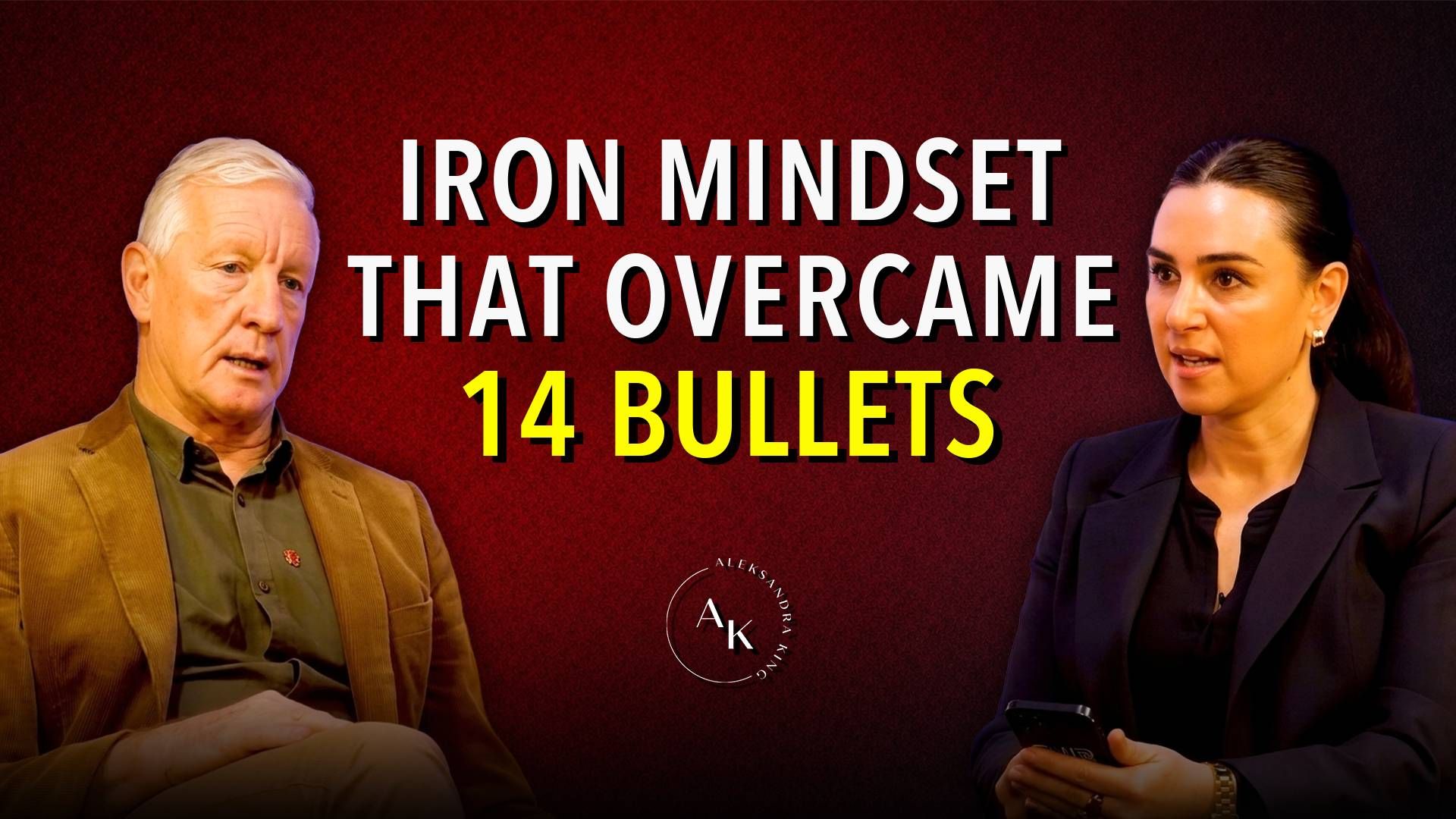
Some conversations change the way you think about your own resilience. My latest episode of The BEYOND Podcast, with Derrick McManus, is one of them.
In 1994, Derrick was a Senior Constable with South Australia's Special Tasks and Rescue Group, the state's elite tactical unit. On what began as an entirely ordinary autumn day, he was sent to a rural property in the Barossa Valley to execute an arrest warrant. As he approached the house, a concealed gunman opened fire. Eighteen rounds in under five seconds. Fourteen of them struck Derrick. He returned fire, then lay critically wounded and exposed for around three hours while the gunman barricaded himself inside and kept shooting. By the time he reached hospital, the trauma team initially believed he was dead. He was, doctors later confirmed, about thirty seconds from it.
He survived, recovered, and returned to full operational duty. That alone would be a remarkable story. But what makes Derrick worth listening to is that he can tell you, step by step, how he stayed alive and clear-headed through it.
The answer surprised me. The decisive moment, he says, was not on the ground in 1994. It was five years earlier, in an open, honest, and confronting conversation he had with his wife when he first joined the unit. They talked through the realistic possibility that he might be killed or permanently disabled. He asked her what she would want her own life to look like if he died. They agreed what she would tell their children. And they settled on a single baseline he would return to while bleeding out: anything better than death is a bonus.
Because he had already faced those questions, his mind was free during the crisis to do the one thing that kept him alive. As a trained tactical diver, Derrick understood that panic and shock physically drain blood from the part of the brain that plans and reasons. So he deliberately slowed his heart rate and his breathing, not to reach peak performance, which would have killed him through his injuries, but to hold a level he could sustain for hours.
This is the heart of what Derrick now teaches, and it is why his work resonates well beyond emergency services. He draws a sharp line between resilience and what he calls human durability. Resilience is reactive: recovering after a breakdown. Durability is proactive: pre-conditioning your mind, body, and emotions in advance, so that pressure does not take you offline in the first place. It is a discipline he now shares with chief executives, military units, and schoolchildren, through a simple exercise of mapping the challenges you can expect, the feelings they will bring, the resources you hold, and the early signals that tell you to use them.
Few of us will ever face what Derrick faced. All of us will face loss, change, and pressure of some kind. His message is that the time to prepare is now, not in the moment itself.
If this kind of conversation stays with you, an earlier episode is a natural next listen: Aleksandra's BEYOND Podcast conversation with the science writer David Robson, on loneliness, mindset, and the intelligence trap.
You can listen to the full conversation on The BEYOND Podcast, and read the complete feature here: Derrick McManus on surviving 14 gunshots and human durability.
The BEYOND Podcast is hosted by Aleksandra King, co-author of Marketing Wins and founder of AK Agency.
Podcast Host / CEO
Aleksandra King is the uncompromising host of the The BEYOND Podcast Podcast, where she drives fearless conversations with entrepreneurs, leaders, and cultural voices on resilience, ambition, and unapologetic success. As a media agency founder, podcaster, and leading communications specialist, she is dedicated to cutting through the noise to reveal the raw truths of achievement. Prior to launching her media career, she built an extensive corporate background. Born in Poland and raised in South Africa, her global upbringing shaped her ambition as she climbed the corporate ladder, working in areas such as telecoms consulting and developing her expertise as a seasoned marketing and communications specialist across continents.
In 2016, Aleksandra became a familiar face after her time on BBC’s The Apprentice UK. Known as the candidate who famously walked out mid-series, she chose to reclaim her autonomy, recognizing the conflict between the show's high-pressure environment and her core values. She left the boardroom to redefine success on her own terms, turning a moment of controversy into a lesson in mental resilience and trusting her gut. Today, she channels her incisive style and corporate expertise into her podcast, providing listeners with unfiltered lessons on confidence, power, and success.