
Season 2 · 16 December 2025
Inside the Mind of a Psychopath Who Chose to Change
Can a psychopath be a force for good?
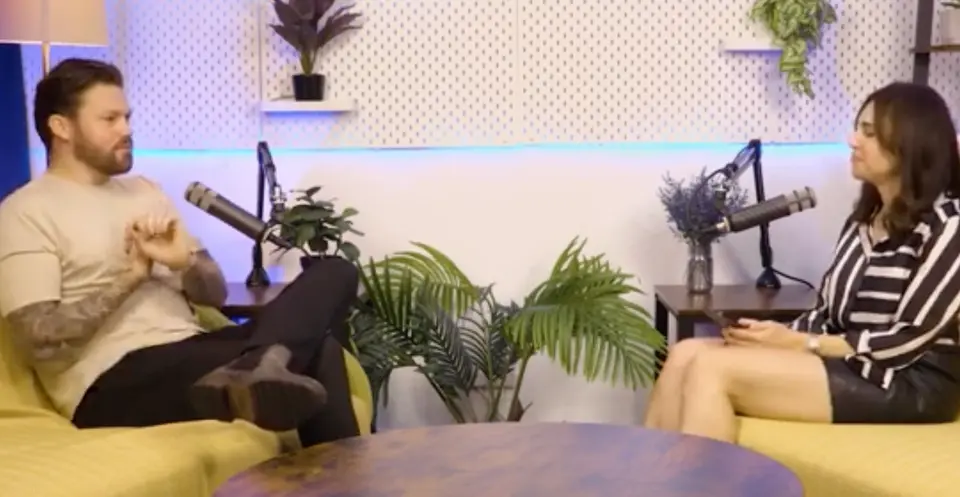
Lewis Raymond Taylor, star of Netflix's The Psychopath Life Coach, joins host and producer Aleksandra King on The BEYOND Podcast to discuss his journey from prison to a £25 million business, and how a lack of fear and raw logic became a commercial superpower.

Episode summary
Aleksandra opens with an admission: she has never interviewed a psychopath before. Lewis takes the label seriously rather than theatrically, unpacking the psychology behind the Netflix title, what the diagnosis-shaped word does and does not describe in him, and his own blunt account of an emotional life that runs, in his words, very baseline: logic first, not emotion first.
He traces where the violence really came from, and what three separate prison sentences were actually like from the inside. Strikingly, he argues that rock bottom never arrived; no single catastrophe forced the change. The turning point was quieter: a fellow prisoner's caption, nothing changes, and the saying he carries to this day, if nothing changes, nothing changes.
From there the conversation turns to the rebuild: how emotional absence became a strategic advantage in business, why the coldness that once isolated him lets him take risks, absorb rejection and make decisions others flinch from, and how education, discipline and self-belief carried him from a cell to a company valued at £25 million.
Aleksandra presses him throughout, on whether change like this can be trusted, and on what a psychopath doing good actually looks like. It is an unfiltered conversation about whether the mind you are given has to dictate the life you build.
“If nothing changes, nothing changes.”– Lewis Raymond Taylor on his turning point
Key takeaways
- The Netflix label is examined, not performed: Lewis describes an emotional life that runs very baseline, logic first rather than emotion first.
- Rock bottom never arrived; the change began with a fellow prisoner's caption and the saying he still carries: if nothing changes, nothing changes.
- Emotional absence became a strategic advantage: risk-taking, absorbing rejection and cold decision-making built a £25 million business.
- Three prison sentences preceded the rebuild, and education, discipline and self-belief drove it.
- The hard question stays on the table throughout: can a psychopath be a force for good?
Key chapters
| Chapter | Timestamp |
|---|---|
| “I've never interviewed a psychopath before” | 00:00 |
| The psychology behind the Netflix title | 05:15 |
| Where violence really came from | 12:35 |
| What prison was actually like | 19:35 |
| Why rock bottom never arrived | 29:40 |
| “Nothing changes”: the turning point | 40:15 |
| Turning emotional absence into strategic advantage | 47:15 |
| Education, discipline, and self-belief | 56:55 |
The guest
Lewis Raymond Taylor is the star of Netflix's The Psychopath Life Coach. After three prison sentences, he built a business valued at £25 million. His full background is on his guest profile.
Where to listen
Related reading
Read the companion insights on the site: The Psychopath Life Coach on Netflix, Business Strategy and Mastering Anxiety.
And: From Prison Cell to Business Empire: The Logic of Redemption.
Transcript
Read the full episode transcript
Cold open (trailer montage)
Clips lifted from later in the conversation, intercut with voiceover. Lines here legitimately recur in the body below.
00:00:00 Aleksandra King: I've never interviewed a psychopath before.
00:00:08 Lewis Raymond Taylor: I mean, obviously I don't feel anything, I'm sure–
00:00:11 Aleksandra King: How do you answer the allegation that you are exploitative– in the cult–
00:00:15 Aleksandra King: How many times were you in–
00:00:17 Lewis Raymond Taylor: Three times.
00:00:18 Lewis Raymond Taylor: So I put a man in a coma.
00:00:20 Aleksandra King: No.
00:00:21 Lewis Raymond Taylor: Yeah, that was the main thing. Well, I actually put– I've actually put two– [unclear]
00:00:30 Voiceover: In this episode we step inside the mind of a psychopath who chose to rewrite his history.
00:00:36 Lewis Raymond Taylor: Growing up, my dad was an alcoholic and he would put me down a lot. He'd call me a buffoon, he'd tell me I'd never amount to anything. He would say I was stupid, he would say I was bad.
Lewis Raymond Taylor: And I realised in that moment that I, I was the problem.
00:00:48 Voiceover: From prison to 25 million, now the subject of Netflix's The Psychopath Life Coach documentary, and a Penguin author, spotlighted by Forbes and Yahoo Finance as one of the world's top 10 coaches– meet Lewis Raymond–
Interview
00:01:15 Aleksandra King: I've never interviewed a psychopath before. Welcome. I'm scared.
00:01:19 Lewis Raymond Taylor: Welcome to your own podcast.
00:01:23 Aleksandra King: I did a story just before, so I was trying to– no, it, it's something like– for someone to admit that they're a psychopath and then to build a career as successful as yours, whilst telling everyone, and on Netflix having a literal documentary about yourself admitting "I'm a psychopath", and then making money off it– that is wild. How do you feel about it? Do you feel– do you feel–
00:01:53 Lewis Raymond Taylor: I mean, obviously I don't feel anything, I'm sure. We'll– yeah, I mean, we'll get into that, but I just don't have a visceral reaction. So come on, it just is a thing, you know. It's like asking a blind person why they can't see, you know. I have cognitive emotions, so I could tell you how I feel, but it's just the way I represent it. So I could answer that question, but if we're getting into the–
00:02:17 Aleksandra King: But if you see like a little kitten or something getting ridden over, do you not feel really, really sad? Is it that kind of feeling that you don't have, or is it a different kind of feeling that you don't–
00:02:26 Lewis Raymond Taylor: So see, that's a little bit different, because that's on– it's on a spectrum, and there's a threshold. So the illusion of empathy and fear and things that people seem to get consumed by on a day-to-day basis, I just don't feel. It's just very baseline. If something significant happens– if I was to see a cat getting run over, I would– it's difficult, because I'd have to really be there to know exactly what I'd feel like, because it is kind of rare that I have those moments. But I would be concerned about it, you know, and I would be– yeah, I would care about it. I actually really like cats, funny enough.
00:02:57 Aleksandra King: Oh, good.
00:02:58 Lewis Raymond Taylor: I actually have– at one point I had five, cause in Bali we would see them on the street– ironically, little ones on the street– and I would take them home. So I do like cats, but it's just– there's a big difference between cognitive understanding empathy– feeling like, I know that's sad and wrong and bad, you know– and having a visceral reaction to it. And if something significant happens, like a death or something really tragic, you know, I will have a feel– yeah, but it will be less– it will be like a tiny little flicker, and it will go straight away after.
00:03:34 Aleksandra King: Okay. You see, I mean, I love that you've said that you love cats. That just shows you– cause I'm– I just love cats and it just– [unclear]– of course, even if you're a [unclear], about the one that's going to have you have feelings for, it's going to be a cat– let's, let's be, let's be honest. Okay, but look, let's just go through some of your credentials here, okay? And I have taken notes about this, because this is really outrageous. So, from prison– and also, I've never met anyone that's gone to prison, that I know, ever in my life, so this is a first– to 25 million empire. You're a really good business person.
00:04:09 Lewis Raymond Taylor: Thank you.
00:04:10 Aleksandra King: That is so cool. Netflix– I mean, you have a documentary about yourself, we said that, you're totally in the spotlight and there's more documentaries on the way. There's things constantly happening for you. I know that you had an event the other day, you're totally on a big stage, you got people coming around– doesn't even– it's like literally nothing for you. And then you've got this– you want to rewire education, because we'll– we'll talk about this– you're very into education, but in a different way. And then your business is about coaching, and you're very good at it. So you've got– you're pursuing a PhD in education–
00:04:45 Lewis Raymond Taylor: Well, it's interesting, because you must have updated your homework, actually, because I wanted– yeah.
00:04:49 Aleksandra King: I know. Okay, we'll talk about this, we'll talk about this. Yeah, there's a whole thing about the education and how you've taken a different path– we'll, we'll pause that one. But you've done so many wonderful things, and you've done it whilst with this label, okay, and that's massive. So we're going to talk about that. So, the documentary about you is called The Psychopath Life Coach– is that– that's correct? Okay. Were you okay with that? Did you question it and go, don't– don't call this documentary that– or whose idea was the title?
00:05:28 Lewis Raymond Taylor: It wasn't the initial working title for it, but as, as the sort of exploration of everything unfolded, that became the central thing– that became the thing– yeah, because that was the unique edge. And you know, I was okay with it because I, I'm logic first, I'm not emotion first. Most people would be like, I can't be called a psychopath, what's going to happen, what are people going to think of me–
00:05:49 Aleksandra King: I'm emot– I'm quite emotionally– yeah.
00:05:52 Lewis Raymond Taylor: But for me it's logic first, and I understand marketing, and I understand the idea of sensationalism and being interesting, and people aren't going to watch it if it wasn't called that, you know. So– and it gives me a platform to educate and inspire, and what it's called doesn't, doesn't bother me. And I found it– yeah, I found it interesting. It's something that I've, I've found quite enjoyable to, to talk about and be positioned as, because it's, it's different, it's unique.
00:06:19 Aleksandra King: It is unique, and people have watched it. And today I was at the hairdresser having my hair done, and the hairdresser said, yeah, I've seen– [unclear] you're going to interview– she's like, wow.
00:06:26 Lewis Raymond Taylor: This is what I didn't expect, to be honest– to get into the top 10. So it was top– it was seven in the charts in the UK.
00:06:32 Aleksandra King: This is– it's pretty huge. She was like, I can't believe you're interviewing him. I'm like, yes, I'm terrified. She's like, oh my god, are you going to be okay? I'm like, I don't know, I don't know. I said– what's the thing people get wrong about you? They have this expectation– they– what do you think they get wrong about you? Because you're obviously aware– you're very aware. I can see you sort of looking and analysing, and it's like– I know, I know you're aware. So what do you think people get wrong about you?
00:06:59 Lewis Raymond Taylor: I think if people take the time to actually learn about me, they don't get much wrong, because I'm so– I'm brutally honest and transparent, to the point where people just can't really get their head around how I would be so blasé about the things that I think and feel, or don't feel, or care about, or don't– my intentions and all sorts of things, I think. So when people actually understand and learn about me, they get me right, because I'm displaying exactly who I am. It's the people that don't take the time to learn about me. So they might see a snippet of a reel that's 30 seconds long, and it's me talking about putting a guy in a coma and not feeling anything for it, and of course I get "you're evil, should be locked away for life". So those– of course, people don't understand. They also don't understand psychopathy– or if we are going to get it into more detail–
00:07:39 Aleksandra King: Yeah, let's– we'll get in more detail.
00:07:41 Lewis Raymond Taylor: –the actual clinical diagnosis behind it, which is an antisocial personality disorder. And this is just neurodivergence– this is no different than someone that's got ADHD or dyslexia.
00:07:49 Aleksandra King: Really?
00:07:50 Lewis Raymond Taylor: Yeah, it's a neurodiverse–
00:07:51 Aleksandra King: I've got a– diverse– I do know quite a few people that are openly– they talk about that, and they are neurodiverse, and you can see that their brain works in a different way, and they get really excited about things, and they'll– you know, you'll talk about something and they'll go into another subject really quickly and passionately– you think, well, hang on, come back. But, but it's, it's sort of in a childlike– very genuine, what you're saying– it's very direct, honest, very– there is a– there's something nice about that.
00:08:17 Lewis Raymond Taylor: Yeah, but there's also something probably, uh, counterintuitively negative about it as well, you know.
00:08:24 Aleksandra King: What?
00:08:24 Lewis Raymond Taylor: Well, people– they can have low– ADHD can have low attention spans. They can find it very difficult to concentrate or get things done. They procrastinate a lot. They overwhelm themselves with too many things. So there's– so there's, there's dark and light to everything, and I, I think it's just in more recent years we're becoming more open to the ways that people work. It was only, you know, however many years ago that, you know, the whole LGBTQ thing, you know, that was not spoken about, and now it's like, of course, huge in every aspect that it possibly could be. Now it's moving into– now it's moving into the way that you think as well, and, and I think different layers of that will get unfolded. You know, at first it might be, oh, I think slightly differently, and it's like, oh, that person's got a disability– then if you've got dyslexia, you're disabled. Now it's like, okay, they just think a certain different way– that's harnessed those skills– and how can we benefit from that, and what type of person is this? And then different layers get, you know, unravelled. And I think something like psychopathy– this has got the worst label attached to it, that it's going to be one of the last to be uncovered. But I, I'm seeing already an awareness around it– a movement– yeah, and there, there are more features that I know about that are coming up that are going to bring a lot of light to this, and more people are going to come out of the woodwork, for sure.
00:09:37 Aleksandra King: Oh, interesting. Okay– so you've shared a lot about your life– prison, addiction, your diagnosis. Does a part of you regret being so open, or are you totally comfortable?
00:09:54 Lewis Raymond Taylor: Totally comfortable. I, I, I– no–
00:09:57 Aleksandra King: You question yourself sometimes at night, or wake up and think–
00:10:00 Lewis Raymond Taylor: The only one thing that's come up recently– because I recently did another documentary that's going to be aired in Germany– there's a, a whole different feature that's sort of similar, in Germany– and since the first documentary I've had a son, and the questions that come up around him to do with love and things are very sensitive, because I'm very aware of, if one day he may watch that, and what he would think about that. Because I want to make sure that he, you know, understands that correctly and he doesn't perceive that in the wrong way. So that's probably the only thing– I don't regret it, but that's probably the first time I felt uncomfortable with how my thoughts might be perceived, because I'm now aware that it's not just me.
00:10:43 Aleksandra King: Yeah, there's someone more important than you, and their life is impacted by, by everything you've just– yeah. It's communication, isn't it– you've got to let them know, like you're saying, who you are, and then the rest is noise. Once they know you, they know you– it doesn't, doesn't– but, but I, I get it as a parent, I totally– cause imagine being asked, um, do you love your son–
00:11:05 Lewis Raymond Taylor: Oh god, that's what they threw at me, you know. And the answer is, yes I do– yeah, but I don't necessarily feel it. And I– and it's different, and it's probably less– that's the truth– because I can't just pick and choose. I can't just say I'll have that emotion but not that one. I just have a very flat range, and it's a knowing rather than a feeling– and it's, and it's shallow, and it's lower than, than, than–
00:11:31 Aleksandra King: Well, I don't know, because you, you've just exhibited more than parents who don't consider themselves having the psychopathy and whatever– that you, you are considering him already. You're thinking about, well, when he's older he's going to watch these things back, what I've said– it's going to impact him. And a lot of parents don't– yeah, you know, they don't care how they speak to their kids and whether that's going to affect them or not, I mean, and they don't have any diagnosis.
00:11:51 Lewis Raymond Taylor: True. They absolutely should– and that, and that's why it's a spectrum, you know. I'm not a full-blown psychopath that cares about nothing and nobody other than myself, and would go out and want to create harm to everybody– [unclear] serial killer documentaries, you know– that's a very, very small part of that spectrum. I cognitively understand and intellectualise, and know what's right and wrong, and have values and morals that I've learned, that I stand by– not because I get an instinctual gut visceral feeling that I have to do it, but because I've learned, and I know that that's what I want to live my life by.
00:12:32 Aleksandra King: You made a conscious decision to live like that. Okay– so in terms of those things, like you say, there's, you know, this psychopathic– go all the way to the, to the extreme, and they do some very, very bad stuff. What about for you– what was that little– the cut-off point, the rock bottom, where you thought, okay, you know something, let's change this– I don't like the way that it is– to now, and I'm making a decision to change– yeah, what was that?
00:12:55 Lewis Raymond Taylor: I mean, I've never actually– I mean, you might be surprised to hear this– I mean, considering, you know, some– gone through– yeah, some of my backstory is– things like, I've had a suicide attempt, I've, I've broken my jaw, my cheekbone– no, sorry, I've broken– yeah, my jaw, my cheekbone–
00:13:08 Aleksandra King: How did you break your jaw, your cheekbone?
00:13:10 Lewis Raymond Taylor: Just fights, you know.
00:13:12 Aleksandra King: Yeah– I've– why are you fighting with people?
00:13:15 Lewis Raymond Taylor: On reflection, there's a few things on it. One, I crave significance, because I didn't feel loved by my family. I don't think that they displayed it to me, but also there was probably a part of, I didn't know how to receive it or feel it, even if it was present– because they weren't showing me they love me, but there's probably still an element of–
00:13:36 Aleksandra King: So you didn't get hugs and, like– no– come on my lap–
00:13:40 Lewis Raymond Taylor: I might have got that, yeah, but I didn't get the "I love you"– the, the really "I love you". And the two– there's, there's many parts of love, but one of it, showing it, and the other one's feeling it.
00:13:48 Aleksandra King: So you could probably have a parent who doesn't outwardly display it so much, but you still feel it, because– yeah, they, they do things– it's not even, they do things– there's just probably this– I'm just guessing– that there's this kind of radiation bond of love.
00:14:01 Lewis Raymond Taylor: So for me, I didn't get that, because I didn't know how to– didn't have it– didn't have that connection– but also, I wasn't shown it. So the closest thing that I could attribute to love, in my mind, was significance. That was in my warped sense of reality, without even consciously really knowing–
00:14:19 Aleksandra King: Significance to whom?
00:14:20 Lewis Raymond Taylor: Significance in any way. Like, I used to like acting, singing and dancing when I was younger, because I would be up on stage and I'd be getting attention. Then I started negatively behaving and getting attention that way. So, you know, I was expelled from school at 15– I had–
00:14:33 Aleksandra King: Why did– why did you get expelled? What did you do?
00:14:35 Lewis Raymond Taylor: Refusing to accept the authority of staff.
00:14:38 Aleksandra King: Oh.
00:14:38 Lewis Raymond Taylor: Because it's another sort of symptom of the antisocial personality disorder– I don't see the hierarchy of, of authority. It is completely baseline to me. So it doesn't matter who you are, how, you know, how important you are– I just can't– I don't get that obvious "oh, I should, you know, listen or behave with this person". So I was just very rebellious, and eventually got me kicked out.
00:15:01 Aleksandra King: Yeah. I mean, I, I do– I sort of– I, I definitely do respect authority– and like, the headmaster walks in and you're like, you know– and this headmaster– so you didn't–
00:15:10 Lewis Raymond Taylor: To me it's just another person.
00:15:12 Aleksandra King: Wow.
00:15:13 Lewis Raymond Taylor: Yeah– but in a way, you could also polarise that and say, but then that's good, because everyone should be treated equally. So it's like– we can– it depends how we look at things, you know. You could be like, he thinks he's better than everybody else, he doesn't respect people– but that's not necessarily the case. It's just a case of, I don't look at it and say, society has told me that this is a person that I should listen to. I see it as, I'm going to make my own decision up.
00:15:40 Aleksandra King: Oh– what about, like, police and stuff like that, and the law?
00:15:48 Lewis Raymond Taylor: That's not relevant– all the same.
00:15:49 Aleksandra King: No– I mean, I like the law. I like that there's rules– and because I, I think, you know, my daughter's just gone in to study politics, and she's asking me my political views and whether I think– and we went to see Alcatraz and stuff, and she's asking me about prison and whether it's good, and the rules, and should– how long should people be in prison for, and all that sort of thing– and everyone's got their views. And like, my husband will say, like, no, like, there should be much more, like, reform in prison– people shouldn't just be put in prison– like, you should look at, you know, why are they there, and do some other thing– like, prison doesn't work, you know. But then you think about, like, really dangerous people, and you're grateful that there's prison, because you think, well, it's protecting, you know, those– and there should be some authority, otherwise everyone's going to do what they want. Yeah– what do you think about that?
00:16:32 Lewis Raymond Taylor: Well, see, I think that's where it gets, uh, confusing for people– because it's not to say that I don't think it's a good idea. I think it's a good idea– I know it's a good idea– but do I have this immediate natural response to follow it? No.
00:16:47 Aleksandra King: No– and I think it's– yeah, of course– I mean, society would be a mess without it. You agree with that?
00:16:54 Lewis Raymond Taylor: It would be, right– yeah, of course– we'd just let people do whatever they want. And I can logically respect the police, and, and I think they're doing a good job, and I don't have any– you know, I don't wish they weren't there. But for me, when I was growing up, I just didn't have– I had to learn that I shouldn't, uh, break the rules. I had to learn that– it wasn't natural. I would naturally break authority– yeah– I wouldn't naturally– break the rules, because I didn't have any value for them, naturally– and then learned later on in life, oh, I can't keep doing this, because it's going to put me back in prison.
00:17:28 Aleksandra King: Yeah. There was a rule that I broke, cause I, I went to boarding school, okay– and, uh, I was in a girl school– and there was a girl school, and there was a little gate, and then there was the boy school– and you were not allowed, ever, to step your foot over to the boy side of thing after 5:00 pm– to the boy side school. I thought, that's a ridiculous rule– because there's no– like– it's not– you live there, so it's your home– and the gate's open– and sometimes you have a conversation that you have to finish, you know– this is, like, you know, young love, and things is really important. And I thought– I did think in your way– I'm going to break the rule and stay after 5:00 pm, because I have to finish this conversation. There is no way I'm not having this breakup conversation, or whatever it was. So I did that, and then, because I knew that I had broken the rules, I said to the prefects, I've broken the rules, I've done it deliberately, you can punish me– I can be grounded, you know, whatever– they– that– you're literally not allowed to see anyone and do anything for, like, three months or something following something like– serious incident– because it's, like, security breach, or whatever you want to call it. But I said, you guys can– that's fine, I'm happy to, to go through the punishment– but this was 100%– it's not– ridiculous– I'm not doing– I'm not doing anything bad, bad, you know– I'm only having a conversation– for you–
00:18:49 Lewis Raymond Taylor: Like I told you, I've never met anyone that went to prison before– but yeah, I mean, you know, I think– yeah, it makes sense. I mean, in that scenario, you looked at it as a ridiculous rule– it was a ridiculous rule– and it allowed you to see past the illusion of, this isn't just something I should do, this is something someone's telling me to do– and your values were more important than that rule, so therefore you broke it.
00:19:08 Aleksandra King: So is that your– what you're doing– is what I'm trying to get–
00:19:10 Lewis Raymond Taylor: In that scenario– most scenarios it is, yeah. Well, I've learned now that I can't break the law, because that's bad and that's going to get me into trouble– but before that, kind of rebellious nature of, you saying no, I, I care about doing this more than the rule that's set upon me, was pretty much my default.
00:19:27 Aleksandra King: But I handed myself in– did you hand yourself in?
00:19:30 Lewis Raymond Taylor: No.
00:19:32 Aleksandra King: Okay. Which brings us to prison– like, what– what is prison even like?
00:19:37 Lewis Raymond Taylor: Well, I went to prison quite a few times– it wasn't just once. I went to prison–
00:19:41 Aleksandra King: How many times were you in prison?
00:19:42 Lewis Raymond Taylor: Three times. The first time when I was– when I was 18. Now that was very different. You, you're not– you're going to be amazed by my answer, but I'll tell you the truth. So, um, I quite enjoyed it– which people find really, really interesting.
00:19:55 Aleksandra King: You enjoyed prison?
00:19:55 Lewis Raymond Taylor: Yeah– I enjoyed both times, and both for different reasons.
00:19:58 Aleksandra King: How did you enjoy prison?
00:20:00 Lewis Raymond Taylor: Because it's very– there's an element of chaos I'm attracted to– and this actually brings back to the question you asked me earlier about, why did you– why were you fighting– and there's an element of, I wanted, um, significance, and I felt that through the power of, of violence– and I could get an element of significance– but also it was, now I realise, a searching to feel. Because with that adrenaline, and, you know, becomes a sensation– and that was more of a physiological reaction in my body– it was still kind of something– that's why a lot of people with an antisocial personality disorder will use drink and drugs, because they're just trying to stimulate themselves. So I think that fighting was a way of doing that– but also chaos and sabotage also gave me an element of, um, feeling and adrenaline, and yeah–
00:20:50 Aleksandra King: You got a rise out of– you like– it got a kick out of it– like, it's– the adrenaline and all the hormones, and it's affecting you in, in, like– psychologically, physically– those chemicals– or you like that sort of feeling. Wow. And then in prison– so you were getting that as well?
00:21:05 Lewis Raymond Taylor: I mean, yeah– because it was just extreme. I like the idea of extreme– like, I really don't like the idea of normality and everyday life–
00:21:13 Aleksandra King: What's in prison that's extreme? Sorry for interrupting.
00:21:15 Lewis Raymond Taylor: Because it's just– it's just chaos.
00:21:17 Aleksandra King: It's just fighting– it's just people fighting in there all the time?
00:21:20 Lewis Raymond Taylor: Well, the first one I went to was young offenders, so it was 18 to 21 years old– and these, these people have no idea of consequences. They just want to– they want to get worse crimes, actually– they're actually trying to get more sentenced.
00:21:31 Aleksandra King: Perfect.
00:21:31 Lewis Raymond Taylor: Um, the first thing they ask you is what you're in for, because then you get ranked by how bad your crime was– and my, my belief system started getting warped, to the fact that I was thinking, I need to come, come back here another time for a more serious crime.
00:21:43 Aleksandra King: Oh no. But– I– just with the wrong crowd–
00:21:45 Lewis Raymond Taylor: Yeah– I, I enjoyed that. I mean, it's just like– for example, a lot of people, when they're younger, they like going out, getting drunk in the park, and, you know–
00:21:52 Aleksandra King: Well, maybe I did.
00:21:53 Lewis Raymond Taylor: –and smashing windows, and kind of– I just liked all that stuff, you– and I enjoyed it– got, got a kick out of it– and I did it when I went to prison. But that was a very different time. And I went in again– young offenders– a little bit after that, um, but the next time I had a big–
00:22:07 Aleksandra King: Did you upgrade your offence?
00:22:08 Lewis Raymond Taylor: So– yeah, yeah, I did, yeah. So next time I went in for GBH.
00:22:12 Aleksandra King: What's that?
00:22:13 Lewis Raymond Taylor: Grievous bodily harm. So I put a man in a coma.
00:22:16 Aleksandra King: No.
00:22:18 Lewis Raymond Taylor: Yeah– that was the main thing. Well, I actually put– I've actually put two people in a coma.
00:22:23 Aleksandra King: You didn't.
00:22:23 Lewis Raymond Taylor: So– I've done GBH before, but I didn't go to prison for it, because I was on trial for two years.
00:22:28 Aleksandra King: You didn't mean to put them into a coma– you just– it got– probably went too far– but you didn't mean to do that.
00:22:33 Lewis Raymond Taylor: No, I didn't mean to–
00:22:35 Aleksandra King: That's intense.
00:22:36 Lewis Raymond Taylor: Yeah. Well– I didn't put the two people in a coma, sorry– I gave two people a brain haemorrhage– one of them went into a coma.
00:22:43 Aleksandra King: So you were really fighting– really badly– and getting into–
00:22:46 Lewis Raymond Taylor: Well, actually– I mean, I was– yeah, I was– those particular scenarios, actually– it's more unlucky– I think– this just got really serious really quickly.
00:22:56 Aleksandra King: It was like, "oh, you went to prison"– it's like– I– actually did that– that– this just– I mean, that's–
00:23:00 Lewis Raymond Taylor: So this is where the psychopathy– because it's interesting– if you look at the psychopathy checklist, most of it is behavioural. So most of it is the things that you're doing– which is interesting, because now– because I've learned to harness my behaviour, and I've developed my mind, and I've become more cognitively aware, and I've trained myself– I've learned how to access empathy on a more of a brain level than a, than a body level– and all these things– I don't necessarily display as many of the checklist points as I used to. But I still display the ones that are, um, more of a, like, a biological response.
00:23:36 Aleksandra King: Um, like what– like what?
00:23:38 Lewis Raymond Taylor: I don't feel empathy. Um, I don't feel fear. I don't really feel any emotion, um, other than things that stimulate me. So that's why the significance, the attention, the fame, the success– those are the things that kind of–
00:23:52 Aleksandra King: Make your new– yeah, you've got your new thing, in a way.
00:23:56 Lewis Raymond Taylor: Yeah, exactly, yeah. And I don't mind it a bit– like, most people, like, oh, I don't want to be famous, I don't want to be in the spotlight–
00:24:02 Aleksandra King: Yeah– I was going to ask you, like– do you like– how do you feel about that?
00:24:05 Lewis Raymond Taylor: I mean– I mean, it gives me something. I mean, I got to find something, right– because otherwise I do feel flat, and I do feel empty. There is like a– there is a– there is a numbness to me– and this is why people sometimes go out there, get very depressed, and end up killing people– because they want to feel. I can tell you, that's probably one of the main reasons they do it.
00:24:24 Aleksandra King: And do you think a lot– they're undiagnosed, basically– they don't know.
00:24:27 Lewis Raymond Taylor: A lot of them must be– because it– what–
00:24:29 Aleksandra King: What did it take for you to get a diagnosis?
00:24:33 Lewis Raymond Taylor: So I committed a load of very violent crimes in a very short period of time, um, and I was going to court, and my probation officer sent me for a pre-sentence report– sorry, the court sent me to probation for a pre-sentence report– and that's where they analyse you, and usually take into consideration background factors, and then they recommend sentencing for the judge. It's not like how you sort of see on the TV, where they make their minds up on the day– like, it's usually a bit of a process. They went through all the background– and it's known to be on your absolute best behaviour on this pre-sentence report, because you're supposed to present yourself well, so that you get a favourable sentence. But I turned up there, and I just had my arms crossed, and I was like, oh no, do your worst, you know– and there– you know, because at this– at the time, I, I was– I was, was actually on trial– I, I shouldn't laugh, but just cause how extreme it is– I was actually on trial for four GBHs, um, because me and my friend had a fight with four guys– and, and we just was– I blacked out, drunk, and I just–
00:25:27 Aleksandra King: You must be a terrible person to get into a fight with.
00:25:30 Lewis Raymond Taylor: I was– I was– I used to be– cause I used to like– the psychopathic kind of– my eyes would glaze over, I couldn't see, I don't remember anything– and I just–
00:25:38 Aleksandra King: Did people not see that in you and go, oh, okay, I'm sorry– and run away? Did you– did they not– who would want to pick a fight with you?
00:25:45 Lewis Raymond Taylor: Like– well, lots of people back then– because they didn't– they didn't know who I was. And I wouldn't win all the time– most of them I would, because I wouldn't stop.
00:25:52 Aleksandra King: You didn't care though, did you?
00:25:53 Lewis Raymond Taylor: No– I enjoyed it. See, that's another thing I enjoyed– I quite like the fighting– it was like a self-sabotage release– it was a release of anger, adrenaline–
00:26:00 Aleksandra King: Um, okay– but okay, okay– what, what I find uncomfortable, right, with this, is that surely you would know– and maybe you didn't know, I don't know– but surely, like, even, even if you are– I don't know about drugs– but let's say drunk, and you're fighting with someone– surely you would know that sort of limit of how much you can hurt them– or does that just go– no– that you would know– if I, you know, do something more, that will–
00:26:29 Lewis Raymond Taylor: I grew up and my friends were also violent, and we, we were proud of it– that's the truth– like, the whole group was proud of it.
00:26:38 Aleksandra King: Were they also psycho– I mean, why– why are they proud of–
00:26:41 Lewis Raymond Taylor: Necessarily– but I mean, it's a nature and nurture thing. You can also– you can either inherently have, like, a, like a desire for– I mean, violence– I guess it sounds quite extreme to say that– or you can, you know, just learn to be a lad. I mean, there's this– it's not–
00:26:54 Aleksandra King: Part of where you've grown up, right?
00:26:56 Lewis Raymond Taylor: I can tell you, there's a big part of the population that, you know– you go down the pub, and it's like– you, you're telling about the fight you had the last night, and you get more popularity and more girls for the, for the better fight you had.
00:27:05 Aleksandra King: Oh– I can understand that a bit– but, but there's– I think there's a line between, you know, fighting, and then– then fighting– fighting with–
00:27:14 Lewis Raymond Taylor: There is– as a, as a, as a mature 35 year old man that's educated himself around right and wrong. But as a, you know, 18 year old lad that had no parental guidance around what was right and wrong, and only a group of friends that were doing that– the group of friends aren't bad– like, you're all– you're all influencing each other. I mean, I was probably one of the worst–
00:27:36 Aleksandra King: You were– yeah, you probably were. So you got to be careful, you– who you hang out with.
00:27:41 Lewis Raymond Taylor: I'm a very good influence, by the way.
00:27:42 Aleksandra King: You got– be– yeah–
00:27:43 Lewis Raymond Taylor: No, you have got to be very careful– like, it's 100%– that, you know– I mean– and I was– you know– it was– a lot of– you know– a few, few people I know have been killed. You know, one of my friends got stabbed and murdered, um, with one, uh, kitchen knife to the heart. Um, few, few people I know have got– have been killed by one punches. Um, it just kind of– I don't know– if– I don't know, because I'm not on the scene anymore– I should imagine it's still there– but there's just a big community and belief and societal group of people that just, for some reason, get a bit of a kick out of that.
00:28:16 Aleksandra King: I'm really glad I'm not hanging out in that crowd– yeah– too much anxiety– and, you know– you're not– you know– you're not– How much were drugs a factor in that– messing with people's minds?
00:28:29 Lewis Raymond Taylor: Uh, I'd say it fuelled it, yeah. So I would say that that was a part of it. Um, alcohol, definitely, for me– I could control myself when I was sober– um, not all the time, but most of the time. But when, when alcohol came into the picture–
00:28:43 Aleksandra King: Is alcohol worse than drugs for, for fighting?
00:28:46 Lewis Raymond Taylor: It depends who you are. For, for me it is, yeah– because, if anything, uh, cocaine– which is what I used to take– it did get me aggressive, but it also kind of, in a way, sobered me up– and it didn't mellow me, but it made me a bit more insular– when I'm– I'm explosive on alcohol– like, I just– I can just take off with alcohol. With, with– with cocaine I can be a bit more wired, and– but sort of a little bit more to myself.
00:29:10 Aleksandra King: But– really? I heard that cocaine was a– like, it made people outgoing– and more high– but maybe with you it was a different–
00:29:18 Lewis Raymond Taylor: It did also make me confident, and, you know, have a good time– and life and soul of the party– but I, I kind of had my rationale still there a little bit. But then, when you mix them both– so what I would do is, I would drink alcohol, sober myself up with cocaine– alcohol, cocaine– and then it gets to the point where I was just gone. So it's called– actually– cocaethylene– it's a different chemical compound when you mix alcohol and, and cocaine– that's what it is– terrible. Um, and that is a, is a very dangerous, scary combination– if you black out and you're just high on coke, for example– then, um, yeah– that's when I just would do the craziest stuff and not remember anything.
00:29:55 Aleksandra King: Oh, okay– you're not doing that anymore?
00:29:57 Lewis Raymond Taylor: No– no, I'm not taking this– uh– and I just want to sort of explain that– I'm not taking any pride in that now, you know. It's just– I'm being truthfully honest with where I was at the time– because I had no awareness around that behaviour, and had no idea of the consequences– and because I didn't feel that natural empathy or remorse– whether it was because I was never taught it, explained it, displayed it– or never had the ability to feel it.
00:30:20 Aleksandra King: Well, I can tell you something– speaking to you– that you've got guts to say it all. That's why I keep asking you– are you sure you're okay to say this– and I know you've done a Netflix documentary, but I'm also aware that you're a human being– you've got your family, you've got people that, you know, care about you– you don't want to affect others as well, even if you don't care so much about yourself. It's like– I'm always– I'm conscious, you know, who I bring on, and I, I, I don't want to do anything to harm you, you know– I don't want anything bad to happen– I don't want– I, I want people to understand that it takes a lot of guts to say this. And I, I know that you don't get scared, in a way– like a normal– like– well, not normal– I don't even know how to say– non-psychopath– what is the– psychopathy– empath– well, empathetic, anyway– yeah, someone without that diagnosis– would react. But it, it does take guts. And what I think– I think– and I have a hunch that you're right about– is that many have this di– undiagnosed diagnosis within them– the way that people behave– the things you see– you know– also the crime stories that happen– and a lot of young people– and there will be these cocktails of the drugs– and, and these things happen– and then you kind of think, well, yeah– what– you've probably– no one sat down with you and actually looked into your brain, and had a little look, and go– you– are you all right? Like– is– do you need some help here?
00:31:43 Lewis Raymond Taylor: Yeah, it's huge. I mean, it's– it's a proven fact that 1% of the population are psychopaths.
00:31:49 Aleksandra King: One percent?
00:31:49 Lewis Raymond Taylor: So out of every hundred people you know, there's one– that is– that's a diagnosed one– but most people are never going to go and get diagnosed. They don't want– don't want that label attached to them– and they don't understand themselves– because it's difficult to compare yourself with other people. It's– it's– although I had this diagnosis, it didn't really hit home until much later on in my life that I was actually on that spectrum– and it was mainly when I was actually coaching other people, and listening to other people, and just realising, I'm just not like these people. That was when I thought, oh– actually, that, that diagnosis makes sense now. Because I thought they just labelled me with something because– yeah– because I've been bad– done something wrong– and– they– I must be mentally ill in this way– because I've had different diagnosis– I've had bipolar as well, and emotionally unstable– which is also borderline personality disorder– so I've had, like, multiple diagnosis. And I kind of just think– how is this guy that's spoken to me for an hour– can tell me about myself– you're just trying– you just can't get your head around the fact I've done all these things– so you've just chalked it up to this. But then it was later on in life where I thought– oh, actually– I've changed my behaviour, changed my life, my identity– but these things still remain. And it was at that point where I realised– okay, there probably is some truth to it.
00:32:54 Aleksandra King: Well, you can help a lot of people– I mean, that, that's for sure– people that have gone through really bad stuff, you know. When, when you've been there– you've been to the prisons as well– you know what it's like– you know what it's like to be in court– you know what it's like to hurt other people– and their– you know what it's like– then you can speak to them from that place– you know– I've been in that dark place. So that brought you to coaching. And you are– people won't know this– um, but on our pre-podcast call that we had– you are such a coach. Like, you actually are– like, naturally– it just comes forward– and you started to coach me. And I was like– I was like, okay– um, but in a way it's like, hang on, I'm interviewing you here– but you've got– you do have this sort of a naturally mentoring thing about you– you do– you agree?
00:33:40 Lewis Raymond Taylor: Yeah– I mean– maybe it was, like– like I mentioned– I see everyone as equal– so you were probably thinking, oh, he's coming on my podcast show– that's a huge–
00:33:47 Aleksandra King: Yeah.
00:33:47 Lewis Raymond Taylor: But I was thinking– you could do some help.
00:33:50 Aleksandra King: Yeah– you're like– uh– well, this is what you– like– hang on. No, but it's like a natural mentoring thing, where you want to– you want to help someone– and you were like, okay, look– and it's very direct– I'm not used to it– yeah– I'm like–
00:34:05 Lewis Raymond Taylor: But it's also– well, that's my approach– and that's why– being able to come– become, you know, very successful in what I do– because it's a very different angle. Because when you're– if you're– a lot of people are worried about what they're going to say– how it's going to become– how it's going to come across– how that person's going to react– they're skating around subjects, because they know that it's going to be uncomfortable for the person to hear. And with me– I don't get that– so I just cut through it.
00:34:29 Aleksandra King: And just– how do you live your life? So, um– so you like your coaching business– you enjoy it?
00:34:36 Lewis Raymond Taylor: Yeah– to be honest, I don't– I do less coaching now, because obviously I become a CEO. Um, that was never the plan. When I started out, I was helping people for free in Costa Coffee– just trying to help–
00:34:47 Aleksandra King: You were?
00:34:48 Lewis Raymond Taylor: Yeah– because I came out of rehab– so the story was– I went to jail– you know, we missed the kind of rock bottom bit– but anyway–
00:34:54 Aleksandra King: Yeah, yeah– we'll go– let's– yeah– okay– let's– no– continue– and then we'll go back.
00:35:00 Lewis Raymond Taylor: So I went to– I went to prison– I mean, I'll explain that. So I didn't have a rock bottom moment– that's the truth– that's what you're going to be surprised–
00:35:06 Aleksandra King: You were saying that– you were saying that.
00:35:07 Lewis Raymond Taylor: I didn't– I didn't– I still didn't really see that much of a problem with it– that's the problem, you know– that is the problem– I didn't see the problem. You know– if anything– I used to look– I remember– that– I was sitting in a prison bus– in this tiny little cubicle in the prison buses– going to jail, handcuffed– and just looking at people walking to work, and going, [expletive], I'm glad I'm not you. Because I, I thought that I was at least living my life in some capacity, compared to these people that were just living this mundane– like– that's– that– well– it didn't scare me– but that was what I wanted to avoid– that's what I didn't like the idea of.
00:35:39 Aleksandra King: Because– that– going to work– that much– yeah?
00:35:42 Lewis Raymond Taylor: Because it would mimic that kind of baseline flatness that I knew that I didn't want.
00:35:47 Aleksandra King: Um– wow.
00:35:48 Lewis Raymond Taylor: So yeah– I didn't see a problem with what I was doing, because my belief system was so warped– that– I said– there's an element of pride, even, going to prison. I was like– oh yeah, people are going to know– they talk about me– Lewis has gone to prison– I kind of like that. It's weird– and I look back at it now– I have a complete different belief system, where I don't think that way– before– but at the time, I remember, you know, not really– almost being quite excited to go back– and be like– oh, I'm going jail for a couple of years this time– and, you know– no– cool– I'm going to tell everyone I was here for GBH this time– and, uh– new chapter, you know. That's– that's how I saw it. But there was a moment, um, where I had my realisation– so it wasn't from a rock bottom. You know– I would– like– I, I would like to say it came from hurting this guy– the truth is– I, I hit him– he hit his– ground on the floor– he hit his head on the ground– and he was in a coma for three days– and yeah– I would like to say that that was the– my rock bottom– but it just wouldn't be the truth. You know– I didn't see that as my rock bottom– I didn't feel– I didn't– for me– I didn't know him– I didn't– I didn't have any ability to understand or empathise with him. Um, I kind of felt, like, just in my actions, to be honest– because he shouted at me in a taxi queue– so my response was– if I'm being honest– probably deserved it. That's how– how brutal I was. And the thing I regretted the most was the fact that I got caught– because I was right in front of a camera– so I just looked up at the camera and I saw it– and then I just thought, okay, I'm going to prison– because I thought I'd killed him at the time– because he went face down– and he went face down and he was passed out, his face on the ground– and then this big, slow, dark trickle of blood come out of his head– and I thought, okay, I'm going to go to jail– so I have to wait– and put my hands up– I put my coat over him.
00:37:35 Aleksandra King: You didn't think– that's a life– that's someone's partner– someone's– I mean– how old was the man?
00:37:42 Lewis Raymond Taylor: He– he was actually– so this is something that sounds even worse– um, I was 25 at the time– and I didn't know– but he was 40– um, which– now we know– isn't actually that old– but at the time– um, when I heard that, I was thinking– wow– he's significantly older– I feel like I've hit an old man. Um, but I didn't know at the time– to– if I'm– if I'm– see– this is what I don't want to do– I don't want to minimise or justify my actions– but I do want to explain the rationale. So one of the things that did happen that night– which was unusual to other nights– is, um– I was very triggered. So my dad used to call me a buffoon– tell me– never amount to anything– he would hit me– um, and that's been a big factor in kind of this anger that I have– and this violence.
00:38:25 Aleksandra King: I think there's this nature and nurture debate– are you born a psychopath– do you create a psychopath– and the argument usually falls in between– there's got to be a bit of both. It's like– you have this predisposition to it– and then, through your environment– you can– it can be exaggerated, or it can be brought out.
00:38:40 Lewis Raymond Taylor: It's correct, what you're saying– there's a predisposition– but that doesn't mean it's predetermined– and therefore– because you're predisposed– and if you have been in these situations and done that– you can reverse it as well, if you're determined to do so– or manage it.
00:38:53 Aleksandra King: I mean– have you reached out to, to the man– to apologise– or you're able to–
00:38:57 Lewis Raymond Taylor: Yeah– I mean– I tried to do restorative justice and things– but he didn't– he didn't want to participate in that– and, um–
00:39:02 Aleksandra King: But you tried it– good.
00:39:03 Lewis Raymond Taylor: Yeah– and there's a lot of cognitive– um– I understand that's wrong– and I, I wish that never had happened to him– but at the time, I just didn't know what that felt like.
00:39:15 Aleksandra King: Okay– so how do you– so you, you apologised to him– and you wanted to rehabilitate yourself– so what was that like– what, what steps did you take?
00:39:23 Lewis Raymond Taylor: Well– to be honest– like I said– that wasn't the turning point for me– so that just happened– my, my immediate reaction was more– okay, I'm going to jail. So I went to– so I went– I got sentenced to prison for– I would have got three years, but they gave me 18 months for pleading guilty at the scene. And then, um– it was when I went to prison– I rang up my friends– and I was kind of saying– what are people saying about me– and– I was on the paper– violent and boorish– um– paralytic man attacks in taxi queue– and all this sort of stuff. Um– and I was like– okay– cool– whatever. And then– and then they said– oh– but your friend has posted a picture of you, um, the day you were sentenced– and there was a picture out of me outside the courtroom– and then there was a picture of me outside the exact same courtroom seven years before, when I'd been to jail another time– and– but he'd written up at the– at the top– "nothing changes"– as the caption. And it's strange– because loads of people had told me things in the past– I'd kind of brushed it off– because, again, I was like– I'm not listening to them– but because it came from my friend– I was kind of– it just hit me– and I was like– what– what does he mean? Because he was just as bad as me– um–
00:40:31 Aleksandra King: Yeah.
00:40:31 Lewis Raymond Taylor: But he– because– because he said that– I kind of listened– because it was my friend– and I thought– what does he mean by "nothing changes"? And then I kind of actually just realised– I– actually– seven years before– I'm in the same prison– like– well– the same courtroom– different prison– but I'm in– back in a cell. And I realised that– if nothing ch– there's a saying that I've picked up since– if nothing changes, nothing changes– and I did realise that I was doing the same things. There's another saying– but I've– I've picked up some vocabulary to explain these situations– but if you keep doing the same things over and over again, um, you're going to get the same result– and that's a definition of insanity. And, um, I realised– yeah– that I couldn't keep doing it. So it was more of a selfish– I don't want to go back to prison– and this is my–
00:41:14 Aleksandra King: So you didn't– so then– you realise– actually– I, I do want to be the guy that's on the outside– and not the guy that's in the car going to prison– all the time– yeah.
00:41:23 Lewis Raymond Taylor: Yeah– cause I was a bit older now– and, you know– yeah– I was– I, I kind of got the realisation that this isn't what I want to do for the rest of my life– so– but it wasn't the full realisation– so that was the– the penny drop–
00:41:34 Aleksandra King: Oh, okay.
00:41:35 Lewis Raymond Taylor: And then– the– my story sounds like something you would write in a bloody fictional book– but I went back to my cell– and I looked in– in the mirror– and we don't have mirrors– we just have these scratched-off pieces of metal– you can barely even see yourself– it's just– cause mirrors can be used as, like, blades or whatever. So, um– I just about caught my reflection– and, as cheesy as it sounds, I kind of saw myself for the first time. I was like– oh– and I realised in that moment that I, I was the problem. Because I, I, I didn't see myself as the problem– and I didn't even see there being a problem– what I was doing, really. But I realised– okay– nothing's changed– so I do need to do something different– and why does this keep happening– how– how come I keep on ending up back in jail? And I realised that I was refusing to accept responsibility for myself– and blaming everything and everyone around me– and being like– ah, just the way things are– no one wants to tell me– it's always going to be like this– using that– that story. But I realised– no– I'm the problem– but I'm also the solution. Um– and in that moment I kind of got this exaggerated idea of what changing my life could be like. So I thought– I could change my name– I could move country– I could be this different– I could reinvent myself– and– and I kind of like the idea of the other extreme– because I– I was addicted to extremities. Um– I hated– normal– the idea of normality– but I was taking the easy route of crime and chaos– yeah– yeah– but I could also go for this other end– which is a really, like, amazing life.
00:43:03 Aleksandra King: Paint it to me– what is this other end– what does it look like?
00:43:05 Lewis Raymond Taylor: Well– at that time– I was thinking– kind of still a little bit warped– so I was kind of thinking more– I could change my name– and I could pretend I came from a different background– and I could just, you know, make up this story of who I was– and just start all over– yeah– and it was kind of like a bit of a dream– like a fantasy– of all this, you know. And then it started– but then– the moment I realised that I could change– and I wanted to change– my whole viewpoint changed– to the point where everything that I saw was different. So I talk– we talk a lot about, in the coaching training, where we have these filters in our brain that delete, distort and generalise information. So before– I was like– I don't want anyone's help– there's no one help me– I'm happy what I'm doing– I'm not the problem– and I was just seeing specific things that reinforce that message. But the moment I decided I wanted to change– I was like– oh– there's maths and English programmes– I could do that– oh– this rehabilitation programme– I could sign up for that– oh– we could go to the gym– oh– and they're just everywhere– just support everywhere– all these resources.
00:44:00 Aleksandra King: They're– reopened up to you– yeah– yeah– and– I just– oh my god– it's like you've had to discover the world again.
00:44:05 Lewis Raymond Taylor: And– and then it's almost like the computer games– you know– you play computer games before– where, like, another world opens up to you– and it's–
00:44:11 Aleksandra King: Well– actually– I haven't played computer games– but I know what you mean.
00:44:14 Lewis Raymond Taylor: Yeah– you kind of go around– and you'll have– like– depending on the level– you'll have– you'll operate in one world– and then you can go to another level– and then it's, like, completely different– and it's like you have reinvented yourself.
00:44:24 Aleksandra King: Um– but that's– yeah– it's almost like you had to take yourself– maybe because of your upbringing– because I can't even imagine what it's like not to feel loved– you know– by your parents– that's blimmin' awful– to someone– little person like that.
00:44:38 Lewis Raymond Taylor: Those realisations that I had– it took me 25 years to have them– but usually you'd have a parent telling you–
00:44:42 Aleksandra King: Every– that's– I think– rubbish parents are just so bad for society– like– when they don't know– but then again, as well– like– thank god that you came to that realisation– because although you had a rubbish childhood– that doesn't mean you've got to have a rubbish adulthood– you know– and, um– you can definitely turn it around– and you have.
00:45:04 Lewis Raymond Taylor: Well– yeah– I mean– yeah– everything was stacked against me in terms of the ability to change.
00:45:07 Aleksandra King: Everything against you.
00:45:08 Lewis Raymond Taylor: Psychopathy– which isn't– you know– we'll go into it– but isn't a diagnos– it's not in the DSM– the diagnostic manual– you can't actually be a diagnosed psychopath– it's a label that people put on the extreme end of the spectrum of people that have an antisocial personality disorder– and that's what I was diagnosed with. So when I went for that pre-sentence report– they give me a psychiatric assessment– and they diagnosed me with that. Okay– um– I didn't think much of it– um– but yeah– later on in life I realised– oh– but it's significant–
00:45:35 Aleksandra King: And it affects your– your behaviour.
00:45:38 Lewis Raymond Taylor: Yeah– it affects the way that you rationalise everything– everything. But what I was going to say is– that is actually incurable– so there's no cure for it. It's– um– you can only learn to manage it. Even the personality disorder– not even psychopathy– the personality disorder– there is no– no proven cure whatsoever.
00:45:55 Aleksandra King: There's no tablet you can take–
00:45:56 Lewis Raymond Taylor: There's no tablet– there's no therapy– there's no nothing. I mean– I'm proof that you can manage it– and you can very much use it to your advantage– um– but there's– but there's nothing so far that says that you can just reverse it.
00:46:08 Aleksandra King: Let's just be completely frank here– so out of all the people watching– okay– I'm going to post this– people are going to watch– guaranteed there's going to be people with serious– like– they're going to have personality problems– they're going to be awkward– weird– maybe not empathetic– maybe they're horrible– maybe they overly shy– they are– hund– no one watching is going to have this perfect personality. So everyone watching– 100%– will benefit from the fact that you've been honest about it– said– I have this thing in my personality– I recognise it as an actual problem– and I'm going to actually do something about it. That is power– like– that's genuinely something everyone can take. And the reason I've got you on– you've– you have transformed your life– you have done horrible things– and you know that you– you're– unfortunately– going to have to live with that– and you want to be better– you have apologised– you want to improve your life– and you've since then taken it– you've built a business– which is a blimmin' hard thing to do for anyone– like– and you've taken it to really good levels– like– you're doing very, very well– and you've got the Netflix documentary. So how do you think that your personality– is– and– and– you know– the– the personality disorder– um– has actually helped you to build a successful business?
00:47:29 Lewis Raymond Taylor: If I was to summarise it in a really– uh– cheesy– cliché way– uh– it's just focusing on what you do have, rather than what you don't. And– uh– because– for example– if a– a deaf person can probably see better– and– um– someone that's blind can hear better– you adapt– you evolve– and you compensate. So because I'm less emotionally reactive– I become more cognitively aware. So I feel like I have an advantage strategically– because my brain has had to evolve and adapt to be able to navigate. So there's– I see everything like a map– like a visual representation.
00:48:08 Aleksandra King: Give me some examples– so like– you– you– you want to get a client– yeah– what's going through your head?
00:48:14 Lewis Raymond Taylor: So I– I will see, like– client– and then I'll see every step– from where I am now– or where I was– or whoever it is– and it can be anyone– and I– and I'll gather information– and it will just come in– come into a map– and I'll see every step of exactly how to do it– and– I can see it right there in front of me– and I can move the bits around– and I get extra information– all fits into the puzzle– and then–
00:48:36 Aleksandra King: But the thing is– there are some people that have that– so there are some people that– strategic– that get things– there's some people that don't– so if you don't– you– you've got to learn it– right– but some people just get it– they don't need to learn.
00:48:45 Lewis Raymond Taylor: Like– I haven't really learned– I just get it. Okay– but then– but then– some people have that– but then what they don't have is the ability to bypass the emotions that are going to hold them back. Because a lot of people know what they need to do– but they don't do what they know. So they have a strategy– they have a plan– but the– the fear– the insecurity– the fear is massive– of every step of the journey– just holds them back– or makes them take ten times as long– or even– should I post– shouldn't I post– oh– people are going to say this and that about me– yeah– and that– to me– to give you an example of kind of the way that my brain works– it's so– um– absent those types of feelings– that I find it absolutely bizarre. Like– I just– I look at people sometimes– and I'm literally just like– I'm looking at an alien– like– when they're– when they're crying– or stressing– or they were anxious– or they're having panic attacks– or they–
00:49:30 Aleksandra King: I get anxious– I just– well– I understand– I don't– I don't think I'm an alien.
00:49:34 Lewis Raymond Taylor: No– I don't mind it when it's– um– I don't– I– I– I can understand it– um– cognitively– and I can understand it when it's something significant– like– if it's a big deal. But what I really don't get– is when people create these scenarios– that– actually– not even drama– but they just create a scenario that doesn't exist– what if this happens– and then that happens– do– that–
00:49:52 Aleksandra King: Yeah– I do– yeah.
00:49:52 Lewis Raymond Taylor: And I just think– well– that's never going to happen.
00:49:54 Aleksandra King: And– you know– well– you don't know– it– that's the problem– how do you know?
00:49:57 Lewis Raymond Taylor: Well– because– has it happened before?
00:49:59 Aleksandra King: It might do.
00:49:59 Lewis Raymond Taylor: Well– it might do– but it might not– and that's what I tend to think about– you know– I think about– logically– what is actually going to happen– not– what– because what happens is– you have an emotion– that causes reaction– and that causes you to think– and then the thinking creates your behaviour– the behaviour creates your results– yes– but I don't have the emotional response– so I just get– what is the logical outcome here– not some emotional reaction that creates– uh– okay– the wrong logical conclusion.
00:50:24 Aleksandra King: Would you like to get into my head for a minute? So– what you just said– I am the complete opposite to you. So I will think of one scenario– I will think about– literally– about 10, 15 things that can potentially happen– so that I can be prepared for every single one of those. And some of them will make me very anxious– some of them less so– but I can't help it– so I will really think about everything– and it probably will never materialise– but I will analyse it to the nth degree– and I will have all of those thoughts– all at the same time– all in my head. And sometimes it's like– but I will have them– and it's made me good in some ways– but it's definitely held me back– for sure– it's given me too much anxiety– definitely. But I see life like a chessboard– so when I– and I love chess– and I'm pretty good at chess– but I will– I see moves– many moves ahead– of what might or might not transpire– so that's how I think– yeah.
00:51:16 Lewis Raymond Taylor: So you've got two– you've got one piece of the– in my mind– my advantage– you've got only one piece.
00:51:21 Aleksandra King: Yeah– you've got the strategic chess playing– but now you're competing with me–
00:51:24 Lewis Raymond Taylor: But no– but what I'm saying is– my advantage– you have your– you would see your– because you can use your advantage– to– strengths– like–
00:51:30 Aleksandra King: Empathy allows me to deeply understand and connect with people– and– and build relationships– so–
00:51:36 Lewis Raymond Taylor: So you have your own strengths– but for me– I just have a strategic plan– and steps– and nothing I think about other than just taking that step– and that step– and that step– and I just take every single one– and I get right to the top– very quick.
00:51:48 Aleksandra King: And you get to 25 million– so you know what you're talking about.
00:51:51 Lewis Raymond Taylor: That's everything I want to do– and also– I can– deep– and I can departmentalise as well– so if I've got a mill–
00:51:57 Aleksandra King: So you're– you're thinking of– a load of things that aren't going to happen– but also– there's obviously some do– if you've got a load of things–
00:52:05 Lewis Raymond Taylor: Some do– yeah– and also– I would– even if they happen– I don't care about it– you know– it's like– I don't have a– I'm just like– if that happens– so– you know– so what– it's not–
00:52:15 Aleksandra King: I'm not competing– I'm just trying to give you a perspective.
00:52:18 Lewis Raymond Taylor: Okay– no– no– it's competitive– compet– cause I learned– cause I– because I'll be like– I'll either learn from it– or I'll get through it– or whatever– you know– it is what it is. So– um– I forget exactly where we were–
00:52:29 Aleksandra King: No– no– let me– okay– no– no– no– let me just go– so– I– so– my USP then– so– yes– and– and my thing is the caring– yeah. So I care so deeply– yeah– that– that's what makes me good– otherwise I wouldn't be able– if I don't care emotionally about making something really good and amazing– for myself– for my client– if I don't– I can't pretend– like– there's no pretending– I can't– like– I can't fake it– I have to– I am completely and utterly driven by emotion– it's weird– because it's the complete– yeah–
00:52:58 Lewis Raymond Taylor: I would say there's two parts of that– one part is to be honoured and owned– and be like– yes– I do care– but then you've got to be careful not to let that blur the lines into justifying kind of all these other things–
00:53:08 Aleksandra King: Actually– totally–
00:53:08 Lewis Raymond Taylor: Because they aren't– not to do with other people– like– you're caring– actually– about yourself– cause it's the outcomes that you're scared about– that you're thinking about–
00:53:14 Aleksandra King: Well– it's also the outcomes for my clients– because if they don't succeed– I don't succeed– so we're together– in the same team.
00:53:20 Lewis Raymond Taylor: This– this anxiety that you feel around all these million things at once– yeah– is partly your clients– I should imagine– all areas of your life?
00:53:28 Aleksandra King: I'm afraid that's how it is. So– I– yes– so even if I wake up at night– so– so if I'm waking up at night– it is– it could be– it's– could be a client thing– and I'm worrying about their business– but I'm– I'm worrying because I'm responsible for things– and I'm– I will worry that if I don't get it right for them– yes– then also it's not right for me– but I– I will– yeah– yeah– I will– I will worry about that– I will really worry about–
00:53:57 Lewis Raymond Taylor: Interesting. Because– again– I don't– I don't want this to be like the empath– psychopathic– but in a way– we– we seem– in a way– I understand– we're driven from the same place of wanting that outcome– but– like– in a very narcissistic– arrogant– um– grandiose place– I just know I'll get the result– so I don't care– hey– I get the results.
00:54:17 Aleksandra King: Yeah– I'm sure you do– but I don't get the results–
00:54:20 Lewis Raymond Taylor: You're taking what I say as a– as some form of– um– attack on you.
00:54:28 Aleksandra King: No– I'm not– I love it– I tell you what– I'm not– I literally– see– I see my– my shortfalls in you– like– I actually do– so I– I love this– I– I think it's– it's really good– because I feel that emotion– fear– also– too much worry– it burns you out– you're not going to get– I– I– listen– I know– like– completely am– totally aware of my– the bad things– like– the things that aren't going to push me forward– and I can see that having a cool head– and strategically going forward– and blocking out the noise– there's even this– this– like– I don't– even– if it's a parable– or if it's a– one of those little stories– about this guy who's trying to get to the top of the mountain– and– if– and– and loads have tried before him– but they failed– because when they've looked at the– these things that try and distract them– these creatures– or gremlins– and you turn to stone– and you become one of them– I don't know if you've heard that story– and you just got to– like–
00:55:22 Lewis Raymond Taylor: Well– using that same story– though– I'll tell you why– we'll flip it back– so you don't feel so attacked by it– it's not– you asked me to explain the advantages– but there's huge disadvantages to it. So I can climb that mountain for the rest of my life– and I will never care that I've got to the top– because I just keep putting more snow on top– you know–
00:55:41 Aleksandra King: You're going to want the next throw–
00:55:42 Lewis Raymond Taylor: I'm going to want the next throw– yeah.
00:55:43 Aleksandra King: So– so when a– when you get a good result for a client– and they say– oh my god– I'm so happy– that's like your reward– you must be so–
00:55:50 Lewis Raymond Taylor: Okay– can I explain to you–
00:55:52 Aleksandra King: Yeah–
00:55:52 Lewis Raymond Taylor: Can I–
00:55:53 Aleksandra King: So this is also the weird thing– so I– I– I am never– I think we– we spoke about this before– I will never take a compliment– or a– an insult– ever– too seriously– so I'm always remaining neutral on it– so it never really– I don't really– it's not that I don't believe it– I'll be like– yeah– you've said that– great– but it doesn't affect me in that way. So I'm never satisfied– but in a different way to you– because I always feel like it's not good enough– it's still not– something could go wrong– you see– something could go wrong– maybe– you know– so I'm– I'm never– ever– but I'm also not– like– like– totally destroyed by it– you know– I'm not– like– it just works out– you know. It's the same with trolling– or compliment– if someone says– oh– you're this or that– or good or bad– they will neutralise each other in the end. I feel like I'm quite grounded in that way– so I don't need it– I don't need the verification of it– but it never really gives me that ultimate high– what you're saying–
00:56:54 Lewis Raymond Taylor: Well– yeah– cause– what– what I'm just going to make– just a wild assumption– because it'd take ages to question– but– um– sounds like you're a bit of a perfectionist– um– that can sometimes manifest itself from– from low self-worth– and it can be– I assume that other people are going to treat me like this– because that's actually how I feel about myself– and the problem is– because the– the– the negative comments can feel– that– that's the worst thing a perfectionist can hear– because that's the last thing they ever want to hear– is that they've done something bad or wrong. So sometimes you can create a defence that blocks you from feeling that– that– that feedback– like– so– I don't care what haters say– actually– you do– you do– but you want to tell yourself– I don't– because that keeps you safe– and keeps you from feeling the immense pain that you know that you put on yourself. The problem is– if you shut off that part– you shut off the opposite part. So if you say– I'm not going to care what haters think– you're basically saying– I don't care about opinions– and you put this block up– that will also stop you from feeling the praise and the gratitude from when you do get it right– you just become neutral.
00:57:55 Aleksandra King: Yeah– that's interesting– so– are you– possibly on to something. I will say that it doesn't come from low self-worth– because I've always had good– I mean– I– decent self-worth– I've always believed in myself– I don't– I– I haven't had low self– I'm a pretty confident person– so I wouldn't say that– but I hear you.
00:58:10 Lewis Raymond Taylor: So why– if you don't have low self-worth– why would you question everything that you do?
00:58:14 Aleksandra King: I question the good and the bad– because I always think– like– I always think– so many other things can happen– you just– nothing is fixed in time– nothing stays the same– nothing is guaranteed– it's ever evolving– and you have to work to stay on top– because you can fall off at any second.
00:58:36 Lewis Raymond Taylor: And– you– when you said that– you said– you can fall off at any second– yeah– are you talking about me?
00:58:41 Aleksandra King: Everyone– life– it's not– I'm not– it's not only me– it's everybody.
00:58:46 Lewis Raymond Taylor: So it is you– so you could fall off any second.
00:58:48 Aleksandra King: Everyone– and me– I'm not immune to falling off– from– you have to keep working– you have to keep–
00:58:55 Lewis Raymond Taylor: Yeah– try it with "I"– see how that feels.
00:58:58 Aleksandra King: I have to keep working–
00:58:59 Lewis Raymond Taylor: Yeah– all those things–
00:59:00 Aleksandra King: You're coaching me–
00:59:01 Lewis Raymond Taylor: Just try it with "I"– and see how it feels.
00:59:04 Aleksandra King: Who's doing the interview?
00:59:06 Lewis Raymond Taylor: Both of us– it's a conversation– isn't it?
00:59:08 Aleksandra King: No– we're not– I'm doing an interview– I'm doing an interview– but I appreciate that– I– I– you know– we approach it from different ways– but– like I told you– I– totally understand the merit– and I do work– in many ways– to be a little bit like you– in the sense that– try and block out the unnecessary noise– I would call it those statues– and go– and just go– because it– it wastes energy– because you're just getting– and you sometimes just got to run that race– and finish– you know– get it done– lick wounds if you need to– electrolyte drink– whatever it might be– and go again– and go again– repeat– repeat– repeat.
00:59:53 Lewis Raymond Taylor: But it never ends– that's the thing.
00:59:56 Aleksandra King: So why aren't you happy– with– like– what– what about you– getting to that pedestal– Netflix– this– are you– you're not celebrating– you're not happy?
01:00:06 Lewis Raymond Taylor: To be honest– I'm– um– I'm very aware– that– I know that it's– it's not my ultimate desire– I know that my longing– become– comes from actually wanting to feel loved– and that I've substituted that for a– a quest for significance– and fame– and success– and– but I know that it's wrong– because I'm– I'm too– um– aware– to know that that's just [expletive]– right– yeah– but I kind of keep the programme playing– in my own brain– consciously– knowing that it's serving me. So it's– it's– my life's still better– it's better than it was before– so I'm not going to say I don't want to be successful– I know that ultimately it's not going to be my destination– it's not going to give me what I need– but my subconscious thinks that it does– at the moment– so I kind of let that programme play out for a little bit longer– until I have more things that I want– and then I'll probably try and break it down even further– because– um– sometimes you can turn something off– and it can affect your results– or the trajectory of your life– and right now it's moving in a good direction– I– I know it won't lead– yeah– I like where I am– I like where I'm going– and it's moving in the right direction– but not the exact destination– and I know that if I can just move myself forward for now– I know that I'll be able to recalibrate at a later stage– to give me something–
01:01:23 Aleksandra King: So you've set your sails– I like what you– you– you are literally doing what you said that you do– and you've got your plan– and there is a destination– and you're just– like– almost like– it's almost like–
01:01:32 Lewis Raymond Taylor: To be honest– I don't know what the ultimate destination is– because I know that I want to feel loved– and fulfilled– and I– I know– every– every layer of success I've achieved– it– it reconfirms to me– more so– that I'm not going to get what I want from it– um– but it's still good to have. So– um– I don't know if I'll ever be able to really– truly– feel love. I'm– I'm working on it– I've done lots of deep work– lots of plant medicine– lots of healers– lots of crazy things– you know– all sorts of different therapies– and it flickers every now and again– and I do some– like– breath work– or some mushrooms in the jungle– and– and I–
01:02:12 Aleksandra King: Mushrooms in the jungle?
01:02:14 Lewis Raymond Taylor: Yeah– come on– plant– I've done– yeah– I've done a few different plant medicines– from peyote to Bufo– which is like frog poison– and it sends you to outer space– in terms of– but– cause I'm– I'm on a quest to heal– you know– if I can– if I can be the first person to cure psychopathy– then– brilliant.
01:02:33 Aleksandra King: Let's talk about this– let's talk about the way that you've been educating yourself– it's a really important part– and I want to– I want to go into this– and you were correcting– let's just have a look– let's go back to slide one– right– education– you didn't pursue a PhD– you've got a– yeah–
01:02:50 Lewis Raymond Taylor: I've got one– thank you.
01:02:51 Aleksandra King: Yeah– that's right– that's right. And you really– you really want to educate yourself– like– that's just such a– you want to grow all the time– you want to read books– you want to do all these things– so talk to me about why education is so important to you– and how is it different to traditional education?
01:03:09 Lewis Raymond Taylor: Yeah– I mean– this is a difficult one to unpack– but– um– I think– nowadays– the reason why I crave it is because– um– it gives me stimulation– which is like a sensation– it's not a feeling– but it's something close to it– you know– so when I keep myself busy– and stimulated– and learning– and growing– it–
01:03:24 Aleksandra King: Well– like– reading all these books and studying is stimulating to you– we are definitely different– okay.
01:03:28 Lewis Raymond Taylor: Yeah– yeah– yeah– exactly– and without it– I just feel– no– that's cool– you know– so– I want to– I– I actually– you know– for example– a lot of people try and create work-life balance– and they try– for me– I'm the opposite– I put on work when I– when I feel things are– like– not chaos– I'm like– I need more– I need to feel– I almost want to feel that cortisol in my– in my bloodstream– I want to feel stressed– I– I want to have that kind of– you know– fight or flight– let's get [expletive] done– kind of–
01:03:54 Aleksandra King: Actually– in that way– we have something– again– in common– I– like– I– I hate stress– but I like– I'm addicted to– too– stressed– that's why I do stressful things.
01:04:01 Lewis Raymond Taylor: Yeah– me too– and it's just– I think– another craving of– of feeling– uh– something– if– because feeling nothing is not nice– trust me– it's a feeling of emptiness– hollowness– flatness– numbness– pointlessness.
01:04:13 Aleksandra King: Well– why can't you just go for a walk in nature– and– like– look at the nice greenery– and watch the wind blowing through the trees–
01:04:19 Lewis Raymond Taylor: Cause it means absolutely nothing to me.
01:04:20 Aleksandra King: No– it's not nothing– go and smell a flower– look– it's a rose– it's got scent– you know– look at animals– a fox– lovely–
01:04:28 Lewis Raymond Taylor: Sounds nice.
01:04:29 Aleksandra King: Sun on your skin?
01:04:30 Lewis Raymond Taylor: I mean– I get it a little bit– I get it– just about– I mean– I have to travel the world and go to some really beautiful places to just about– go– but it– it's not– it's not a profound–
01:04:41 Aleksandra King: English countryside– just sit in the countryside– grass– have you smelled grass– it's nice– it's sweet– it's like– soft–
01:04:49 Lewis Raymond Taylor: It's– no– grass– no– just grass– unfortunately– in my brain– that's the problem– or my body. I mean– I would love to feel like that– at the end of that– you know what– my– if I could swap everything that I have– that's difficult– because it's like– there's battle there– but I think– deep down– if I was to be able to swap everything I have– for just a normal life– where I'm just fulfilled– and I wake up– and– like– yeah– everything's good– you know– I'm happy– I would–
01:05:16 Aleksandra King: I don't think anyone can do that– I don't– I don't think anyone– well– there are– I know a lot of people that have nothing– but they're happy.
01:05:24 Lewis Raymond Taylor: Yeah– no– they have nothing– they might be very–
01:05:26 Aleksandra King: You mean money-wise– poverty– yes– some of them– even– some of them I've seen– I've seen– I went to Uganda– and– and– and– like– fed kids that were on the street– and built little houses for them and stuff– and I'm telling you– them kids– they're running around– and they are happy.
01:05:41 Lewis Raymond Taylor: Yeah– no– that's– that's– that's different– I think that– yeah– actually– a lot of the people– when they have less– as well– it's like– life is less complicated– and you– you don't have these sort of mental health– I would say– issues–
01:05:52 Aleksandra King: As well– as in the modern world– I think– in some ways– we bring it– we bring ourselves into the stressful situations– whereas– when you're forced to think about the essentials of life– go and get water– you know– make sure that that water is reasonably clean– because you want to not die from drinking it– and go and milk the cow– and go and do this– and– you– let's cut the wood– to keep– you're so busy– it's like you were saying– you're busy– you don't have time to think about all these other things– you're living–
01:06:18 Lewis Raymond Taylor: Gratitude can get missed when you're out of perspective– you know– they have the perspective of the simple things that bring life– you know– and they're smiling–
01:06:25 Aleksandra King: And– yeah– there is a bit of distortion– I think– for us– that– but I also think that life– yeah– it– it can– we can get corrupted in ways–
01:06:36 Lewis Raymond Taylor: I mean– I can't even remember the question–
01:06:38 Aleksandra King: I know– education– right– education.
01:06:40 Lewis Raymond Taylor: Yeah– so I was expelled from school at 15– and I– um– in– in– I signed up to maths and English in prison– Functional Skills Level 1 and 2–
01:06:49 Aleksandra King: You did–
01:06:50 Lewis Raymond Taylor: And this was– it was actually just because they paid– well– it was also cause I wanted to work on myself– but you could get– I think it was £11 a week– if you did education–
01:07:00 Aleksandra King: Awesome– they paid you–
01:07:01 Lewis Raymond Taylor: Or £10 if you worked– like– mopping the floor– so I was like– I get an extra pound– I get an extra pound– and– okay– let's work on myself. And– um– but when I first went in there– I didn't look at the board– I screwed the paper up– and I threw it– and I said– I'm not doing this [expletive]– at 25 years old– and it was just– it's just crazy when I think back on it– but I was just so defiant– and– um– a prison tutor– sweet old lady– Susie– sat down next to me– and she just said– what's the matter– and I don't think anyone ever asked me that before– and I just blurted out– I don't understand– and then I was really confused at why I said that– because I didn't even look at the board– or look at the paper– so how did I know I didn't understand? I don't know– but I had created this belief that I was stupid– because that's what my dad used to say to me– he used to call me buffoon–
01:07:43 Aleksandra King: And actually– I thought– a buffoon–
01:07:45 Lewis Raymond Taylor: Um– yeah– yeah– no– buffoon is like a jester– you know– like a clown. Um– that word really stuck with me– and I just– because that's the only person I looked up to– of authority– I guess– at that time– yeah–
01:07:58 Aleksandra King: He let you down– he let you down.
01:08:00 Lewis Raymond Taylor: I just assumed that he was right– and also– I didn't do anything at school– and I got expelled– and my whole life people told me I was bad– and I kind of linked that with being bad– and useless– and– and not smart. So– but she was like– well– give it a try– and then– okay– yeah– I kind of get it– and then I– and then I started to just do the work– she'd support me– and then I just got it– it was simple– obviously– because it was just– like– simple calculations– but– um–
01:08:24 Aleksandra King: Simple for you– maybe.
01:08:25 Lewis Raymond Taylor: But then I thought– you know– what's actually stopping me from thinking that– you know what– now I'm kind of realising– okay– it's probably come from my dad– it hit me in the moment– um– and then I thought– I wonder what I would do– do– if I thought the opposite– is– I was like– what about if I was smart– and I didn't even know? So I said– can you– can you give me– like– a– a test– and she said– um– I'm going to teach you how to do pi– it's like– how to do the circumference of a circle– I was like– okay– cool– and then she gave me– like– written down– a bit of paper– and then I came back– and I said– I've– uh– I've memorised a– pi– pi to 100 decimal places– the next day– and– um– she said– no– you haven't– and I was like– that's what you wanted me to do– right? And she said– no– no– no– you have to do a calculation– to– I– I was like– oh– I thought you wanted me to memorise it– and– um– oh– so I– so I came– and I said– I said– I have– and then I just started going– 3.14159265358– 979– 332– 338– 462– 6433– and that is– I mean– it's– I still remember it now– and– um–
01:09:20 Aleksandra King: Okay.
01:09:21 Lewis Raymond Taylor: And then she– she got all the other tutors from the other classrooms in– to do it– and I was– they were shouting out– what's this decimal place– I was writing on the wall– and then– and then I said– I'm going to do 500– and then I came back the next day– and I did 500– and then– um– it was then– she sat me down– had a conversation– he was like– okay– you know– you can do a lot more than this– yeah– and then I said– do you ever think I could go to university? Because I just genuinely thought that was just not for people like me.
01:09:42 Aleksandra King: I– you could leave at school at 16 back then– yeah.
01:09:45 Lewis Raymond Taylor: And– and it was only– I don't know– they'd never– cause I was– cause I got expelled– obviously– at 15– and before then– they weren't even starting to talk about kind of what you're going to do after school– um– I just assumed it was reserved for the smart kids. So– um– she said– of course you can– and I just thought– oh– and it was a level of belief that no one had had in me before– including myself– but I got it when she said it– because it was real– she was really certain about it– she was like– of course you can– like– I was like– you idiot– of course you can– and then– so I thought– oh– okay– I'm going to go to uni then. So I went to rehab after prison– for six months– is a whole another story– and then– after that– I got accepted into an access course– which is the equivalent of A-levels– in one year– shortened down– to get you into uni– and– um– I thought– you know what– these kids were fresh out of school– and I was a 26 year old mature student– technically– at the time– yeah– and– um– but I thought– you know what– I'm just going to try my hardest– I've never tried before– I'm just going to see what I've got– and– um– I got a distinction in every module– and every subject– and won an award at the end of the year. It's obviously only college– you know– it was only Level 3 at the time– but it was–
01:10:54 Aleksandra King: Put it down– well done– don't say "only".
01:10:57 Lewis Raymond Taylor: But what I mean is– it wasn't like this huge achievement– but it was me trying my hardest– and I got 100% attendance– I– there every day– I was cycling there to get there– and–
01:11:07 Aleksandra King: Amazing.
01:11:07 Lewis Raymond Taylor: Yeah– and then I was like– okay– cool– so I got into uni– and then– I was three months in– and I thought it was going to be amazing– all these academics– I was going to learn all this amazing stuff– and I got in there– and I was just– this is– this is crap– this is– this is rubbish– and I was being– I was being taught– um– I– I did a business management and entrepreneurship degree– I was being taught and lectured by someone that had never left university– so they had got a– a PhD in product design– never started a business– and now just went into academics– and now teach– so I– I couldn't value this– a– person's opinion– as well– authority starts–
01:11:44 Aleksandra King: Well– not just authority– but there was no results– there's no–
01:11:46 Lewis Raymond Taylor: Slightly– you have to have the– the– the substance behind it. I'm not just going to– you're a doctor– I'm going to listen to you– I don't have that– I've got– why should I– what have you got– and I don't want– you– so I'm not going to listen to you– because I wasn't going to end up in the same place. So I dropped out– and– but I don't like that term– I chose a different path–
01:12:02 Aleksandra King: Okay–
01:12:03 Lewis Raymond Taylor: And I went– doubled down on my business– and by the time they graduated on their degree– I was a millionaire– so I was all right– you know– with that decision. Yes– but then– as I started– uh– creating my own sort of– uh– education– online– and my own accreditations– and things like that– um– I brought a whole different sort of flavour to learning– which is more authentic– more real– um– more relevant– um– and then there's a whole another conversation we can have around– um– the way that I would like to see education changed– but– to be honest– I could talk about it for hours– um– because it did fail people like me– like– I– it didn't support me when I was younger– um– I get that– and also– it's just completely incomplete– it teaches you how to learn things– it doesn't teach you anything about yourself– like– if someone had just taught me about myself– then I would have been able to unlock everything after that– easily.
01:12:50 Aleksandra King: I can see– I mean– even the way that you– that you coach– you– you're quite sensitive to the other person's personality– you know– the psychology of the person is very important to you.
01:13:02 Lewis Raymond Taylor: Yeah– because everyone's different– like– you can't– the– the adage is– you can't judge a fish on its ability to climb a tree– have you heard of that before?
01:13:11 Aleksandra King: I haven't– but– like– so– you know– but there– standardised test– I think of it differently now that I've met you– but yeah–
01:13:17 Lewis Raymond Taylor: But the standardised tests– for everybody– and they're not understanding their– their behavioural patterns– their– their neurodiversity– their wants– their needs– their rep systems– their learning style– their visual– auditory– there's– there's so many different– like– things to it– and they just get– like– learn this– and– um– anyway– so I decided that– you know– I want to disrupt education– it's quite a large mission– but I want to disrupt education– something I've been working on behind the scenes– to create an alternative degree– uh– so we're about to be– it's taken two years– but about to be officially accredited by Qualifi– which gives us the ability to deliver Level 4 and 5 diplomas– and partner with universities to be delivered degrees– but it will mean that I can deliver it– unfortunately– to the same curriculum– because that can't be changed– because it's too– yeah– okay– government regulated– but I can change the way it's delivered– and what's in there– and the style– and the relevance– and the excitement that's in there– so it's not– it's going to be very good for a lot of people who don't want that– it's a very different format– it's all online– cheaper– all sorts of things to it. Um– but I went on a– after– after my Psychopath Life Coach– um– I went on– um– talk– TalkTV– I think it was– it was a live TV show– and– uh– the guy– hadn't even– Andre– whatever his name is– Andre– if you're listening– listen up– mate– he hadn't even done any research– to me– he said– oh– just by the way– just before we go on live– I haven't seen your documentary– but he'd just been given– like– a script– of just– like– try and drag this person through the muds– you know– okay– and– um– some of the things he came up to me was– like– how can you teach people– you know– anything– like– who– who says you are academically qualified– and all this sort of nonsense– because he had a couple of degrees– people that have degrees are so protective over the money they've wasted on it– that they will tell anyone that doesn't have one– that they are wrong– I mean– and– uh– he was like– all sorts of things– like– because I– because I'm not academically qualified– what I'm doing is manipulative– and it's a scam– he said it's close to fraudulent– he said– how can you promise people a better life if you're not academically qualified– and it's– and I– and I said– anyway– yeah– after that– I thought– okay– not because– necessarily– to prove anything to him– but I just knew– this is what I'm dealing with– and if I want to make a big impact– I can't completely go against people's belief system– because they're just not going to be receptive to it– so I need to play into it. So if you think that I need academic qualifications to be able to make the change I want to make– then I'll go and get them. So I went and got it–
01:15:45 Aleksandra King: Wow.
01:15:45 Lewis Raymond Taylor: So I did a PhD in transformational education– and got a distinction– so– so– Andre– if you're listening to that– I'm more qualified than you are– my friend.
01:15:56 Aleksandra King: I mean– come on– you know– let's– let's just– we've been speaking for over an hour now– okay– you've told your story– you've gone through terrible times– like– bad stuff has happened– you dragged– you singlehandedly dragged yourself out of that– you got educated in prison itself– with this lovely lady– was it– S– Susie– did you say?
01:16:22 Lewis Raymond Taylor: Yeah.
01:16:23 Aleksandra King: And you were motivated to do that– and you did that yourself– from all the stuff that you had been through– where everyone– society– has written you– written you completely off– and you still got an education. So for that man to say what he said is not okay– like– not on any planet. Would he have been able to pick himself up if he had been told these things by his own dad? Because the thing is– the problem with parents saying such toxic things to these little people– these little humans that are growing up– is that they only become what the parents said they are– because they believe the parent– because that is the voice of authority. So they then are just fulfilling what's been put there– and it's only if they can– by some miracle– grow out of that– and break that programming– and then they realise that there's this other way– but– that– to do that– that's also insane– like– that is just– to have the– the self-awareness to do that is– is another level– you know– not everyone is in that position to do that– a lot of people will carry on their whole life just reinforcing what they've been told– because that's what they believe– so they just– programmed– and they just executing programming. So I don't like– I don't like that– I don't feel that you have to– who says you have to have an education like this– or like that– I mean– just as long as you're trying to be better– that's it– just try– be better– yes– you've done bad things– but try– whatever it is– is education– how you treat people– just be better– work on yourself– then that is successful– do it– whatever road it is– do that– to help other people.
01:18:02 Lewis Raymond Taylor: I mean– it's not just– like– I– it's– it's counterintuitive– and it's– it's almost a conflict for me to– to sit here and say I care about people– and making a difference in the world– when I've said those things– but I genuinely do– yeah– for more than one reason– though– like– everything doesn't have to be black and white– like– what is your intention– is it this or this– there's many– you know– I want to be known as significant– and I want to feel proud– and to– although I haven't been able to access that yet– but the idea is– I want to be able to get to some place– some time– where I can look back and go– I'm so proud of what I did– you know– not necessarily for the other people– but that I'm glad that I was one that did it– you know– that's the selfish part of it– in me– um– craving something for myself– but also– I do deeply care about these people– knowing that– you know– I was once in that place– and wishing someone could have helped me– and I– on a cognitive level– yeah– I might not feel– like– this– whatever you feel–
01:18:57 Aleksandra King: Even– I'm just saying– whatever anyone feels–
01:18:59 Lewis Raymond Taylor: I– don't know– I can't even– I can't even describe it– but I just don't get the feeling– but I– I might not feel that sensation that people explain that they get– but I still just 100% get it– if not– I think it's more acute– I think it's more sharp– I think– I think I'm more aware– I think I can–
01:19:14 Aleksandra King: I think you're very aware.
01:19:14 Lewis Raymond Taylor: And– motion– and I– and– sorry– not emotionally– I think I can cognitively care– and want to impact– more so– and just– but just because there's no emotion attached to it– doesn't make it any less profound.
01:19:28 Aleksandra King: So– you're right– it's interesting– you're right– and I've– I've interviewed a lot of people– and never has– has anyone– well– first of all– analysed me back– because I always say– I'm quite– analyse me back– but also– being– you– the questions you ask are quite emotional– or they– they touch on the emotions of a person– of how they perceive themselves– so you're quite– you're definitely– like– incredibly aware– I think– of the other person– it's– it's total– it's a total superpower.
01:20:01 Lewis Raymond Taylor: Thank you. And that's what I want people to understand– it's not that I'm void of empathy– it's more so– I just don't get a physical reaction– that's pretty much it. And there are– like– for example– would you think of an autistic person as evil?
01:20:14 Aleksandra King: Obviously not.
01:20:15 Lewis Raymond Taylor: Obviously not– but you say– obviously– but they– a lot of autistic people also do not feel any emotion– so– one of the symptoms of it– but they're not categorised as– you know– evil– or bad– or– lack– don't care for other people– but they just might not get a physical sensation– so it's just a misperception– and a lack of awareness– around what these personality disorders are.
01:20:35 Aleksandra King: I mean– I've– I've totally got the lack of awareness– and I– I feel bad– I feel part of the problem– you know– that I also think– oh– psychopath– I mean– that's really bad– and I'm so scared– and it's like– I feel– yeah– cause it's like– then– yeah– how's autism different– it is a diagnosis– and– you know what the worst thing about this is– is that I actually– I mean– I did a business– um– informatics degree at university– but as part of this– that module– I was allowed to take another subject– like– humanities– that I wanted– so I took psychology– and learned about personality disorders and all these things– and mostly because I wanted to understand my family– because I think they– all a bit– yeah– um– but– yeah– so I should know better– you know– I should know better– not to do that– and I– I didn't– I'm sorry about that.
01:21:24 Lewis Raymond Taylor: Oh– apology accepted.
01:21:27 Aleksandra King: It's been amazing having you on– thank you so much.
01:21:30 Lewis Raymond Taylor: Thank you.
Follow Aleksandra
Business and collaborations: aleksandraking.com | aleksandra@aleksandraking.com
The views expressed by guests are their own and do not reflect those of Aleksandra, the podcast, or its producers. This podcast is for entertainment only.