
Season 3 · 16 July 2026
The Hidden Psychology of Style, Success & Status | Anthony Flynn
What if the jacket you pulled on this morning already told the room more than you meant to?
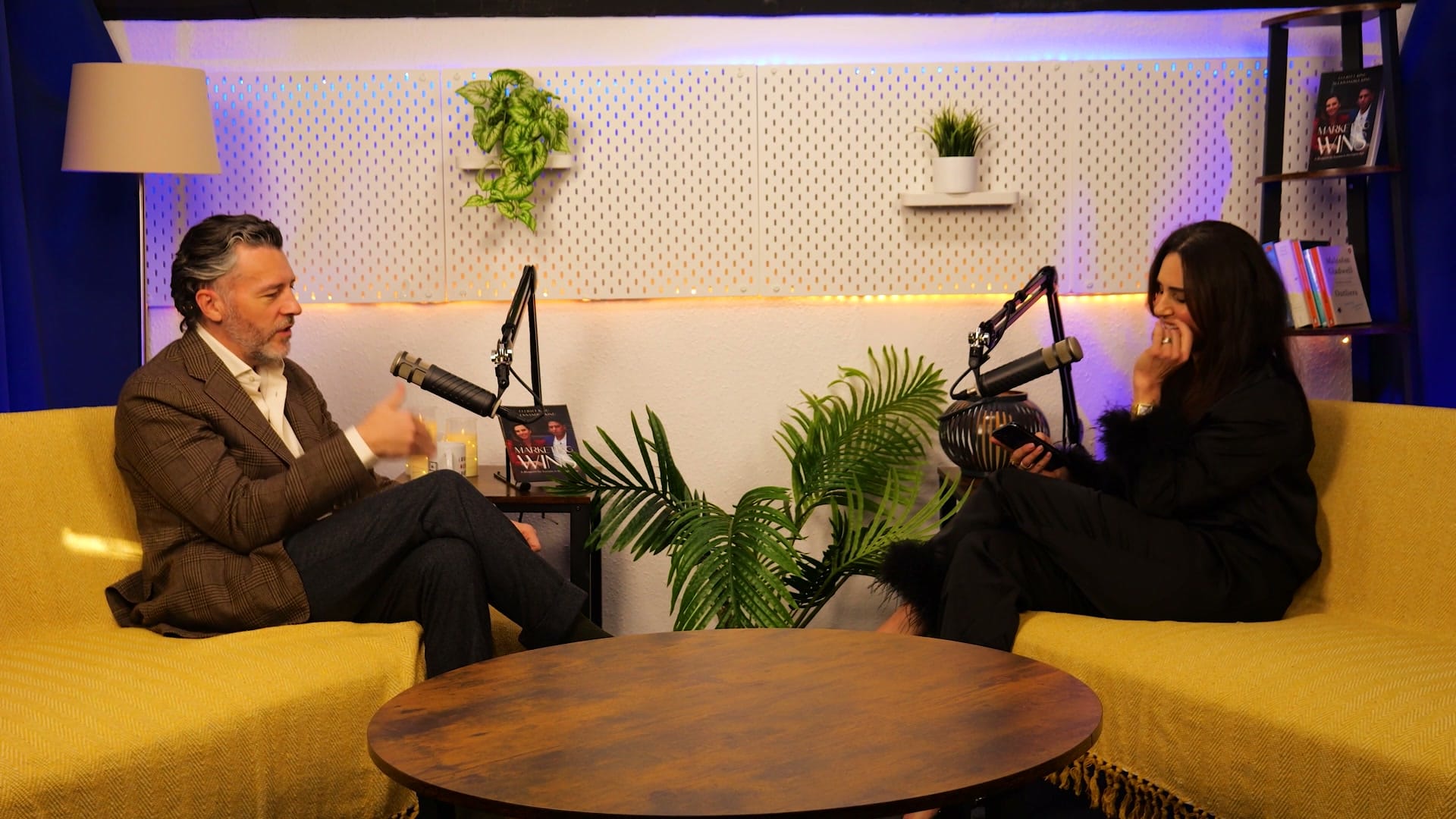
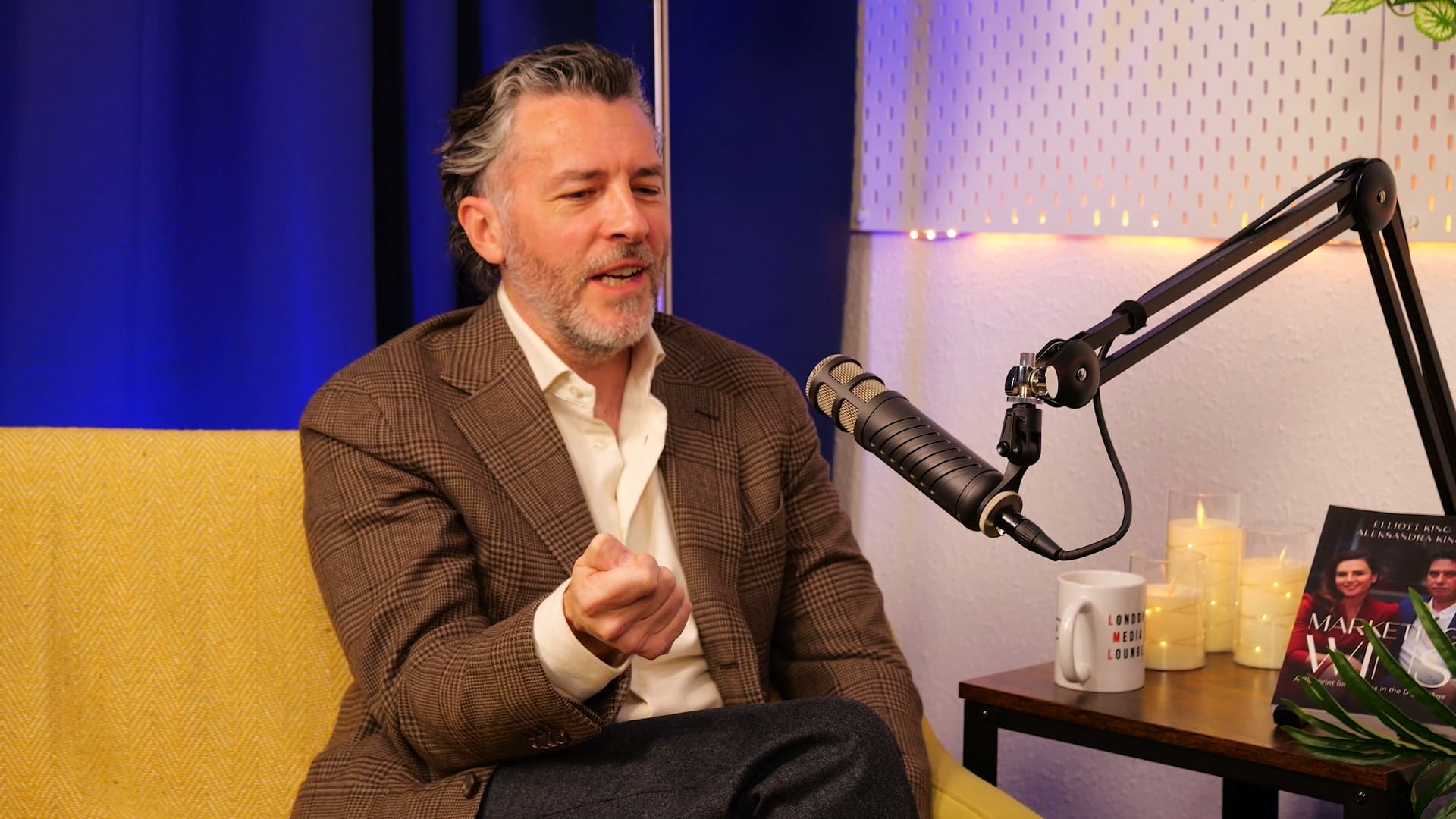
Behavioural expert Anthony Flynn joins host Aleksandra King to argue that clothing is never decoration. It is evidence, and everyone around you is already reading it. Anthony, a Director at Evelyn Partners and a long-time student of behaviour profiling, arrives having deliberately chosen an outfit he calls a little bit challenging, then invites Aleksandra to analyse him live.
Episode summary
He works upward from his shoes, explaining why grey trousers keep your options open where navy quietly closes them down, and why he dressed against a set of block yellow and block blue. From there it goes somewhere harder. Clothing has become modern armour, he argues, and what it guards against is the fear of social injury, because a mammalian brain still treats exile from the tribe as death and still asks one question about every stranger: opportunity or threat?
He introduces the composure pendulum, with collapse at one extreme, posturing at the other, and composure on a razor's edge between them, and explains why humans think in opposites and sail straight past the middle. He names the principle of cause blindness, the habit of chasing the symptoms of confidence while never touching the causes, which is why he says fake it till you make it does not work.
Aleksandra pushes back on blending in, brings in the lioness and the zebra, and shares an encounter with a man whose reply still troubles her: do you think I respect myself? Anthony resists giving rules, on the grounds that rules create dependence while insight creates independence, then offers them anyway.
“How much not enough does this person feel?”– Anthony Flynn on reading what people wear
Key takeaways
- Clothing is never decoration. It is evidence, and the people around you are already reading it whether you intended a message or not.
- The mammalian brain sorts every stranger into opportunity or threat before language catches up, which is why visual presentation carries so much weight.
- Cause blindness is the habit of dressing for the symptoms of confidence while never addressing its causes. It is why fake it till you make it fails.
- Between collapse and posturing sits composure, on a razor's edge. Most people swing between the two extremes and sail straight past the middle.
- The gap between your on-screen and off-screen self is a credibility problem, and it is the thing people actually notice.
- Get the internal state right and the external state is just an obvious consequence of it.
Key chapters
| Chapter | Timestamp |
|---|---|
| An outfit chosen to be difficult, and a live analysis | 01:49 |
| Building an outfit from the shoes up | 03:43 |
| Clothing as modern armour against social injury | 10:04 |
| Opportunity or threat: what the brain decides on sight | 18:01 |
| The wolf in sheep's clothing | 19:49 |
| Cause blindness: dressing the symptom, not the cause | 21:10 |
| On-screen and off-screen: the congruence problem | 25:10 |
| “I don't care what people think”, and what it really means | 28:49 |
| The composure pendulum: collapse, posturing, composure | 29:48 |
| Logos, and the question to ask when you see them | 32:14 |
| Why he says stay away from the high street | 39:25 |
| Rules create dependence, insight creates independence | 42:39 |
| Grooming, dirty shoes and the hundred-point rule | 45:38 |
| How we judge others is secretly how we judge ourselves | 49:14 |
| The zebra: camouflage against each other | 57:11 |
| Culture, Poland, and why respect shows in your shoes | 1:03:57 |
| Getting the internal state right | 1:08:06 |
The guest
Anthony Flynn is a Director at Evelyn Partners and a behavioural expert on the psychology of style. Full background, credentials and links are on his guest profile.
- Website: Anthony Flynn at Evelyn Partners
- LinkedIn: linkedin.com/in/anthony-flynn
Where to listen
Related reading
The companion article to this episode: The Man Who Dresses with Purpose: Anthony Flynn on What Your Clothes Confess.
If this one landed, hear it alongside Aleksandra's conversation with Lewis Raymond Taylor on why the scoreboard lies: Success Doesn't Equal Fulfillment– A Psychopath's Brutal Honesty.
Transcript
Read the full episode transcript
Cold open
The first 1m 49s is a trailer montage: short clips lifted from later in the episode, plus Anthony's self-introduction. The lines below recur in context further down.
00:00:00 Aleksandra King: I looked in my wardrobe and I thought, I am going to deliberately choose an outfit that is a little bit challenging. I would like you to analyse it from a psychological perspective.
00:00:10 Anthony Flynn: Now, I'm Anthony Flynn. I'm here today to talk about the intersection of style and psychology. I've trained for many years with the world's leading expert in understanding behaviour, and from a style perspective, it's something I've done throughout my whole life.
00:00:25 Aleksandra King: What if someone's completely abandoning their– You see, I'm going off script, but what if someone's completely abandoning their looks and they don't care anymore?
00:00:33 Anthony Flynn: All they need is some love and attention and support. So if somebody is making a conscious effort to disengage, there's an issue with that person.
00:00:40 Aleksandra King: The wolf in sheep's clothing. So, getting dressed up to pretend you're someone you're not. What's that?
00:00:45 Anthony Flynn: Well, that's either going to be a fear of who you actually are, a sense of not feeling valued enough.
00:00:51 Aleksandra King: Gosh, it's getting deep. It's getting so deep.
00:00:54 Anthony Flynn: The reason people choose outfits that make a statement is because you're trying to put distance between you and judgement. And this is a universal truth. If you're outwardly saying, "I really don't care what people think, I really don't care," what that really means is: I deeply do care.
00:01:10 Aleksandra King: Yeah, there you go.
00:01:11 Anthony Flynn: Stay away from the high street.
00:01:13 Aleksandra King: Oh, why?
00:01:14 Anthony Flynn: It's very homogeneous.
00:01:16 Anthony Flynn: There's an interesting psychological bit within that, which is how we judge other people is secretly how we judge ourselves. All psychopaths are narcissistic, but not all narcissists are psychopathic.
00:01:28 Aleksandra King: Oh. Like, if you're wearing brand– like, really branded stuff, and you've got Balenciaga on your forehead and everything is dripping in Chanel and Gucci and all that. Is that posturing?
00:01:40 Anthony Flynn: Yeah. The question to ask when you see this: how much "not enough" does this person feel?
00:01:48 Aleksandra King: Oh, people are not going to like that.
00:01:49 Anthony Flynn: No.
Episode
00:01:52 Aleksandra King: Anthony, you're looking very stylish today.
00:01:54 Anthony Flynn: Well, I had to. That was the memo, wasn't it? Basically, come and talk about style.
00:01:58 Aleksandra King: I also made an effort today.
00:01:59 Anthony Flynn: You did. You look fantastic.
00:02:00 Aleksandra King: Do you know what? I deliberately– I looked in my wardrobe and I thought, I am going to deliberately choose an outfit that is a little bit different.
00:02:09 Anthony Flynn: Yeah.
00:02:09 Aleksandra King: A little bit challenging. And I would like you to analyse it from a psychological perspective. Now.
00:02:17 Anthony Flynn: Right away.
00:02:18 Aleksandra King: Right away. Straight up.
00:02:20 Anthony Flynn: Okay. So you're trying to make a statement, aren't you? You are somebody– particularly this podcast as well– you want to go quite deep and you want to offer real value to your watchers and listeners and readers. And so I think you knew you were going to be in some ways judged by the people out there, because the subject is style and psychology.
00:02:42 Anthony Flynn: You're always very well put together, though. When we first met, actually, at that event, I thought, "Yeah, you stood out, because you had an outfit put together." So, in particular, you've got some jazz going on, haven't you?
00:02:54 Aleksandra King: I mean, let's be honest. This isn't my everyday outfit.
00:02:57 Anthony Flynn: But is it not? You didn't just roll out.
00:02:59 Aleksandra King: It's the outfit for– you know, I thought, we're talking about style, so let's go for it.
00:03:05 Anthony Flynn: There's an implicit power in that, isn't there? The colour, the gold, which is, I know, a signature piece for you. The shoes, all of it.
00:03:14 Aleksandra King: Yeah, indoor shoes.
00:03:16 Anthony Flynn: So, I'm very impressed.
00:03:17 Aleksandra King: Oh, thank you. Well, you're looking very smart yourself. Can you explain your style choices today?
00:03:22 Anthony Flynn: It's always interesting, isn't it, when you set out purposely to portray an image. I suppose the issue, as we'll get into throughout today, I'm sure, is where that is incongruent with who you are. But nevertheless, the style choice today– I'll start from the bottom up, because I think that tends to be how I think about putting an outfit together.
00:03:44 Aleksandra King: I love that. Okay.
00:03:45 Anthony Flynn: So, I'm wearing shoes from my favourite maker. They are the only shoe company ever to have existed on Savile Row, which is quite a prestigious thing to be able to say. They're one of the few makers left in England. England used to be such a– the centre of shoe making, and now there's very few factories left. So Gaziano & Girling is who make them.
00:04:09 Aleksandra King: Lovely.
00:04:10 Anthony Flynn: I particularly wanted something that was sharp but wasn't overly done. I think there's a real subtlety to some of this. So that takes shoes. Happy to carry on.
00:04:22 Aleksandra King: Yes. It's a very nice colour matching of socks with the shoes, because your shoes are a dark brown and then you've got this dark olive green.
00:04:31 Anthony Flynn: They're kind of staples, though.
00:04:33 Aleksandra King: It is.
00:04:34 Anthony Flynn: They're staples. And when you start to build a wardrobe using those kind of colours– I don't think colour theory– maybe we can talk about, because I've got some–
00:04:44 Aleksandra King: We will definitely talk. Okay. Okay. We're going to talk about colour theory.
00:04:48 Anthony Flynn: And also, no laughing in the back, but they're all knee-highs. So that is a gentlemanly thing when it comes to socks. So you don't want– the way they go up.
00:04:57 Aleksandra King: Yeah, I like that. And you've got good quality fabric, I can see, for your trousers.
00:05:02 Anthony Flynn: Yeah. So it's a flannel. And I think flannels will take you anywhere, really. So you can dress them up, you can dress them down if necessary. It's still a wool, but it's not what's called a worsted wool. And maybe we can unpack that a little bit. I prefer a turn-up personally. So it's a two-inch turn-up.
00:05:18 Aleksandra King: Let's get into the detail. It's important, isn't it?
00:05:20 Anthony Flynn: Yeah, it's a nice finish. It really– it helps the trouser. It's like a turn-in with hair, which I haven't done properly today, unfortunately. I was running long on time. I tried my best. But yes, it finishes the–
00:05:32 Aleksandra King: Yeah. The look. I like it.
00:05:34 Anthony Flynn: And because it's grey, which is generally the most versatile colour for trousers– because a lot of people, or a lot of guys, in the absence of any advice will probably go with navy.
00:05:50 Aleksandra King: Yeah, navy blue. Dark navy blue.
00:05:51 Anthony Flynn: Yeah. And what they will then typically do as well– this is no judgement, you know, I'm saying this to reveal some of the secrets– but the issue with navy is it really ruins your options for a jacket.
00:06:02 Aleksandra King: Oh, yeah.
00:06:03 Anthony Flynn: And it also reduces your options for shoe colour as well. And a lot of guys will kind of break a cardinal rule, which is shoes darker than trousers.
00:06:14 Aleksandra King: Typically, I think– let me think about women. And I think women actually– women will go for black.
00:06:20 Anthony Flynn: Mhm.
00:06:21 Aleksandra King: Just because it makes you look slimmer, I think. No, no judging. But that's what I would do. It's always like you choose a darker, you know, and it's a neutral. Black is– is it? It is a neutral. Yeah, it is.
00:06:32 Anthony Flynn: Yeah. Absolutely.
00:06:33 Aleksandra King: Harsh, but I think there's this colour theory thing.
00:06:37 Anthony Flynn: If I say, the way in which it works for guys is maybe a little bit different than it works for the ladies. And you ladies have been given so much stuff over the years about rules and certainly matching colours to facial tone and that kind of stuff. With guys, it's more important that the colours match each other, as opposed to you, for your own colouration. So it's the tonality of the colours that you pick in your clothes that is the key, not necessarily what do they look like on your face.
00:07:09 Aleksandra King: Okay. So the jacket has got some– is that grey in the jacket, or is it brown? It looks– this almost, it fits with a grey. Yeah, it does. How does that work?
00:07:19 Anthony Flynn: Well, brown and grey is, again, an absolutely brilliant combination for menswear, because there's an element of being somewhat casual today yet still want to be– really, still there's a–
00:07:32 Aleksandra King: Pattern. Yeah.
00:07:33 Anthony Flynn: Yeah. So if you think– and we'll dig into this particularly when it comes to talking about shoes later– there's a kind of formality scale, and that is executed through your fabric and whether it's patterned, particularly, as well. So if you think, at the very bottom, or top, depending on which way you think about it, very, very formal will be, like you said, black. It will be nothing on it. No, it will just be– because normally they're worn at an event where the other person is the focus. Does that make sense?
00:08:11 Anthony Flynn: So, I'm happy to wear a pattern today, and it's quite a classic overcheck pattern, it would be called. And what I really wanted to do is not wear blue shirt, not wear white shirt.
00:08:25 Aleksandra King: It's given me some things to think about– this, this and this. Yeah. As to how to– it's tough.
00:08:32 Anthony Flynn: Yeah, it is tough.
00:08:34 Aleksandra King: Yeah, it is.
00:08:36 Anthony Flynn: And so I've gone with a slightly unusual choice, but I think actually is quite a powerful choice, is–
00:08:43 Aleksandra King: Yeah, cream looks good, because it against the yellowy. So, how you thought about this set? I don't know who else would have thought about the set and analysed it prior to arriving here.
00:08:53 Anthony Flynn: But I think if you're– thank you– if you're conscious about the way in which you're perceived, and it's not from a validation perspective, if you're just conscious about, you're going to be the person talking to the audience about how to think about style and what that communicates, you've got to take it in context. And the context is you and I sat together on block yellow and block blue, which is a nightmare. And then if we're wearing something fluorescent or–
00:09:18 Aleksandra King: Yeah, you could completely destroy the whole–
00:09:20 Anthony Flynn: You can– the camera would scream.
00:09:22 Anthony Flynn: And there's, you know, do you want to go into more detail about some of the points within it?
00:09:27 Aleksandra King: We will be going into a lot of detail about all of them, but in order to not veer off in these things, I'm going to try my best, because I'm actually not that good at sticking to the scripts. I've realised– I actually didn't– I have been veering off, actually. Yeah. So I'm going to try my best to, because I've really thought about the things that we need to cover today.
00:09:47 Anthony Flynn: Okay.
00:09:48 Aleksandra King: Okay. So when someone changes what they wear, what happens internally with their mood, their behaviour, with all that psychological stuff? So you put something on– what happens inside, and in the brain?
00:10:07 Anthony Flynn: It has become the modern armour, and it's armour against something. And what it typically is armour against is the fear of social injury. That is the most debilitating thing that we as humans, I think, suffer with. This is why public speaking is always rated as the number one biggest thing.
00:10:26 Aleksandra King: Social injury.
00:10:27 Anthony Flynn: Social injury. Because it's not– it sounds like I'm going off on a tangent, but this is important to think about. The reason people have an issue with public speaking is not because of the speaking. You can do that.
00:10:39 Aleksandra King: Yeah.
00:10:39 Anthony Flynn: You can speak one-on-one, you can speak one to two, you can probably speak one to three. There becomes an arbitrary point at which all of a sudden you make a decision that there's too many people. But what it is, is when you stand in front of your peers or your social group, and the risk from a mammalian brain point of view– this is how we've evolved– the risk of being outcast is death, if you were cast out of the tribe. And, or just as equally bad, you'd never get to pass your genes on, for example.
00:11:13 Aleksandra King: So, God forbid.
00:11:14 Anthony Flynn: Yeah. God forbid.
00:11:16 Anthony Flynn: So that is why the psychology behind what people choose to wear, if it's very contrived, it will be a foil against something, and it will be this sense of armour. It's signalling.
00:11:32 Aleksandra King: Yeah, armour. Interesting.
00:11:36 Anthony Flynn: Mm.
00:11:36 Aleksandra King: So you wear it to protect against social injury, even in this podcast setting, which is public speaking, because we're going to go global with it.
00:11:46 Anthony Flynn: Well, it is global.
00:11:47 Aleksandra King: Yes.
00:11:47 Anthony Flynn: Oh, quite.
00:11:48 Aleksandra King: Yeah, it's global.
00:11:49 Anthony Flynn: Well, last year was a massive year for you, wasn't it, on the channel.
00:11:51 Aleksandra King: Yes. So people will be watching, and we're out there, and–
00:11:55 Anthony Flynn: Yes. And we are wearing what we're wearing to primarily avoid the rejection, the cancellation.
00:12:02 Aleksandra King: And I mean, that's– is that really– is that it, sort of?
00:12:07 Anthony Flynn: Well, there's still a conscious element of you wanting to paint a picture in somebody's mind about how much you care about the way you look, for example, or want looks.
00:12:16 Aleksandra King: Sure.
00:12:17 Anthony Flynn: But ultimately the reason people choose outfits that make a statement is because you're trying to put distance between you and judgement.
00:12:28 Aleksandra King: Oh, okay. Is it not risk-taking? Is it not like–
00:12:34 Anthony Flynn: Well, there's risk-taking in the context of what's acceptable for the event, for example. So there is an element of that. And if that's what drives you, then again, I think you're distancing yourself from the ability to get injured, because you're going out there. You're putting a distance between you and other people. So risk-taking is part of it. Telegraphing what you want people to think about you is also massive.
00:13:03 Aleksandra King: Yeah.
00:13:03 Anthony Flynn: What do you want people to read about you?
00:13:05 Aleksandra King: Yeah.
00:13:05 Anthony Flynn: Because when you apply it to the human needs– and that's a way to profile people– the way in which people present, in terms of what they wear, is a really good indication of what their primary needs are. And when we talk about needs, this is about chemicals in the brain. This is how you need to be seen.
00:13:27 Aleksandra King: Oh, he's getting– we're getting straight in there. You said getting powerful in this room. Okay. But yes, yes, of course, we put the clothes on because we're sending a message. It's our armour.
00:13:42 Anthony Flynn: It is.
00:13:43 Aleksandra King: We want to be dressed and feel protected, and we like the messaging around what we're wearing. Even if one day we– okay, there's obviously different versions. You dress up, you dress down, but it's our protection.
00:13:56 Anthony Flynn: Mhm.
00:13:56 Aleksandra King: It's our armour, and it's connected very much to everything that's going on inside us.
00:14:04 Aleksandra King: Can I also ask, because I feel like, for example, this podcast, and going to see clients, whatever, even going down to local shop. You just– this is your local shop outfit, isn't it?
00:14:15 Anthony Flynn: I did. I did.
00:14:16 Aleksandra King: This is your Sainsbury's.
00:14:19 Anthony Flynn: Yeah, maybe there's a hoodie and a–
00:14:21 Aleksandra King: Yes. But you know, but you still make some effort. I feel like if you're going to go do something important, and you want to show respect and you want to honour your guests, and you want– you know, you make that effort. There's also that. So you kind of present yourself in a presentable way for your guests. Yeah. You respect them.
00:14:40 Anthony Flynn: There is a respect, and that is as much about respecting them as whether you respect yourself as well, isn't it? That's a function of how you choose to dress, ultimately. So I absolutely agree that there's a respect point. But it still reveals your primary need as a human: how you need to be seen by others.
00:15:06 Aleksandra King: What if someone's completely abandoning their– You see, I'm going off script, but what if someone's completely abandoning their looks and they don't care anymore? What's their need?
00:15:19 Anthony Flynn: Well, their need is some love, isn't it? And attention and support. So if somebody is making a conscious effort to kind of disengage, and they're presenting that through a lack of respect for themselves or others, then there's an issue with that person, isn't it? That they need some help.
00:15:36 Aleksandra King: There is. And I had an encounter like that. I'm not going to obviously say the name, but I had an encounter with someone like that and I'm still thinking about it. It was a few months ago, and it was shaking me, shaking me to the core. Where this person doesn't really dress very well at all. Doesn't really respect the way he looks. He just sort of will wear whatever. Doesn't care at all. And then I said, you know, "Well, why don't you– why don't you go do this, and these people don't think badly of you." And I was trying to uplift this person, and the person said, "Hang on, look at me. Do you think I respect myself?" And it just hit me like a–
00:16:12 Anthony Flynn: Yeah.
00:16:12 Aleksandra King: –ton of bricks. I was like, what? Like, imagine that that's your mindset. That you care so little about yourself, or in fact you not just don't care, you don't like yourself so much that you self-sabotage.
00:16:26 Anthony Flynn: You know, that's quite a heavy burden for somebody to be taking. And no doubt that person– no idea who they are– no doubt that person is really stuck in a loop that's probably coded in childhood. So they've gone back to a point in childhood.
00:16:47 Aleksandra King: And that's pretty sad.
00:16:50 Anthony Flynn: There's a lot of guys that struggle with this. So there's a permission piece about it. Do I have permission to make myself feel good and present myself as a happy, kind of go-getter kind of person? There's a real permissive piece that sits underneath that.
00:17:05 Aleksandra King: Yeah, there is. I think– I mean, this man, I feel very bad, but I always sort of think, oh, if you just, you know, if you just did this with your hair, if you just did that. You want to help the person, but of course, you can't intrude. But yes, it's so psychological, this thing of, yes, we can, you know– what outfit am I going to wear today? What do I want to– what message do I want to send? But then there's this deeper thing of like real psychological problems and low self-esteem and that sort of thing.
00:17:36 Aleksandra King: So why do humans read clothing as information? Like, how does that work, in the absence of communication?
00:17:47 Anthony Flynn: So, say you're walking up to somebody on the street and you don't know them. So the visual cue is all you've got to go on at that basis. You're also looking at the way in which they walk, for example. And what your brain is doing is, it all boils down to one of two things: is this person– do they represent an opportunity or a threat?
00:18:10 Aleksandra King: Gosh, that's simple.
00:18:12 Anthony Flynn: It's as simple as that, because that is how we survived as a species. Because if you didn't recognise– or you got them the wrong way round and it was a tiger or something– then if you didn't understand that that was a threat, then that's it, you're finished, aren't you? So this mammalian brain is really important, because you'll be getting this feeling, and sometimes it takes a bit of time for your logical brain bits to start giving you language around what you're seeing. But you're already having a feeling about whether this person is somebody that is a threat or an opportunity.
00:18:53 Aleksandra King: Okay. So we're analysing it on such a basic level, the clothing. Is this person an opportunity for me, or is this person a threat for me?
00:19:03 Anthony Flynn: There's congruence within that as well. So when you study behaviour profiling, as I have done, you start to understand the signs. And, as I say, you can put a framework around it, because you've got the language to interpret your gut feeling. But the gut feeling is what makes all the decisions. And so you're trying to work out, actually, is this congruent to the person? Are they– is this a mask, or is this a consequence of how they really feel?
00:19:37 Aleksandra King: I was going to ask you about clothing as a mask, because there is the saying– you know, and this will fit well the question of psychology and style– the wolf in sheep's clothing, right?
00:19:47 Anthony Flynn: The wolf in sheep's clothes.
00:19:49 Aleksandra King: So getting dressed up to pretend–
00:19:51 Anthony Flynn: Yeah.
00:19:52 Aleksandra King: –you're someone you're not. What's that?
00:19:55 Anthony Flynn: Well, that's either going to be a fear of who you actually are, a sense of not feeling valued enough, and that without it, no one's going to really take me seriously, you know, without this really obvious portrayal of status and power and importance. People are not going to see that within me if I was naked, for example. So that's what's going on with that.
00:20:20 Aleksandra King: Gosh, it's getting deep. It's getting so deep.
00:20:22 Anthony Flynn: Well, it's what you asked for, isn't it? This is the nature of your podcast.
00:20:26 Aleksandra King: Okay. Well, let's talk about why do people reach for clothes then to solve their internal problems. Or how do they reach for clothes to solve their internal problems, I guess.
00:20:38 Anthony Flynn: So this is a fascinating question, that actually the answer is really quite deep. And even though it sounds like an obvious question, actually what's behind that is also quite telling. So, you have to just say– give me the question again. I'm sorry, Aleksandra.
00:20:54 Aleksandra King: Okay. So why and how do people reach for clothes to solve their internal problems?
00:21:03 Anthony Flynn: This comes down to a fundamental issue that we need to talk about, and which once you've heard it– and everybody has heard it– they won't be able to unsee it anymore. This is the tendency for people to focus on symptoms and not causes. So there's this principle of cause blindness. Symptomatic living is: you're choosing what you think are the symptoms of confidence and status and power, and you never address the causes of those things, which is all inside. So the way in which you dress, you need to get to the point where it's just a simple consequence of your internal state, not the other way around. People are always using clothes to–
00:21:52 Aleksandra King: Yeah.
00:21:53 Anthony Flynn: –portray this confidence, and the fake it till you make it, which we should probably talk about.
00:21:58 Aleksandra King: Yeah.
00:21:58 Anthony Flynn: Which doesn't work, by the way. That's what's happening.
00:22:04 Aleksandra King: Okay.
00:22:05 Aleksandra King: I don't know why this flashed into my mind, but I'm going to say it, also off script. But you know that movie, the psychopath one, that– you know that one where he's all like in the mirror and he's doing all his things, and he's dressed so really well and everything. Is he solving an internal problem? Like, why is he so obsessed with his clothing?
00:22:26 Anthony Flynn: Well, there is a–
00:22:27 Aleksandra King: And his appearance.
00:22:27 Anthony Flynn: Yeah. Well, there's a saying– and I'm very conscious of who you had on the show before, or who was aired on the show a few weeks ago. But there is–
00:22:38 Aleksandra King: They're different, right?
00:22:40 Anthony Flynn: Quite different, but true. I'm not– and they're not– not all psychopaths are the same, but the principle holds true that all psychopaths are narcissistic, but not all narcissists are psychopathic.
00:22:53 Aleksandra King: Oh, okay. Yeah.
00:22:56 Anthony Flynn: And what you'll find– I'm not an expert in psychopaths.
00:22:59 Aleksandra King: Okay.
00:23:00 Anthony Flynn: However, what I do understand is– and in fact, it's changing all the time, isn't it? People's understanding, or science's understanding, of what a psychopath is, accepting there is a scale, of course, is changing. So the premise used to be they can't feel any emotion. You know, there's just no emotion in there. But what I read now in the scientific literature is that it's just not– the emotion is not compulsion. So it doesn't cause them to do or not do something. It's not the main driver.
00:23:31 Anthony Flynn: But this, what you were saying about– it's *Psycho*, isn't it? That's the film. And psychopath generally.
00:23:38 Aleksandra King: God, I can't– we've gotten to psychopath already. Yeah, but the clothing, the outfit, it's a thing. I think it's an important–
00:23:45 Anthony Flynn: Well, there's a striving to feel something in a lot of people who have that brain issue, which is what it is. It's not a processing issue in the sense that it's a conscious decision to be like that. This is a brain that doesn't function in the normal way.
00:24:04 Aleksandra King: Mhm.
00:24:05 Anthony Flynn: So it's striving to feel emotion, to feel stimulation from the environment. And they're changing their looks around so they can look– I don't know– better, more interesting, appealing, so that they get– it's a game to a lot of them. So they will dress in a way that they think will get them better access to people, to play with them.
00:24:39 Aleksandra King: Wow. There's a– okay, so yeah. Yeah, I hear you. Okay, let's switch lanes. So what does comfortable– yeah, what does comfortable mean psychologically? Like dressing comfortably? Like, what's all that? "Oh, I'm in my loungewear, I'm in my–" Is that a state of mind?
00:24:59 Anthony Flynn: Now, there's a point around this, which is a really important tenet of authority. It's the difference between your on-screen presence and your off-screen presence, or on camera and off camera, and where they're really different. That's an issue for authority, because people like me, or people that have a good intuition, will be able to see that they're so far apart that neither of them are real.
00:25:31 Aleksandra King: Interesting.
00:25:32 Anthony Flynn: So, I'm not saying I woke up and rolled out of bed like this, of course. But if they're complete–
00:25:36 Aleksandra King: Yeah. Yeah.
00:25:37 Anthony Flynn: If they're completely opposite, that's a real telltale sign for somebody that is operating on a superficial level, because they're flitting from, excuse me, from one to the other.
00:25:50 Aleksandra King: Gosh, makes you check in with yourself every now and again and just make sure you're–
00:25:56 Anthony Flynn: But this is the thing, you know, we were saying about the consequence. If your frame of mind is one of confidence– and maybe we talk about that– but if your frame of mind is one of confidence, then the natural byproduct of that is that you're going to be comfortable in what you're wearing.
00:26:10 Aleksandra King: Sure.
00:26:10 Anthony Flynn: You're not trying to elicit some kind of validation or compliment to make up for something you don't feel already.
00:26:17 Aleksandra King: Yeah. I mean, sometimes, you know, when I go out– so, you know, you ask me, how do I go to the local Tesco or Asda.
00:26:25 Anthony Flynn: Terrible.
00:26:26 Aleksandra King: Not too terrible. But no, but it will be, you know, I'm in my lounge, like, you know, you can see me. I'm great.
00:26:31 Anthony Flynn: I can see you.
00:26:32 Aleksandra King: You can see me. It's fantastic. We'll say hello. Everything good. Same thing. But it's going to be, you know, I'm in my sneakers. I'm in sports mode. I'm running. I don't have time for fancy shoes. I cannot even think about that. It's like, mission is this.
00:26:46 Anthony Flynn: Yes.
00:26:47 Aleksandra King: Then mission is that, then mission is that. But it's like different modes.
00:26:51 Anthony Flynn: And it's not unreasonable that people wear masks for different things– different masks for different things– and particularly when your business is show, let's say. And I know there's clearly a substance underneath. I don't mean it's all for show. What I mean is show business. So image is really important for you and what you do for your clients. So it's inevitable that there'll be a tendency to have a work persona and a personal persona, and that's fine.
00:27:23 Aleksandra King: So we were on a course together. We won't elaborate too much, but we were on a course together, and on that course you were presenting and you were talking about the psychology of style, and there were two members of the audience which got a bit upset and had their feathers ruffled, because you were kind of, in a nice way, saying, you know, that what you wear matters. You know, it's important. And how you show up. It's important how you show up, and what you wear, whether you like it or not, is part of how you're showing up. And one of the– well, both of them had a problem, but one specifically, you know, was not happy with you and said, "Well, I don't care, and I am going to wear this, and why can't I just wear this?" And it was quite a difficult moment, wasn't it?
00:28:12 Anthony Flynn: Probably more difficult for him than me.
00:28:14 Aleksandra King: Yeah.
00:28:15 Anthony Flynn: Because it's quite telling as to the reaction, that he was upset.
00:28:20 Aleksandra King: He was upset.
00:28:21 Anthony Flynn: So people get upset when a nerve is hit.
00:28:25 Aleksandra King: Yeah.
00:28:26 Anthony Flynn: I don't know who he is. I don't– it doesn't really–
00:28:30 Aleksandra King: Well, he told people who he was very quickly.
00:28:33 Anthony Flynn: He did. We won't repeat. But you know, if somebody– and this is a universal truth really, but not a lot of people will want to accept it or want to believe it.
00:28:46 Aleksandra King: Mhm.
00:28:46 Anthony Flynn: If you're outwardly saying, "I really don't care what people think, I really don't care."
00:28:52 Aleksandra King: Yeah.
00:28:53 Anthony Flynn: What that really means is: I deeply do care, and I can't compete, and I'm [expletive] off about it.
00:29:00 Aleksandra King: Oh, yeah. There you go.
00:29:04 Aleksandra King: It was interesting, because you're–
00:29:07 Anthony Flynn: I was on stage and– yeah– this individual was unhappy with it. But that's all about him and not about me.
00:29:18 Aleksandra King: Yeah.
00:29:18 Aleksandra King: So let's say him, maybe the other lady that was also upset, or the people that weren't upset about what they were wearing– how do they know that they were dressing for themselves? Or are any of us dressing for ourselves, or are none of us dressing for ourselves?
00:29:36 Anthony Flynn: I don't really like– at this point there's a principle that will change people's lives when they really embody this and see how it applies to so many things. And it's called the composure pendulum.
00:29:54 Aleksandra King: Okay.
00:29:54 Anthony Flynn: So if you imagine a pendulum in a clock, and at one end, the one extreme, you've got what we would call collapse.
00:30:02 Aleksandra King: Mhm.
00:30:02 Anthony Flynn: And at the other end you've got what we would call posturing.
00:30:06 Aleksandra King: Mhm.
00:30:06 Anthony Flynn: And right in this razor's edge in the middle is composure. Is true composure. And you apply that to any scenario like this. And style and dressing, it fits perfectly with it. The issue with both of these extremes is that they're both rooted in insecurity, and they're both about concealing how you really feel.
00:30:25 Aleksandra King: Okay. Yeah.
00:30:26 Anthony Flynn: So this is the issue with these things. And the human, or our tendency as humans, when we're trying to fix something that we perceive as broken, is we think in opposites. So if you're over here in collapse, and you finally get to the point where you think, I'm not happy with that anymore, then you look over here and what do you see? You see posturing.
00:30:50 Aleksandra King: Yeah.
00:30:50 Anthony Flynn: That looks like the solution to all the problems you feel over here. And you completely bypass composure in the middle and you go straight to posturing. And you see this in clothes a lot.
00:31:01 Aleksandra King: Like how? Give us an example.
00:31:02 Anthony Flynn: The principle of peacocking, which maybe is a term that's more applicable to the guys. But this is where it's all over the top. It's just very flamboyant. I don't necessarily mean lurid colours and spandex, although that's a different podcast, clearly.
00:31:20 Aleksandra King: Yeah.
00:31:20 Anthony Flynn: But it's showing really hard.
00:31:27 Aleksandra King: Try hard.
00:31:28 Anthony Flynn: It will be the guy that has a pocket square and a tie and a tie pin and some jewellery and a boot in the air here and bright something. It will be– that is posturing. Extreme stuff.
00:31:46 Aleksandra King: Yeah.
00:31:46 Anthony Flynn: And collapse– you know, the guy you were talking about before is stuck down here, which is really sad. He's in collapse.
00:31:53 Aleksandra King: Yeah. Yeah. He completely doesn't care. Zero.
00:31:58 Anthony Flynn: Zero.
00:31:59 Aleksandra King: So can I ask, is– you know, like if you're wearing brand, like really branded stuff, and you've got Balenciaga written on your forehead and everything is dripping in Chanel and Gucci and all that. Is that posturing?
00:32:13 Anthony Flynn: Yeah. So you're going to want to write this one down. The question to ask when you see this– and again, you can apply this to lots of things– is–
00:32:20 Aleksandra King: Is it fake?
00:32:22 Anthony Flynn: Well, is it fake? It's: how much "not enough" does this person feel?
00:32:30 Aleksandra King: No. Oh, people are not going to like that. That are dripping in the Balenciaga.
00:32:35 Anthony Flynn: No.
00:32:36 Aleksandra King: No.
00:32:38 Anthony Flynn: When you dress as a consequence of being composed, there's no need to underdress or overdress. It's just– you embody this natural level of composure that is really quite compelling. And you see it if somebody's primary need is to be seen as strong or powerful. This is the Under Armour T-shirt that's 10 sizes too small, for example. And that is really important, that nobody thinks I'm judging, because I really– I'm not judging. But that is a contrived way to present an image of a type of person that they want other people to see.
00:33:17 Aleksandra King: Yeah. You know, the big brands and things– and I'm in marketing, so I get it. I understand all the stuff. I know how the cookie rolls. I know it all.
00:33:27 Anthony Flynn: The ball rolls, whatever you want to call it.
00:33:29 Aleksandra King: I understand– whatever, crumbling down the road, however you want to term it. I get it. I understand this branding stuff. What disturbs me though is when you know the difference between– you know, we're talking about like the extremes– between become when you're really good quality. You've got a great quality material. The sewing is– craftsmanship is perfect. It's put together properly. Good quality buttons. Everything, tailoring. And it's sort of reached its– what it is, what it can be. Or whether it's a handbag, the stitching, the excellent quality leather, whatever it might be, right? Extra soft. It's reached its peak. And then you've got all the rest of that extra money that you're spending, all of it, which is completely pointless, just for the brand name.
00:34:18 Anthony Flynn: Precisely. It's, in some respects, you've got to really– I don't know if "praise" is the right word– but kind of respect how much margin brands can put on top of the cost price of an item that represents their ability to brand.
00:34:34 Anthony Flynn: And so when you– particularly in menswear– the further up the, let's say, the style curve you go, and the more composure you have, people will fight very hard to not have anything branded. The only telltale will be to somebody who knows what they're talking about, because they'll notice the way a lapel rolls, for example. They'll notice the positioning of a pocket on a jacket, for example. And there's nothing else. Or maybe the buttonhole here will be sewn in a certain way, like a Milanese buttonhole, for example. That's all the subtle nod that it needs. And if you think about it, it's a choice as to, as a proportion of what you pay for an item: are you wanting to pay for the craftsmanship and the raw materials? Do you want that much of the cost to be craftsmanship and raw materials, and this much branding and marketing and salaries and shops, or the other way around?
00:35:38 Aleksandra King: I mean, if I was just thinking about– I also don't want to be unfair, because if you know, like, I really– Tom Ford is a great designer. He's just– some cool stuff for women. He knows how to dress women in a way that's sensual and powerful, and I just– I like his– I like it, whatever he's got going on in that brain. I completely get it. And actually, yes, I probably would pay a lot of money for Tom Ford. Tom Ford, if you're watching– Tom Ford, if you're watching– I mean, of course you're watching. I would love to liaise with Tom Ford. And I would pay a lot of money, a lot of money, to be dressed by Tom Ford. But that's Tom Ford.
00:36:15 Anthony Flynn: Yeah. Right. So this is the extreme. I mean, whatever walk of life you choose to think about, there's always the extremes. And there's no point making the decisions based on the extremes. Tom Ford is Tom Ford.
00:36:27 Aleksandra King: True.
00:36:28 Anthony Flynn: Tom Ford suits are made by Zegna in Italy, who have their own line, of course, and make for other people as well.
00:36:35 Anthony Flynn: But there is a– it's a very specific aesthetic, isn't it? And I'm not saying it's wrong. Like, who am I to judge if somebody wants to do that? But what I'm saying is it's giving out a message that is trying to augment how somebody really feels.
00:36:57 Aleksandra King: And what about like Chanel and the big brand houses and the classics and the– you know, there's a story behind all of that, isn't there? And there is a sense of belonging that people have if they attach themselves to a brand.
00:37:10 Anthony Flynn: Yeah. There's a heritage, of course there is. And there is an inherent quality. And I'm not suggesting for a second that there isn't an inherent quality, but as a proportion of the cost, most will be on the non-tangibles.
00:37:23 Aleksandra King: Yeah. The cost base, basically.
00:37:25 Anthony Flynn: Yeah. Yeah.
00:37:25 Aleksandra King: So yeah, for every– for life, I really look at– for me quality is important. The fabric. I don't want toxic dyes in it, and I don't want it to fall apart after one wash, and I don't want to see, you know, bits falling off.
00:37:38 Anthony Flynn: And yeah, this is natural material, isn't it? Which people, particularly in fast fashion– it's majority synthetics. It's cheap and disposable and all of that kind of stuff. And people haven't valued the natural abilities, or whatever, of some of the materials.
00:37:58 Aleksandra King: So quality is really clear.
00:38:01 Anthony Flynn: Quality comes through very clearly.
00:38:03 Aleksandra King: Yeah.
00:38:04 Aleksandra King: So to those watching that feel like maybe they could benefit from a style upgrade, should they try upgrade their style? I mean, should they look at themselves and be like, "Okay, what can I do and how can I improve it?" Should they do it? And if so, why?
00:38:20 Anthony Flynn: Well, if they go to an event and– that the life and soul, and they are networking and, you know, making connections, and then they go home and they feel [expletive], or they look at themselves in the mirror and think, who was that? If that's what's happening, then yes, they owe it to themselves to think about their own sense of worth coming from within, as opposed to from outside.
00:38:56 Aleksandra King: Okay. And what's the thing that they can do to upgrade their look? Like, what's the one suggestion that you would say, do this, or go and get whatever, buy whatever? Or what would you need to look at specifically?
00:39:13 Anthony Flynn: So let's start on the detail and we'll zoom out a little bit. So we'll start on the detail. And for guys in particular, I might be inclined even to say stay away from the high street.
00:39:29 Aleksandra King: Oh yeah. Okay. All the high street is watching and in the comments. Yeah. What? Why? Why?
00:39:40 Anthony Flynn: It's very homogeneous. And what you got to think, the way in which high street works is volume. It's a volume sale, isn't it? And so wherever corners can be cut– I'm generalising here, of course, but, to make the point, wherever corners can be cut, they will be cut. So what you'll find, particularly in men– and you see this all the time in guys who have bought from the high street– is things like the lapels will be much–
00:40:10 Aleksandra King: What's the lapel? For the lapel–
00:40:12 Anthony Flynn: So this is the lapel. The lapel really is quite a fundamental part of the way in which a jacket looks on the wearer. And you'll get a collar– the collar height, which is this bit, on shirts as well– will be much smaller. Because if you're making 100,000 shirts or jackets, if you can shave a centimetre or two–
00:40:33 Aleksandra King: Sick, isn't it?
00:40:33 Anthony Flynn: That's a lot of money saved that goes into more jackets and so on. And they'll be cut on a really generic block. So what that means is the sizing will be very generic, and it just won't fit that many people. So there's very little body or construction going on on the high street. And like I said this, and from a tailoring point of view, which is also quite interesting, there's something called seam allowance. So the actual seams of, say, a pair of trousers in a higher-end– and don't forget you can go second-hand. I'm not saying, you know, somebody just has to have all the money in the world.
00:41:19 Aleksandra King: Vinted.
00:41:20 Anthony Flynn: Vinted, precisely. eBay, all of that stuff. The seam allowance will be a lot bigger, which means they're much more alterable to that particular individual. And if you go high street, there'll be no seam allowance, so you're basically stuck with it.
00:41:36 Aleksandra King: You're stuck with that. So what can they do? So for men it's like, avoid the high street, but go to–
00:41:45 Anthony Flynn: I suppose you got to educate yourself a little bit about some of the more fundamental styles, and maybe start looking second-hand for it. There's a tendency for blokes to overtailor things, if they tailor it at all. So they'll have the trousers too tight. Somebody, a guy with big calves, that is the limiting factor.
00:42:06 Aleksandra King: Yeah.
00:42:06 Anthony Flynn: So you can't tailor at the hem, you got to tailor for the calf, otherwise it would just stick. Does that make sense? And so there's this real tendency to go, the tighter the better, because it shows sort of physique and so on.
00:42:19 Aleksandra King: I'm going to press you a bit more. So for the guys, for the high street, what do they actually do? So they do their research. Okay, they try and avoid the high street, because– just try and get something a little bit better. Do your research. And then what else can you do?
00:42:35 Anthony Flynn: Think about the staple menswear colours. So what I'm really conscious to not do is just give a load of rules, because rules without understanding just creates a dependence. So people will then become dependent on being told what to wear for what. And insights that shift perspective will create independence, and that's what is really, really fundamental, so they can answer their own questions about these things. And I know you're wanting takeaways for the audience, aren't you?
00:43:07 Aleksandra King: You know, precise things, because they'll feel lost if you say to them, don't go to– if they are shopping on the high street and you say don't go there, it's like they don't know where to go.
00:43:16 Anthony Flynn: Okay. Okay. So, should we just fire off some rules?
00:43:18 Aleksandra King: Yeah, just fire off some rules, because they're easy.
00:43:20 Anthony Flynn: Okay. Just for beginners. Okay. Shoes darker than trousers.
00:43:25 Aleksandra King: Is this for women as well now, or just mostly?
00:43:27 Anthony Flynn: The principles. So if you take the principles of– so, shoes darker than trousers, that's a really straightforward one. It's a little bit different for women, because you might want to choose to have some kind of a dramatic shoe, right?
00:43:38 Aleksandra King: Yeah.
00:43:39 Anthony Flynn: But again, that's a contrived choice, isn't it? You're wanting somebody to notice that you've got a pink pair of–
00:43:45 Aleksandra King: Okay. Whatever. Yeah.
00:43:47 Anthony Flynn: So let's say shoes darker than trousers. Never wear the top half of a suit with jeans or any kind of casual trouser. A suit jacket.
00:43:57 Aleksandra King: Never.
00:43:57 Anthony Flynn: The difference is, because the way in which the wool is made, let's say, called worsted, is it's very flat. It's a very flat finish to it, and it's very obviously the divorced half of a suit.
00:44:11 Aleksandra King: Yeah, it is.
00:44:12 Anthony Flynn: So that's no good. And what you'll often find as well is the way– I'm trying to be as precise as possible– the way in which a lot of these jackets will be constructed will be quite formal. So the shoulder will have a bit of roping. It will have a much more structure, and it doesn't lend itself to a casual wardrobe.
00:44:29 Aleksandra King: Okay, I'm with you.
00:44:30 Anthony Flynn: Happy so far?
00:44:31 Aleksandra King: I'm so happy so far.
00:44:32 Anthony Flynn: Don't buy shirts with different colour stitching around the buttons.
00:44:36 Aleksandra King: Why?
00:44:38 Anthony Flynn: It just looks bad.
00:44:39 Aleksandra King: Yeah. Yeah. This is the "how much not enough" bit, isn't it?
00:44:44 Anthony Flynn: Yeah. This is what I've got wrong, and lots of other people got wrong, when you– if you go bespoke. Just because you can doesn't mean you should. So if you're given 400 options, it's very tempting to go, "I'll have a bit of everything, please." Like, if you're going to make your own sundae at an ice cream place, you got halfway through and you feel sick, won't you? Because you've put everything together. So you've overdone it.
00:45:09 Aleksandra King: Overdone it.
00:45:10 Anthony Flynn: Does that help?
00:45:11 Aleksandra King: Yes, this helps. This is good stuff. This is digestible stuff.
00:45:16 Aleksandra King: Can I add another layer in here?
00:45:17 Anthony Flynn: Oh, correct. Yes. Okay.
00:45:19 Aleksandra King: So for me, for what I think– and I'm no style expert. I'm no style expert at all. However– and I won't say "but", I'll say "however".
00:45:27 Anthony Flynn: Okay. I might disagree with you, by the way.
00:45:28 Aleksandra King: Okay. Yeah. Yeah. You can disagree. You won't disagree. I can promise you, you won't disagree on this.
00:45:34 Anthony Flynn: Okay.
00:45:35 Aleksandra King: So, right, for me, absolute essential. No matter what you do in life, no matter how you dress, no matter what style you got, okay, I'm fine with all that. The main thing is: please be groomed, right? Clean. Brush your teeth. Floss them.
00:45:54 Anthony Flynn: Yeah.
00:45:54 Aleksandra King: Clean your ears. Make sure you have no hair coming out of the ears if you're a guy.
00:46:00 Anthony Flynn: I trimmed mine especially today, by the way.
00:46:03 Aleksandra King: Those kind of things. If you're a lady: nice nails, not bitten.
00:46:08 Anthony Flynn: Yeah.
00:46:08 Aleksandra King: Not one nail flicked off and I'm coming here with, you know, or four painted and one chipped.
00:46:13 Anthony Flynn: Yes.
00:46:14 Aleksandra King: Or really bad nail thing coming down. I know it happens to all of us, but those are the things that are, you know– dirty hair, dirty fingernails, dirty shoes.
00:46:27 Anthony Flynn: Dirty shoes is universal. It's a real nightmare. Unless you've just walked across a field to get to an event, then there's no– it's not acceptable, is it? A lot of guys won't know that you can buy paint in a little pot, really, called sole edging. So sole– S-O-L-E. So the sole of a shoe, edging. And it's this bit here that gets destroyed. And yeah, because you might kick a step or, you know, something on the floor or whatever, and that really shows. So you just get these little small– so dark brown or black, depending on what sole colour is– and you just wipe it across. And that's such a small thing that makes a big difference.
00:47:09 Anthony Flynn: The grooming thing is really fascinating, and there's a permissive piece within that as well, isn't there? Do they feel worthy of having the time spent to do those things?
00:47:20 Aleksandra King: I mean, maybe it's also a bit of like, can I be bothered, you know? Because I'm in a hurry and there's more important things in life. Do I really have to? No one's going to notice. And maybe they are the sort of people that don't notice. But unfortunately, the world is so different and there are a lot of people that notice.
00:47:37 Anthony Flynn: Yeah, it's a lot.
00:47:38 Aleksandra King: And also like cameras. Cameras pick up things.
00:47:41 Anthony Flynn: Cameras pick up a lot of things.
00:47:43 Aleksandra King: So you can edit out my big nose hairs or whatever.
00:47:47 Anthony Flynn: No, no big nose. But they do, you know, they will pick up things.
00:47:51 Aleksandra King: They absolutely– and people do notice.
00:47:54 Anthony Flynn: And it's like losing points, isn't it? If you start with 100 points, you're perfect. And there's no such thing, but you get my point. And you lose a point because your shoe is dirty or your nose hair's hanging out, or you start to chip away, don't you? And yes, if you're in the business of trying to influence people– and that can be a very good thing, by the way, it's not a negative thing. If you're trying to sell your product and you believe your product is the best product for this person, then you want to try and influence them. All of that matters when you're trying to persuade another human.
00:48:30 Aleksandra King: Yes. Although I have to also say that on this podcast, and even dressing for the– because I never realised what a big deal and how much energy and thought would have to go into dressing for the podcast. Thought it's all about the guests, it's all about the information that we're sharing here, and that needs to be all valuable. But then I realised there's this whole other thing, and it's wardrobe, and it's having the time to do the wardrobe. And I have made a lot of mistakes, and I look back and I think, I wish I didn't wear that shirt, and I wish I had time to do my hair, and I wish– and you know, you see those things. But you've just got to– the perfectionist has got to let it go, let it be. And it's also okay. There was a bad headache. Fine. Today I look better.
00:49:13 Anthony Flynn: Precisely. There's an interesting psychological bit within that, which is really– how we judge other people is secretly how we judge ourselves.
00:49:23 Aleksandra King: Yeah.
00:49:24 Anthony Flynn: And that's quite a fundamental thing to kind of get your head around. And again, the context for you is different than many people, because you'll have a thumbnail, and that needs to be interesting and provocative and all of those things. So I can understand your perspective on that.
00:49:46 Aleksandra King: Yeah. Okay.
00:49:50 Aleksandra King: So, perception matters. That's all we're really talking about. How we perceive ourselves, how we perceive others. How does that relate to clothing then? I guess– I mean, we cover it, but specifically perception.
00:50:10 Anthony Flynn: Like we said, rightly or wrongly, we as humans will make a story up about the individual that we see in front of us. Particularly if you don't know them. And so this thing about first impressions– I mean, it's a real thing.
00:50:31 Aleksandra King: About that for next– let's knit them together.
00:50:33 Anthony Flynn: Yeah. So this instinctual assessment that your brain is playing on everybody, this threat and value thing, is so informative to how your body then reacts. And when your body– your body always going to react way quicker than your, like, the human brain, the prefrontal cortex, the bit that with language in it, for example. There's no hierarchical parts in our brain for language. So this is really important to understand, because you think, we haven't always spoken like this. Way back in ancestral days, there just wasn't a language as we would understand it now. So we've never evolved a hierarchical part of the brain to interpret language. There are two parts that are involved in it, but they're not hierarchical.
00:51:27 Aleksandra King: Yeah.
00:51:27 Anthony Flynn: The Broca's area and the Wernicke's area. And one takes sounds and makes them into words, and the other bit gives meaning to those words. But they're not hierarchical. They don't control how you feel. So the gut feeling is– sorry– is without language.
00:51:43 Aleksandra King: Okay. So we're looking at the clothes and we're decoding them and we're forming a story.
00:51:49 Anthony Flynn: Yeah. And that story is also interpreted through our own life perspective. So it will vary. Everyone looking at you will have their own story of you.
00:51:59 Aleksandra King: Which is quite– it's really crazy to think that. So it gets really complicated actually.
00:52:06 Anthony Flynn: The universal things that really weave through all of that, irrespective of story and history and the lens with which you view people, is congruence. So that's a really important one. Like, if I go top down: yeah, great, great– I think I said this, you know, great, great, great, wonderful. Oh, your shoes are terrible, or they don't, whatever. Then that's an incongruent thing. Or somebody, let's say, tries to dress in a very powerful way in order to try and feel powerful, but then you just can sense that they're not.
00:52:44 Aleksandra King: Mm.
00:52:44 Anthony Flynn: That really undermines everything that they do from an appearance perspective.
00:52:49 Aleksandra King: Interesting. So before they even speak, we've already spoken a script about them, and it's clothing-led with behaviour into it. And people can move from the box depending on how they then talk and interact. But this is how we categorise people.
00:53:09 Anthony Flynn: That is why it's the psychology of style.
00:53:12 Aleksandra King: Yeah. It's so important.
00:53:14 Anthony Flynn: It's so important. And not forgetting the really key bit around symptoms and causes. So again, if from a confidence perspective, let's say, because that's quite a big topic. People are dressing to appear confident. They're the symptoms of it. They're not addressing the cause. And the cause will be unresolved trauma, unresolved issues from childhood, a generalised sense of things are okay, like there's generally going to be okay. Is the world a hostile place or is a happy place? They're the mindsets that really dictate the outcome.
00:53:56 Aleksandra King: Do you think it's almost like extreme dressing is the thing that's maybe a red flag? Like, it is extreme dressing what you're saying. But then again, do you– is in the middle you're blending?
00:54:10 Anthony Flynn: Yeah.
00:54:11 Aleksandra King: What's the problem with blending in? I don't know.
00:54:13 Anthony Flynn: It's if your– yeah– if your sense of value needs to come from standing out, then it depends.
00:54:20 Aleksandra King: I suppose if you're– look, the peacock is going to want to stand out at a certain point. But then also if you're hunting, if you're a lioness, you're hunting, you want to blend in, but then you want to also be seen at the right time, I guess. I don't know. There is also like– it depends. It all depends on the situation. Sometimes I get it. We want to blend in, but sometimes we don't want to blend in. And what about those frogs in the jungle? Sorry. You know those guys, they're poisonous, but they actually deliberately make themselves really cute and they're like bright green and they got all these lovely– they're shiny and it's like, "Oh, so cute." But my god, they're toxic. Yeah. What's that all about?
00:55:01 Anthony Flynn: There's a lot of tribes, isn't there, in the jungle that will harvest that– what's the word?
00:55:08 Aleksandra King: Yeah. The poison. Toxin.
00:55:10 Anthony Flynn: Or, they want to stand out. They deliberately– they're trying to make themselves– well, because they're tiny. They don't want to get eaten. So that's a predation thing really. So it has a benefit too.
00:55:21 Aleksandra King: Of course. Absolutely.
00:55:22 Anthony Flynn: If they were– it's the same principle as, I think it's the same principle as scorpions.
00:55:30 Aleksandra King: Yeah. Yeah.
00:55:31 Anthony Flynn: The general principle is that if they got tiny little pincers, they're really poisonous. And if they got massive pincers, they're not poisonous.
00:55:38 Anthony Flynn: So this is a survival mechanism. And you can trace a lot of animal stuff into human behaviour.
00:55:45 Aleksandra King: I always look at the nature.
00:55:48 Anthony Flynn: I remember you talking in previous episodes about that, and you being the lioness and so on.
00:55:55 Aleksandra King: Because, you know, the flock animals, they want to look the same. They want to go together. They go as a group. And then there's people that behave like that as well, and they will go– like the trolling, for example. When one person– everyone gets on the same thing. When one person says something like that, they jump on the thing, they go together, it's a big group and it's a collective thing. Or them in a mass going to watch a guillotine– same thing as trolling in today's modern times. I feel it's like trolling is the modern-day guillotine.
00:56:22 Anthony Flynn: That is another subject for another–
00:56:25 Aleksandra King: Brutal. But it's the same thing, right? You take someone to slaughter. You literally are there, you're in a parade, and let's see, and the cancellation is happening, and it's like, let's all partake in this thing. But not everyone used to attend those things. I'm sort of moving around, but in nature there's so many clues and there's so many things that you can see and adapt and use. Even with things like grooming the animals– you know, animals do look after themselves in general anyway. You'd rarely see an animal that doesn't care. People say that pigs are dirty. They're not. They're really clean animals, you know, they want to be clean. So, I don't know.
00:57:01 Anthony Flynn: I agree. There's the herd mentality that you're kind of referencing, and this is a camouflage point. I wrote an article about that actually, on LinkedIn, about zebras.
00:57:13 Aleksandra King: Okay. Yeah. Go on.
00:57:14 Anthony Flynn: And the sense that the camouflage seems stupid, like a stripey horse, black and white– not a horse, but stripey black and white horse– in the middle of savannah is going to stand out a mile, isn't it? But the camouflage is against each other.
00:57:29 Aleksandra King: Yeah, it's crazy.
00:57:30 Anthony Flynn: So if you're an individual zebra, you're less likely to be picked as the target, because you just look like all the others, don't you? Unless you paint a big pink spot on the back, and then that's the one that will get eaten by the lions. So that principle is really similar in humans. And what's underneath that is fear.
00:57:52 Aleksandra King: Mm.
00:57:52 Anthony Flynn: I don't want– I'm worried about getting socially injured. And that again is such a big driver. And to avoid that, I'm going to look like everyone else, and then the strength in numbers, and the chances of me getting picked off are much lower. So that's the fear driving behaviour.
00:58:14 Aleksandra King: Yeah. You know, as you speak, it makes me want to fight against the fear driving behaviour and think like, who do you think you are, fear driving behaviour?
00:58:23 Anthony Flynn: Yeah.
00:58:23 Aleksandra King: You know.
00:58:24 Anthony Flynn: Yeah. I know. You want to kind of rise up against it.
00:58:26 Aleksandra King: Yeah. Totally. Revolt against–
00:58:28 Anthony Flynn: Yeah. But some of those are evolutionary mechanisms to stay alive. And that is what the brain– the brain's only job really is to keep you alive and try and mate. That's it. And your brain– it might sound like a tangent, but again, it's really completely linked to this– your brain is always going to prioritise what is familiar and not what is best.
00:58:54 Aleksandra King: Yes.
00:58:55 Anthony Flynn: And so it doesn't care what's best. It just cares: does this look like something that I know about because I survived it before? Okay, that's fine. I can do that.
00:59:03 Aleksandra King: So maybe then from a style perspective, it is actually good to push your boundaries and go out to a different place and go out and get a different colour and get a different style and try and do something else. Because maybe we do get too stuck and too safe and too this into that, and we need to just, you know–
00:59:18 Anthony Flynn: You do. Because the best antidote to that is to start to get in the mindset that it doesn't matter to who you are as a person if you get it wrong. That's the thing that holds people back. It's not ambition or desire. It's the fear of being outcast from the group, for example, or that it threatens the ego if you get it wrong by somebody else's measure.
00:59:48 Aleksandra King: Yeah. Yeah. The podcast is an interesting experiment for that, because it is like an exercise of– you have to be prepared for the comments. And it's really interesting when the comments come through, to see how it affects one's ego.
01:00:03 Anthony Flynn: Yeah.
01:00:03 Aleksandra King: How it affects this thing of, how do I feel about the greater group and how do I feel? I actually really like this experiment and I'm living it in real time. I'll feed back maybe later. Maybe I'll do a separate podcast on my findings actually. But it's a totally interesting experiment.
01:00:18 Anthony Flynn: It's fascinating. I bet you clearly see all kinds of people, and there's an ambition that you have to uncover, you know, to get deep and uncover things for– to be credible and to really give your audience something. And I would wager that you'll get people who come in here who are very different from when they come in to when you go, "Right, go, you're on."
01:00:45 Aleksandra King: Yeah. Yeah. There's that. There's the people that come in, and there's the world and what it perceives of the guests and of me as well as the host. So it's like the whole ecosystem. It's the whole jungle. But it's also– it's fun, the challenge. It's actually nice to be in a bit of a dangerous situation. Oh, we might get eaten. But it's kind of fun. Let's see. Let's see.
01:01:16 Anthony Flynn: You know, podcasts– you know, you can either play it safe, can't you, and just talk about stuff in a not a meaningless, but a more superficial way. Or you can sit on the sofa opposite somebody, and in order to make it quid pro quo, you're saying, you open up to me, but then you've got to open up to me too.
01:01:37 Aleksandra King: Let's open up.
01:01:37 Anthony Flynn: And that's where the opportunity for wounding comes in. So you've got to be prepared for that. I don't know how you do it. It can't be easy to put yourself out there like that.
01:01:50 Aleksandra King: I'm still doing it. So I have no– I'm still work in progress, and I'm forming my opinions about how I feel about all of this. But it is a tricky one, because you have to think about– yeah– what do I from my personal life? How much do I give? Yeah. How much do I– you know. But I think there's some values and principles that are quite established. You know, with my life, I know what's right and I know what's wrong, and I'm okay in that field. I just love the ego experiment and I love the social experiment. I love how people perceive things and how they read them. But I'm doing the show for people. I want people to feel better about themselves. I feel really bad about this man. I'm like thinking, what can I– how can I–
01:02:33 Anthony Flynn: Yeah. What can you– you know? You just want to help him out of that.
01:02:37 Aleksandra King: What can I do in there? What's the correct approach? And I want people watching to also take something from this. I want them to dress better. I want them to feel more positive about the world. I don't like the negativity. I don't like the bad attitudes around us. I want us all just to get better. Let's just all work together and make it better. Like, don't you think there's just such a concerted effort to divide us and rule through fear, this whole–
01:03:02 Anthony Flynn: Well, that's power. There's a power to that.
01:03:05 Aleksandra King: There is. There is a power to that.
01:03:06 Anthony Flynn: And it's easier to control a nation that's fearful and separated. And there's so many wedges being driven, particularly– this is a conversation for another time– but between the differences between men and women, for example. And or not just men and women, but men and other men. We're way more similar than we are different.
01:03:26 Aleksandra King: Way more similar than we are different. I think divide and conquer is a power tactically, the rules of power. But I also feel that bringing people with you is powerful. And I feel it's more powerful, because then you've got not just yourself but everyone else that's gone with you, and not half, you know, divided, but the full, which is always going to be better. So I do feel like that's probably the better way to go versus the divide and conquer.
01:03:52 Aleksandra King: Back to the style. One final finishing point, because we haven't addressed it and it's a huge one, but I've left it to last. It's complicated. So cultural dressing, geographic dressing, that kind of thing. I mean, different cultures see clothes in different ways. You think about the Italians, you know. I love the way the Italians dress. I just think it's fabulous. Also, the French, especially French women, have got such a style. You just sit there in a cafe in Paris, you just watch and you're like, "Oh, like that outfit."
01:04:23 Anthony Flynn: Yes. Yes. Yes.
01:04:24 Aleksandra King: You know, you can just take all these ideas and take notes. In Poland you won't see dirty shoes. No. No way.
01:04:31 Anthony Flynn: And this is– that's where you were born.
01:04:32 Aleksandra King: Yeah. Yeah. Cleanest shoes. Everyone, everyone. I was saying to my daughters, I said, "Watch– watch in the supermarket. Find me one pair of disgustingly dirty shoes."
01:04:41 Anthony Flynn: What's that about?
01:04:43 Aleksandra King: It's very important. It's a respect thing. It's– you respect yourself and you respect the people around you and you respect the supermarket, the staff who have to clean that floor after you. You're respectful to your surroundings, to everybody. And no one wants to look at your ugly dirty shoes anyway. So be mindful. Be mindful of others, you know, just try and– you know. And also there's a thing about you would never ever under any circumstances wear your dirty outside shoes indoors in Poland. Everyone has slippers. You take your shoes off, you come in, clean slippers. You don't walk around your outdoor shoes inside. It's just horrible. People step on gum and urine and god forbid things that– and then you walk into the house with that, you know.
01:05:30 Anthony Flynn: Yeah. Takes a lot of work to clean those floors.
01:05:32 Aleksandra King: Yeah. It's horrible.
01:05:32 Anthony Flynn: It is horrible when you stand in something you shouldn't be standing in.
01:05:35 Aleksandra King: Well, you just– you're just walking around the road. So it's like it's a thing. So, and so how do we dress in a way that's also globally appropriate and considerate of other cultures?
01:05:50 Anthony Flynn: And if I get– I don't know. I don't know enough about other cultures and how they should or shouldn't dress. But it's probably fair to say that if you are authentic to who you are and you're not purposely being offensive by keeping your shoes on in Poland, or in– is it Japan, say, the sole– you would never show the soles of your shoes, for example. That's quite– I don't know if it's Japan, maybe. Totally wrong. But yeah, I've heard something online. But also, people still have to take some responsibility for ignorance, as in if somebody comes to you and they're wearing something ignorantly that is culturally–
01:06:34 Aleksandra King: No, no. But they don't know that. How can they be chastised for not knowing that? Yeah, of course there are basic rules, you know. When you– for mosques and things– in Abu Dhabi we went, we all had to be completely covered. Really enjoyed that actually. The whole experience of that was lovely. It's just respectful. When in Rome, do as the Romans do. So you find out.
01:06:54 Anthony Flynn: And I think there's an identity bit within– you said about French women, let's say, and Italian as well. And there's so much style that comes from Italy for both men and women. The biggest fashion houses are generally in Italy, aren't they? But it's part of the psyche, I think, and the identity of those people, that style is a differentiator at a kind of national level really.
01:07:23 Aleksandra King: There's a pride, isn't there, behind that. I guess the English pride is a little less showy, you might say.
01:07:30 Anthony Flynn: Yeah. A lot less showy.
01:07:31 Aleksandra King: A lot less showy. You think about like in India the beautiful saris and the colours that come out of vibrancy. And you know, in some countries they're more glittery and jewellery is a major thing. But yes, in Britain it's more understated.
01:07:45 Anthony Flynn: And that suits the vibe of that.
01:07:49 Aleksandra King: Yeah.
01:07:50 Anthony Flynn: So yeah, it's quite interesting, adapting. And take a fish from one pond and drop it into another. And then, but you know, some of the universal principles around consequences and causes is still really applicable to all nations and cultures. And getting the internal state right so that the external state is just an obvious consequence of that is still universal. So I think there's enough of a thread that goes between all of that that you can probably do okay in another culture.
01:08:28 Aleksandra King: It's been amazing having you.
01:08:30 Anthony Flynn: Thanks for having me.
01:08:30 Aleksandra King: Thank you so much. I'm definitely going to pay even more attention to the clothing and the way that psychology– the psychological side of it. I'm going to be paying a lot more attention to that, and I know people watching will appreciate it and do the same. So, thank you so much for coming today.
01:08:47 Anthony Flynn: Thank you. It's been fun.
01:08:48 Aleksandra King: Thank you.
Follow Aleksandra
Business and collaborations: aleksandraking.com | aleksandra@aleksandraking.com
The views expressed by guests are their own and do not reflect those of Aleksandra, the podcast, or its producers. This podcast is for entertainment only.