
Season 3 · 7 October 2026
What the Arctic Silence Does to Your Mind | Sue Stockdale
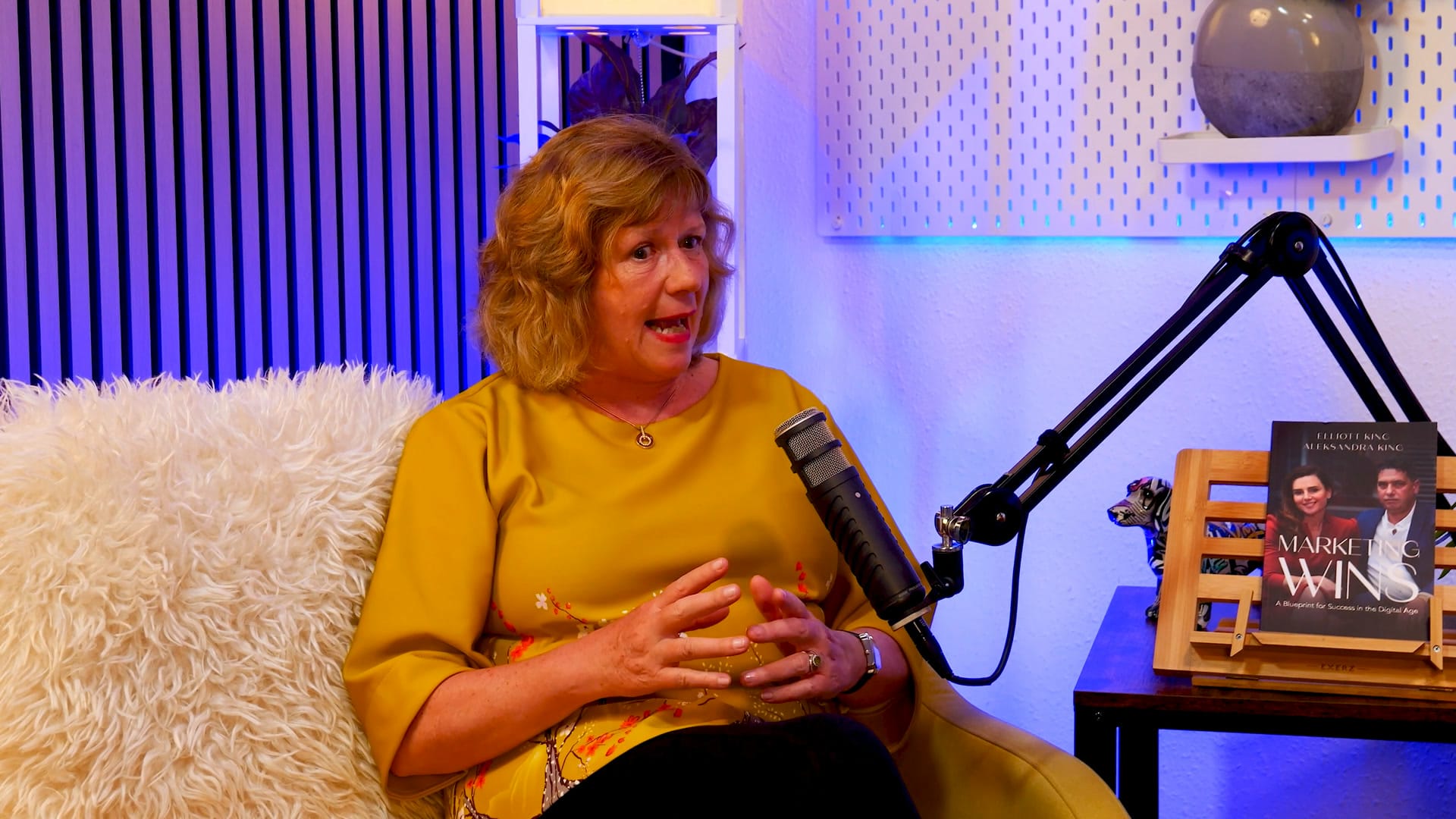
What happens to your mind after 30 days of skiing in silence? Polar explorer Sue Stockdale tells Aleksandra King how she reached the Magnetic North Pole, and what the ice taught her about fear, teamwork and asking for help.
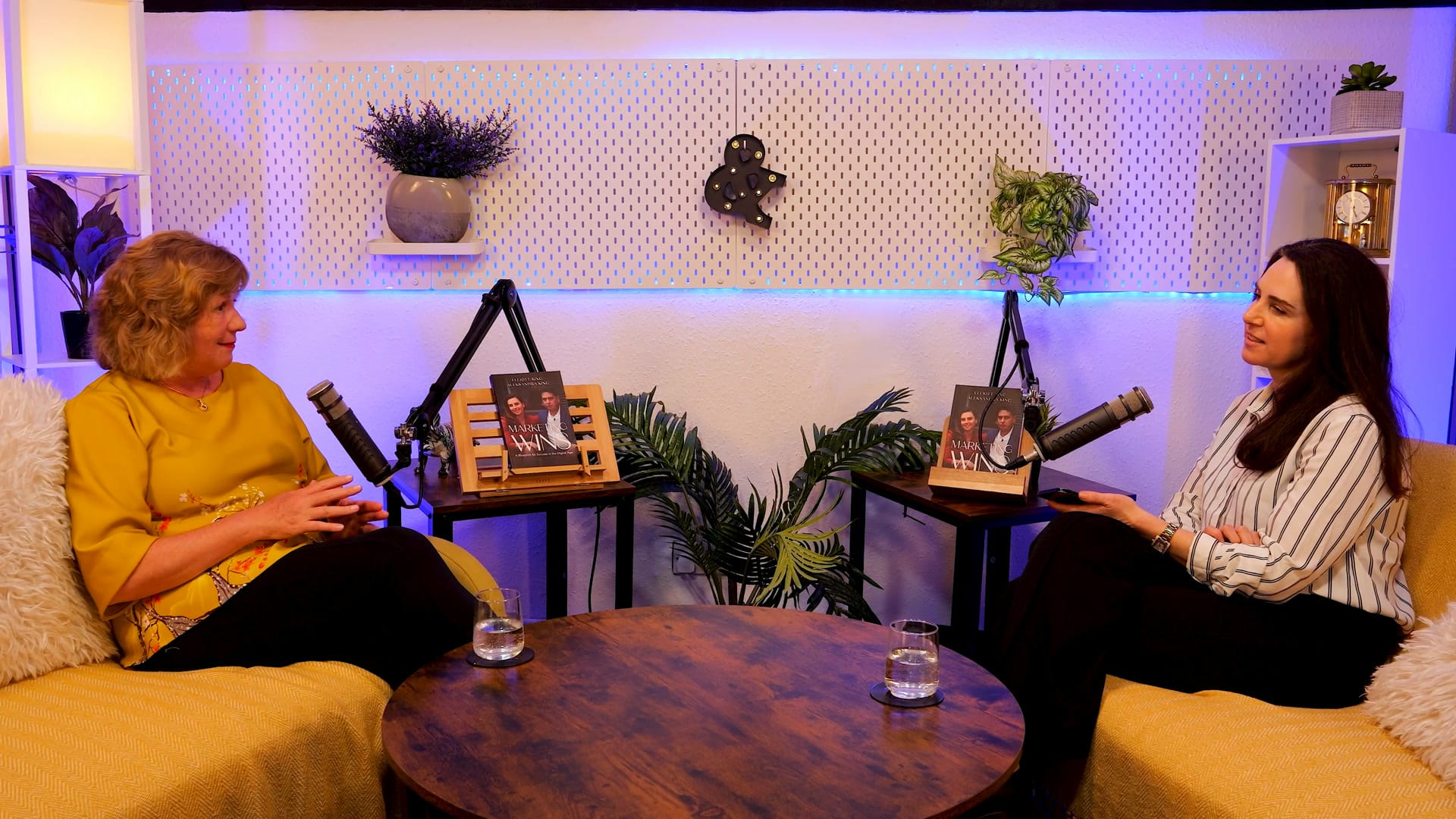
Polar explorer and executive coach Sue Stockdale joins host Aleksandra King on The BEYOND Podcast to talk about the 1996 expedition that made her the first British woman to ski to the Magnetic North Pole, and the lessons about the mind she has carried into her work with leaders ever since.
Episode summary
What does a month of silence do to your mind? On this episode of The BEYOND Podcast, host Aleksandra King talks to Sue Stockdale, the polar explorer, executive coach and author who in 1996 became the first British woman to ski to the Magnetic North Pole. Sue explains how losing her mother at 14 taught her to use every minute purposefully, and how curiosity carried her from a job in Edinburgh to a Raleigh International expedition in Kenya and then to a newspaper advert that asked, "Are you man enough for the ultimate challenge?"
She had never done cross-country skiing, but she had a rule: take the next small step and see what happens. Sue describes a selection process built to find high-performing teammates rather than high-performing individuals, and a 350-mile journey across the frozen Arctic Ocean from Resolute in northern Canada. The expedition ran on routine, an hour of skiing then a five-minute break, and on bad days she told herself she would get through just the next five minutes. Skiing in single file, too cold to talk, she had 30 days of silence in her head, and learned that doubting herself slowed her down.
Reaching the Pole was, she admits, a bit of an anticlimax. Back home she waited three months for opportunities that never came, then rebuilt her confidence by helping others, leading expeditions in Chile and Antarctica and becoming a motivational speaker.
The conversation closes on resilience. Sue argues that asking for help is a strength, and tells the story of a Greenland crossing where she resisted a team-mate's offer to lighten her sledge because she did not want to admit a weakness. Shut in a tent with nowhere to escape, the team learned to sit with the discomfort of conflict until it resolved.
“Can you imagine 30 days' silence in your head?”– Sue Stockdale on skiing to the Magnetic North Pole
Key takeaways
- Take the next small step and see what happens: big goals become possible one decision at a time.
- When an hour feels impossible, commit to the next five minutes.
- What you tell yourself under pressure affects how you perform.
- Choose high-performing teammates over high-performing individuals.
- Reaching a goal can feel like an anticlimax; the journey and the people are the real reward.
- Asking for help is a strength, and it gives the helper a stake in your success.
- Understanding doesn't mean acceptance: stay in the discomfort until conflict resolves.
Key chapters
| Chapter | Timestamp |
|---|---|
| Introduction | 00:00 |
| How curiosity led Sue towards adventure | 03:39 |
| The expedition that changed her life | 04:53 |
| From corporate life to extreme exploration | 06:58 |
| Learning to survive in the Arctic | 19:04 |
| The power of routine and small steps | 20:16 |
| Why teamwork can become a matter of survival | 25:21 |
| "The Arctic wants you dead" | 28:49 |
| The reality of skiing for up to 12 hours a day | 29:03 |
| Reaching the Magnetic North Pole | 29:51 |
| What happens after achieving the impossible? | 32:25 |
| Finding the next challenge | 33:39 |
| Taking on Antarctica | 38:48 |
| What extreme environments teach you about resilience | 43:08 |
| Learning to accept weakness and help | 48:44 |
| Sitting with discomfort and resolving conflict | 50:00 |
The guest
Sue Stockdale is a polar explorer, keynote speaker and executive coach who helps leaders navigate uncertainty. Born in Edinburgh, she represented Scotland in athletics and spent 12 years with one employer, moving from finance into training, before a newspaper advert changed her life. In 1996 she became the first British woman to ski to the Magnetic North Pole, on an expedition led by David Hempleman-Adams. She went on to lead and mentor young people on expeditions in Chile and Antarctica, including Robert Swan's UNESCO expedition, and in 1999 skied across the Greenland ice cap. She is the author of books including Enabling Leadership and The Growth Story, co-founded the podcast Access to Inspiration in 2019, and received an Honorary Fellowship of the Royal Scottish Geographical Society in 2024. Today she coaches senior leaders and speaks on resilience, teamwork and taking the next small step.
Where to listen
Related reading
What Surviving 2 Everest Disasters Reveals About Mental Health | Alex Staniforth.
Transcript
Read the full episode transcript
Cold open
A trailer montage assembled from clips taken later in the episode, plus Sue's self-introduction. These lines legitimately appear again in the conversation below.
00:00:03 Aleksandra King: Never would anyone tell what hardships you've been through, rough terrain you've trekked through, and how many adventures you've had.
00:00:12 Sue Stockdale: What I've learned in my life is that the only person stopping us achieving amazing things is yourself. I'm Sue Stockdale. I'm a polar explorer, an author and a coach. 30 years ago, I skied to the Magnetic North Pole, first British woman to do so. It looks white all around. There are icebergs. You wake up every morning. It's cold. You ski for 8, 10, 12 hours a day.
00:00:39 Aleksandra King: And then you went back to real life.
00:00:40 Sue Stockdale: Well, yes. I sat back because I thought, well, I'm going to be famous now. The media will be bringing me opportunity. And then you're old news. All the confidence I'd had at the North Pole began to dissipate. I began to think, oh, poor me. Nothing's going to happen. And I said to myself, do you know, Sue, the only person that's going to help you is you. You have to get back out there. There I am in Greenland, four of us, on an expedition. We're going to ski from the east coast to the west coast. You've got to rely on each other because out there, this is an environment that wants you dead.
00:01:16 Aleksandra King: Did you feel that you could die?
00:01:18 Sue Stockdale: The thought went through my mind. What's the worst that can happen on this expedition? That we don't come back. I was prepared to accept that. Often in life when we're trying new things, we think, "Oh, nobody will be there to help me." Well, maybe we've never asked.
00:01:31 Aleksandra King: I think there's also the element that it's not necessarily that nobody will be there to help, but there is pride.
00:01:36 Sue Stockdale: Asking for help is a strength.
The conversation
00:01:40 Aleksandra King: You were living an everyday life like all of us, doing the usual thing that we all do. And then your life changed. How did it change? What happened?
00:01:49 Sue Stockdale: Well, the first dramatic thing in my life was that my mother sadly died when I was 14. As a teenager, that really makes you grow up fast. I learned to take on responsibility. I learned that life can be short. And I also learned that if my life, no matter how long or short it was going to be, was going to be fulfilling, I better use every minute of it purposefully.
00:02:11 Aleksandra King: Wow. Yeah. I've got a 14-year-old, a 16-year-old and an 18-year-old, and I can't even– it would just be awful. I can't even imagine what that's like, a little 14-year-old child like that losing her mom. But you channelled it in a very mature way, this sadness. Were you always such a responsible person in your own mind? Did you used to be very, very studious and anything like that, or did you just grow up fast?
00:02:43 Sue Stockdale: I think in some ways I'm responsible, but I am the younger sister. I have an older sister as well. She might be described more as the responsible one. However, I think the responsibility, if we want to call it that, I realised was to myself, because I maybe wouldn't have described it like this when I was 14.
00:03:02 Aleksandra King: Yeah.
00:03:02 Sue Stockdale: But I wanted to make sure that every minute that I had ahead of me, I could fill it up with things that would give me a sense of enjoyment. And I guess it's the opposite from the sadness. How does then one bounce back and say, wow, I want to make my life fulfilling and for it to be a big adventure? And part of that was, in those childhood years, I loved the Enid Blyton stories, the Secret Seven and the Famous Five.
00:03:26 Aleksandra King: Yeah.
00:03:27 Sue Stockdale: And those adventure stories, whilst fictitious, I wanted to translate into real-life adventure.
00:03:33 Aleksandra King: So I suppose as a kid you were already then exhibiting signs of framing the negative into a positive, and you weren't aware that you were doing that. But so many of us– I've had so many people on the podcast and we speak about this. It's how you look at things that's so important. It's a powerful thing. Okay. So you lost your mom. You're developing your character here into the sort of person that's a positive-minded person, which is already fabulous. What then?
00:04:04 Sue Stockdale: Well, I got myself a normal job like anybody else at that age. Got myself into employment at 16.
00:04:10 Aleksandra King: Okay.
00:04:10 Sue Stockdale: Although I could have gone on to university, I had all A-star, A grades with my exams. I wanted to go into the world of work and discover what that was like. So this was again a bit curiosity-led. My sister was working, earning money. I wanted to do the same. And it was in that job, when I was working in that job, that I saw an advert to join Raleigh International, which is a charity expedition, to spend 3 months in a remote part of the world. And I applied for that, followed my curiosity, and found myself in Kenya in 1988. And it really gave me a much bigger sense of the world, which before that had been Edinburgh and Scotland.
00:04:50 Aleksandra King: So what did the expedition say? What did it say?
00:04:54 Sue Stockdale: They were looking for young people to go on a three-month expedition to carry out scientific, community and adventure projects.
00:05:02 Aleksandra King: And you were like, "Yeah, let's go to Kenya. Let's just go."
00:05:04 Sue Stockdale: Well, you got your salary paid. And in my mind, it was like 3 months off work, salary paid, and have an adventure. What's not to like about that?
00:05:13 Aleksandra King: And you were how old? You were 16?
00:05:14 Sue Stockdale: I was 22 by then.
00:05:15 Aleksandra King: Oh, you were 22 then.
00:05:16 Sue Stockdale: 22 by then.
00:05:17 Aleksandra King: Okay. So you're 22 and you see this thing, you're like, "Yeah, I'll go to Kenya." And you went to Kenya. And how was Kenya?
00:05:23 Sue Stockdale: Well, I met there people from all over the world. There were 120 of us young people on this expedition, split up into small groups of 10. And my black book of contacts had gone from a few friends around the local area in Edinburgh to now in many different countries around the world. So my sense of what's possible suddenly just grew enormously. And I learned how to plaster walls. We built a school. We did scientific work with the local scientists. We trekked with camels. So there was a good degree of hardship. And it just really gave me a much bigger level of confidence. So much so that I went back to my employer afterwards and I said, I don't want to work in this finance function that I'm based in now. I want to work in the training department, because that's where I think I can add most value to the company. I never would have had the confidence to do that prior to that expedition.
00:06:16 Aleksandra King: Right. I love that. So that started to develop your sense of confidence, and then you moved into this training department. And then talk us through. So what was the next thing? How did that work for you?
00:06:29 Sue Stockdale: Well, in the training department I helped managers and leaders to get better at what they were doing. So I understood what it meant to develop yourself. While helping other people was fantastic, I also wanted to develop myself as well. And after a number of years working in that company, I thought it really is time for a bigger adventure, because there I'd been working in the organisation for 12 years.
00:06:54 Aleksandra King: And I think that's probably a pivotal moment. You think, well, I'm either going to be here till I'm [unclear: 25?] and retiring. Yeah. Or leaving after a very long career here. Or now it's time to change.
00:07:04 Sue Stockdale: And I saw another advert in the newspaper.
00:07:07 Aleksandra King: You did indeed. You did indeed. And correct me if I'm wrong, but that advert said, "Are you man enough?"
00:07:16 Sue Stockdale: It said, "Wanted: 10 Arctic novice explorers to ski 350 miles to the Magnetic North Pole." The brochure came back because I was curious enough to apply for it. And then it said, "Are you man enough for the ultimate challenge?"
00:07:32 Aleksandra King: Can you believe that? The ultimate challenge? Are you man enough? They wouldn't do an ad like that now. There's no way they would do an ad like that now. But did you sort of get wound up by all the "man enough"? Did you feel you did?
00:07:46 Sue Stockdale: Yes. Yeah. Because the brochure had just all pictures of men, and I thought, how dare they think only men can do this.
00:07:55 Aleksandra King: But could you do this? I mean, had you ever done it before?
00:07:58 Sue Stockdale: No. I had no idea. But I thought, well, the only way I would find out is if I can try. And I think what I've learned since then is always about just take the next small step and see what happens. Just take the next small step and see what happens.
00:08:12 Aleksandra King: But that's a bit more than a small step.
00:08:16 Sue Stockdale: Well, there's always plenty.
00:08:17 Aleksandra King: That's a long way. How far was it again?
00:08:19 Sue Stockdale: 350 miles. That would be like skiing from London to Edinburgh in Scotland.
00:08:24 Aleksandra King: And were you fit? Did you have any sort of– you must have had some sort of physical fitness to be able to–
00:08:31 Sue Stockdale: Yes, I will admit to that. At that point I was competing in athletics. I represented Scotland. I knew that I was–
00:08:38 Aleksandra King: What distances were you–
00:08:39 Sue Stockdale: In 3,000 metres and cross country. So that kind of endurance distance. So I knew I was fit. I didn't know what would be required. I knew we would be dragging our own sledges. So, okay, it would be very physically demanding, but there was plenty of time to back out if I was selected. But it's always about just take the next step and discover what is possible, and from that I can then make a next decision.
00:09:02 Aleksandra King: Okay. So you did have enough fitness-ish. But in terms of skiing ability, were you a skier?
00:09:10 Sue Stockdale: I had done downhill skiing, Aleksandra. I had never done cross-country skiing, but I didn't think that was going to be–
00:09:16 Aleksandra King: What does that mean technically, for those that don't understand? What is it?
00:09:18 Sue Stockdale: Yeah. Downhill skis, you've got your feet fully clipped into your skis and generally you're using gravity to take you downhill. Cross-country skiing, your feet are only clipped in at the toes of your boots. Your heels are loose, and you're then using your muscles to push yourself along the ground to glide. But don't forget you're dragging a sledge behind you. So let's imagine a supermarket shopping trolley filled with shopping, that weight if not heavier, behind you, a harness attached to your waist. You've got these skis on your feet that aren't completely fixed in, so there's a degree of out-of-control feeling there. And then you're heading forwards and you're heading north towards–
00:09:58 Aleksandra King: Okay. Okay. So you agreed to the ad, you were like, "Yeah, okay, I'm going to do it." And then did you do any special preparation before you embarked on this adventure?
00:10:09 Sue Stockdale: Well, you can imagine hundreds of people applied for this opportunity, and there was a whole very stringent selection process.
00:10:16 Aleksandra King: Okay.
00:10:16 Sue Stockdale: A 28-mile hike, the military assault course at Sandhurst. There were psychometric tests. And really the main qualification, if you like, that the organisers of this expedition were looking for was the ability to work in a team. So there were some really fantastic individuals that excelled in many of the tests as individuals, but they didn't look out for other people. And when you're out in a place like the Arctic that wants you dead, you need to know that your teammates are going to rely on you and you are going to rely on them. So you need to trust them. So you don't want high-performing individuals. You want high-performing teammates.
00:10:53 Aleksandra King: Okay. And the objective of the team in this inhospitable zone was what exactly?
00:11:00 Sue Stockdale: It was twofold. It was an adventure expedition, because back in 1996 you couldn't just sign up and turn up and go on expedition. Those sorts of things didn't exist like they do today. This was really the first ever opportunity for people who didn't have experience to participate in an expedition. So there was the adventure element, and then there was also a scientific element. We were collecting data for the University of Ottawa to track the location of the magnetic pole. And so the data that we would collect on the expedition would go back there and be verified by the university and help their work.
00:11:35 Aleksandra King: How do you collect that data? I don't want to get really [unclear: technical?], but what do you do? Did you have a little gadget? Did they train you and you need to point something, or what?
00:11:42 Sue Stockdale: You're pretty much right. Yeah, we had a magnetometer and a theodolite with us, the sort of surveying equipment that people would use. I'd never seen it before, but we were trained in how to use it. Now, it's fine saying that on a lovely warm British day in the UK. Take yourself to minus 40 Celsius when you're physically and mentally exhausted at the end of each day, and you still have to go out there with pen and pencil and collect the data.
00:12:07 Aleksandra King: You didn't know that at the time. So you signed up, you thought, okay, sounds good. You went through this rigorous training process. How long did that last, the training?
00:12:16 Sue Stockdale: From August till January was the selection process.
00:12:20 Aleksandra King: Couple of months.
00:12:20 Sue Stockdale: Yeah. I only knew I'd gained a place on the expedition in January, and we were leaving in April, and I still had to raise £15,000 to pay for my place.
00:12:30 Aleksandra King: Right. So you had to pay for it as well. How did you raise the money?
00:12:34 Sue Stockdale: Sponsorship, and thankfully Birds Eye Frozen Foods came up with the money. We were filmed by the BBC, and of course if successful I'd be the first British woman to get there. So those were two compelling reasons that they agreed to sponsor.
00:12:47 Aleksandra King: Okay. Okay. So you got some sponsors, and then you had to get on a plane. And did you know any of the people coming with you on the expedition on that flight, or you were just going straight there? Where did you fly to? What was your airport?
00:13:01 Sue Stockdale: I flew ahead with two others. We were the advance party, so we were doing some of the early preparations prior to everybody else joining us. And we flew into northern Canada. Ultimately, our expedition began in Resolute, which is in the Nunavut territories of northern Canada. So think of a globe. Think of almost the top of the world in northern Canada and put a dot in the map, and that's where we started from.
00:13:24 Aleksandra King: How did it feel when you landed?
00:13:26 Sue Stockdale: We opened the door. I think it was minus 20 Celsius outside, and the cold just hits you in the face and the body.
00:13:32 Aleksandra King: Yeah.
00:13:32 Sue Stockdale: And I suddenly realised, what have I let myself in for? I'm not going to have any respite from this sapping feeling of really extreme cold when we were out on our expedition. And I thought, maybe I've bitten off more than I could chew.
00:13:48 Aleksandra King: Yeah. I was in Poland once when it was, I think, minus 20 or something, and my eyeballs hurt, literally. They stung. You just wanted to protect every bit of your entire– oh.
00:14:01 Sue Stockdale: Yes. It's penetratingly cold. It just uses up so much mental as well as physical energy that you realise how comfortable we are normally in warmer temperatures.
00:14:13 Aleksandra King: Oh, so comfortable. Okay. Okay. So, yeah, talk us through. So you've arrived. You go to your hotel. Are you excited? Yeah, I know you've got a bit of "what did I get myself into?", but are you excited?
00:14:25 Sue Stockdale: Yes, I am excited. I've now got to know my teammates a little bit, so I'm looking forward to working with them. I love how you say hotel, because we are in the High Arctic. So it's more boarding house. Think youth hostel equivalent. Very small building that only would house 20 or so people. Think, yes, comfort and warm, but fairly primitive. And that's probably easing us into the extreme hardship we're going to have when we're camping out in tents on the ice.
00:14:56 Aleksandra King: Was the food good when you–
00:14:58 Sue Stockdale: The food was– it gave you a lot of energy. It was wholesome food.
00:15:02 Aleksandra King: What was it? Just your pasta and–
00:15:06 Sue Stockdale: I can't remember the exact things we were eating, but it was wholesome food that set us up for being out in the cold.
00:15:13 Aleksandra King: Hearty, lovely food. I always think about food. Sorry, I apologise, but anyone who watches my podcast will know I love food. Okay. So you eat, you start mentally preparing, you've arrived. What's next?
00:15:27 Sue Stockdale: Well, one of the things that is really important is to do final preparations. And by that I mean, when the rest of the team arrived, then we went out from the village where we were– not camped– we went out from our village to camp just outside of the village overnight, dragging our sledges, pitching our tents, simulating what it would be like when we actually leave for the expedition. And very quickly you work out the things that are working for you, the equipment that's working, that's suitable, and the things that aren't. A really simple example: when there's no extra zips or latches on the end of your jacket to zip up your jacket, for example, and you're wearing giant gloves and it's really cold, it's very hard to comfortably or easily zip up your clothes. So we went back immediately and sewed an extra loop on the end of our zips for our jackets, for example. You wouldn't think about that when you're in comfortable temperatures. You go into the cold, you realise that's really important.
00:16:26 Aleksandra King: Oh, it's like a trial run.
00:16:28 Sue Stockdale: Yeah. So it was like a trial run. And even simple things, like you now realise that everything in your sled you're going to be dragging with you. And so therefore everything is carefully considered: should it really be in there or not? No luxuries, nothing that's weighing too much. You thought you could take an extra pair of socks. Well, maybe you'll leave them behind. So it really did force–
00:16:50 Aleksandra King: Difficult. I'm a terrible packer.
00:16:53 Sue Stockdale: I'm not sure how you would fare in the Arctic then, Aleksandra.
00:16:56 Aleksandra King: Yeah.
00:16:57 Sue Stockdale: So, yeah, it does. It forces you to really think, what do I actually need to survive?
00:17:02 Aleksandra King: To survive. Yeah, that's the key. What do you need to survive in your survival kit bag?
00:17:10 Sue Stockdale: Well, minimal clothing, clothing enough to keep you warm in the really cold temperatures. I think what's more important is what's in your head that you need to survive. It's the mental toughness. It's the belief you can keep going. It's the trusting your teammates. It's what you're telling yourself at any hour of any day, in any moment. That's the key thing that you need to survive, I think.
00:17:35 Aleksandra King: Okay. We'll get to your head in a second. So you've got your essentials, you've packed, you've done this little testing thing, you've camped out there. Did you enjoy the test?
00:17:46 Sue Stockdale: Yes. And it gave me a sense of anticipation of what was to come ahead. And then I also realised that the next time we go out, that is it. We're packing our sled, we're heading north, and we won't see anybody else.
00:17:58 Aleksandra King: Okay, let's go there. You went out. You're now on the real expedition. The adrenaline's pumping. You've packed your things. You've tested. You're going. What is it like? What does it look like out there and feel like?
00:18:13 Sue Stockdale: It looks white all around. There are icebergs. The snow is not flat. It's not looking like an ice rink, watching an ice hockey match. It looks more like the rubble on a building site. So there are large lumps of ice, icebergs that have been frozen into the frozen Arctic Ocean. And of course the current's moving, so the ice is pushing itself together and then kind of erupting, and therefore it's very uneven. So you have to work out your way, looking ahead. Should I ski over that block of ice? Should I go around it to the left? So it's a puzzle.
00:18:50 Aleksandra King: Why do you have to have skis? Can't you just take them off and walk?
00:18:52 Sue Stockdale: You might think that that would be the case, but given that in some areas the snow is very thick, if you walked, the single weight of your foot going through the snow would actually be up to your thighs. The benefit the skis give you is weight distribution.
00:19:07 Aleksandra King: They must be thick skis, and not the normal thin–
00:19:09 Sue Stockdale: They are thin skis. Yeah. Just like you would see on a ski–
00:19:14 Aleksandra King: But why don't you just sink down there? I still don't get it. Sorry. It's my lack of ski and Arctic knowledge here, but–
00:19:21 Sue Stockdale: Yeah. So you're wearing your long thin skis, and on the bottom of them they have what you would call skins, like fish skins. Obviously it's not real fish skin, but it's something that's going to grip when you're going uphill. You're not going to slide back down. And so I quickly learned from the others how to navigate my way using these skis, and remembering your sledge is following you behind through this difficult icy terrain. The other thing that we really realised very quickly– and we had a very experienced expedition leader guiding us, David Hempleman-Adams– and he said to us, okay, the first thing you need to learn in the Arctic is routine. Because we will, for example, ski for an hour. We will have a five-minute break. We will ski for another hour, another five-minute break. And that will be the routine for the entire day. The reason you don't stop for longer is you're just going to get cold. You need to have some sort of break as you're going along, but it gives you some sense of structure to the day. And it was really important to have that sense of structure.
00:20:24 Aleksandra King: I love that. I love that. It's like steps. It's like little goals.
00:20:27 Sue Stockdale: Yes.
00:20:28 Aleksandra King: I love that. Did that help you?
00:20:30 Sue Stockdale: Oh, absolutely. Yeah. And on some days, when an hour just seemed insurmountable, I couldn't imagine even skiing for 60 minutes, I said to myself– what's going on in my head– I'll get through the next 5 minutes and then I'll see how I feel.
00:20:43 Aleksandra King: This reminds me of athletics training, and I love running too. And it is like the idea of interval training, where you push yourself to unbelievable speeds that you think you will die, but then you rest and then you go again. It also reminds me of childbirth, because you think after you've done it once, never again, but you do it again, don't you? It's a different kind of interval. Okay. Okay. So you're doing these little intervals, and so you're good? Is it all good or is it not?
00:21:09 Sue Stockdale: Well, it's too cold to really speak to anybody else, very often.
00:21:13 Aleksandra King: Not talking. It's cold.
00:21:15 Sue Stockdale: Very often you're skiing in single file, because it's safer if the ground and the terrain beneath you is unstable. If all of you are skiing across in twos or threes, then you're putting much more weight on that area of ground. So safety means we ski in single file. You have so many clothes on: you have your balaclava, your hood up, your goggles, your mask, whatever it might be. Therefore it's really quite difficult to speak to anybody else. So now that means you don't have any– we didn't have Sony Walkman or anything like that. It was pre all of those things. So now you're just in silence. Can you imagine 30 days' silence in your head? And all that then begins to evoke in your mind is, if you start to catastrophise, if you start to think I can't do it, of course that will really affect your performance.
00:22:02 Aleksandra King: You know, the closest I ever came to that was on The Apprentice, the reality TV show, and I can't give away too many things, but there were these periods, and I found it unbelievably difficult. It's not something you think– "I'll be fine, silence." No.
00:22:19 Sue Stockdale: Yeah. So that was a huge learning. And learning to start to notice what and how I was thinking was going to really impact how I skied and how I showed up for the day.
00:22:32 Aleksandra King: Because then you're having conversations with yourself, and that could be a problem. So what were you telling yourself? What were those conversations? What did they look like? Did you doubt yourself?
00:22:44 Sue Stockdale: Initially I did doubt myself, and then I quickly realised that that wasn't going to be helpful for me, because I noticed my speed of skiing was reducing. You talked about athletics already, Aleksandra. You'll know from interval training yourself how you're thinking, I'll just get through this next 400 metres and then I'll have a rest. So that whole kind of process of just really giving yourself some positive thoughts, positive self-talk, I quickly realised that was important. And then I just began to always be thinking about food. You mentioned that earlier, and I also have a love of food. And after a few days of this–
00:23:19 Aleksandra King: Chocolate.
00:23:19 Sue Stockdale: Oh, I love chocolate. I began to think to myself, you know, Sue, surely you must think about something a little bit more highbrow than food. Come on, get some more intellectual thoughts in your mind. So I began to think about friends that I hadn't seen for a while, and recall who they were and where we met and what we did. And then I quickly realised that the memories that I had were always that I'd met this person in a bar or a restaurant and we'd eaten something, and I could recall exactly what meals I'd had when I had met them.
00:23:51 Aleksandra King: Steak.
00:23:52 Sue Stockdale: And I apologise. [unclear: So they said, "Don't eat meat"], but steak.
00:23:55 Aleksandra King: Steak. Steak. Steak.
00:23:56 Sue Stockdale: So it just made me think, come on then. Okay. Food's the thing that you want to think about, just do it.
00:24:02 Aleksandra King: Oh, well done. Oh, that's good. You see, I don't have to go to the Arctic to think about that. Okay. So you're talking to yourself, you're going on this expedition. How many days in are you now? How is it?
00:24:17 Sue Stockdale: We're about 10 days or so into the expedition.
00:24:21 Aleksandra King: And you've been doing fine.
00:24:23 Sue Stockdale: Yeah, I've been doing okay, although I'm starting to get blisters on the back of my heels. And any cuts or problems that you have health-wise, of course, you're not going to be in warm conditions to allow anything to heal or improve. So all that happened to those blisters is they got bigger and bigger and bigger. And then my attention stopped thinking about food and started thinking about the pain in my heels.
00:24:47 Aleksandra King: Okay. Very real pain, getting worse. No. Did you tell anyone?
00:24:52 Sue Stockdale: Yeah, I did. And although I tried to look after these blisters, you know what it's like, even if you wear shoes that hurt your feet for the first time, that's all you can think.
00:25:03 Aleksandra King: You're in a terrible mood as well.
00:25:04 Sue Stockdale: Yeah. So it was really a bit of an endurance test until I managed to get a combination of wearing more layers of socks and just really trying to take my mind off that discomfort and start to look elsewhere and to start to think about other things.
00:25:20 Aleksandra King: Were you able to sleep at night? You must have loved just the moment where you guys put your heads down, right? And you're like, "Oh, please help." Was it like that?
00:25:29 Sue Stockdale: Well, yes. However, also it's 24-hour daylight. We're going in April, May. So–
00:25:34 Aleksandra King: I was going to ask you about the stars. I'm not going to do that anymore. There's no stars.
00:25:37 Sue Stockdale: There are no stars. So I'd wear my balaclava over my eyes to give me a sense of darkness, and that's what helped me go to sleep. But of course we're so exhausted then, it really is very easy to just be off to sleep in a couple of minutes.
00:25:50 Aleksandra King: So, yeah, that's actually good advice. Just make yourself physically [unclear: tired?] and then you'll sleep. So, yeah. But you're managing, you're managing fine, and the expedition continues. And what happens next?
00:26:05 Sue Stockdale: Well, I'm now beginning to really get to know my other teammates. I'm not there on my own. There's a team of 10 novices. We have four experienced people. And I'm now realising that I could be a motivator to them when anybody's having a down day, and that they can be encouraging me. And I'm really not there on my own. I'm also realising that the only way that we're going to be potentially successful is if Mother Nature allows us to get there. You think in a place like that, Aleksandra, in the Arctic, there's nothing to look at. There really is nothing to focus on. So there's the–
00:26:43 Aleksandra King: [laughter]
00:26:43 Sue Stockdale: Well, let's say there's not anything different particularly to look at. Everything is white all around you.
00:26:48 Aleksandra King: Different types of white.
00:26:49 Sue Stockdale: There are different types of white. Now you're making it sound good, you see. But it can be very one-dimensional. And so, realising that if the weather turns bad, that might stop us getting there. If we meet a polar bear, that might stop us getting there. There are so many factors that are uncertain, out of our control, that that's when I thought, you know what, we're so insignificant in this world. So we have to just make the best of every moment on this expedition. And I'm so glad I wasn't doing it on my own. In fact, I don't think I could have done it.
00:27:22 Aleksandra King: Oh, yeah. Well, if you're on your own, anything happens to you, you're toast. You probably felt the– yeah, you did, the polar bears you're talking about– but the vulnerability of it, that you really are relying on– yes, you've got a team, but you've got to put your work in, because how are they going to carry you when something happens? You've got to survive now.
00:27:44 Sue Stockdale: Yes, you are in the team, but you have to also contribute to the team. So you have to do the work, you have to–
00:27:50 Aleksandra King: You will die [unclear: quickly?]. You could die. And did you feel that you could die?
00:27:57 Sue Stockdale: The thought went through my mind. What's the worst that can happen on this expedition? That we don't come back. And I was prepared to accept that.
00:28:04 Aleksandra King: Did they tell you when you signed up to the ad?
00:28:07 Sue Stockdale: It wasn't quite like– warn you.
00:28:12 Aleksandra King: [laughter]
00:28:12 Sue Stockdale: I think it was about acceptance of risk. You could walk out in front of a bus unexpectedly, or a cyclist could hit you in the middle of a city, and you could die.
00:28:23 Aleksandra King: It's a bit different.
00:28:25 Sue Stockdale: I don't think it is. I was consciously choosing to put myself into that situation, and therefore I'm consciously accepting of the risks that it brings. And I'm accepting also that the teammates there are doing also the same, to the best of their abilities. So I think– again, we talked about responsibility earlier in this conversation– I felt I took responsibility for being there and the consequences that might happen.
00:28:53 Aleksandra King: Did you feel responsible for other people?
00:28:55 Sue Stockdale: Yes. Yes, I did, because I think we were all looking out for each other. When you're all novices, when nobody in our 10 of us had previous experience, you know what it's like. You're all in it together. You're doing something new. You're all eager to learn, but you also know that you've got to rely on each other, because out there, this is an environment that wants you dead.
00:29:20 Aleksandra King: Yeah. And you're also taking responsibility for other strangers' lives. You're in this very bonding situation, but you're there to save their life, they're there to save your life. So what happened?
00:29:34 Sue Stockdale: Well, it was a slog. It was mindless. After days and days and days, you wake up every morning, it's white and cold. You eat the same food. You put your skis on, you pack your tent up, you pack your sledge, you wait for everybody else, you begin to ski, and you ski for 8, 10, 12 hours a day. And it's rinse and repeat. Same thing every single day. And there were times when I thought, why are we doing this? Do I really want to get to the North Pole? Is it worth the effort? I did question myself. And then I realised, well, there are very few people in the world that ever get an opportunity to do this. This is a privilege, and I've got to really make sure I make the most of it.
00:30:20 Aleksandra King: Did you get there?
00:30:22 Sue Stockdale: 30 days later. Yes, we did. We did. And it was a bit of an anticlimax. Of course there was a great sense of, we've accomplished our goal. But you can imagine, we had our GPS, our global positioning system, like your car satnav. We had that in our hands and we were measuring down: 100 metres to go, 50 metres to go. Oh, now you can just stop skiing.
00:30:48 Aleksandra King: Yeah.
00:30:49 Sue Stockdale: And you've skied for a whole month, and then all of a sudden you go–
00:30:51 Aleksandra King: One day.
00:30:52 Sue Stockdale: Well, this is just white and cold, and like every other bit of white and cold.
00:30:56 Aleksandra King: There's no monument thing, nothing?
00:30:58 Sue Stockdale: And who's going to build a monument? There's no–
00:30:59 Aleksandra King: [laughter]
00:30:59 Sue Stockdale: All of a sudden we almost just crashed into each other like dominoes, because the person at the front said, "Okay, right. We're here." They planted a flag, and–
00:31:06 Aleksandra King: So there's a flag there.
00:31:07 Sue Stockdale: Well, we took our flag with us.
00:31:09 Aleksandra King: Okay.
00:31:10 Sue Stockdale: But there's nothing to distinguish it from the ice.
00:31:12 Aleksandra King: There's nothing there?
00:31:13 Sue Stockdale: No.
00:31:13 Aleksandra King: I would think there's something there, special.
00:31:16 Sue Stockdale: You're skiing on frozen Arctic sea ice, and the Arctic sea ice moves. So the North Pole today would be different in 2 hours, 3 hours' time if you were standing on the piece of ice, because the ice is gradually moving. So there isn't a fixed– compare that to the South Pole where, yes, there is a fixed pole and a flag that you can get to, because that's a land mass. So they're quite different.
00:31:36 Aleksandra King: Gosh. But you made it there.
00:31:38 Sue Stockdale: We made it. But it was a sense of– well, really the big thing that was most valuable and enjoyable was the journey, the camaraderie that we'd shared together. And actually I think we were all quite sad that when the plane was going to come in to pick us up, the little Twin Otter plane, that close connection, the camaraderie that we'd shared, was going to be broken, and we would have to go back to the real world and be out of this amazing experience we'd had together.
00:32:05 Aleksandra King: Was getting out of it a bit of a shock then, the hustle and bustle of life?
00:32:10 Sue Stockdale: Yes, it was. And we had a sponsor that flew in with his wife on a small jet to meet the group of us, a rather wealthy Swiss individual. And we did find it quite amusing, because we of course hadn't washed for an entire month, and then they had to travel back in the same small jet as us. So we thought perhaps we've got our own back now.
00:32:33 Aleksandra King: Yeah. Yeah. Don't want to imagine what that smelled like. But, yeah. And then you went back to real life, and then what happened?
00:32:45 Sue Stockdale: Well, yes. I sat back. I sat back because I thought, well, I'm going to be famous now. The media will be bringing me opportunities. I'll be in the press and so on. Well, that lasted 5 minutes, and then you're old news. But I just thought that the world would bring me things. And all the confidence I'd had at the North Pole began to dissipate. And I didn't just wait a week or a month. I sat back for three months. And then I began to think, "Oh, poor me. Nothing's going to happen." And I said to myself, you know, Sue, the only person that's going to help you is you. You have to get back out there. And if you can do something for somebody else, then maybe that will give you some confidence. So I took my attention away from looking internally to the outside world. How can I help somebody else? And so I contacted the charity that I'd been to Kenya with. They always need volunteer members of staff. And I asked them if they needed somebody like me with my experience now. And they said, "Yes, we'd love to have you. Would you like to go to Chile in 3 weeks' time and be deputy expedition leader for 120 young people down there?" Well, I just grabbed the opportunity from them, and I headed off down to southern Chile, which looks mistakenly like Antarctica.
00:34:01 Aleksandra King: Really?
00:34:02 Sue Stockdale: Yeah. Well, if you go down to the south of Patagonia, there's lots of ice there. There's a northern and southern Patagonian ice cap. So whilst I spent four months there leading the expedition, my curiosity now began to make me think, I wonder if I can get to Antarctica. And so in a letter that my sister wrote to me, she enclosed a newspaper cutting with an advert in it. And this was talking about an expedition that a man called Robert Swan was organising, to take young people down to Antarctica. Now, the age limit at that time was 24 for the young people. So in my letter, my sister wrote, "Ha ha, Sue, you're too old now," because now I was almost 30, "but I thought you'd like to know about it." And from this newspaper cutting, I thought maybe there's a chance here. Maybe there's an opportunity.
00:34:50 Aleksandra King: To do what in Antarctica?
00:34:53 Sue Stockdale: To be part of Robert's team. So he was taking 35 young people from 25 different countries as part of a UNESCO expedition, to take these young people down there to inspire them to experience Antarctica first-hand. So that in 2041, which of course is many years away, when the Antarctic Treaty comes up for renewal, which is a treaty that means that all the countries in the world agree to use Antarctica for science and peace and not to take the resources from it, these young people would now be older and be in positions of influence to then, if you like–
00:35:31 Aleksandra King: It's a noble cause.
00:35:32 Sue Stockdale: –influence their countries.
00:35:34 Aleksandra King: It's a different way to operate, I would say.
00:35:35 Sue Stockdale: Yeah. Well, very different. I think the important thing that Robert really realised is how we can often only get inspired when we experience something for ourselves. Reading a book or watching a television programme isn't the same as actually being there. So, having read about this expedition, I thought, I'd love to be a member of staff on this expedition. I didn't know who Robert was, but I was resourceful. I found out his contact details, made contact, and asked him if I could be part of the expedition. Would you believe, two months later, after the Chilean expedition, I found myself in Antarctica?
00:36:11 Aleksandra King: You went to Antarctica. So you went all the way up and all the way down, if there's any up or down, whichever way you want to think about it. Who knows at this point? And how do the two sides of the Earth differ?
00:36:25 Sue Stockdale: Well, apart from the Antarctic being, of course, the land mass and the Arctic being frozen sea ice, they're still cold and white. They're still places that want you dead. They're still magical and remote and challenging. And of course there's a lot more wildlife in Antarctica than the Arctic. So taking these young people, now I had responsibility. I wasn't just taking myself there as part of a team. I was now co-leading the expedition as one of the leaders with Robert.
00:36:52 Aleksandra King: More responsibility. For those that don't know, what wildlife, and what does the day and night look like? Just tell us the basics about the region.
00:37:00 Sue Stockdale: Well, we were sailing down to Antarctica. So we sailed from Ushuaia, which is the bottom part of the continent of South America. So we took a ship from there, and we sailed over the Drake Passage, which is quite an infamous stretch of water because it can be so extreme. So then of course we begin to get closer to Antarctica. We begin to see icebergs floating past us in the water. We see penguins. We start to see seals, walruses–
00:37:26 Aleksandra King: All sorts of things.
00:37:28 Sue Stockdale: And it's just an amazing place.
00:37:31 Aleksandra King: Oh, it's beautiful. So beautiful. Filled with nature. And so far it sounds very touristy, very nice. But, yeah, take us with you. So what are you eating? What's going on? Are you getting along with everyone? And what's the next task?
00:37:47 Sue Stockdale: Well, these young people from these 25 different countries were purposely selected because they were countries where there was a degree of conflict at that time. So there was Chechnya and Russia. There was Northern Ireland and Ireland. There was a black and a white person from South Africa. You get the sense of what I'm describing.
00:38:10 Aleksandra King: Interesting combination.
00:38:11 Sue Stockdale: Because Robert wanted to show that these people and these countries, whilst they can be in conflict in their countries, when you take them to Antarctica, we promote peace. We promote connectedness and cooperation.
00:38:24 Aleksandra King: [unclear: Same species] and surviving. Nobody cares. Yeah. Literally no one cares.
00:38:29 Sue Stockdale: And these young people, yeah, they quickly realised it didn't matter if that person came from another country that was back in conflict.
00:38:36 Aleksandra King: Do you not think it would be a terrific idea to do that with our world leaders? Put them on a little expedition.
00:38:42 Sue Stockdale: Absolutely.
00:38:42 Aleksandra King: Little skis on them, say, you want to survive, you've got to work together. Can you imagine?
00:38:47 Sue Stockdale: Yes. Well, that's the wonderful thing. It does. It strips away–
00:38:51 Aleksandra King: It would be wonderful to do that.
00:38:52 Sue Stockdale: –job titles, sense of importance, value, anything that is the measures that we use, let's call it, in normal life. Those things get stripped away and you come back to being an authentic human being.
00:39:06 Aleksandra King: Oh, I love it. Right. Okay. Okay. So what's your assignment?
00:39:12 Sue Stockdale: My assignment is to really support the young people, if you like, almost kind of pastoral care. There were some young people there that had never seen snow before. There were some that weren't good at speaking English. They had to cooperate with one another. Some of them were completely overawed by the experience. We were camping out on the ice in Antarctica for part of the time, getting off our ship and having that experience. We were doing some community work, helping some of the projects. There's an old museum hut there at Port Lockroy. We were helping those that were running that hut to refurbish it and look after it. So my job was to really be noticing which young person's looking a bit quiet, who's hogging the space here, how can I get them to interact more effectively together?
00:40:05 Aleksandra King: So way back, all that experience in that corporate environment and training development helped you.
00:40:10 Sue Stockdale: I was able to then help to build a team together with these young people, helping them to learn, get to know each other and to trust each other.
00:40:18 Aleksandra King: Okay. So were there any hairy moments?
00:40:21 Sue Stockdale: Well, I think there were some people that enjoyed the experience more than others, it has to be fair to say. And I think also when you have young people that want to enjoy themselves, you've got to keep them engaged. You've got to keep giving them some activities to engage them. And we almost didn't even get on the expedition, because when we got down to Ushuaia ready to sail out, waiting for our boat to come back into harbour from its previous charter, we got a call to say the ship had hit some rocks in its previous voyage and it was going to the boatyard to be repaired. Can you imagine? Young people have saved up money. They've prepared. They're there, excited, ready for this expedition, and now the ship isn't going to arrive. Well, Robert was a great leader at that moment, and he said, "I don't have the answers as a leader here. Let's tell the young people that this is going to happen. We may not get on the expedition, but let's use the time purposefully." So we broke the young people up into small groups of four or five, and we said, "Go and research what's available for us to do here at low or no cost. We're going to be here for at least four or five days minimum. What can we do that's going to be purposeful and meaningful?" And they were brilliant. They went out, they accepted the reality. They found things for us to do. They wanted to learn from one another. They wanted to learn about the food from their different countries. They wanted to learn about the language. They wanted to learn about Antarctica and how they would put the tents up and things like that. So they got really involved in using that time purposefully, which I thought was fantastic.
00:41:54 Aleksandra King: It would be interesting. I mean, people go as tourists to go there to just enjoy, and if you can, it'd be a wonderful experience to just look at these beautiful animals.
00:42:04 Sue Stockdale: Yes.
00:42:05 Aleksandra King: And just be in that environment, as long as you're well fed and you have your hot chocolate. Well, you know. But, yeah, that's lovely. So how did that then evolve, and what happened next?
00:42:19 Sue Stockdale: Well, after that experience– Robert Swan is a great motivational speaker, and he delivered a speech to us all, and I was wowed and inspired by what he had to say. But then I began to also think, hmm, maybe now with my experiences that I've had in adventuring so far, maybe I've got something that I could use to inspire people. And I didn't just want those photographs that I had taken in the Arctic in particular to be photographs in an album that were just personal and memories for me. I thought, what if there's a bigger reason for me having done that journey? What if I could inspire other people, just like Robert's doing with us, to get to their North Pole in life and in work? Maybe that would mean that my experience had been really more purposeful, more valuable than just something personal and selfish for me. So Robert's wife at the time, she was his speaking agent. So I asked for some help from her, and she helped me craft together my first presentation, and I decided to set up in business as a motivational speaker.
00:43:20 Aleksandra King: Yeah. And that's what you do now. And you take these lessons that you've learned and you help people and you help companies to apply them. I'm going to ask you the most important one I find in business now, and that is resilience. What have you learned about resilience in all your adventures?
00:43:39 Sue Stockdale: Well, I've learned a lot about resilience, because I think back to what we talked about earlier on, about taking that next small step. So you see the advert. What's the next small step? You get the brochure. What's the next small step? You apply. You go through the tests. Always about taking the small steps. And if it doesn't work out, this next small step, well, what have I learned from that? How can I apply that in the next small step?
00:44:03 Aleksandra King: But even the next small step has a big step.
00:44:06 Sue Stockdale: Not always. It's about how we frame things in our minds. Taking anything that seems like a big step, then I always think to myself, okay, well, if I could just break that down–
00:44:17 Aleksandra King: Break it down.
00:44:18 Sue Stockdale: Break it down into just the smallest thing. And the other thing I learned is how we often have more support around us than we ever realise. I had the support of the team in the Arctic expedition. I wasn't there on my own. So I could use their support, their encouragement, to give me a degree of resilience. Often in life when we're trying new things, we think, "Oh, nobody will be there to help me." Well, maybe we've never asked.
00:44:42 Aleksandra King: I think there's also the element that it's not necessarily that nobody will be there to help me, but there is pride. I see that a lot. And it's like, no, I want to do it myself. There is a lot of that. Not everyone wants help.
00:44:58 Sue Stockdale: Well, perhaps that's because maybe they perceive that help is a weakness, asking for help is a weakness. I see that asking for help is a strength.
00:45:09 Aleksandra King: Why?
00:45:10 Sue Stockdale: Because if somebody asks me for help– if I take it the other way around– if somebody asks me for help, I feel honoured that they have valued me enough to want my help. I feel good when I give it, and I see that in some small way I've helped to benefit what they're doing. And now I've got a vested interest in supporting them in what they're doing. So now there's two sort of sets of energy helping them forward.
00:45:36 Aleksandra King: Okay. Can you give me an example in your adventures where you were forced to ask for help and you didn't want to ask for help? Has that happened?
00:45:44 Sue Stockdale: Well, I can give an example from a subsequent Greenland expedition that I was on.
00:45:48 Aleksandra King: Let's go to Greenland, right? What's Greenland like, before we go there? What's Greenland?
00:45:52 Sue Stockdale: Well, Greenland's certainly not green. It's cold. It's not green at all. Cold and white as well. Again, it is an amazing country. There's obviously a lot more population there than there is in Antarctica, but only on the edges of the country.
00:46:05 Aleksandra King: Is it clean and not polluted?
00:46:07 Sue Stockdale: It is. In some places it is polluted. We did see some aspects of pollution, but there's 56,000 population in a vast land mass. So they're very few and far between in terms of human beings.
00:46:19 Aleksandra King: Okay.
00:46:20 Sue Stockdale: There I am in Greenland, four of us on an expedition. Heavier sledges than the Arctic expedition. We're going to ski from the east coast to the west coast.
00:46:30 Aleksandra King: Why are you doing this adventure, Sue?
00:46:33 Sue Stockdale: Because it's there.
00:46:34 Aleksandra King: You need to really– okay.
00:46:38 Sue Stockdale: Right. We as a team: two Norwegians, a German and myself. And we set off on our adventure. And I'm the most experienced person in the Arctic environment, polar environments, by that time. So I sort of think of myself as, well, I know it all, effectively, because I've done it before. And as we begin skiing, the others start skiing much faster than I am. Now, I become kind of annoyed by this. Don't they know I'm the expert here? And we can't ski at this speed for an entire month.
00:47:10 Aleksandra King: Yeah, sure.
00:47:11 Sue Stockdale: This is ridiculous. I'm sure we've all been in those sorts of situations, where we think we've got expertise and no one's listening to us.
00:47:18 Aleksandra King: But also a valid concern, that you feel they ski too fast.
00:47:20 Sue Stockdale: Yes, but of course they're skiing so fast that I can't catch up with them to tell them that. And when we get to the end of the day and we're all inside the tent together, nobody says anything.
00:47:33 Aleksandra King: Oh, it's awkward. Oh, it's awkward in a tent in Greenland, and cold.
00:47:38 Sue Stockdale: So you can get that sense of tension. The elephant in the room sort of thing.
00:47:42 Aleksandra King: It's quite annoying if they all skied ahead. You think–
00:47:45 Sue Stockdale: Yes.
00:47:46 Aleksandra King: –that's not very nice.
00:47:47 Sue Stockdale: Now, I was reflecting on this later, because I probably didn't really think about it at the time. But if that happened in the workplace, you could probably go home and you could complain to your husband or your wife or your friends: oh, those people that work there. You get away from it, and then you can come back next day and you can still have the frustration, but you've got some way of getting respite from it. In the Arctic, four of us together, there is no respite. There's nowhere to escape. So really these issues have to be addressed, otherwise they're going to just cause fracturing or tension in the group.
00:48:22 Aleksandra King: Right. Heavy.
00:48:24 Sue Stockdale: Yeah. So there's kind of frustration, trouble brewing, nobody's saying anything in the tent, and it's a little bit uncomfortable. Well, the next day, the fittest of the team, the one who was far ahead, he gets a muscle strain in his leg.
00:48:38 Aleksandra King: Because he was going too fast.
00:48:41 Sue Stockdale: Well, of course, my reaction initially was, "Yes, now he can slow down. Look, that's solved the problem." A very selfish perspective, of course.
00:48:51 Aleksandra King: A little bit of I told you so.
00:48:53 Sue Stockdale: Yes. Yes. And what is that about? That's probably about me not willing to address my own inadequacies here, looking at my own self.
00:49:01 Aleksandra King: What was that?
00:49:02 Sue Stockdale: I think I was trying to put the blame on him. Well, it's his fault. He's going so fast. Now we're slowing down. And I'd started to tell myself a story that wasn't reality at all, just to keep myself in my comfort.
00:49:14 Aleksandra King: What was the reality?
00:49:15 Sue Stockdale: The reality was I didn't want to accept that I had a weakness: that I couldn't take a quarter share of the weight of the equipment and ski at the same speed as everybody else. So we had to sit down together, and this muscle strain was the catalyst for that conversation. And the first thing was: you're too fast, you're too slow, you're not listening, all that kind of emotional expression.
00:49:39 Aleksandra King: Heavy stuff.
00:49:40 Sue Stockdale: Yeah. But then we just sat, because we knew that we couldn't just storm off in a huff and escape. There's nowhere to escape to. So you just have to sit with that discomfort, and then you can start to let those emotions subside and get to some quality thinking. And so we came up with lots of different ideas. How can we resolve this problem? We've got a variation in speed of skiing. We need to find a way through it. Eventually the man with the muscle strain said, "Look, Sue, give me some of the weight from your sledge. That will free you up. You can ski faster. It will slow me down with my muscle strain. We'll have found a more even speed of skiing." Now, doesn't that sound really simple, Aleksandra?
00:50:22 Aleksandra King: It sounds very logical.
00:50:25 Sue Stockdale: I resisted that.
00:50:26 Aleksandra King: Why?
00:50:26 Sue Stockdale: "No, I'm fine," I said to myself. "I can do it." Because I didn't want to actually accept that I had a weakness. And then it took me a few moments to think, what's not to like about a lighter sledge? Why am I stopping myself accepting this change? And if I do that, I'm helping the entire team to succeed. It's not just about me.
00:50:50 Aleksandra King: In business, it's like when I started. I went from being an employee to having a business and being forced to rely on people. Initially I was worried about that, the whole finance side or this side, or giving someone the power to– you do the technical ads– instead of being in everything. There's a relief in that, though, too, when you can allow someone with their talent and their expertise– please do run that, actually, please do do that. But you have to let go of the control, and it's hard, isn't it?
00:51:22 Sue Stockdale: Yes, it is hard. And when I accepted that–
00:51:28 Aleksandra King: Hard, that difficult challenge, that difficult decision to make.
00:51:33 Sue Stockdale: There was a lightness. Then there was a freedom. There was like, wow, this is great. I'm enabling everybody. It's not just about me. And that was such a pivotal moment on that–
00:51:42 Aleksandra King: You realised that in that moment.
00:51:44 Sue Stockdale: I did. And it just gave me a newfound gratitude for the other members of the team. I thought we handled that– maybe not initially. The kind of storming stage of team building, we didn't maybe handle that as effectively. But once we then did sit down and have that conversation, with nobody escaping and sitting with that discomfort, we found a really helpful resolution. And that lesson for me has stuck with me ever since: that there's no shame in having weaknesses. There's no shame in actually then enabling somebody to give you help, because actually it takes courage to do that, and it's about having enough humility to accept we're human.
00:52:27 Aleksandra King: Do you know what, as you're speaking, do you know what else it takes courage to do? To have these emotionally horrible, draining, annoying, awful– and all the listeners will relate– those horrible conversations that you don't want to have, and you've got to go through them. You've got to hear the other side, and you've got to just listen as well, and calmly say your piece and communicate. It's hard to do that.
00:52:57 Sue Stockdale: It is hard. And I think what I've learned from that is the tolerance of the discomfort. We can tolerate far more than we realise. And to see that– the belief, I guess– that accepting that discomfort at that time will lead to something better. Conflict is part of everyday life. It's healthy to have differing views. It's about listening and understanding. I always find, when I'm working with leaders these days, I say understanding doesn't mean acceptance. I can understand you have a different point of view to me. That doesn't mean I agree with it, but I can accept it's different to mine.
00:53:38 Aleksandra King: Sure. Sure. That's a powerful thing that we don't even get role-modelled very often. Very powerful. Very powerful. The avoidant type, those personality types who have perhaps been burnt by conflict and find it very difficult– and we're now moving away from business, we're talking about just in life. They've been burnt. They don't want to face more conflict. They don't want to have those conversations, because it's brought them pain and they haven't found a very good resolution to it. So the survival mechanism for that is: leave, walk out. In this situation, it was really good because there was no "I'm just going to leave the room". But what if there is no mediator? What if there is no tent-in-Greenland situation, and you are an avoidant type? How do you recognise you're the avoidant type? And maybe it's not that obvious. And what do you do to put yourself back in the game, is what I'm going to call it.
00:54:42 Sue Stockdale: Yeah. No, that makes complete sense. The question that comes into my mind as you're saying that is: what would it take for me to stay in the room, to stay in the discomfort, and what's the benefit that I believe I'm going to gain?
00:54:57 Aleksandra King: Oh, I love it. Oh, Sue, this takes me back to right at the beginning, when your mom died, this horrible thing. But, yeah, what will it take to get me to get back in the game? Yeah.
00:55:08 Sue Stockdale: And to believe that there's something beneficial from doing so. Nobody's going to want to have pain if they don't believe there's a positive light at the end of the tunnel. So reconnecting with that bigger purpose, with that reward, with that benefit of resolving the team differences or whatever it might be. It's going to require effort. It's going to require discomfort. And you know what? The more we experience those things, the more we get practised at them, the easier they become.
Follow Aleksandra
Business and collaborations: aleksandraking.com | aleksandra@aleksandraking.com
The views expressed by guests are their own and do not reflect those of Aleksandra, the podcast, or its producers. This podcast is for entertainment only.